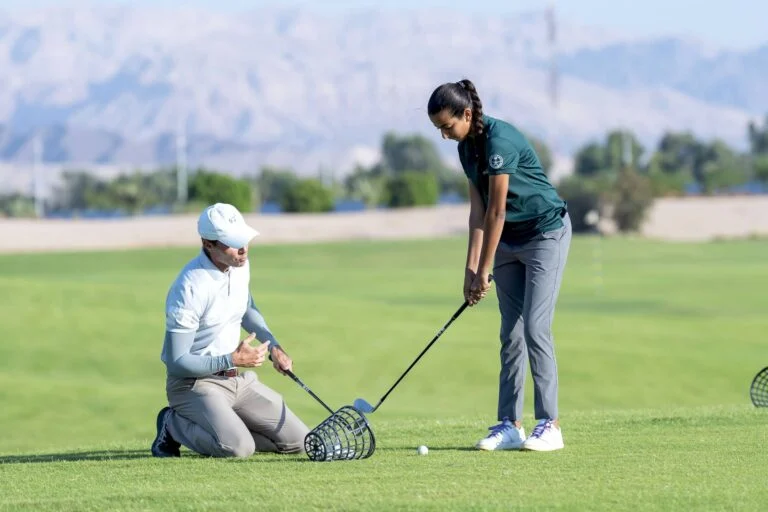
 Andy Devaney
Women’s Golf is not short of talent, nerve or technique; it has never lacked for players capable of threading a five-iron through a letterbox in a crosswind. What it has too often lacked is the professional infrastructure and prize money to match the quality of the product. Annabell Fuller knows exactly how much that matters.
The English player, a three-time Curtis Cup representative and two-time gold medallist for England, has spent enough time around elite competition to know the difference between a good tournament and one that makes a player stand a little taller.
At the 2025 PIF Saudi Ladies International, Fuller finished solo third and earned $270,000 — a sizeable jolt when set against the roughly $78,000 she had earned across her previous full season on tour.
That is not merely a larger cheque. It is fewer anxious glances at flight prices, fewer mental calculations over accommodation and a little more freedom to behave like the athlete she already was.
“It makes you feel more professional, which I think helps with the mindset side of it. Having weeks like this… elevates the reality of being a professional,” says Annabell Fuller.
A Home Return With More Than A Trophy At Stake
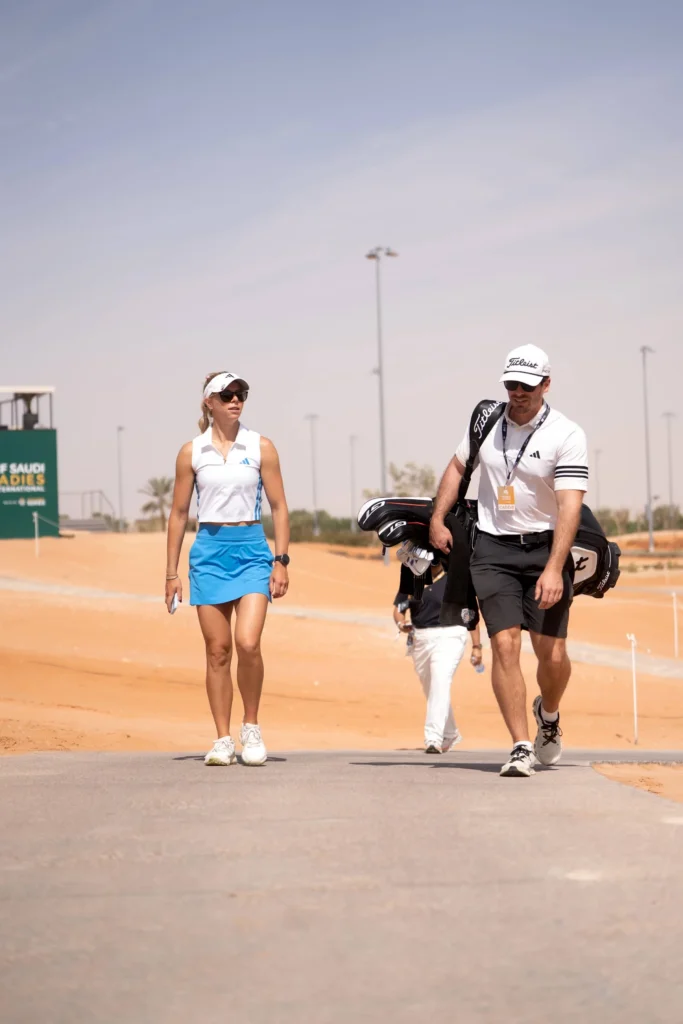
Fuller is now set to compete on home soil when the PIF Global Series returns to Centurion Club for the PIF London Championship from August 6–9, 2026. The setting is a tidy one: a rising English player, a high-profile London stop, and a women’s golf landscape that is starting to ask a rather sensible question — why should excellence arrive with a discount label attached?
The PIF London Championship will carry a $2 million prize fund and move into a four-day, individual stroke-play format. In professional golf, those details matter. The format is not window dressing.
Four rounds of individual stroke play remain the standard measure of tournament seriousness: no hiding place, no gimmickry, just 72 holes and the slow reveal of who has the strongest golf and the most obedient central nervous system.
“It all adds momentum. We are really starting to feel the shift, and with more events like this, I hope we can get to a place where the consensus is that the women’s game is just as impressive as the men’s.” Fuller said.
There is a calm steel in that line. Not pleading. Not posturing. Just a request for the game to be judged with both eyes open.
Why Prize Money Changes More Than Bank Balances
Golf has always been wonderfully democratic in theory and brutally expensive in practice. Clubs, coaching, travel, hotels, physio, caddies, entry logistics — the professional game can turn into a spreadsheet wearing spikes. For players trying to build careers, the difference between survival and progress can be alarmingly thin.
“Golf isn’t cheap, and neither is travelling, so having the opportunity to earn at this level is huge. It really helps make a career in the game more sustainable,” Fuller explains.
That word — sustainable — is the one that should linger. Prize money is often discussed as spectacle, as if the number itself is the whole story. For players, it is operational oxygen. It buys preparation. It buys recovery. It buys better decisions. It allows a professional to plan like a professional rather than exist in a weekly fog of budgetary gymnastics.
Women’s golf has produced world-class athletes for generations. The shift now is in the ecosystem around them: tournament presentation, player services, prize funds and the small backstage details that tell athletes they are not merely being accommodated, but properly valued.
The Details That Tell Players They Matter
At the heart of the PIF Global Series is a deliberate attempt by Golf Saudi to make tournament weeks feel like marquee sporting occasions. That ambition shows up in the obvious places, such as the prize fund, but also in less glamorous corners: the players’ lounges, the course preparation, the sense that the week has been built for elite competitors rather than assembled around them with a staple gun and crossed fingers.
Fuller’s comments suggest those details are not cosmetic. They affect how a player prepares, how long she can train, and how deeply she can commit to the work without the usual drag of professional uncertainty.
“I found that practicing eight hours a day was kind of easy. I didn’t have any dip in the day or tiredness,” Fuller notes.
That is a quietly revealing sentence. Elite sport is rarely improved by athletes wondering whether the next logistical annoyance is about to leap out from behind a palm tree. If a tournament environment reduces friction, it gives players room to chase sharper practice, clearer thinking and better golf.
Fuller As A Face Of A Bigger Shift
Fuller’s position in this story is compelling because she is not being presented as a finished monument. She is still building, still moving, still becoming. That makes her experience more useful. Her $270,000 result at the 2025 PIF Saudi Ladies International was not just a career highlight; it was a practical pivot point.
For a player with Curtis Cup pedigree and international success for England, the talent was already there. The question was whether the professional structure could give that talent the room it deserved.
The PIF London Championship at Centurion Club now arrives as both stage and statement. It gives Fuller the chance to compete at home in an event designed to feel significant, and it gives women’s golf another opportunity to show that investment in presentation and prize money is not indulgence. It is the cost of treating elite sport like elite sport.
A Sport Learning To Match Its Own Standard
The broader significance is not that one tournament suddenly solves every imbalance in professional golf. It does not. The sport is too old, too layered and too fond of committees for anything to be solved overnight.
But momentum matters. So does visibility. So does the simple act of giving players the conditions, purse and platform that reflect the standard they are already producing.
Fuller’s final thought may be the most human of all, because beneath the finances, formats and strategic positioning lies something simpler: pride in the job.
As Fuller concludes, the experience “makes you love your job a bit more because you feel a bit special. You feel like you’re training and your hard work has led to something that you feel proud of.”
That, in the end, is the quiet revolution. Not noise. Not fireworks. Just a golfer arriving at work and feeling, at last, that the stage is worthy of the swing.