 Andy Devaney
Esther Henseleit helped Europe win the Solheim Cup at Bernardus. Her bag is almost as interesting: three clubs before the first iron, one deliberate misfit in the set and a driver spec detailed enough to satisfy the most committed equipment tragic.
There is a particular kind of golfer who looks inside a tour professional’s bag and becomes immediately fascinated by the one club that does not match.
Esther Henseleit will keep those people happily occupied.
Her 5-iron is a TaylorMade P·770. Everything from 6-iron through pitching wedge is P·7CB.
One club. One little disruption. The golfing equivalent of turning up to a black-tie dinner wearing brown shoes and somehow making everyone else look overdressed.
Fresh from helping Europe win the Solheim Cup at Bernardus Golf, Henseleit has more obvious reasons to command attention. But for anyone interested in how elite players actually construct a set, her equipment tells a rather good story of its own.
This is not a bag assembled for the pleasing symmetry of a catalogue photograph. There are three clubs between driver and 5-iron, that solitary change of iron model, then three wedges separated by beautifully boring four-degree gaps.
Boring, in this case, is a compliment.
Esther Henseleit WITB
Henseleit’s current setup is:

- Ball: TP5x
- Driver: Qi4D LS 10.5°
- 3-wood: Qi35 16.5°
- 5-wood: Qi4D 18.0°
- Rescue: Qi4D 22.0°
- 5-iron: P·770
- 6-iron to PW: P·7CB
- Wedges: MG5 50°, 54°, 58°
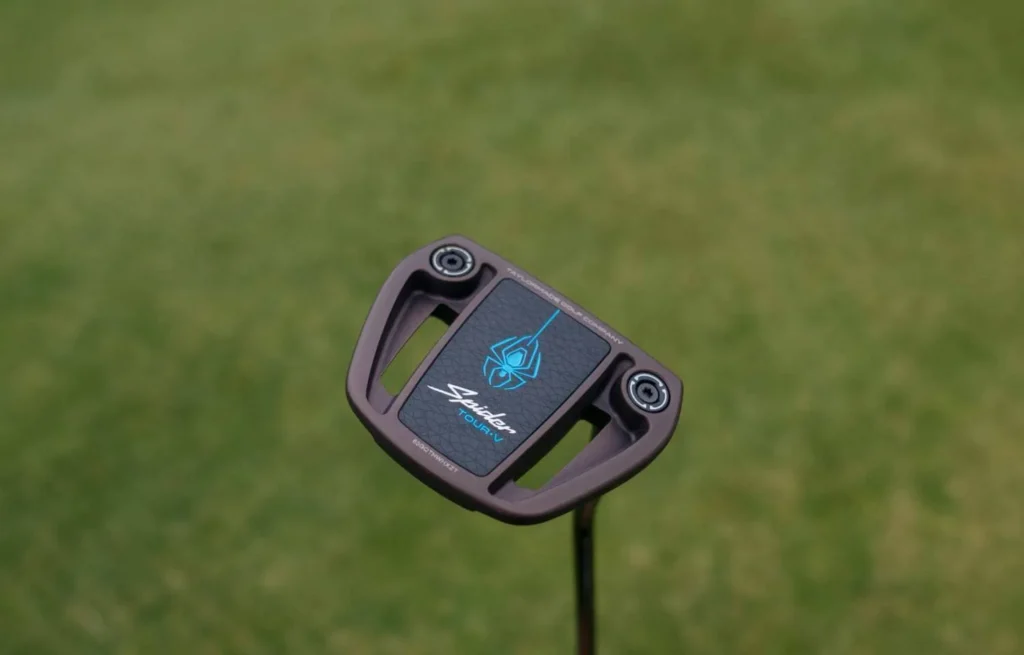
- Putter: Spider Tour V
The immediate temptation with a list like this is to start assigning jobs to everything.
The 3-wood does this. The 5-wood does that. The Rescue comes out when the moon is in Capricorn and there is a slight breeze off the left.
We are not going to do that.
Without Henseleit’s carry distances, launch figures and her own explanation, lofts only tell us so much. What they do tell us is that she wants several options before she reaches an iron.
That is interesting enough.
Three clubs before the irons even get a look in
Henseleit moves from a 16.5° Qi35 3-wood to an 18° Qi4D 5-wood and then a 22° Qi4D Rescue.
Only after all that does the 5-iron appear.
There is something pleasingly professional about this. Amateur golfers are often encouraged to think of a set as an object: buy these irons, add a couple of woods, find a putter you can tolerate emotionally and off you go.
Tour bags are rarely so considerate.
They are working toolboxes, and Henseleit’s upper section looks built around having choices rather than maintaining order.
Exactly what those choices are cannot be established from the loft stamps. The important point is that there are three of them before she asks an iron to do anything.
Then things become stranger.
The 5-iron that wandered in from another set
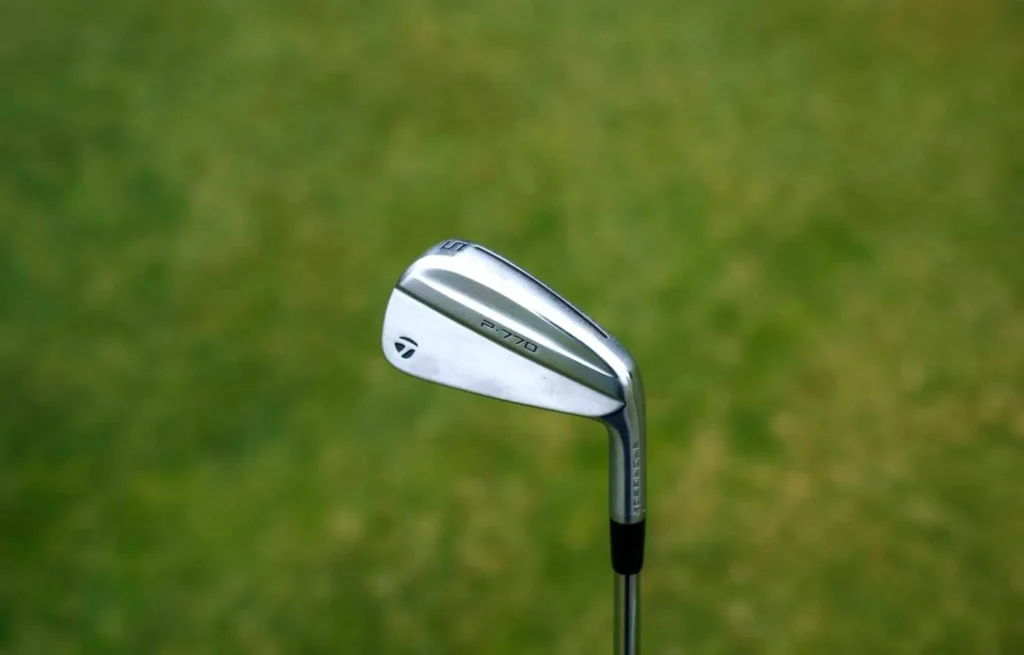
The P·770 5-iron is the club that makes you stop.
Below it sit the P·7CBs from 6-iron through pitching wedge. Above it is the 22° Rescue.
So the 5-iron lives alone.
It would be very easy to dress this up with the usual phrases about launch, forgiveness and ball speed, which tend to breed rapidly whenever golf equipment is discussed without actual data.
There is no need.
We do not know precisely why Henseleit prefers the P·770 in that one slot. We do know that she does.
And that makes the club a wonderfully clear reminder that tour players are not obliged to care whether their irons look as though they arrived in the same cardboard box.
The 5-iron sits at a natural junction in the set: Rescue above it, P·7CB below it.
Whatever the precise performance reasoning, somebody has clearly decided that this is where one solution stops and another begins.
That is proper bag-building.
The driver specification goes down to one wrap
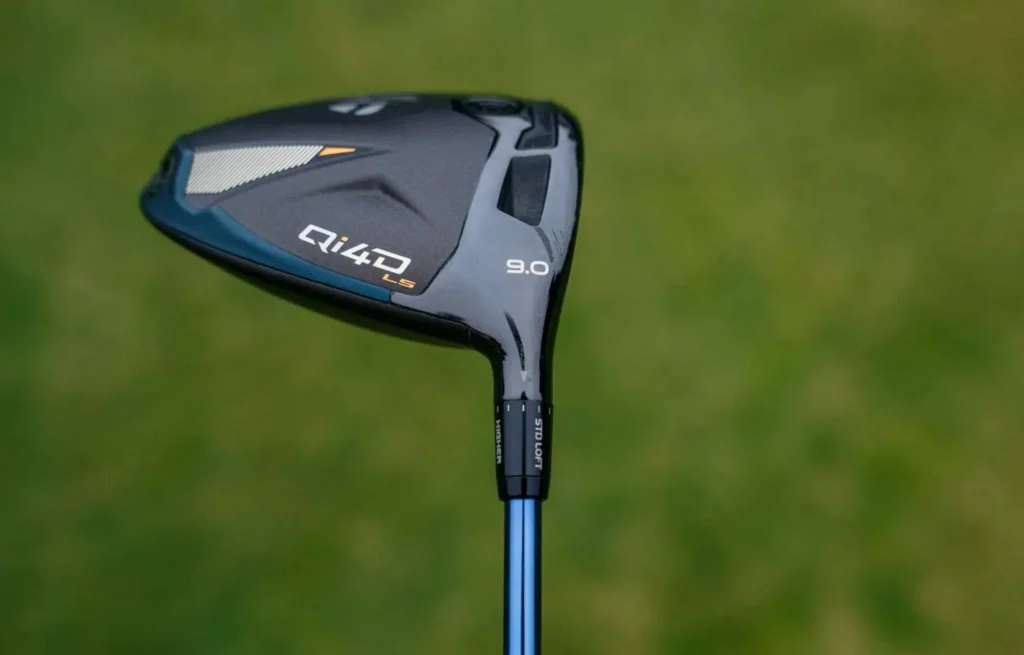
If the irons supply the intrigue, the driver supplies the paperwork.
Henseleit uses a Qi4D LS 10.5° head with an 8g front weight and a 15g back weight. The loft sleeve remains in the standard setting.
Her full build is:
- Head: Qi4D LS 10.5°
- Front weight: 8g
- Back weight: 15g
- Loft sleeve: Standard
- Shaft: Diamana TB 50S
- Length: 45in EOG
- Grip: Tour Velvet 60 RD
- Wraps: 1
Yes, we know the number of wraps.
This is the point at which ordinary human beings may quietly leave the room while equipment obsessives move closer to the screen.
The 15g back weight compared with 8g at the front is clearly part of the build, but once again there is no merit in pretending we know exactly what it does for Henseleit without her numbers.
We do not have her launch. We do not have her spin. We do not have dispersion data.
What we do have is a remarkably detailed specification of the club she actually plays, which is considerably more useful than making up a performance story because the weights happen to have numbers printed on them.
And then the wedges behave themselves
After the mild chaos further north, Henseleit’s wedges are wonderfully obedient.
MG5. 50°. 54°. 58°.
Four degrees. Four degrees.
No riddles. No interpretive dance.
The loft of her P·7CB pitching wedge has not been included, so the first gap cannot be calculated from the available specification. Beyond the 50°, though, the progression could hardly be cleaner.
A Spider Tour V putter completes the club lineup and Henseleit plays the TP5x ball.
It is a strangely satisfying end to a set that spends much of its upper half refusing to behave like a conventional set at all.
Henseleit was winning long before Bernardus
The timing of this particular bag inspection matters because Henseleit’s career has been moving quickly for some time.
She turned professional in 2019 and immediately had the sort of rookie season that rather ruins the curve for everybody coming after her. She won the Ladies European Tour Order of Merit and Rookie of the Year in the same season, while also earning LPGA playing status through Q-Series.
Five years later came Olympic silver.
Henseleit began the final round in Paris in 13th place, then shot 66 at Le Golf National to climb onto the podium.
Her first Solheim Cup followed soon afterwards. As Europe’s only German player in 2024, she hit the opening tee shot and earned one-and-a-half points, although the United States ultimately won.
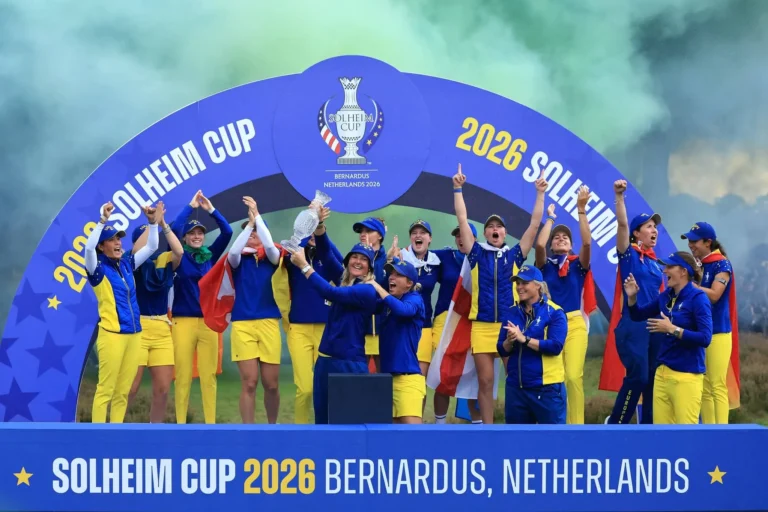
Two years later, Bernardus delivered a different ending.
This time Europe won.
Which brings us back to the golf clubs.
Whenever a player succeeds, there is an irresistible urge to rummage around the bag searching for a piece of equipment responsible for everything. Golf has always enjoyed the idea that salvation might be available with a headcover on it.
Henseleit’s setup is more interesting than that.
Three clubs before the irons. One P·770 standing alone. P·7CBs beneath it. Three wedges marching in four-degree formation.
No magic wand.
Just 14 decisions.