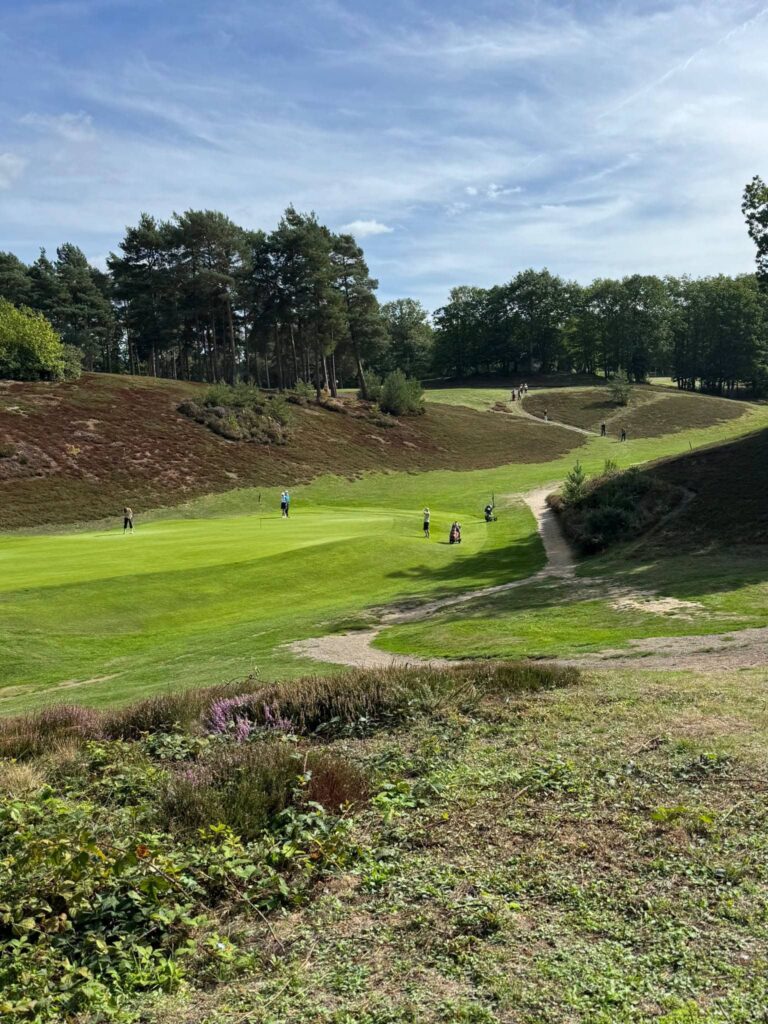
 Andy Devaney
Pleasington Golf Club welcomed leading amateur golfers for two major July tournaments, with Imogen Hall winning the Pleasington Putter before Daniel Belch claimed the Pleasington Antlers and set a new course record of 68.
For a venue intent on strengthening its tournament credentials, it was a useful fortnight in which the golf did rather more talking than the investment brochure.
Hall holds her nerve in the Pleasington Putter
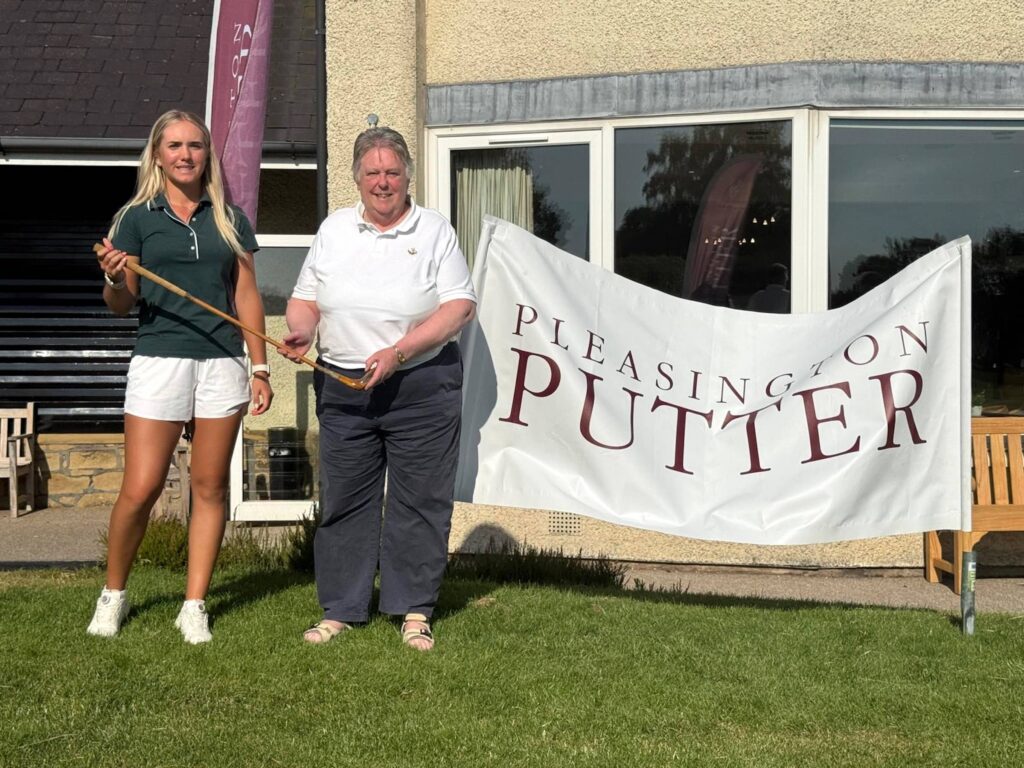
The Pleasington Putter brought an accomplished field of women amateurs to the recently upgraded Lancashire course on 12 July.
Hall, representing South Kyme Golf Club in Lincolnshire, negotiated the challenge best. Her one-over-par round of 75 gave her a two-shot victory over Formby Ladies Golf Club junior Scout Wilson-Bonner.
There was little room for extravagance. On a course designed to ask awkward questions, Hall supplied the sensible answers and kept enough daylight between herself and the field to secure one of the established titles in British women’s amateur golf.
The Pleasington Putter was first staged in 1982 and has developed a persuasive record of identifying serious talent. Previous champions include Gemma Clews, the 2014 winner, and Emily Price, who lifted the title in 2019. Both later competed on the Ladies European Tour.
Pleasington Golf Club general manager Mark Bleasdale said: “We are incredibly proud to see the Pleasington Putter continue to attract such outstanding fields, showcasing the very best of women’s amateur golf in the UK.
“This tournament is one of the most important on our calendar, and reflects the true quality of our course and Pleasington Golf Club as a tournament venue.
That history gives Hall’s victory some useful context. Amateur trophies do not arrive with guarantees attached, but the Putter’s list of former winners suggests it is worth paying attention to the names engraved upon it.
Belch turns the Pleasington Antlers into a procession
Earlier in July, the men had their opportunity during the Pleasington Antlers, one half of the 1891 Trophy contested in partnership with Clitheroe Golf Club.
The 36-hole championship returned another strong field to Pleasington’s heathland layout. Daniel Belch of Hart Common Golf Club then proceeded to remove much of the suspense.
Belch established a new course record with a two-under-par 68 and completed a nine-shot victory over the rest of the field. That is not so much edging ahead as leaving the opposition to conduct a search party.
Course records carry a significance beyond the number itself. They become part of a club’s competitive folklore, particularly at a venue that has staged Open Qualifying on 12 occasions. Future contenders now have a new mark to pursue, although 68 is unlikely to be offered up without an argument.
His margin of victory was equally emphatic. Across 36 holes, consistency generally wins the trophy. Belch added a record round for good measure.
An upgraded course facing proper examination
Tournament golf offers a more credible assessment of course changes than any collection of architectural diagrams or carefully selected adjectives.
Pleasington recently completed its five-year “Good2Great” strategic plan, which included a major course upgrade. The arrival of two high-quality amateur fields provided an immediate competitive examination of that work.
Hall’s controlled 75 and Belch’s record-breaking 68 showed two different ways of handling the same venue. One performance was built around staying clear of trouble and protecting a narrow advantage. The other turned the contest into a rout.
The club is listed among Golf Monthly’s Top 200 Golf Courses in the UK and Ireland and is rated as Lancashire’s leading heathland course. Its location, approximately one hour from Liverpool, Manchester and Leeds, also places it within reach of a sizeable visiting market.
None of that removes the need for the course to earn its reputation every time a serious field arrives. In July, it did precisely that.
Pleasington begins its next investment phase
The tournaments coincided with the club’s announcement of a further £500,000 programme under its “Next Level” strategy.
The investment is intended to improve the experience for members and visiting golfers while building on the work completed during the previous five-year plan.
Bleasdale added: “As we implement our ‘Next Level’ £500,000 investment programme, we look forward to welcoming even more talented players in the years ahead, continuing to strengthen Pleasington Golf Club’s position as one of the UK’s premier golfing destinations.”
Ambition is plentiful in golf-club development. The difficult part is translating capital expenditure into a better playing experience without polishing away the character that made the course worth improving in the first place.
Pleasington’s tournament calendar offers a useful safeguard. Elite amateurs are unsentimental critics. They notice weak holes, inconsistent surfaces and poorly judged demands rather more quickly than they notice a new slogan.
Two winners who strengthened Pleasington’s case
Hall and Belch left with different trophies and very different winning scores, but their performances served the same broader purpose.
The Pleasington Putter reinforced the club’s place within women’s amateur golf and added another promising name to a winners’ list with Ladies European Tour connections. The Pleasington Antlers produced a course record and a nine-shot margin that will be difficult to ignore when the tournament returns.
For Pleasington, the value of the fortnight went beyond staging two successful events. The club placed its upgraded course in front of strong fields and received the sort of competitive examination that cannot be replicated by promotional photography.
Visitors can book tee times through the official Pleasington Golf Club green-fee page.
Investment plans may describe where a club intends to go. A one-over-par winning score, a record 68 and two worthy champions provide a considerably more interesting account of where it stands.