 Andy Devaney
Jeff Dunovant has spent enough time in golf to know that progress rarely arrives with a brass band and a clean pair of shoes. Usually it comes with dust, delays, steel beams, and a lot of faith.
But at John A. White Golf Course in Atlanta, the future is starting to look less like an idea and more like a statement, with a new $30 million clubhouse set to give the historic course a proper centre of gravity and the National Black Golf Hall of Fame a home at last.
That matters. It matters to the city, to the course, and perhaps most of all to Dunovant, the PGA Member and General Manager who has watched this story unfold from both the office and the family living room. His father, Harold, founded the National Black Golf Hall of Fame 40 years ago, and for much of its life the operation ran on devotion rather than infrastructure.
Back then, as Dunovant recalls, it was essentially a family affair. His father, mother, brother, sister-in-law and Jeff himself kept it moving. There was no grand building, no polished visitor experience, no permanent home to match the importance of the institution. It existed because people cared enough to carry it.
Now, after decades of effort, that changes.
A clubhouse with a bigger purpose
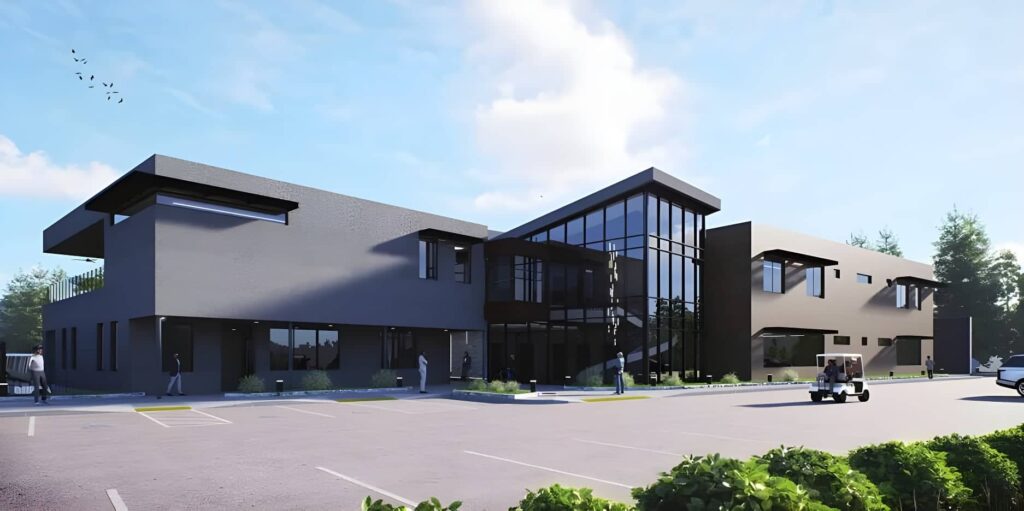
The new John A. White clubhouse is not some vanity project dressed up in polished renderings and civic optimism. At 29,000 square feet across two storeys, it is being built to do a great many jobs at once, and that is precisely the point.
It will house the National Black Golf Hall of Fame, but it will also include a senior activity centre, casual dining, event space, conference rooms, indoor golf simulators, and a new pro shop. Designed with both seniors and golfers in mind, the facility aims to fold sport, leisure, learning and community into one address.
That is clever planning, not fluff. The best golf facilities are never just about tee times. They become places where people gather, linger, eat, talk, learn and occasionally solve the world’s problems over coffee or something stronger. John A. White appears to be leaning into that idea with real conviction.
There will also be wellness programmes, a fitness centre, a teaching kitchen and flexible meeting areas that can be split into four separate event spaces. In plain English, this is a building designed to work hard.
And Dunovant sees exactly what it can become.
“Atlanta golf participation has increased tremendously in the past five years,” says Dunovant. “That brought new golfers to the game, which obviously helped bring players and revenue to our facility. This new clubhouse will not only change John A. White, but the whole west end side of Atlanta. It’s going to become a destination where people can play a great nine-hole course, enjoy a great meal after the round, or host functions, and our inductions into the National Black Golf Hall of Fame, where we will have space for up to 200 guests. We’re looking forward to that.”
There is a lot packed into that quote, but the key word is destination. Not stop-off. Not municipal afterthought. Destination.
Why this matters beyond the scorecard
John A. White Golf Course is already important. It has history, identity and a role in Atlanta golf that extends beyond the simple business of green fees. What the new clubhouse does is bring the physical environment up to the level of the course’s cultural significance.
That distinction matters because golf has spent years trying to look more open, more inclusive and more connected to local communities. Here, there is a chance to do exactly that in brick, glass and daily use.
The National Black Golf Hall of Fame finally gets a real address rather than a symbolic one. Seniors in the community get a modern, adaptable space designed with them in mind. Golfers get a fuller experience around a regulation-length nine-hole course that has already been renovated and, by Dunovant’s account, is in excellent shape.
In other words, this is not a rescue job. It is an upgrade.
The view, the terrace and the part Dunovant loves most
Every good clubhouse needs one feature that makes people stop mid-sentence and say, that’ll do nicely. At John A. White, it may well be the outdoor terrace.
Dunovant’s favourite part of the development is the back-side terrace overlooking all nine holes, complete with fire pits and an elevated perspective across the property. He describes it as one of the best views in the city, especially at sunrise or sunset.
That sounds like the sort of spot where a golfer can replay a missed four-footer for an hour and somehow turn it into poetry. It is also the kind of amenity that makes a facility feel alive beyond the golf itself. You do not need a scorecard in your pocket to enjoy a terrace like that.
And that, again, is the larger play here. The course and clubhouse are being tied together into one experience rather than two separate conversations.
The Hall of Fame comes in from the cold
For Jeff Dunovant, the emotional centre of this story is obvious. The National Black Golf Hall of Fame is not an add-on feature or decorative talking point. It is part of his family’s legacy.
From those early years as a “family operation,” the Hall has grown into an organisation with more than 125 members, a board, a marketing director and a treasurer. That treasurer, notably, is Dunovant’s wife. So yes, the family fingerprints are still there, only now the institution has scale to match its ambition.
Until now, though, it has largely been virtual. Important, respected, meaningful, but still lacking the one thing that signals permanence in the public imagination: a front door.
This clubhouse changes that. It gives the Hall of Fame visibility, legitimacy and a setting worthy of its purpose. It also creates room for induction events with up to 200 guests, which means celebration can finally happen in a space designed for it.
Patience, support and the bigger partnership
Construction projects move at the speed of construction projects, which is to say, slowly enough to test the temperament of a saint. Dunovant understands that as well as anyone, but he also seems clear-eyed about what comes next.
He has said that while the process can feel slow, people will look back once it is finished and say, “Man, that was worth the wait!”
That line lands because it sounds true. Not polished. True.
Dunovant has also been quick to credit Bobby Jones Links, the management company behind the property, for the support it has provided. After working with several golf management companies over the years, he described Bobby Jones Links as “the most supportive” group he has been part of.
That support, he says, stretches from strategic direction to vendor relationships and talent recruitment. In a business where good intentions often get tangled in operational nonsense, practical backing counts for a great deal.
And it has been noticed at the top.
“I am so happy for Jeff and the Black Golf Hall of Fame,” says Bobby Jones Links CEO, Whitney Crouse. “Both have been waiting patiently for years for this to happen. The new clubhouse and community center at John A. White will be the perfect place.”
What Jeff Dunovant’s project means for Atlanta golf
The broader significance of Jeff Dunovant’s story is that it reflects where golf is headed when people get it right. Courses cannot just survive on nostalgia and yardage. They need relevance. They need community roots. They need to feel useful as well as beautiful.
John A. White already had the bones. Now it is getting the infrastructure.
For west Atlanta, that could mean a genuine gathering place. For the National Black Golf Hall of Fame, it means permanence. For Dunovant, it means seeing his father’s work step into a building that fits the weight of the mission.
And for golf, it is a reminder that sometimes the most important developments in the game are not found on television or stamped on a leaderboard. Sometimes they rise more quietly, beam by beam, in the places that have waited longest and deserved better all along.