Staff Writer
LIV Golf Adelaide has never exactly whispered its way into the sporting calendar, but the 2026 edition arrived with the subtlety of a driver through a stained-glass window: 115,000 fans, a record Australian golf crowd, a $165.0 million AUD economic impact for the national economy and a city once again reminded that golf, when properly caffeinated, can move serious money.
Held at The Grange Golf Club from February 12-15, the event delivered $97.1 million AUD directly into the Adelaide economy, according to figures announced by the South Australia Tourism Commission and LIV Golf. That marks a 36% increase on the 2025 event, which is the kind of growth figure usually accompanied by a boardroom grin and someone quietly ordering better champagne.
Adelaide’s Big Golf Week Gets Bigger
The 2026 tournament was not merely larger. It was broader, louder and more commercially muscular.
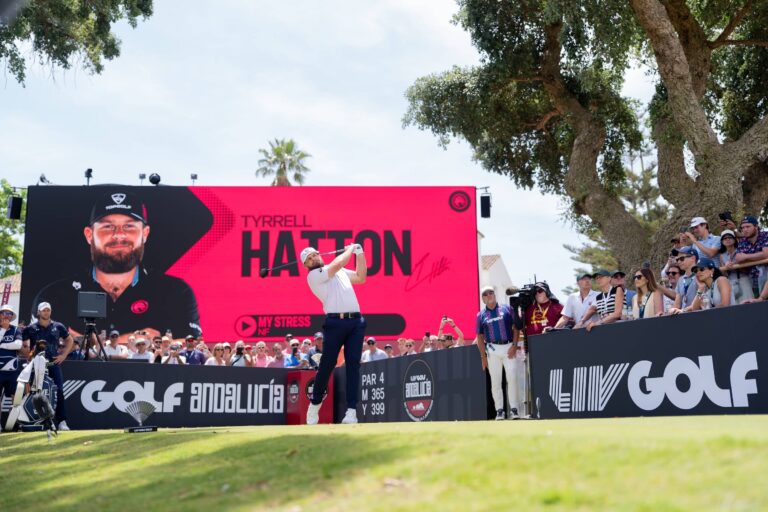
LIV Golf’s expanded four-day, 72-hole format gave the week extra competitive heft, while the galleries brought the sort of volume that makes traditional golf stewards reach instinctively for a calming mint. Attendance rose to 115,000, up from 102,483 in 2025 and 94,327 in 2024.
For Adelaide, the result is more than a tidy sports-business headline. LIV Golf Adelaide has now delivered $314.6 million AUD in economic contribution to South Australia across its four-year run, while LIV Golf says its global economic impact has passed $1.5 billion USD.
The numbers may be polished, but the central point is fairly blunt: Adelaide has found an event with pull.
Anthony Kim, Ripper GC And A Home Crowd In Full Voice

The golf itself came with useful theatre, which is not always guaranteed in a sport where men can spend 18 minutes discussing the grain of a green as if decoding a military telegram.
Ripper GC, the all-Australian side of Cameron Smith, Lucas Herbert, Marc Leishman and Elvis Smylie, won the team title in front of a crowd with no great interest in emotional neutrality. For a home team, on home soil, in a format designed to make allegiances obvious, it was a tidy bit of sporting symmetry.
Then came Anthony Kim.
The 4Aces GC player completed a historic comeback by claiming his first LIV Golf title, providing the week with a story that travelled far beyond the ropes. Golf likes a return narrative almost as much as it likes an argument about equipment, and Kim’s victory gave LIV Golf Adelaide a sharper competitive edge than any marketing department could manufacture.
Visitors Turn A Golf Tournament Into A Tourism Engine
The real commercial muscle came from people packing bags, booking rooms and staying long enough to make a proper dent in the local economy.
According to the event figures, 43% of attendees travelled from outside South Australia. Of those out-of-state visitors, 22,721 came from elsewhere in Australia. Travelling fans stayed an average of 3.71 nights, a useful reminder that a major sports event is not simply a ticket sold at the gate. It is hotel rooms, restaurants, taxis, bars, airport queues, local attractions and the quiet financial miracle of thousands of people all needing coffee at once.
“LIV Golf Adelaide continues to set a new standard for what a golf tournament can bring to a city,” said Ross Hallett, EVP, Head of Event for LIV Golf. “The passion of the fans in South Australia is unmatched, and we’re incredibly proud to see growing interest and support for LIV Golf as well as Ripper GC. The event’s success has translated into a substantial and lasting positive impact for the region and is a testament to the impact we want to have with our partners in host communities across the globe. We’re grateful to SATC and the Premier for their continued support as we continue to set new benchmarks for the golf industry.”
South Australia Premier, Peter Malinauskas, added “LIV Golf Adelaide has given us 314 million reasons to back in major events for South Australia. Not only did the 2026 tournament generate over $97 million for our economy, but it broke national and LIV attendance records and cemented our state’s position as a forward-thinking leader in world-class event delivery. The value of international events like LIV Golf goes way beyond the dollar figure, with the thousands of out-of-state attendees going on to be passionate advocates for South Australia as a place to visit, live, and do business for years to come.”
The Crowd Was Not Just Golf’s Usual Suspects
Perhaps the most interesting detail is not simply how many people turned up, but who they were.
The 2026 event attracted returning spectators, families, traditional golf fans and a fair number of people who may have previously regarded golf as something that happened quietly near shrubbery. Returning spectators made up 60% of the crowd, while 36% were attending their first golf event. Another 14% identified as non-golf players.
That matters. Golf has spent years trying to look less like a private argument between dress codes and more like a modern spectator sport. LIV Golf Adelaide, for all the noise around the league, appears to have found an audience that does not require every attendee to know the difference between a cut and a hold-off fade.
Across the four days, 39% of attendees were under 45, women accounted for 29% of the crowd, and more than 7,000 first responders, military veterans and students from the wider South Australian community attended. Most spectators came socially: 55% with friends, 33% with a partner, and 15% with children.
That is not an old tournament model wearing new shoes. It is a different proposition.
Little Rippers And The Participation Question
The event’s local influence is not limited to grown adults trying to remember where they parked.
In 2024, LIV Golf and Ripper GC partnered with Golf Australia to launch MyGolf, powered by Ripper GC, a national grassroots programme for children aged 5-12. The initiative welcomes “Little Rippers” into the game through hands-on activities and coaching across Australia.
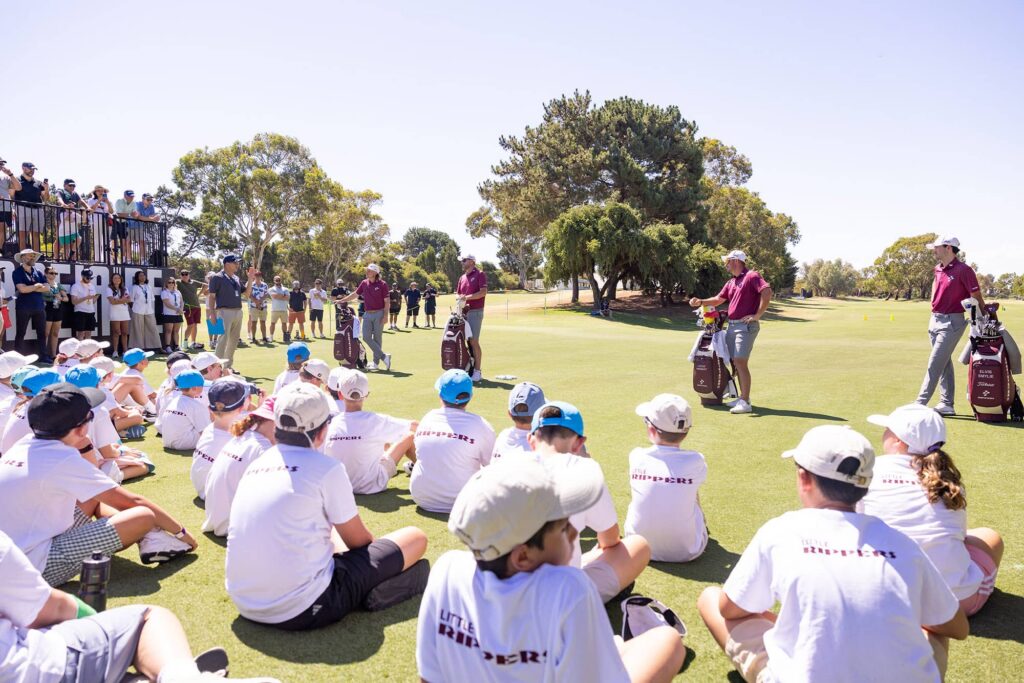
Before LIV Golf Adelaide 2026, Ripper GC hosted a masterclass clinic and meet-and-greet with 70 local young golfers. In 2024, the programme reached nearly 17,000 junior golfers nationally, with 444 venues delivering instruction. In 2026, it is tracking towards a target of more than 40,000 junior golfers across the country.
The wider participation backdrop is notable too: under-18 Australian golf club membership has more than doubled across a rolling five-year period, rising by 112%. Australian professional Grace Kim has also been named an ambassador for the programme, with a focus on inspiring more girls to take up the game.
For a sport that has often made itself harder to enter than a locked wine cellar, that sort of junior pathway is not decoration. It is the long game.
Concerts, Penfolds And A Fan Village With A Pulse

LIV Golf Adelaide has leaned heavily into the idea that spectators might enjoy being entertained before, during and after the golf. Radical stuff, admittedly.
The 2026 edition included four nights of post-play concerts. Australian acts Peking Duk and Royel Otis headlined Thursday and Friday, while U.S. DJ John Summit performed on Saturday, his first time playing in Australia. According to the event figures, 60% of Saturday’s fans attended that concert, amounting to 17,550 people.
On Sunday, FISHER returned for a fourth consecutive year, taking the stage after the trophy ceremony. By then, the average decibel level had probably moved from “sports event” to “airport runway”.
The wider experience also drew on South Australian culture. Indigenous artist Tony Albert’s work was showcased throughout the Fan Village, while the Savour by LIV Golf Culinary Showcase brought local and regional chefs to the course for demonstrations and sampling. Penfolds Winery, the event’s exclusive wine partner, provided a wine-tasting element, which feels entirely appropriate in a city that knows its way around a glass.
Accessibility And Sustainability Move Into The Main Tent
Away from the leaderboard and the bassline, LIV Golf Adelaide 2026 also expanded its inclusivity and sustainability work.
The Sunflower programme was fully introduced to support fans with hidden disabilities, including dedicated spaces and a specialised sensory bus designed to help spectators decompress on-site.
Through the LIV For Good platform, the event also advanced community and environmental initiatives across its stated pillars of Game, Community and Planet. LIV Golf Adelaide is pursuing GEO Sustainable Golf Event accreditation for the third consecutive year, while LIV Golf says it is the first league, tour or major body in golf to achieve ISO 20121 certification for sustainable event management.
On-site measures included 20 solar towers, The Grange Golf Club’s 90% renewable mains power, a closed-loop waste system with 96% biodegradable branding, and the donation of 17 tons of carpet for reuse in local housing projects.
Golf has not always been a natural fit for environmental applause, largely because it involves large landscapes, thirsty turf and humans flying across the planet to discuss spin rates. Still, these details give the Adelaide event a more substantial sustainability story than a logo on a recycling bin.
Kooyonga Next, North Adelaide After That
After four editions at The Grange Golf Club, LIV Golf Adelaide will move to Kooyonga Golf Club in 2027 before heading to the newly renovated North Adelaide Golf Course in 2028.
That venue rotation gives the event another storyline, and likely another search spike. The Grange has provided the launchpad; Kooyonga now inherits the noise, the expectation and the opportunity to show how the event travels within the city.
For Adelaide, the larger point is already clear. LIV Golf Adelaide has become more than a tournament. It is sport, tourism, music, food, youth participation and civic ambition crammed into four days of very expensive movement.
Golf used to ask people to keep quiet. In South Australia, it appears to have discovered that making a racket can be rather profitable.