 Andy Devaney
Luke Donald has been confirmed as the European Captain for the 2027 Ryder Cup, and the choice feels less like a gamble and more like Europe re-ordering its favourite comfort blanket—tailored, pressed, and quietly intimidating. The venue is Adare Manor in Limerick, Ireland, and the assignment comes with the sort of historical weight that makes even seasoned golfers check their pulse.
The Ryder Cup will hit its 100th anniversary next year, and Donald—48, English, and relentlessly composed—now has a chance to do something no captain has managed: guide a team to three consecutive Ryder Cup victories. He already steered Europe to wins at Marco Simone in Rome in 2023 and at Bethpage, New York last September. If he can complete the set in Ireland from September 13-19, 2027, he won’t just be part of Ryder Cup history—he’ll be holding the pen.
The third act: why Europe went back to Donald
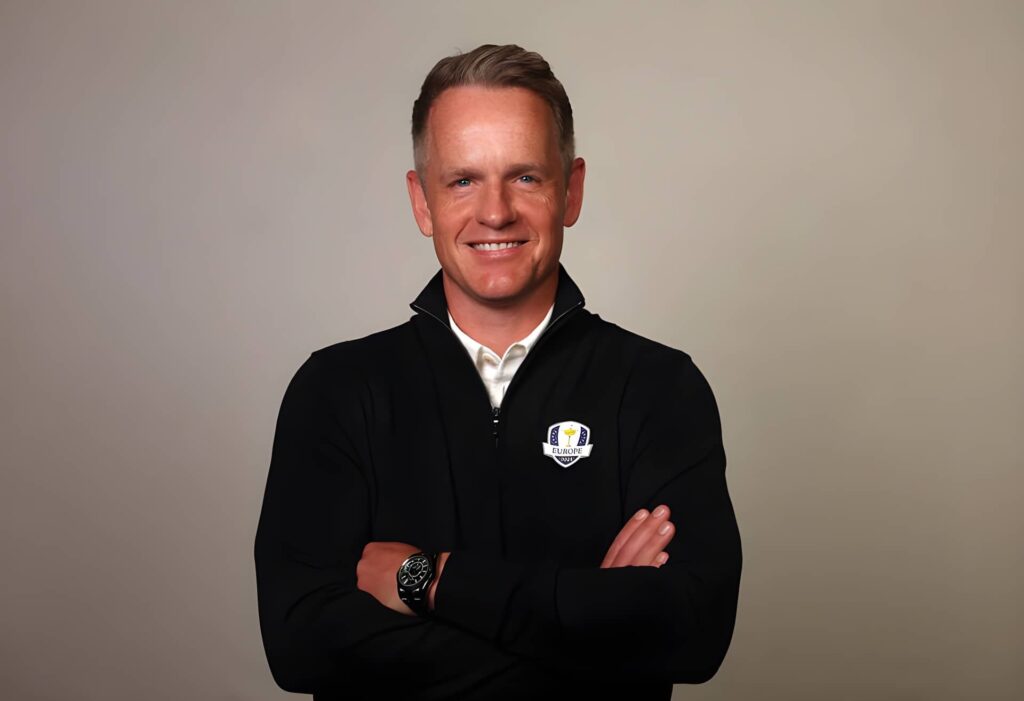
Donald’s captaining record is spotless in the role, but the bigger story is how he’s done it: calm in the chaos, methodical under scrutiny, and apparently immune to the emotional weather systems that swirl around Ryder Cup weeks.
Donald said: “The last two Ryder Cups have meant a lot to me and my family. I didn’t imagine this third time would come. Celebrating on that Sunday night in New York after a pressure packed week in a tough environment, I thought maybe my job was done. But maybe there is a little more story to tell.
“This Ryder Cup Captaincy journey has given me so much focus, so much purpose and it is something I don’t take for granted. It’s a real privilege and I am certainly looking forward to another home Ryder Cup.
“History is obviously important to me. As a team, as Ryder Cup Europe, we all play for history. We talk about it a lot, about the guys who paved the way for us and the responsibility we have to inspire next generations. But I don’t think I have ever thought about history through a personal lens. I just try to enjoy the journey and the day-to-day work to create an environment that gives the players the opportunity for success. That is what I focus on.”
That last line matters. Captains don’t hit shots, but they can absolutely shape the air the players breathe. And Donald has shown he knows how to build a room, not just pick a team.
Ireland again, and a crowd that can change a match
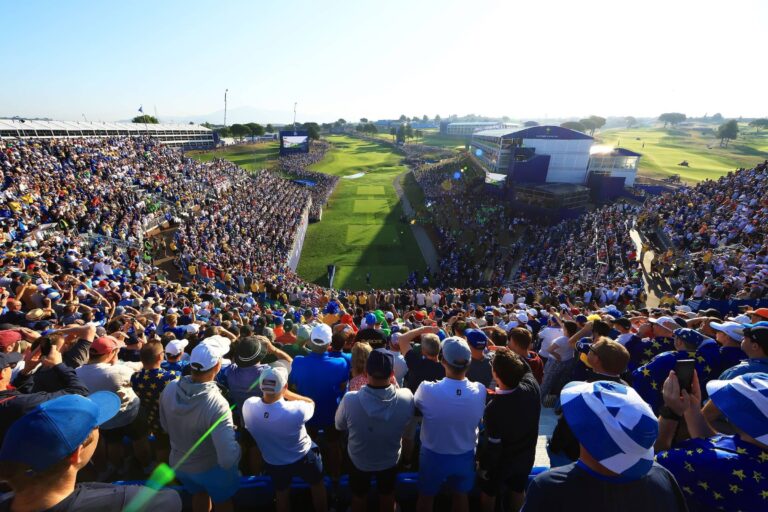
There’s a neat bit of symmetry here: Donald played in the 2006 Ryder Cup in Ireland, so he’s already tasted the particular electricity that Irish galleries bring—equal parts warmth and warfare, delivered with a grin.
“The Irish golf fans are some of the best in the world. They are so passionate about the game, so hospitable and so down to earth. They will bring such a great energy to the Ryder Cup. I am sure they will get behind our players and cheers us on. That’s what you want from a crowd – to pick you up in those low moments and keep you going when things are going well.
“That will be a big factor. It’s obviously one of the advantages of playing at home and there is no better place to do it than in Ireland.
“Adare Manor is such a special place, such a beautiful place. JP McManus and his team have done an amazing job creating a world class venue and hotel. Hosting a Ryder Cup will be very special to them and they are going to make sure it is going to be one of the greatest Ryder Cups in the history of our beautiful trophy.”
If you’re wondering how much home advantage matters in Ryder Cup golf, ask anyone who has tried to quieten a chanting crowd while standing over a five-footer that feels like it’s been inflated with national expectations.
What Adare Manor represents for the Ryder Cup
Adare Manor isn’t just a course; it’s a statement of intent. Ryder Cups increasingly live at the intersection of elite sport and global spectacle—television theatre with the intensity of a street fight conducted in polite shoes. A venue and hotel that can handle that circus matters.
And in 2027, Europe will want everything aligned: course setup, player preparation, logistics, psychology—the whole, maddening, beautiful machine that turns match play into an annual referendum on nerve.
The European Tour Group’s case: calm, poise, and planning
Guy Kinnings, Chief Executive of the European Tour Group, framed Donald’s appointment as both reward and rationale—acknowledging results, but also the manner of them.
Guy Kinnings, Chief Executive of the European Tour Group, said: “Luke was an outstanding Captain in Rome and New York, leading the team to victory both times, and it is fantastic he is coming back to do it a third time.
“Those victories were remarkable, but almost even more impressive was how he led the team and how he conducted himself. He has faced a lot of challenges as Captain throughout his two terms, and he has handled all of them with his usual calm, poise and authority and above all with respect.
“He is meticulous in everything he does when it comes to planning and preparation, but Luke would be the first to acknowledge that as good as job as he has done, this is a new challenge for him and the team. He will be as motivated and as committed as ever to help them achieve more success.”
In Ryder Cup terms, “meticulous” is not a compliment—it’s a job description. The margins are microscopic. You win by getting the small things right until they add up to something massive on Sunday afternoon.
The history chase: Hagen, Hogan, Jacklin—and the one step further
The record books are littered with great captains who won multiple times but couldn’t stack three in a row. Walter Hagen led the US to four wins total and Ben Hogan to three, yet neither managed three consecutive victories. Both only reached two straight (Hagen in 1935 and 1937; Hogan in 1947 and 1949).
Europe has its own lineage: Tony Jacklin captained back-to-back wins in 1985 and 1987, then retained the trophy in 1989 after a 14-14 draw at The Belfry. Donald now has the opportunity to push beyond that benchmark with a third straight win at Adare Manor—an achievement that would land differently because modern Ryder Cups are louder, brighter, and more relentlessly analysed than any era Hagen or Hogan ever navigated.
Donald also becomes just the fourth person to captain Europe in three or more consecutive Ryder Cups, following Dai Rees, Tony Jacklin and Bernard Gallacher—company that comes with both prestige and pressure.
Why Donald fits this moment: player pedigree, captain’s mindset
Donald’s playing CV still reads like a reminder that he wasn’t only built for the team room. He spent 56 weeks as World Number One, and in 2011 became the first player to top the money lists on both the DP World Tour and PGA TOUR in the same year—an achievement that requires excellence across styles, setups, and continents.
As a Ryder Cup player, he represented Europe four times and was on the winning side each time, contributing 10½ points from 15 matches. He debuted at Oakland Hills in 2004, then produced a perfect three-from-three at The K Club in Ireland in 2006. He also featured in wins at Celtic Manor in 2010 and Medinah in 2012, and later served as a vice-captain under Thomas Bjørn (2018) and Pádraig Harrington (2021).
That blend—player credibility, organisational discipline, and a temperament that doesn’t spike under stress—is precisely why Europe has returned to him as the European Captain for the 2027 Ryder Cup.
The takeaway: a familiar leader, an unfamiliar challenge
This is not a nostalgia appointment. It’s Europe recognising that Ryder Cups are won by decision-making under pressure, and Donald has made a habit of looking unbothered while everyone else is chewing their fingernails into modern art.
Adare Manor will bring its own puzzles, the United States will bring its own fire, and the centenary context will only crank the volume. But if Europe wanted a steady hand for a loud week in a proud place, they’ve chosen the man who treats chaos like a spreadsheet—without forgetting it’s also a story.
And in 2027, Ireland won’t just host the Ryder Cup. It will stage the next chapter of whether Luke Donald can turn calm leadership into something genuinely historic.