 Andy Devaney
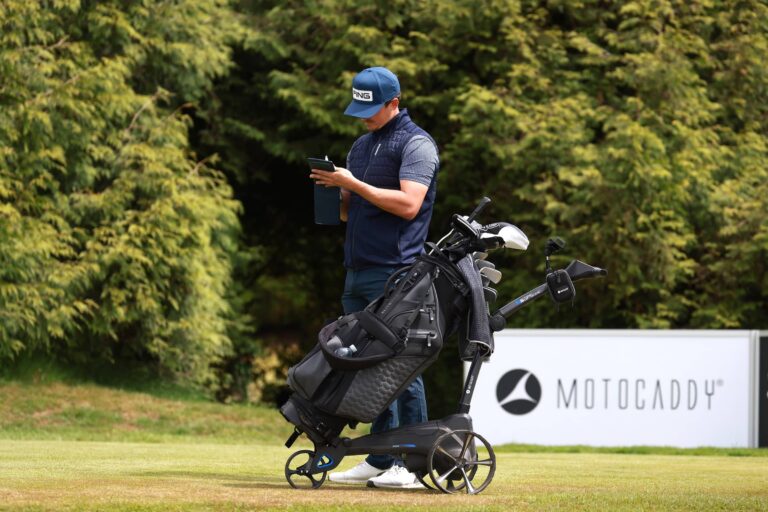
Motocaddy has never been shy about where it sits in the pecking order of electric trolleys, and its renewed place in Golf’s Greatest Holes feels less like sponsorship and more like a very public demonstration of intent. Scotland, after all, is no place for flimsy kit or marketing fluff. If a trolley can cope with the ancient rumples of St Andrews, the sharp mood swings of the Scottish weather and the visual theatre of Turnberry and Troon, it has earned the right to be noticed.
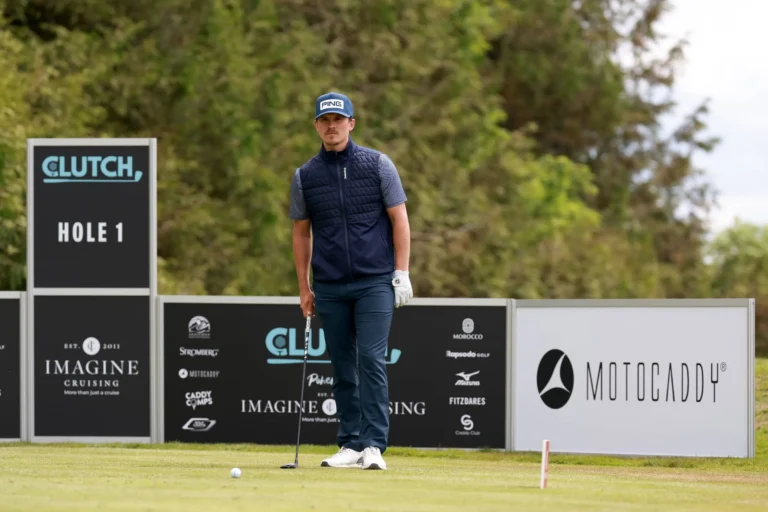
That is the play here. The world’s best-selling electric trolley brand has extended its partnership with the Sky Sports series for a fourth year, returning as the ‘Official Trolley & Bag Partner’ for the new six-part season filmed across some of Scotland’s most revered courses. Paul McGinley and Chris Hollins are again at the wheel, with Colin Montgomerie and Dame Laura Davies joining the cast on holes that most golfers would walk barefoot over broken glass to play.
The timing is tidy, but the strategy is even tidier. This is not simply about a badge on a broadcast. It is about placing Motocaddy in the one setting where golf products are stripped of brochure nonsense and exposed to the elements.
A Scottish stage built for proper testing
Scotland is a magnificent old brute of a golf destination. It can be postcard-pretty one minute and thoroughly unreasonable the next. That makes it a fine backdrop for television, but an even better proving ground for equipment.
The new series visits The Old Course at St Andrews, Trump Turnberry, Royal Troon and a supporting cast that reads like a greatest hits album: Cabot Highlands, Trump International, Muirfield, Glen Golf Club, Dumbarnie Golf Links, Kingsbarns Golf Links, Prestwick and Western Gailes.
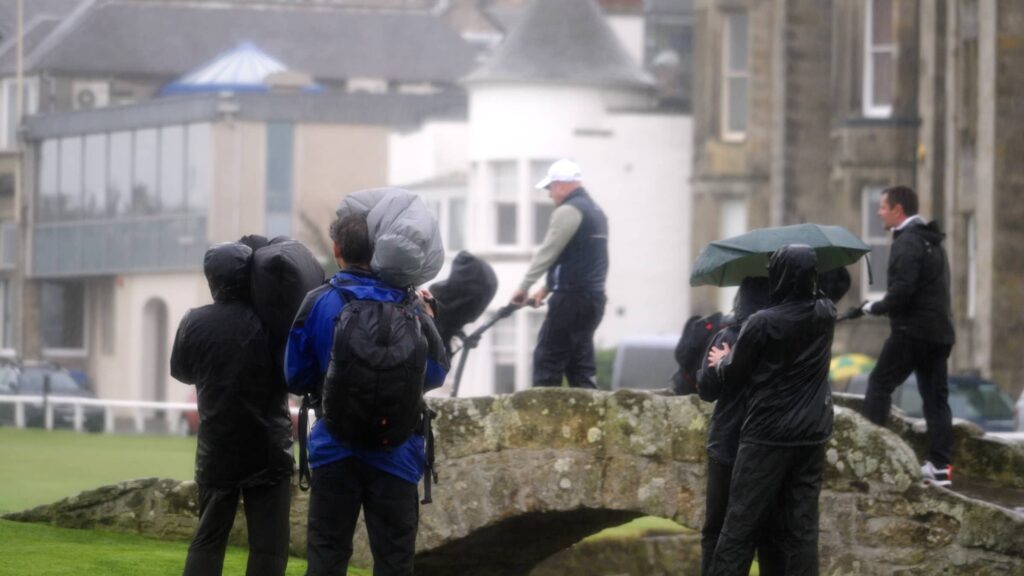
These are not tidy little parkland strolls. They are courses with lumps, swales, coastal winds and enough awkward terrain to expose any weakness in an electric trolley. In that sense, the partnership works because the setting does half the talking.
Motocaddy Marketing Director, Oliver Churcher, put it this way: “Through partnering with Golf’s Greatest Holes over the last three years, we have been able to place our brand and product range in front of huge global audiences, so it was a straightforward decision to extend our sponsorship for this exciting new series,” said Motocaddy Marketing Director, Oliver Churcher.
“Golfers from across the world travel to Scotland to discover best-in-class golf experiences, which we also strive to offer. We look forward to seeing Paul, Chris and their esteemed guests use our products while playing some of the greatest holes in Scottish golf. There really is no better way to experience Golf’s Greatest Holes than with a Motocaddy trolley by your side,” he added.
Why this matters beyond television
Plenty of brands sponsor things. Far fewer manage to look entirely at home doing it.
Motocaddy’s advantage is that this is not a forced fit. Walking golf remains the purest form of the game, and electric trolleys have become less a luxury and more a practical concession to common sense. Carrying is admirable until the back stiffens, the shoulders tighten and the walk starts to feel like unpaid labour. A good trolley lets golfers keep the benefits of walking without arriving on the 14th tee looking as though they have been moving furniture.
That is the wider message running through this partnership. The series may celebrate golf’s finest holes, but it also quietly champions a way of playing that is easier, more efficient and, for many golfers, more enjoyable.
The production company behind the show clearly sees it the same way.
“Motocaddy has supported Golf’s Greatest Holes from the outset and we are delighted that the brand has continued the partnership for another blockbuster series. Scotland is a must-visit golfing destination and we look forward to exploring new destinations with Motocaddy walking the course with us.”
The models doing the heavy lifting
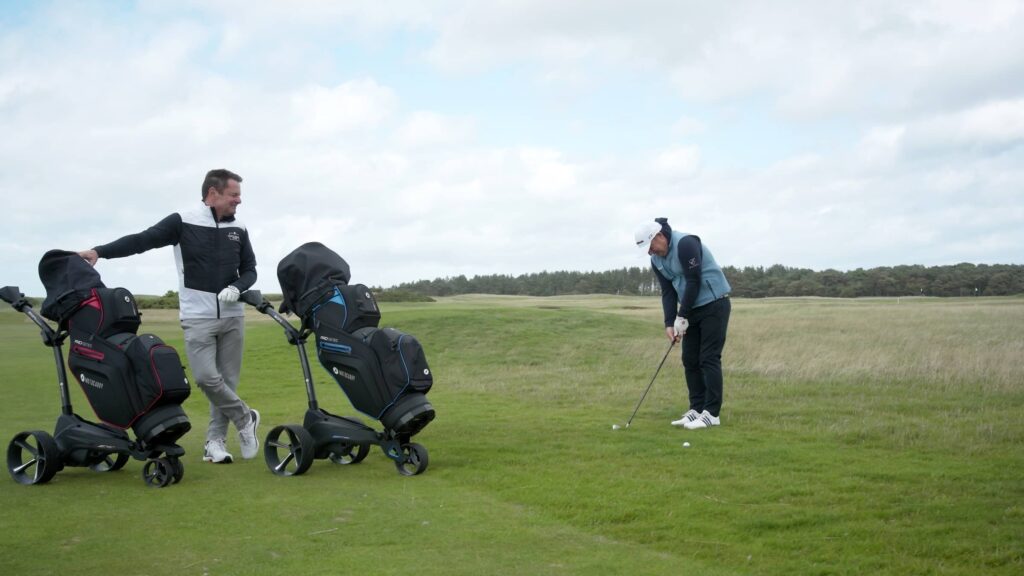
This is where the story turns from scenery to substance.
The M7 GPS REMOTE is the headline act, and it reads like a trolley built by people who have spent time around modern golfers and realised they no longer want dumb equipment. It combines remote control, GPS functionality, Bluetooth® smartphone alerts and Wi-Fi updates through a 3.5-inch LCD touchscreen. In plain English, that means it is not just hauling clubs around; it is trying to become part of a golfer’s decision-making rhythm.
The M7 REMOTE strips that idea back slightly but keeps the key attraction: responsive remote navigation with forward, left, right and reverse control, along with pause, resume and emergency stop functions. On undulating ground, or simply during a long day’s filming, that kind of ease stops being a novelty and starts becoming useful very quickly.
Both remote models also come with a rechargeable handset, a control range of more than 100 yards, inverting wheels, a retractable anti-tip rear stabilising wheel and downhill control technology designed to maintain a constant speed on slopes. That last part is not glamorous, but it matters. A trolley that behaves on a downhill lie is worth far more than one that looks clever in a showroom.
The M5 GPS remains the polished all-rounder of the bunch. It blends touchscreen GPS with Motocaddy’s CLICK ‘N’ CONNECT® cable-free Lithium battery system and a sleek, automotive-inspired design. It is the sort of trolley that aims squarely at golfers who like their kit clean, integrated and free from the faff of loose cables and clunky attachments.
Then there is the M1 DHC, one of the brand’s most popular models for good reason. It does not pretend to be an overcomplicated spaceship. Instead, it offers compact folding, nine speed settings, Adjustable Distance Control up to 45 yards, all-terrain tyres, an electronic parking brake and the same cable-free battery approach. It looks like the model for golfers who want reliability first and gadgetry second.
What those features mean on the course
The easy trap with golf technology is to mistake specification for benefit. Nobody enjoys reading a list of functions unless they can see what those functions actually do in the wild.
Remote control helps conserve energy over a round and reduces the stop-start irritation that comes with wrestling a trolley up a bank or across a long linksy walk. GPS helps keep information close at hand rather than buried in a phone or laser case. Downhill control and anti-tip stability help maintain order on the sort of uneven ground that Scottish golf seems to produce for sport.
In rough weather, these details matter even more. Filming a television series in Scotland is not likely to be a dry, gentle ramble through wildflowers. Chris Hollins made that point clearly.
“Dealing with inclement weather was a big factor during our time in Scotland, and the Motocaddy trolleys made our lives much easier, ensuring we could focus on the job at hand.
“Season Four provides a great opportunity for travelling golfers to not only discover the unmatched quality of golf in Scotland but also appreciate the benefits of walking the fairways with an electric trolley, no matter the weather conditions,” he added.
That gets to the heart of it. These trolleys are not being shown in idealised conditions. They are being used where the wind has teeth and the ground has opinions.
Strengths, trade-offs and who this suits
Motocaddy’s strength is obvious enough: breadth. There is a model here for the golfer who wants the full touchscreen, GPS and remote-controlled treatment, and another for the player who simply wants a dependable electric trolley that folds neatly and gets on with it.
The stability features, downhill control and cable-free battery system all speak to practical on-course use rather than gimmickry. The remote models, especially, push Motocaddy toward the premium end of the electric trolley market, and that is where it appears most comfortable.
The trade-off is equally clear. Not every golfer needs a fully connected, remote-controlled trolley with smartphone alerts and Wi-Fi capability. For occasional players, traditionalists or those who prefer a simpler setup, some of these features may feel like buying a Swiss army knife to peel an orange. Useful, certainly, but perhaps more than the job demands.
Against basic electric trolleys, Motocaddy offers more sophistication, stronger integration and a cleaner user experience. Against a standard push trolley, it offers the obvious benefit of reduced physical strain over 18 holes, especially on hilly courses or in difficult conditions.
As for who it suits best, the answer is golfers who walk regularly, play through the seasons and want to preserve energy for the swing rather than spend it dragging clubs around the countryside. Mid-handicappers, seniors, frequent club golfers and travelling players tackling big championship layouts will all see the appeal quickly.
The bigger verdict
There is a reason Golf’s Greatest Holes has found a global audience, reaching an estimated 1.9 billion households in 189 countries through 50 broadcasters and leading airlines. It sells golf as aspiration, beauty and adventure. Motocaddy’s clever move is to place its products right in the middle of that picture.
And the truth is, the brand does not look out of place there.
In Scotland, where golf can still feel gloriously raw and slightly unreasonable, equipment either earns respect or it does not. Motocaddy appears to understand that. Its trolleys are not being asked to decorate the broadcast. They are being asked to perform in real conditions, on famous ground, under the gaze of golfers who know the difference between useful and unnecessary.
That is why this partnership works. It gives Motocaddy visibility, certainly, but it also gives the brand something more valuable: context.
On the most storied fairways in the game, with weather blowing sideways and cameras rolling, Motocaddy does not merely look like part of the show. It looks like it belongs there.