 Andy Devaney
The PING G Le4 arrives with a simple but increasingly important message: women golfers deserve equipment designed for how they actually swing, not a hand-me-down men’s club painted a different colour and sent out wearing a polite smile.
This is a full-family release with driver, fairway woods, hybrids, irons and putters, and it has been built around lighter overall weight, smarter gapping and genuine forgiveness for swing speeds of 80mph or less.
That may sound clinical, but on the course it translates into something rather more attractive: easier launch, tighter dispersion, more usable distance and clubs that do not feel like they are asking too much of the player.
PING, to its credit, has not treated this as a cosmetic exercise. The company has gone after a real problem in women’s golf equipment, namely the gap between what is sold and what is actually playable.
The PING G Le4 looks premium, certainly, but more importantly it appears to have been thought through from top to bottom with the sort of engineering discipline that lowers scores rather than merely raising eyebrows.
“Our commitment to women’s golf started in the 1970s with my grandparents, Karsten and Louise Solheim, and continues today with the Solheim Cup and other game-growing initiatives,” said PING Executive Vice President Stacey Pauwels, who oversees the development of PING products made exclusively for women.
“The G Le4 family offers a full set of performance-engineered, custom-built clubs that deliver added distance, unmatched forgiveness and a confidence-inspiring look. With the rapid expansion of the women’s game, including unprecedented popularity with a new generation of golfers, we look forward to helping them lower their scores and have more fun on the course.”
First impressions: premium without becoming precious
The first thing to say about the PING G Le4 is that it does not look apologetic. Too much women’s equipment in the wider market has historically leaned either into shrink-it-and-pink-it laziness or into such bland neutrality that it feels designed by committee. PING has found a cleaner line here.
The Galactic Lilac and Milky Way Midnight palette, with gold accents in the woods and irons, gives the range a distinct identity without tipping into novelty. It looks polished, modern and properly premium. In other words, it looks like golf equipment rather than a marketing brainstorm.
That matters. Confidence at address is not marketing fluff; it is part of performance. Clubs that sit well, frame the ball properly and look as though they belong in a serious golfer’s bag tend to invite better swings. The PING G Le4 seems well aware of that.
What PING has actually done well: fit and gapping
The sharpest thinking in this launch may not be the driver or even the putters. It is the emphasis on proper set composition.
PING’s engineers made gapping a central priority, and that is the sort of detail that often gets missed in big product launches. Many golfers do not struggle because they lack one miracle club.
They struggle because the set as a whole makes little sense. One club goes nowhere, the next flies too far, and suddenly half the bag feels like guesswork in a visor.
To address that, PING has launched the WebFit Ladies app to steer golfers towards more sensible combinations of fairway woods, hybrids and irons before they go into a fitting.
“With multiple fairway woods, hybrids and irons optimized to the target swing speed, we’re confident when custom-fit to the correct set configuration, women will see tremendous benefits from every club in their bag,” Pauwels said.
“The WebFit Ladies app is a great starting point for the fitting process before visiting an authorized PING fitting specialist to determine your ideal set make-up and specifications. The app takes only a few minutes and helps educate golfers on the importance of custom fitting.”
That is a sensible piece of ecosystem building. It also tells you what the PING G Le4 is really about: not one hero club, but a joined-up set designed to help golfers hit more reliable yardages throughout the bag.
Driver review: lighter, faster, more forgiving
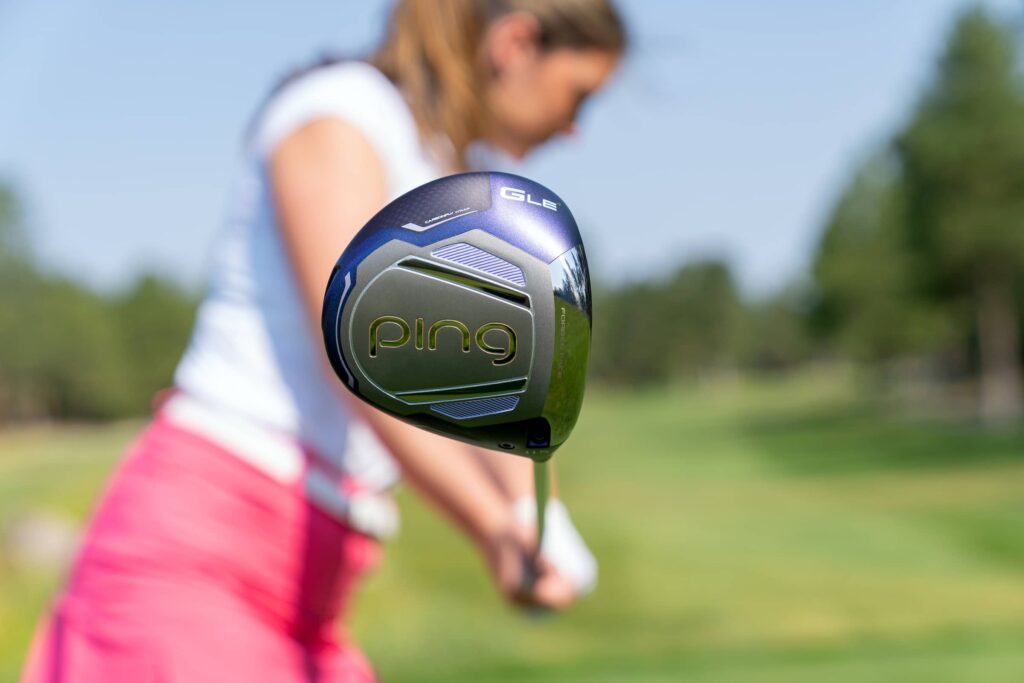
The headline act in the PING G Le4 metalwoods is the driver, which PING says is its longest and most forgiving women’s driver to date. The key engineering move is the addition of a Carbonfly Wrap crown, a first for a PING women’s driver, which frees weight and allows the centre of gravity to sit lower and deeper.
In practical terms, that should help players in the target swing-speed bracket launch the ball higher, keep speed up across more of the face and hold dispersion together when contact is not perfect — which, being golf, is often.
There is also a fixed 22g heel-side backweight contributing to a 15 per cent higher MOI than the previous generation. Again, the real-world translation is simple enough: more stability, especially on off-centre strikes, and more assistance in keeping the ball in play.
This is where the PING G Le4 makes most sense. It is not chasing tour-level workability or low-spin bravado. It is trying to help golfers hit drives that launch easily, stay online and carry with consistency. For a great many players, that is far more valuable.
The 11.5-degree loft is adjustable by plus or minus 1.5 degrees and can go up to 3 degrees flatter, giving fitters decent room to tune flight. Add in the aerodynamic shaping and forged face design, and the driver looks like a very coherent package for moderate-speed players who need launch and forgiveness first.
Fairway woods and hybrids: where this range may really shine
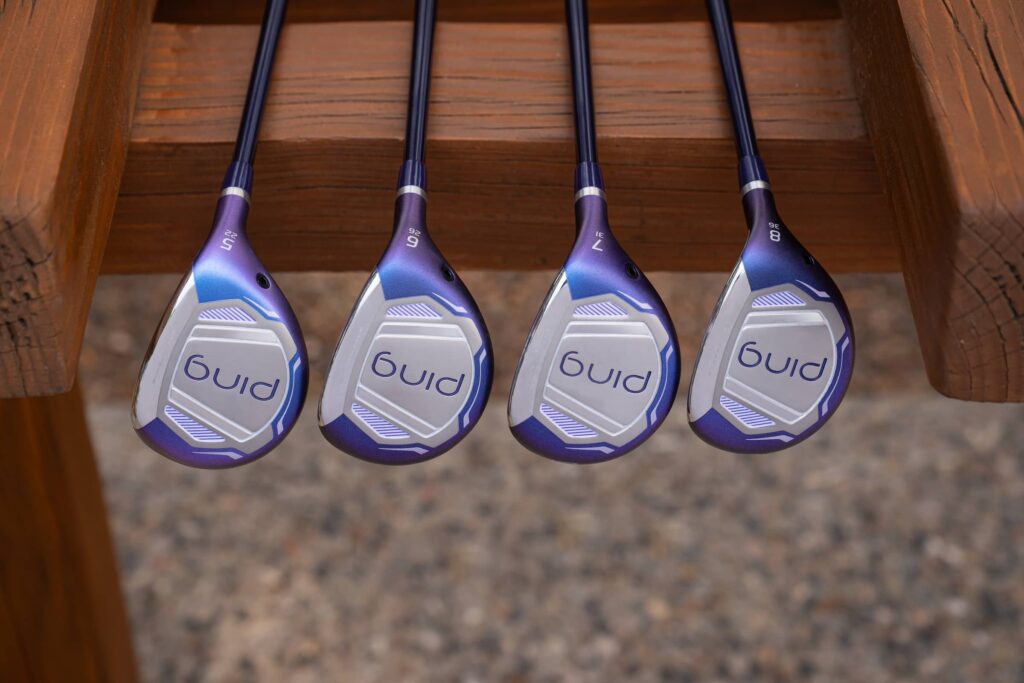
If the driver is the headline, the fairway woods and hybrids may be where the PING G Le4 earns its living.
PING has added higher-lofted fairway options in the 5, 7 and 9 woods, which should immediately improve playability for golfers who struggle to get lower-lofted woods airborne. There is intelligence in that decision. Too many recreational players carry clubs they admire more than they can actually use.
The Carbonfly Wrap crown appears again, shifting weight to improve launch, while the maraging-steel face and Face Wrap design in the 3- and 5-woods are there to preserve speed and flex.
Spinsistency, with its variable roll radius, is especially useful on low-face strikes, which are common in fairway woods. That should help maintain more predictable spin and ball speed when impact wanders south.
The hybrids follow a similar philosophy, with lofts from 22 to 36 degrees and the welcome inclusion of an 8-hybrid. That addition matters. It gives players another practical solution between traditional long irons and higher-lofted irons, and it supports the entire gapping story of the range.
At address, the shorter hosel and deeper profile are meant to inspire confidence, and that is precisely what hybrids are supposed to do: look friendly enough that you make a swing at them rather than filing an insurance claim.
For golfers needing launch, carry and better distance control through the middle of the bag, this could be the strongest part of the entire PING G Le4 line.
Irons review: easy launch without losing structure
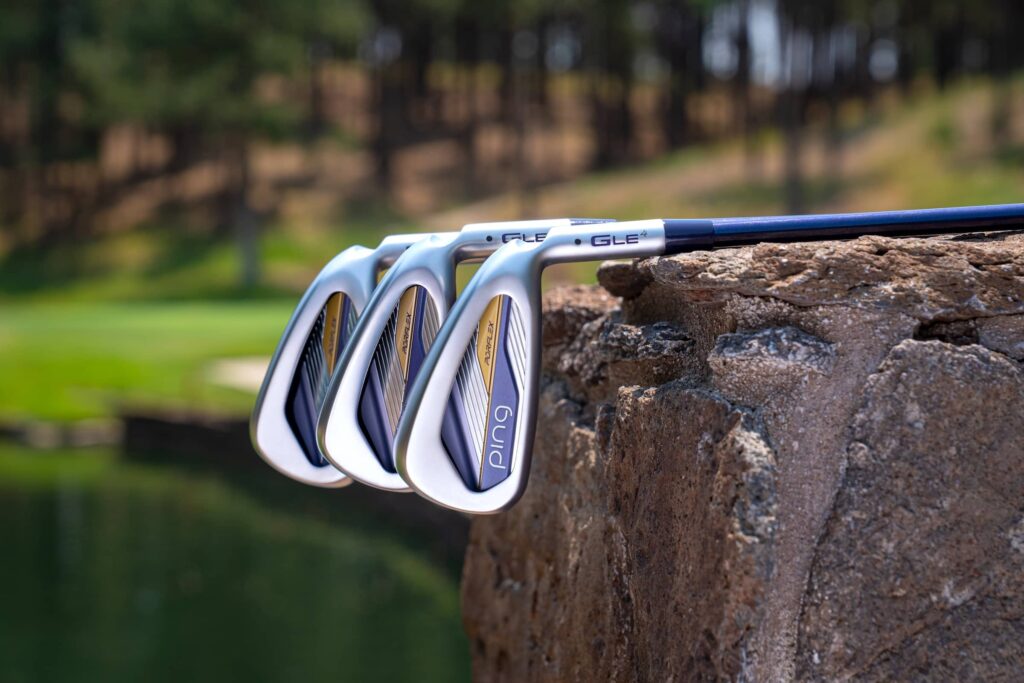
The iron design in the PING G Le4 is notably pragmatic. Rather than forcing a one-size-fits-all setup, PING has again leaned into the iron-hybrid combo concept, which is wise. Golf bags should not be ideological documents.
The stainless-steel irons use a thin face with high-density tip and toe weights to keep mass low and around the perimeter. That points squarely towards forgiveness and launch assistance. In plain English, the club is trying to help preserve ball speed and stability when the strike is not perfect, which is rather helpful unless you happen to be hitting every iron from the middle like a metronome in spikes.
The lighter overall build should also help golfers return the club to the ball more consistently. That sounds modest, but it is one of the most underrated benefits of properly engineered lightweight irons. If a club feels manageable, golfers tend to swing more freely and more often find the middle.
The PurFlex cavity badge is designed to support face flexing while improving feel and sound. That last point matters because game-improvement irons can sometimes feel efficient in the way a microwave is efficient. Useful, yes, but not always charming. PING appears to have paid attention to that sensory side.
The wedge setup is also thoughtful. Fully machined grooves in the pitching and U wedges add control, while the 56-degree sand wedge uses a slimmer hosel, wide sole and traditional head shape to improve bunker performance. That is practical design, not brochure padding.
Putters: three shapes, three stroke types, no nonsense
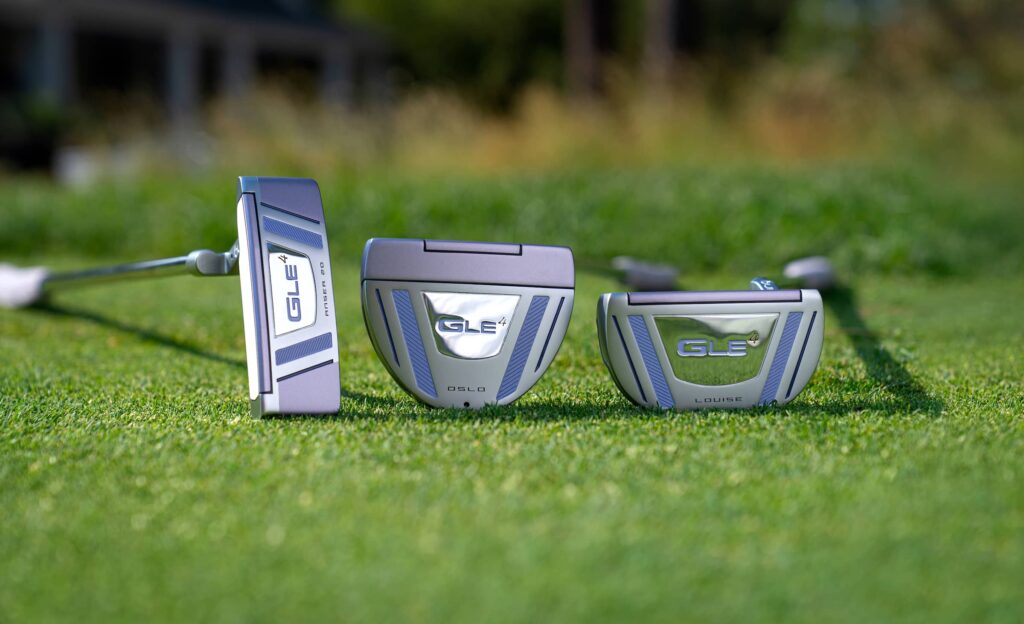
PING’s reputation in putters gives this section some natural credibility, and the PING G Le4 putter lineup looks sensibly structured.
The Anser 2D is a slightly deeper blade with mid-mallet forgiveness for golfers with a slight arc. The Louise, named after PING co-founder Louise Solheim, is a mid-mallet suited to a strong arc. The Oslo is the highest-MOI mallet of the trio, built for straighter strokes.
That is how a putter family should be presented: by stroke type and visual preference, not by hopeful mysticism.
All three use a one-piece PEBAX elastomer insert for a softer but responsive feel, which should help on distance control. The alignment cues also appear to be matched properly to each model, from the cleaner single line of the Anser 2D to the more prominent guidance of the Oslo.
There is no need to overcomplicate it. The PING G Le4 putters offer enough variation to cover the main stroke categories, with high-MOI stability and softer feel as the common thread.
How it compares in the market
What separates the PING G Le4 from a good deal of competing women’s equipment is not merely that it is light. Plenty of brands can make a club light. The more important distinction is that PING has built a coherent system around swing-speed optimisation, club-to-club gapping and custom fitting.
That gives it more substance than ranges that rely heavily on cosmetic differentiation or broad “easy to hit” promises without properly addressing set makeup. The inclusion of an 8-hybrid, multiple higher-lofted fairway options and a dedicated fitting pathway gives the range a sense of completeness that many rivals in this category struggle to match.
Where some competitors focus on one or two hero clubs, the PING G Le4 feels more like a properly connected family. That is a meaningful advantage for golfers buying several clubs at once, or building a full set with long-term progression in mind.
Strengths and weaknesses
Strengths
The biggest strength of the PING G Le4 is clarity of purpose. Everything here points towards lighter weight, higher launch, forgiveness and more logical set composition.
The driver looks especially strong for swing speeds of 80mph or less, the fairway woods and hybrids should be genuinely playable, and the iron-hybrid combo philosophy is smart rather than rigid. The putter range is also neatly segmented by stroke type.
Custom fitting sits at the heart of the range, which adds credibility. So does the fact that PING has addressed real scoring issues such as distance gapping and forgiveness rather than merely adding cosmetic sparkle.
Weaknesses
The main limitation is also built into the design brief: the PING G Le4 is purpose-built for a defined player profile. Stronger, faster swingers or golfers who prefer heavier builds and flatter trajectories may find it a touch too specialised.
The premium pricing will also make this a considered purchase rather than an impulse buy, with the driver at £550, fairway woods at £315, hybrids at £270 individually, irons at £170 each and putters ranging from £250 to £325.
And while the styling is elegant, golfers who prefer a more understated or traditional colour palette may not be sold on Galactic Lilac, however well executed it is.
Who is the PING G Le4 best for?
The PING G Le4 is best suited to women golfers with moderate or slower swing speeds, especially those seeking easier launch, more forgiveness and better consistency throughout the bag.
It should appeal strongly to mid- and higher-handicap players, newer golfers investing in a serious setup, and improving players who have outgrown beginner sets but still need meaningful help with launch, stability and gapping.
It is also a particularly strong fit for golfers who value proper custom fitting rather than buying clubs off the rack and hoping for divine intervention.
Verdict: thoughtful, playable and built for real golf
The clever thing about the PING G Le4 is that it does not try to impress by shouting. It impresses by solving problems.
It addresses the reality of how many women actually play the game: the need for lighter weight without flimsiness, forgiveness without clumsiness, and enough launch support to make the long end of the bag useful rather than decorative. It also understands that scoring is often decided not by one miracle club, but by whether the whole set behaves sensibly from driver to putter.
This is not equipment built to flatter a marketing department. It is equipment built to help golfers play better.
And in an industry that occasionally confuses style with substance, that feels rather refreshing.