 Andy Devaney
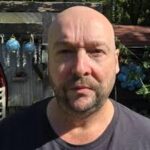
The Ryder Cup is still some distance down the road, but Luke Donald has already reached for a man he trusts as much as a player trusts a one-yard putt in a gale. Edoardo Molinari has been named the first Vice Captain for Europe’s 2027 campaign at Adare Manor, a decision that says plenty about how Donald intends to go about business: calmly, methodically and with both eyes fixed on the smallest margins.
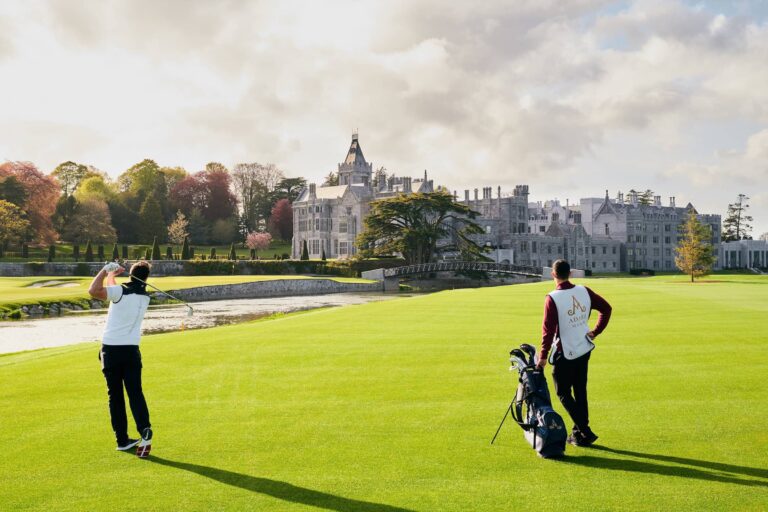
From September 13-19, 2027, Adare Manor in Limerick will host the 100th anniversary edition of golf’s most combustible team event. Before the first cheer rattles the trees or the first American fist pump lands like a hammer, Europe has made one thing clear. This Ryder Cup build will not be left to instinct alone.
A trusted lieutenant for a familiar fight
Molinari returns to the role for a third straight Ryder Cup, having already served in the European victories at Marco Simone in 2023 and Bethpage last year. In a sport increasingly shaped by data, preparation and psychology, he has become one of Donald’s most useful men behind the curtain.
This is not a ceremonial appointment. Molinari’s role stretches well beyond carrying a radio and looking wise in a team cap. He brings statistical support, course analysis and the sort of measured thinking that becomes priceless when the atmosphere gets thick enough to butter.
Molinari said: “It was a very easy decision when Luke called me and asked me if I was willing to help him again. I was obviously very happy. I think any time you can get involved in the Ryder Cup, in any role, it’s a great thing and I cannot wait for Adare Manor to come soon enough.
“Luke is an unbelievable captain. He’s very well-liked by all the players. The great thing about him is that he leads by example. He really puts a lot of effort and thoughts into this process, into the Ryder Cup. He’s trying to make all the players very comfortable when they’re in the team. And at the same time, he’s very motivated to win.
“He will really try any new avenues, new ideas, and see what works. He is incredibly hardworking. And then the players really follow him because they see how motivated he is.
“I thought 2023 in Rome was great, but 2025 was another level. Europe hadn’t won away in a long time. Winning in New York against those crowds was something everyone thought was always impossible when we started working for it. To be able to pull it off, was a dream come true, and at the end of the week it was incredible. It was something that we will never forget.
“It’s going to be incredible to play in front of the Irish crowd next year. Every time we play in an Irish Open or anything really in Ireland, they’re always very passionate, very loud. They’re also very respectful of the players, which I think is going to be a great thing for this Ryder Cup coming after New York. But obviously being the home team, they will be supporting us very strongly, very loud. It’s going to be amazing for all the players and everyone involved to be playing in front of them.”
That tells you plenty. Molinari values the atmosphere, the loyalty and the emotion of the Ryder Cup, but he also clearly relishes the planning. That blend matters. This event is half strategy meeting, half street fight.
Why Molinari matters to Team Europe
Donald is not simply appointing a former player with a decent memory and a good blazer. He is bringing back one of the backroom architects of Europe’s recent success. Molinari’s analysis model has helped Donald make sense of qualification, form, course fit and the shifting terrain of modern elite golf.
That matters more now than ever. The game is split across tours, schedules are crowded, and assessing players goes far beyond glancing at a leaderboard over breakfast. The captain needs someone who can find the patterns others miss. Molinari has become that man.
European Ryder Cup Captain Luke Donald said: “Edoardo has been a rock of support to me. He has made such a difference to our team. He is invaluable from a statistical analysis perspective, in terms of helping me with the qualification system, navigating the ever-changing world of golf.
“He is a very steady head. I always know where I stand with him and he gives me great advice.
“For me, my Vice Captain appointments are important, so to have his expertise again is key. He is a major factor in our backroom team.
“He works closely with a number of players. He is a numbers guy and he is always looking at how to gain those edges, through statistics, through looking at the golf course and how you can set it up to give yourself just a little bit of an edge, which you have a little bit more control over as a home team.
“I’m excited to work with him again. He is so committed, so dedicated and he loves what the Ryder Cup represents. It’s an honour to having him by my side once again.”
There it is in plain sight: edge. That is the word that lives in every serious Ryder Cup room. Not miracles. Not slogans. Edges. A pin position here, a pairing there, a course setup that turns a small preference into a large problem for the other lot.
From Marco Simone to Bethpage
Molinari’s record in the role already gives the appointment weight. He was part of the European team that beat the United States 16 ½ – 11 ½ at Marco Simone Golf and Country Club, then returned for the 15-13 win at Bethpage last September.
The Bethpage victory, in particular, hangs in the air. Winning away from home in a Ryder Cup is no small thing. Winning in New York, with that volume and hostility turned up to airport-runway levels, gave Europe more than a trophy. It gave Donald’s leadership group proof that its methods travel.
That matters now because Adare Manor is a home Ryder Cup, and home advantage in this contest is worth its weight in antique claret. The captain and his vice captains can shape the environment, manage the rhythm of the week and feed off a crowd that will not need much encouragement to get noisy.
Adare Manor and the Irish roar
Adare Manor will not merely stage the event. It will give it a personality. Irish galleries have a gift for being loud without becoming tedious, passionate without becoming boorish. They bring theatre, but rarely nonsense, and in a Ryder Cup that balance is gold dust.
For Europe, that atmosphere could be a force multiplier. Donald knows it. Molinari knows it. The players certainly will.
This is why the appointment feels so sensible. The 2027 Ryder Cup will not be built on sentiment alone, even with the Irish crowd likely to lift the roof off the county. Europe is preparing for a week that will demand emotion in public and precision in private.
The player who became a strategist
Molinari is hardly a figure who drifted into this by accident. He played in the 2010 Ryder Cup in Wales alongside his brother Francesco, becoming part of the first set of brothers to face the United States since Bernard and Geoffrey Hunt in 1963. He halved his fourballs match against Stewart Cink and Matt Kuchar, then claimed another valuable half point in singles against Rickie Fowler as Europe edged home 14½-13½.
His broader career holds substance too: three DP World Tour wins, Challenge Tour Number One in 2009, a place on the DP World Tour’s Tournament Committee, the 2005 US Amateur Championship and, with Francesco, the World Cup of Golf for Italy in 2009.
That resume explains why players listen. He has seen the Ryder Cup from inside the ropes and now studies it from behind the glass, where modern team events are increasingly won and lost.
Europe’s Ryder Cup plan is already under way
The wise old line about the Ryder Cup is that it begins long before anyone hits the opening tee shot. Donald’s first Vice Captain appointment proves exactly that. Europe is not waiting for 2027 to arrive with a trumpet blast and a camera crew. It is already laying the track.
In Molinari, Donald has chosen continuity, intelligence and a man who appears more interested in finding solutions than headlines. For a captain building toward Adare Manor, that is about as useful as finding a straight driver on a windy links.
The Ryder Cup has always loved its roars, its colour and its chest-thumping drama.
But beneath all that noise, the best teams are often built by the quiet operators. Europe has just put one of its most important back in place.