Staff Writer
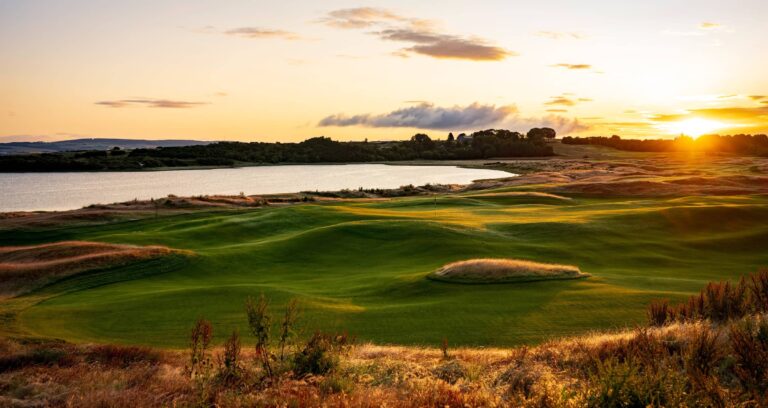
Shura Links has opened in the heart of the Red Sea with the quiet confidence of a golf course that knows it is not merely selling tee times, but making a larger point about where the game is heading.
This is championship golf with a conscience: part luxury escape, part environmental experiment, and part warning shot to every course still watering itself like it has never heard of a drought.
Set within Red Sea Global’s off-grid destination, Shura Links is being positioned as a new model for sustainable golf infrastructure, where elite playing conditions and ecological responsibility are not treated as awkward dinner guests forced to sit beside each other.
Here, solar farms, battery storage, desalinated water, real-time agronomy data and marine-safe turf management are not decorative talking points. They are the machinery behind the experience.
A Golf Course Built For A Sensitive Landscape
The Red Sea is not a casual backdrop. It is one of the world’s most delicate marine environments, with coral reefs, coastal ecosystems and desert light that can make even a poorly struck 7-iron look briefly poetic.
Building a championship course here was never going to be a simple case of carving fairways into sand and hoping nature would forgive the intrusion. Shura Links has had to answer a more serious question: can a world-class golf destination exist in a sensitive environment without behaving like a guest who arrives at a dinner party and starts rearranging the furniture?
The answer, according to the team behind the project, lies in precision. Not the vague kind of precision golfers talk about after missing a green by 30 yards, but proper, measurable, sensor-led control over how the course is maintained.
Precision Agronomy Beneath The Playing Surface
At the heart of Shura Links is a turf management system that sounds less like traditional greenkeeping and more like something borrowed from a Formula 1 garage.
The course uses the POGO turf system, a GPS-guided sensor network that maps soil moisture, salinity and canopy temperature in real time. In plain English, it tells the agronomy team exactly what the turf needs, where it needs it, and when.
That matters because the difference between firm, fast, tour-quality surfaces and wasteful overmaintenance can be razor thin. Shura Links is using data to keep that line sharp.
Rather than flooding areas on instinct or applying resources by routine, the course can direct care with far greater accuracy. The result is a playing surface designed to stay firm, consistent and responsive while using solar-desalinated water with discipline.
Golfers may not notice the technology underfoot, which is precisely the point. If the system works, what they feel is turf that plays properly, balls that release as intended, and greens that behave less like damp carpet and more like a championship surface.
Protecting The Red Sea From Runoff
The environmental challenge does not stop at water use. In a coastal setting, nutrition and runoff are every bit as important.
To help protect the Red Sea’s coral reefs, Shura Links has adopted a bio-organic nutrition model built around seaweed-based foliar feeding. Instead of relying heavily on traditional inputs that risk washing through the soil, nutrients are delivered directly to the leaf blade.
It is a more targeted approach, and one that fits the broader philosophy of the course: intervene only where needed, measure everything, and do not treat the surrounding environment as an afterthought.
The use of Platinum TE Paspalum is equally significant. This turf variety is known for its resilience in coastal environments, particularly where salinity and heat can make other grasses behave like they have been asked to perform Swan Lake in hiking boots.
For a Red Sea golf course, that matters. Less stress on the turf should mean less demand on water and fewer heavy-handed maintenance interventions.
A Championship Course With A Different Brief
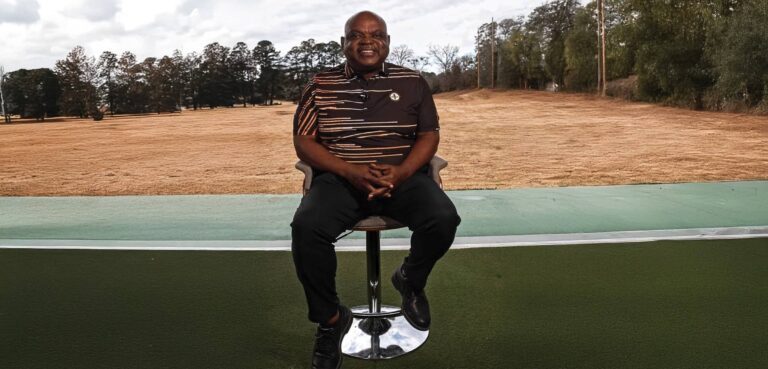
“Shura Links is proving that elite sport and environmental responsibility are no longer competing against ambitions; they are now inseparable,” said Jon Brook, Shura Links General Manager. “Operating within one of the world’s most sensitive environments demanded a fundamentally different approach to how we maintain a championship course, and on Shura Island, we believe we’ve delivered exactly that.”
That quote gets to the heart of the project. Shura Links is not simply another luxury golf course in a dramatic location. The ambition is to show that destination golf can be re-engineered for a world where water, energy and land use are no longer peripheral concerns.
The best modern golf architecture increasingly has to be judged by more than postcard value. Routing, turf selection, drainage, energy use, maintenance philosophy and environmental compatibility all matter. Shura Links is entering that conversation with serious intent.
Stay And Play In Red Sea Style
Of course, sustainability alone will not carry a golf holiday. Nobody books a long-haul escape purely because the irrigation strategy is clever, unless they are either an agronomist or someone who alphabetises their spice rack.
Shura Links is also leaning into the luxury travel market, with “Stay and Play” bundles now available. These pair golf with stays at The Intercontinental or Six Senses, both now live on Shura Island.
That makes the proposition clear: play championship golf by day, retreat into high-end hospitality by evening, and let the Red Sea do the rest.
This is where the destination has obvious global appeal. The atmosphere is not the damp, wind-chewed romance of Scotland or Ireland, nor the manicured resort polish of Dubai. Shura Island offers something different: desert warmth, sea light, coral-blue horizons and the feeling of a golf course placed at the edge of somewhere still relatively untouched.
How Shura Links Compares With Elite Golf Destinations
The natural comparison is with other premium golf travel destinations that combine serious course design with serious hospitality. Think Cape Kidnappers in New Zealand, Costa Navarino in Greece, Yas Links in Abu Dhabi, or the great coastal resorts that understand golf is at its best when the landscape does half the talking.
But Shura Links has a sharper sustainability angle than many of its peers. Its off-grid infrastructure, renewable energy alignment and precision agronomy give it a point of difference that goes beyond luxury.
The modern golf traveller increasingly wants more than a good room, a decent breakfast and a course that photographs well. They want an experience with identity. Shura Links appears to have one.
The Future Of Golf May Look Like This
“Precision agronomy, real-time data, and off-grid infrastructure aren’t future concepts anymore,” added Brook. “They’re essential tools for building golf courses that can exist responsibly in tomorrow’s environments.”
That may be the most important line in the whole story. Golf has long wrestled with its environmental reputation, particularly in regions where water is precious and landscapes are fragile. Courses like Shura Links will not end that debate, but they do move it forward.
The sport’s future will not be secured by pretending maintenance demands do not exist. It will be shaped by smarter design, better data, resilient turf, cleaner energy and a more honest relationship with the land.
Shura Links has opened to the public with all the polish expected of a luxury Red Sea destination, but its greater achievement may be less visible. Beneath the fairways and behind the hospitality is a course trying to prove that championship golf can be both indulgent and intelligent.
And that, in a game famous for losing balls, tempers and occasionally perspective, feels like a rather useful place to start.
For booking and inquiries, please visit the Shura Links website.