
 Andy Devaney
The Singapore Open returns this week with the sort of pedigree that does not need polishing and the sort of stakes that certainly do. Back for its 57th edition at Sentosa Golf Club from 23–26 April, Singapore’s national championship arrives carrying history on one shoulder and modern opportunity on the other.
This is not merely a handsome week in the sunshine with polished shoes and sponsor boards. The tournament is the second stop on the 2026 International Series calendar, which means there is a genuine route onward through the season-long Rankings race and into the LIV Golf League. It also offers two places in The 154th Open at Royal Birkdale through The Open Qualifying Series, which sharpens the whole thing nicely.
That gives the Singapore Open a pleasing double edge. It remains a proud national championship, but it also now functions as a launchpad. In professional golf, that is rather like being both a cathedral and an airport.
A national Open with proper weight
First staged in 1961, the Singapore Open has been around long enough to earn the word “storied” without sounding needy about it. In a region where tournaments have come and gone with the reliability of summer rain, this one has endured.
Its honour roll has some proper clout, too. Adam Scott won it three times. Sergio Garcia, never shy of a big-stage appearance, claimed the title in 2018. More recently, Yosuke Asaji used victory here in 2025 as a springboard up the Rankings and into a full-time LIV Golf League berth this season.
That matters because it tells players, fans and officials alike that the Singapore Open is no ceremonial relic. It still moves careers forward.
For local players, meanwhile, the week offers something no overseas trip can quite replicate: a chance to measure themselves against elite opposition at home, in front of familiar faces, on a course that asks direct questions in a loud voice.
“As our local golfers, this is a chance for them to create an impact at home, where they get to benchmark themselves and compete against some of the world’s best professionals,” said Joshua Ho, Chief Executive Officer, Singapore Golf Association.
Sentosa is no backdrop
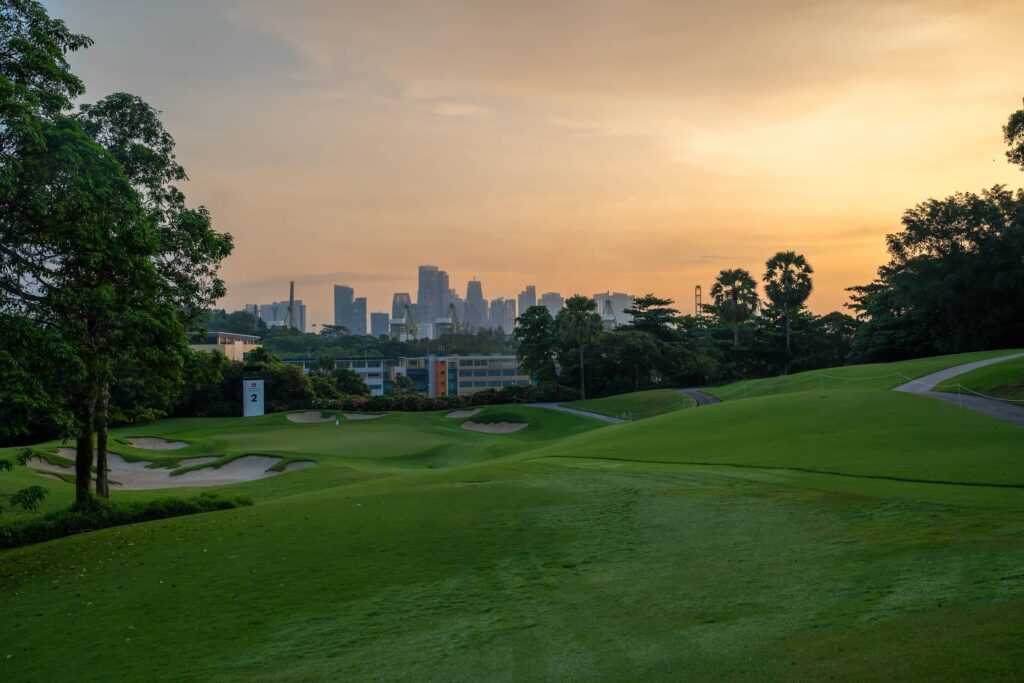
A good venue can elevate an event. A demanding one can expose it. Sentosa Golf Club, and specifically The Serapong, tends to do the latter in the best possible way.
This is the Singapore Open’s first return to the venue since 2022, and it feels appropriate. Sentosa is one of Asia’s standout golfing addresses, a course with enough bite to trouble the best players while still looking immaculate enough to appear almost rude about it.
“Having the Singapore Open at Sentosa Golf Club is significant, given its reputation as one of Asia’s premier golf venues. The Serapong is a championship course that consistently challenges the best players while showcasing Singapore on a global stage.”
That is the central appeal of The Serapong. It does not merely host tournament golf; it tests it. The layout has long been known for demanding precision, nerve and patience, which is another way of saying it can make even top-class professionals look mildly irritated by Thursday lunchtime.
The International Series effect
The Singapore Open is only in its second year on The International Series schedule, but the partnership has already changed the shape of the week. Bigger names, broader relevance and higher consequences tend to follow when a tournament is plugged into something larger than itself.
“Being part of The International Series has further elevated the tournament’s profile and attracted a stronger international field and increasing its global relevance,” Ho said.
That broader relevance is not just a matter of optics. Golf now thrives on ecosystems: tours that feed bigger tours, tournaments that provide exemptions, and ranking systems that turn one good week into a career shift. The Singapore Open now sits in that current rather than on the riverbank watching it go by.
For players in the field, the equation is brutally simple. Play well here and the week can lead somewhere important. Play badly and the tropical scenery becomes less charming by the hour.
More than a leaderboard
One of the more interesting things about the Singapore Open is that its ambitions stretch beyond prize money, television windows and who is holding the trophy on Sunday evening.
“Beyond the competition, the Singapore Open plays an important role in showcasing Singapore as a key golf and sporting destination in the region. It brings together international players, partners and fans, while also increasing the visibility and popularity of the sport locally. Events of this stature help position Singapore firmly on the global golfing calendar,” he said.
That is the wider value of a national Open done properly. It does not just crown a winner. It tells the outside world something about the host nation’s sporting confidence, infrastructure and intent.
In Singapore’s case, the message is clear enough. This is a country that understands staging, precision and presentation, and now wants its golf footprint to match its broader sporting ambition.
Home hopes and the long view
Every national championship ought to mean something to the next generation. Otherwise it becomes a pageant for the already established, which is pleasant enough but not especially useful.
Ho was clear that the ambition here is longer term.
“Over time, we hope it continues to be a stage where Singaporean players can shine and create moments that spark belief among young golfers watching. Ultimately, its legacy should be one of inspiration, aspiration and sustained growth for the game of golf in Singapore,” he said.
That may be the most important line of all. The Singapore Open can deliver a champion on Sunday, but its deeper purpose is to leave something behind on Monday: belief, visibility and a reason for young players to think the game belongs to them too.
And that, in the end, is why this week matters. The Singapore Open is back at Sentosa with history in its pocket, modern incentives on the table and a national golfing future somewhere in the gallery ropes, watching closely.