 Andy Devaney
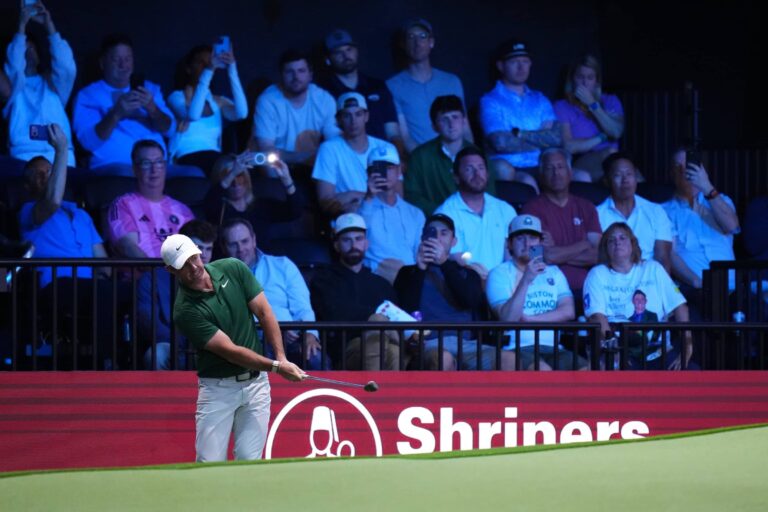
TGL is built to feel like golf dragged into a floodlit arena, told to move faster, and judged without mercy by a scoreboard that doesn’t care how pretty your swing looked.
On Sunday, March 1 at 9:00 p.m. ET (ESPN/ESPN App), Boston Common Golf (BOS) faces Jupiter Links Golf Club (JUP) in Season 2, Match 13, with the SoFi Cup picture tightening and the margins turning cruel.
This isn’t just another glossy night of launch monitors and bravado. It’s a clash between Boston’s power-and-putting profile and Jupiter’s maddening split personality: they hit plenty of greens, then act surprised when the hole refuses to swallow the ball.
What’s at stake in the SoFi Cup standings
The math is brisk and unforgiving:
- Win in regulation or overtime: 2 points
- Overtime loss: 1 point
- Top four teams advance to the playoffs
- Tiebreaker: Total Holes Won (regular season), then Singles Holes Won
At the top, BOS and ATL are tied on 6 points, but Boston sits No. 1 thanks to 25 Holes Won versus Atlanta’s 23. Both have clinched playoff spots, which sounds relaxing until you remember pride is still a currency in this league.
In the chase pack, LA and BAY have 4 points, with LA ahead on 21 Holes Won to BAY’s 17. Then it gets tense: NY and JUP have 2 points, and New York leads on Holes Won 16–13. Jupiter, crucially, has two matches remaining while everyone else has one. Translation: this is one of the last doors still open.
Boston’s identity: long off the tee, lethal from range
If Boston were a restaurant, it would be the kind where the starters arrive at your table already looking like they’ve won. BOS ranks No. 1 in the muscle metrics:
- Avg. Driving Distance: 326.6 yards
- Avg. Driver Ball Speed: 180.0 mph
- Avg. Driver Swing Speed: 123.6 mph
- Driving Accuracy: 75.0%
- GIR: 71.7% (No. 2)
And then there’s the bit that makes opponents feel the temperature drop: Boston leads TGL in putting from 10–30 feet (10 makes), tops medium-putt efficiency (40.0%), and also leads long-putt efficiency (30+ feet) at 16.7%. That’s the profile of a team that can lose a hole with one swing and steal it back with a putt that never looked like missing.
The only smudge is close range: Boston is 4th in short-putt efficiency (<10 feet) at 65% and 5th in scrambling (58.3%). In normal golf, that’s a minor concern. In TGL, it’s how you hand away points like party favours.
Jupiter’s identity: first in GIR, last in making it matter
Jupiter is the league’s most confusing band. Statistically, they do the hard part well:
- GIR: 73.3% (No. 1)
And then they do the easiest part like it’s a rumour they haven’t personally verified:
- Last in Avg. Driving Distance: 305.1 yards
- Driving Accuracy: 60.0% (5th)
- Last in short-putt efficiency (<10 feet): 62.5%
- Last in medium-putt efficiency (10–30 feet): 0%
- Only team with no made putt from 10–30 feet
- Last in avg. putt made on green: 4’1”
That last line is the story in one measurement. In a league where Boston is living comfortably around 9 feet average putts made, Jupiter is basically living in the “please stop leaving it short” neighbourhood.
The Singles matchups that could decide the night
TGL can flip on Singles because it isolates form, nerve, and a player’s willingness to stare down a hole with points attached to it.
Rory McIlroy (BOS) vs Akshay Bhatia (JUP)
McIlroy brings the thunder: he’s among the leaders off the tee in distance and ball speed, and he’s been producing headline drives on holes that reward a brave line. Bhatia, meanwhile, has been perfect in GIR in Singles (6/6) this season and owns a signature moment on The Last Toll with a closest-to-the-pin of 4’2”. The dynamic is tasty: Rory can overpower; Akshay can precision-puncture.
Hideki Matsuyama (BOS) vs Max Homa (JUP)
Homa has already shown he can produce length when needed (including a 346.0-yard drive that landed within a hair of a New York benchmark). Matsuyama arrives with early-season flashes and a tidy tee-to-green pattern, but his all-time Singles record (0-3-3) says he’s been stuck in the “almost” gear in this format.
Keegan Bradley (BOS) vs Tom Kim (JUP)
Bradley is the ironman of the league — the only player to appear in every regular-season match across Seasons 1 and 2 — and he also owns the single most attention-grabbing number in this preview: a 383.9-yard drive, a TGL record, set on Cut The Sails. Tom Kim, making his Season 2 debut, has previously shown he can be clinical in Singles. If this pairing gets tight late, you’ll see who enjoys the arena and who merely survives it.
The holes that will shape the script
One of TGL’s sneaky strengths is that its holes aren’t just scenery; they’re personality tests.
Cut The Sails (Hole 1, Par 4, 394 yards)
Designed by Gil Hanse, it’s already a legend factory. It offers a conservative line down the left or a bold carry that can trigger a “speed slot” and turn a drive into a proper weapon. It has produced the four longest drives of the season — and, frankly, the kind of numbers that make traditional golf courses blush. If Boston starts fast here, the arena can feel small very quickly for the visitors.
The Last Toll (Hole 7, Par 3, 217 yards)
Also a Hanse design, and it’s got bite: it owns the lowest GIR among TGL par 3s at 53.3%, with an apocalyptic bridge carry that looks designed by someone who has never forgiven golf for being polite. Bhatia’s 4’2” close call lives here; if he repeats that trick, it’s the sort of moment that changes a match’s mood.
Caverns (Hole 10, Par 5, 569 yards)
A Beau Welling creation that kicks off Singles, winding through an underground chamber with hanging formations that dictate strategy. It’s a hole built for decision-making under noise: thread the tee ball, earn the option to attack, then decide whether you fancy flirting with a stalactite for glory.
Stinger (Hole 13, Par 4, 416 yards)
This is the hole with a personality disorder: it demands low bullets and punishes anyone who forgets the brief. It leads the league in tee shots into penalty areas (5) and is essentially a dare wrapped in rock formations. If someone gets greedy, you can lose more than a hole — you can lose momentum, which in TGL is practically a currency.
The statistical tug-of-war: distance versus conversion
Zoom out, and the match reads like a simple trade:
- Boston: elite off the tee + elite from mid-to-long putting range
- Jupiter: elite GIR + struggles to convert anything outside tap-in territory
The wrinkle is that TGL doesn’t require perfection — it requires timing. If Jupiter can keep hitting greens and finally see one medium putt drop (even just one), it can steal holes, steal points, and keep its playoff hopes breathing.
Boston, though, doesn’t need charity. With 25 holes won already, and a roster that can generate both raw speed and range putting, BOS is built to turn a small edge into a landslide before the other team realises the ground has moved.
What this means moving forward
For Boston, it’s about maintaining top seeding and sharpening the blade before playoffs: keep the distance advantage, keep the 10–30 foot putting advantage, and tidy the short-putt leakage that can turn control into stress.
For Jupiter, it’s simpler and harsher: this is the season in miniature. They can be the best green-hitters in TGL and still lose if the putter keeps filing restraining orders. With two matches left, they still have a route — but routes in this league narrow fast when “holes won” becomes your tiebreaker and the clock is on ESPN.
And that’s the charm of it: TGL isn’t asking anyone to be perfect. It’s asking them to be brave, timely, and just competent enough on the greens to make all that ball-striking matter. In a pressure box this small, that’s plenty heroic.