 Andy Devaney
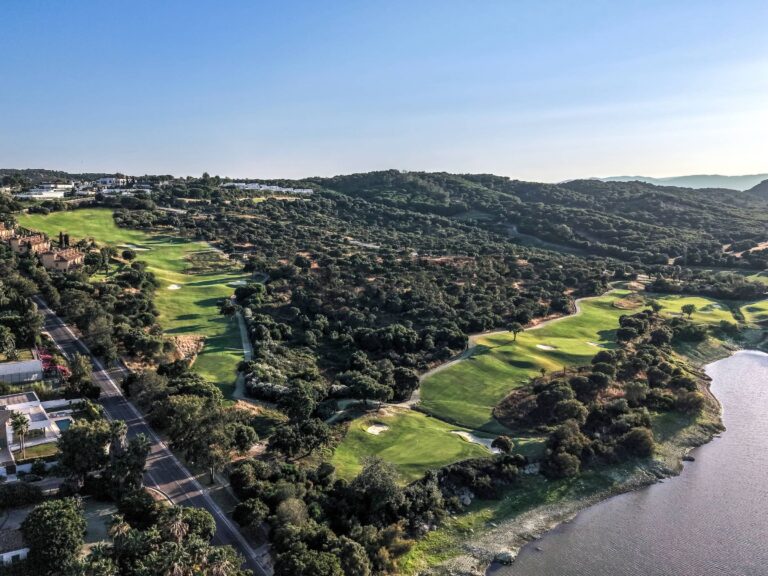
The Institute Golf Club has never exactly gone looking for attention, which is usually the surest way of getting it in golf. Hidden away in Morgan Hill, south of San Jose, this 8,069-yard California layout has long operated with the quiet self-possession of a club that does not need a neon sign, a logoed gin terrace or a man in salmon trousers explaining how exclusive it is.
A Private Club With Public Ambition
For years, privacy has been the currency at The Institute. Its membership, fewer than 50, is said to include global sporting figures and Silicon Valley leaders of industry.
In other words, the sort of people who can afford peace, quiet and the glorious absence of a starter shouting about pace of play.
But the mood is shifting. Not wildly. This is not a place that does wild. The Fry family, owners of the club and patriarchs of the wider Fry’s business portfolio, now see tournament golf as a natural next chapter for a course that has matured into something far more than a private sanctuary with exceptional turf and very little foot traffic.
“The family business dominated my life but now this is my labor of love. The Institute has matured into something quite special and it’s the moment in our journey when we want the world’s best to enjoy this amazing place,” said Randy Fry.
“We valued privacy and comfort for our members above all else and that will continue to be a guiding philosophy, but this course now merits a tournament spotlight and we are encouraged by the conversations we are having with various bodies that this dream can be a reality.”
That is a notable change in posture. The Institute Golf Club is not throwing open the gates so much as slightly raising an eyebrow at the wider game and suggesting, politely but firmly, that it may be ready for company.
Why The Institute Now Looks Like A Tournament Venue

The tournament ambition is not idle club-room chatter over a particularly assertive Chardonnay. In the next few months, the club expects to roll out an expanded proprietary membership, while discussions have already started with governing bodies about bringing tournament golf to its rolling, tree-lined layout.
The course itself was first built in the mid-1990s and has been shaped, refined and maintained with a philosophy that favours patience over noise. That matters. Great tournament venues rarely feel assembled in haste.
They need strategy, elasticity, drama and the faint sense that a player’s day could come apart at any moment if concentration wanders off to admire the view.
Here, the setting does plenty of the talking. The Morgan Hill landscape gives the course scale and theatre, with California scenery doing what California scenery tends to do: sitting there looking expensive without appearing to try.
Suzann Pettersen Gives It Serious Backing
A course can call itself special all it likes. Golf is full of clubs with marble bathrooms and the emotional range of an airport lounge. The better test is whether serious players find something in the bones of the place.
Suzann Pettersen did. The VOXA founder, two-time Major winner, former Solheim Cup player and captain recently played The Institute and came away convinced.
“I loved playing The Institute,” said the former Solheim Cup-winning player and captain. “Beautifully designed and great fun to play. It’s a very special place and my day there was an exceptional experience. There’s no question in my mind that one day it will be hosting some incredible tournaments.”
That is not a small endorsement. Pettersen knows championship pressure, routing demands and the difference between a pretty course and one that can hold up when elite players begin asking awkward questions of it.
Robert Trent Jones Jr, Little I And The Pursuit Of Refinement

The Institute is also leaning into architectural and agronomic refinement rather than assuming beauty alone will do the job. Club President Jeffrey Sanchez, who spent five years as tournament director running the Fry’s Open on the PGA Tour, is a credentialed Member of the PGA of America and a Certified Club Manager. His assessment is direct.
“It very much stands up to the litmus test of what is needed for a tournament venue. It feels ready in every sense,” Sanchez said, adding that patience, legacy and restraint had supported the vision behind the course’s management.
The club is working with Robert Trent Jones Jr. and his team to sharpen the course further, while agronomy partners Turfgrass have been involved in the ongoing development of the property.
In 2025, the club added a nine-hole par-three short course called Little I, a name that sounds modest until one remembers that modesty at places like this tends to arrive wearing handmade shoes.
“We are working with Robert Trent Jones Jr. and his team to finesse parts of the course to an even higher level, and improvements are something Trent Jones Jr. and team are constantly considering. We never sit still, everything is geared to improving the member experiences and developing The Institute as an unforgettable facility.”
Recent work has also touched the 2nd, 6th, 9th and 10th holes, reconstructed under the eye of Brad Owen and Adam Moeller, a former overseer of the USGA Championships.
Owen’s presence carries particular weight: he is a 38-year veteran of preparing the contours of Augusta National Golf Club, which is not a bad line to have on the professional calling card.
Privacy, Restraint And The Lure Of The Spotlight
The challenge for The Institute Golf Club is a delicate one. Its appeal has always rested partly on absence: absence of crowds, absence of clutter, absence of the theatrical self-congratulation that sometimes follows private golf around like a caddie with a faulty yardage book.
Tournament golf changes the oxygen. It brings cameras, infrastructure, scrutiny and players who are not there to admire the curtains. Yet the club appears to understand that staging elite golf does not require abandoning its identity. It requires protecting the atmosphere while allowing the course to be tested by the best.
“We want to protect and elevate the qualities that make The Institute special,” Sanchez added. “But we are gearing up for tournaments now and we’re excited about what the future holds.”
That is the balance to watch. If The Institute can keep its restraint while building the operational muscle required for tournament golf, it may become one of the more compelling venue stories in American golf: not a loud arrival, but a controlled emergence.
For now, the gates remain mostly closed, the membership remains tiny, and the course keeps improving in the hills south of San Jose. But somewhere behind all that privacy, The Institute Golf Club is preparing for a bigger stage. Quietly, of course. The best invitations usually are.