 Andy Devaney
If you’ve ever wondered how to make birdies without needing divine intervention, you’re not alone. Ask any weekend golfer and they’ll tell you that figuring out how to make birdies consistently feels like trying to bribe the golfing gods with promises you can’t keep. Yet few moments in the sport deliver the same jolt of pure satisfaction as seeing that little red circle land on your card.
A birdie means—regardless of how many emotional support snacks you’ve consumed during the round—at least two consecutive golf shots behaved themselves. It’s momentum, it’s validation, it’s proof your clubs aren’t cursed. But don’t get carried away. As Shot Scope’s mountain of data reminds us, the average amateur’s relationship with birdies is about as frequent as a solar eclipse.
According to their numbers, 15- and 20-handicappers produce a modest 0.36 birdies per round. That’s one birdie every 54 holes—roughly the same odds as spotting the Loch Ness Monster riding a Segway. Even 10 handicappers don’t crack one birdie a round. The 5-handicap crowd finally picks up the pace at 1.26 birdies per 18 holes.
Scratch golfers? A healthier 2.34. But even that is miles behind the PGA TOUR average of 3.72 in 2025.
And then there’s Scottie Scheffler—currently playing a different sport entirely. He “averaged 4.61 birdies per round in 2025” and “dropped a staggering 350 birdies over the course of 76 rounds on his way to six wins, including two majors.” A 15-handicapper would manage about 27 birdies over the same span. One imagines Scottie’s scorecards should be displayed in museums.
If you’re thinking, “My gosh! It would take me 1,000 ROUNDS to make as many birdies as Scottie made in tournaments in 2025!”—well, Shot Scope says it’s actually 972. Comforting? Not especially. Accurate? Painfully.
But don’t despair. This isn’t a story about what Scottie Scheffler can do; it’s about what you can do.
So… What Now?

Before we go solving the world’s golfing problems, a reminder: these are averages. You can have multi-birdie days. You can shift your scoring trendline. And you can learn how to make birdies more often without needing superhuman ball-striking.
Shot Scope’s numbers expose the root cause: greens in regulation (GIR).
Scratch players hit 55% of them.
Five handicappers: 38%.
Ten handicappers: 30%.
Fifteen and twenty? Down to 24% and 17%.
The pattern is obvious. Hit more greens, find more birdie looks. But for many recreational golfers—with jobs, families, and no appetite for practising until your hands resemble old leather—it’s unrealistic to expect TOUR-level GIR rates. So you play smarter instead of harder.
Here’s where the sensible strategy comes in—because traditional golf wisdom still holds up, and you don’t need 300-yard cannons to use it well.
Ways to Tilt the Odds in Your Favour
- Find the generous side of the fairway. Hit it there—even if it’s not heroic. Boring golf is scoring golf.
- If your driver misses both left and right, take a lesson. Get yourself to a one-way miss and suddenly you’re playing chess instead of roulette.
- Favour the angle. Leave yourself the clearest approach, away from bunkers, water, or ego traps.
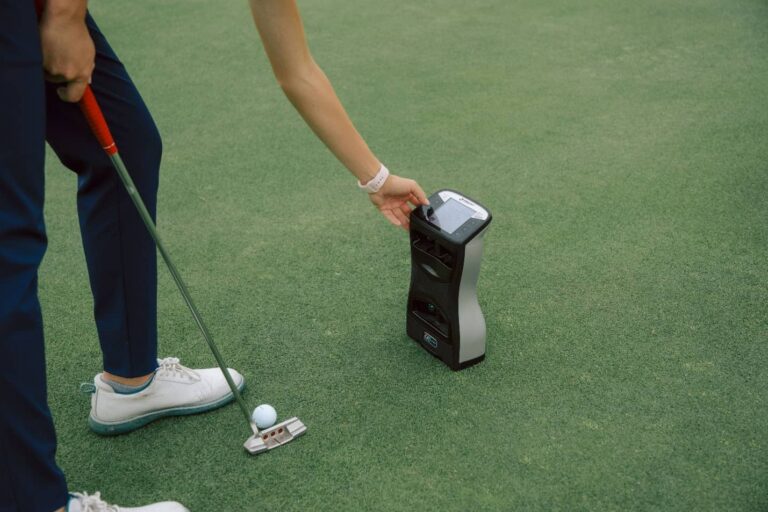
- Know your yardages. The Shot Scope G6 GPS Watch is an amazing tool to help you own this data and play to the most accepting section of the green.
- Dial in wedges from 100 yards and in. Turning three shots into two is where handicaps melt.
- Become reliable in bunkers. No magic, just a repeatable technique.
- Practice putts of every length and break. Birdies are glamorous, but par saves are the true backbone of scoring.
- Track your birdies across the season. It can motivate you—or destroy you—but both outcomes are character-building.
Alongside learning how to make birdies, another truth emerges: your handicap doesn’t improve because you suddenly become a birdie machine. It improves when you stop throwing doubles around like confetti.
Shot Scope’s data is blunt.
- Scratch players: one double roughly every four rounds.
- Five handicappers: 1.44 per round.
- Ten handicappers: nearly three per round.
- Fifteen handicappers: 4.68.
- Twenty handicappers: 6.66—yes, the devil’s own scoring pattern.
And we all know how doubles happen: slapdash drives, hero recoveries, shanked wedges, three-putts, the usual crimes. Fix those, and your scorecard will look less like a police report.
Turning 10-foot par putts into manageable three- or four-footers is a quiet superpower. Keeping the driver in play is another. A tidy short game can save you more shots than the world’s fanciest new driver. And if you’re serious about improving, get obsessive about the simple things—lag putting, bunker exits, reliable wedge distances.
Chase Birdies, but Protect Pars
And yes, all that said… the chase remains. Holing a birdie is addictive. It keeps golfers awake at night, replaying swings and imagining what could have been.
You’re not just learning how to make birdies—you’re learning how to build rounds that give them room to breathe.
So go on. Hit the fairway. Find the green. Roll one in.
Happy hunting.