 Andy Devaney
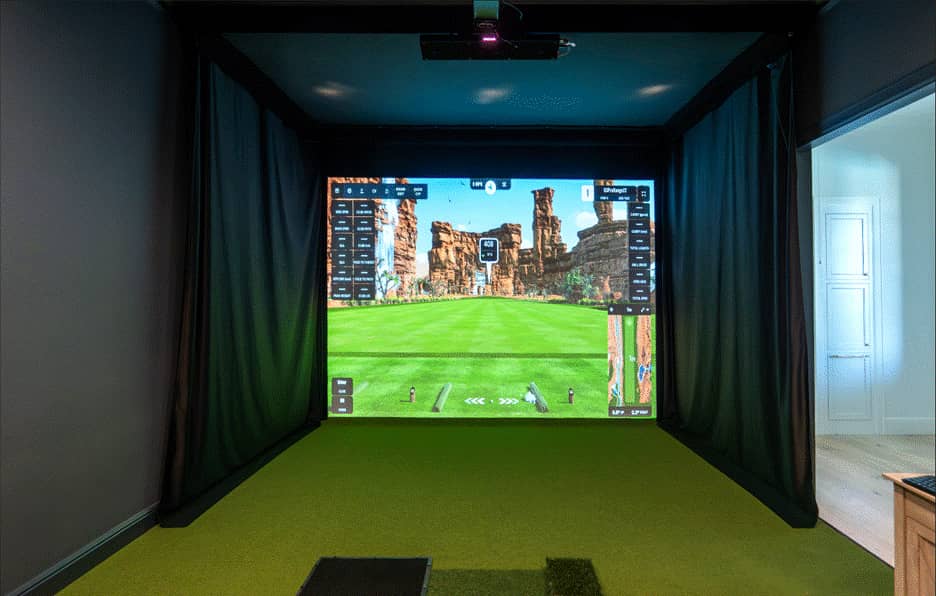
Indoor golf has become so convincing now that it no longer feels like a rainy-day substitute for the real thing. It feels like golf with a roof on it. And as more players build practice spaces at home or book time at simulator venues, the real question is no longer just which launch monitor to buy. In indoor golf, the software often decides whether you get a polished practice studio, a competitive gaming den, or something in between.
That is where the market gets interesting.
The badge on the screen may tell only half the story. Some systems control everything from hardware to gameplay in one neat, sealed ecosystem. Others lean on third-party software and a fiercely loyal user community to create a broader, stranger and often more entertaining world. None of that makes one platform universally better. It simply makes the decision far more personal.
To cut through the sales gloss and the techno-babble, the most useful lens here comes from someone who actually lives with the stuff. Jon Sherman, owner of Practical Golf, co-host of The Sweet Spot Podcast, and a man who installed a serious simulator room in his own home, has spent enough time in this corner of the game to know what matters and what is just expensive noise.
Why software matters as much as hardware
Many golfers obsess over the launch monitor and treat the software as an afterthought. That is a bit like buying a sports car and forgetting to ask whether the steering wheel is attached.
Software shapes almost everything that matters in indoor golf: the realism of the courses, the quality of the practice tools, the usefulness of the feedback, the competitiveness of the online experience, and the cost you keep paying after the hardware is already in the room.
Sherman put it plainly. “My setup is a Foresight GC3 launch monitor, and GSPro. I made that decision for a reason, so there’s a bias and I really do like GSPro. But I’ll start with Trackman, which I always see as like the Apple of the golf industry. They’ve built a closed software ecosystem, but it’s amazing. It’s simple, it works.
From a game improvement perspective, it’s the best and most robust. There are so many different environments you can practice in and do skills challenges. The amount of data you’re getting, how it rates shots, games, fun games, challenging games, games for kids is all outstanding.
They’ve just built an incredible game improvement platform that works seamlessly. You can log in if you’re at a simulator place or if you have one at home, and all of your data goes with you and you get all these great reports. So I would say Trackman is the gold standard when it comes to all of the data you want, all the environments, all the challenges. It’s the best in my opinion, and it works really well. But of course, you’re going to have to pay more for it from a hardware perspective and ongoing costs, as well. In terms of simulation, they’ve got the 3D-rendered courses.
They use drones and more technology to render their best courses. So they do have a large library of real and fictitious golf courses. But again, you’re going to pay for it. It’s all done through them, so there are no user-generated courses. Trackman’s in control of everything. That’s a pro because you get a good experience, but it’s a con because you don’t get some of the things that GSPro offers. So, Trackman’s the best.”
That is the shape of the market in one answer. Trackman is premium, highly polished and beautifully controlled. The price, however, is not subtle.
Trackman: the polished benchmark
If Trackman had a scent, it would be new leather and money.
Its great strength in indoor golf is coherence. The interface is refined, the reporting is deep, and the whole experience feels designed by one mind rather than assembled by committee. For golfers serious about structured improvement, that matters. You are not poking around in menus trying to work out what you should do next. The platform does a lot of the thinking for you.
The real-world benefits are clear. Better shot analysis. Better skills challenges. Better continuity between home use and commercial simulator venues. Better reporting over time.
The weakness is equally clear. It costs a great deal, and because it is a closed system, users sacrifice some of the freedom and community-driven creativity that make other platforms more playful.
GSPro: the lively middle ground with a cult following
Where Trackman feels like a polished members’ club, GSPro feels like the talented mate who built something clever in his garage and then watched it become a movement.
Sherman’s view of it is both affectionate and revealing. “GSPro straddles the middle really well. If you want golf courses, there are over a 1,000 at this point and they’re all user generated.
They have a really cool community behind it. For example, a few years ago, I thought wouldn’t it be cool if Central Park had a golf course and I had AI generate a photo of it. Someone took that idea and actually made the course on GSPro and I’ve played it, and it’s very fun.
You’re literally playing golf in Central Park. So that’s really the benefit of GSPro – its avid community of golf course creators, really good 4K graphics, somewhat low ongoing cost – it’s $250 a year – and its makers have done a good job creating practice environments.
There’s a lot of different skill-based games, you can customize the driving range, you can randomize shots. Is it as robust as Trackman? No, you don’t get all the reports and all that. But it’s quite good. You could work on your short game or do a full skills test of every club in your bag. They have all these different challenges and they’re fun.
You’re on leaderboards, you’re competing against yourself and other users. And golf course simulation as well. You have the opportunity to compete in tournaments which Trackman has, but that’s another great feature. GSPro is for someone who likes that open source software – maybe it’s more of like an Android user with a user community behind it making the courses. Very good practice environment. I’m very happy with it personally. I love GSPro. I think the mix you get for how much you spend and what you get out of it is a really good value proposition.
That gets to the heart of GSPro’s appeal. It offers excellent graphics, broad course variety, enjoyable online competition and enough practice tools to satisfy most committed golfers. It may not have the same seamless reporting structure as Trackman, but it delivers strong value and far more freedom.
For golfers who want indoor golf to be fun, social and occasionally a little bonkers, GSPro has a strong case. Not everyone needs the digital equivalent of a laboratory. Some people just want to stripe one around a fantasy layout in Central Park after dinner.
SkyTrak: built for golfers who want to improve
SkyTrak sits in a slightly different lane. It is less about wild course variety and more about getting better in a disciplined way.
Sherman again: SkyTrak has gone the Trackman route with more of a closed loop. You can’t get official integrations for other software like GSPro or E6 anymore. They push you to their software platform, especially now that it’s owned by GOLFTEC.
SkyTrak’s done a great job because they’re doing more practice environments and skill challenges that are really good. If you look at all of the driving ranges they offer, you can create a barrier on the left or right side, you’re trying to hit shots through certain hoops.
They’re making it fun and engaging. They just released a swing training framework where you can work on clubhead speed, with or without a ball. They’ve done a really good job of taking all the knowledge from GOLFTEC and then carefully building the software.
Even before GOLFTEC, they did a great job of making it a good practice environment. They offer a skills assessment, and club mapping out your bag. It’s a very good option for the typical golfer who’s serious about game improvement. The software is very good. Its simulation options are not as robust as GSPro.
You have to pay more to get either Foresight or Trackman courses and you’re limited to those. So you’re not going to get the 1,000+ courses. And there’s not as much online play or competition. The software is great. You’re going to pay more for features you want, but it’s a closed ecosystem and the ecosystem’s great.
It’s stronger on the game improvement side. Someone who’s serious about practice and improvement would really like the SkyTrak options. You do get courses to play as well, of course.
That is a sensible, grown-up proposition. SkyTrak appears strongest when the golfer’s priority is improvement, skill testing and structured range work rather than endless course exploration.
It is perhaps less romantic than GSPro and less luxurious than Trackman, but plenty of golfers do not need romance or luxury. They need feedback, repetition and a clearer idea of why their 7-iron keeps behaving like a startled pigeon.
The biggest reason simulator enthusiasts love GSPro
There is another layer to GSPro, and it explains why its supporters can sound like they are defending a beloved local band before the record labels arrived.
It’s more for the simulator enthusiast. Someone who likes to play a ton of different courses, likes to play crazy courses. There are some really unique designs on there where you’re like hitting off a cliff. If you want to compete online, there are tournaments.
I used to play a lot of them where they’ll follow the PGA Tour and you’ll play whatever tour stop they’re playing that week. It’s more geared towards someone who either wants to design golf courses themselves or be engaged in that golf course design community. There are great graphics, and the practice environment is great too. It’s not as coherent as SkyTrak and Trackman. You need to dictate your own practice more with GSPro, but they have the features if you know what you’re looking for – whereas SkyTrak and Trackman guide you along better.
I have written several articles for The Indoor Golf Shop explaining what the data metrics mean and how to use them to become a better golfer. And because it’s open source, you get access to more things, but there’s less coherence.
That trade-off matters.
GSPro offers flexibility, creativity and a huge course library, but it asks a little more of the user. It suits golfers who enjoy tinkering, exploring and building their own way through the software. It is less hand-holding, more freedom.
What golfers get wrong when they buy into indoor golf
This may be the most useful point in the entire discussion.
Too many buyers fixate on the hardware and fail to think through the ecosystem around it.
The launch monitor they’re going to buy. They evaluate the hardware a little too much and forget about what software goes along with it. And more importantly, what computing power needs go along with that software.
So someone needs to think long and hard if they want to go with this closed loop system or with the list of companies that GSPro has official integrations – like Rapsodo, Square Golf, Uneekor and Foresight. The only risk there is knowing in the future which companies will go towards closed loop. Uneekor and Foresight each have their own software now.
That is a useful dose of cold water.
In indoor golf, the buying decision is not just about ball data, photometric accuracy or radar credibility. It is about compatibility, long-term flexibility, subscription costs and whether your computer can actually run the software you fancy.
A shiny launch monitor paired with the wrong software is a bit like buying a racehorse and discovering it only trots.
Which platform is best for which golfer?
The answer is not glamorous, but it is honest: it depends on what you actually plan to do.
Sherman breaks that decision down with commendable clarity.
There’s a lot of different permutations to that answer. For me, I just wanted the Foresight GC3 launch monitor. It was very important to me and I felt that Foresight software was pretty good, but I like GSPro more because it has more features. So that helped guide my decision.
Having the flexibility to go with GSPro was helpful. If you’re using a Garmin R50, you have to think if you just want to hit a few balls in the practice environment and not take it too seriously and have the screen there. So you need to think about what you’re primarily using it for. Is it mostly for practice? Maybe SkyTrak is a good option because the hardware isn’t as expensive upfront, and the practice environment is better. So if you’re mostly just going to hit range balls, go with SkyTrak.
And then the decision sharpens further.
If you want to play simulated courses all the time, and play online tournaments, then maybe go with Uneekor, Foresight or Rapsodo because they have the GSPro integration. Just think ahead of what your best-use case is for the simulator, and then look at the software options to see where the strengths and weaknesses are.
Trackman is for anyone wanting the best, but you’re going to have to pay $15,000 or $20,000 for the hardware and $1,000-plus a year for the software. So that’s someone who wants it all. That’s not most people, obviously. And then look at the other options. Do your best, see the strengths and weaknesses of each software, and then work backwards into the hardware solution that also fits your budget with that.
There it is. Start with use case, not ego.
Strengths and weaknesses at a glance
Trackman
Strengths: Best-in-class data tracking, premium game-improvement tools, seamless ecosystem, polished user experience.
Weaknesses: Expensive hardware and software, less openness, no user-generated course ecosystem.
Best for: Serious golfers, coaches, premium home users, and anyone wanting the most complete structured indoor golf platform.
GSPro
Strengths: Huge course library, vibrant creator community, strong graphics, competitive online play, excellent value.
Weaknesses: Less guided than rivals, reporting is not as robust, more dependence on user initiative.
Best for: Simulator enthusiasts, tinkerers, competitive recreational players, and golfers who want variety without financial trauma.
SkyTrak
Strengths: Strong practice environments, useful skills challenges, good improvement tools, sensible entry point for serious amateurs.
Weaknesses: Fewer simulation options, less online competition, added costs for premium features, closed ecosystem.
Best for: Golfers focused on training, skill development and repeatable practice.
Verdict: choose the software before you fall in love with the box
The indoor golf boom has created a market full of seductive hardware, glossy marketing and enough jargon to stun a horse. But the smartest buyers will look past the launch monitor first and examine the software that will shape every session afterwards.
Trackman remains the benchmark for those who want the most polished and data-rich system money can buy. GSPro is the liveliest value play, with flexibility, community and enough imagination to keep the whole thing from becoming sterile. SkyTrak looks particularly strong for golfers who want to improve rather than just wander around digital versions of famous fairways.
That is the real divide in indoor golf. Not good versus bad. Not premium versus budget. It is structure versus freedom, polish versus flexibility, ambition versus appetite.
Choose the one that fits how you actually practice, play and spend. Because in the end, the best simulator software is the one that keeps you coming back for one more hole, one more session, one more chance to finally hit the sort of shot you have been promising yourself since 2017.