 Andy Devaney
MLB Pitcher Tyson Ross spent a decade making hitters uncomfortable for a living. Golf, in return, has been happy to make him uncomfortable for free.
The former 2014 National League All-Star has found in fairways, recovery shots and the occasional violent disagreement with a driver a version of the same problem that occupied him on the mound: repeat a complicated movement, accept the miss, recover quickly and try not to let one bad result become three.
Tyson Ross found golf again when baseball became difficult
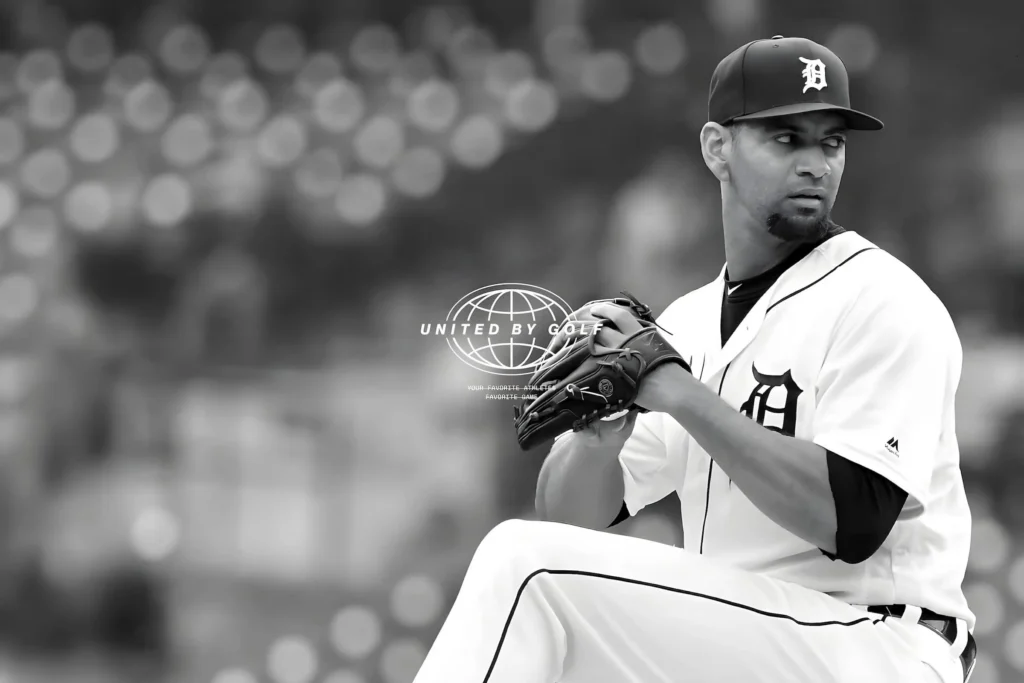
Ross grew up in Berkeley in a family where achievement was not especially scarce. His father is a paediatrician, his mother worked as an emergency-room nurse, and his younger brother Joe also reached the Major Leagues.
Tyson pitched at UC Berkeley before Oakland drafted him in 2008. He made his MLB debut in April 2010, striking out Ken Griffey Jr as his first batter, then moved to San Diego in a 2012 trade that preceded the best stretch of his career.
In 2014 he went 13–14 with a 2.81 ERA and 195 strikeouts in 195⅔ innings, earning an All-Star selection. A year later he made 33 starts and struck out a career-high 212. Then came thoracic outlet syndrome surgery in 2016, including rib removal, and the orderly upward line of a sporting career suddenly became rather less orderly.
Golf returned during that disruption.
I started golfing as a kid. My dad’s two loves were coaching me and my brother in baseball and playing golf. So he got me out on the course early. I wasn’t patient. I played until I was about 13, and then kind of stepped away from the game and just focused on playing baseball for a long time.
And I came back in 2017. I was coming off a rehab year – just had a major surgery. My career kind of fell off, and I decided to pick up golf figuring I needed to suck at something other than baseball right now. And that’s when I kind of fell in love with it.
It was the camaraderie of getting out there with some friends, the constant challenge of trying to improve. It reminded me a lot of pitching, except I didn’t have a lifetime of experience, and I was basically starting at zero.
The line about needing to “suck at something other than baseball” carries more than a joke. Elite athletes spend years building an identity around competence. Golf gave Ross permission to be bad at something and still enjoy the chase.
Why pitching and golf feel strangely familiar
The mechanical overlap is obvious enough. Baseball and golf are rotational sports; both ask the body to create speed without losing sequence. The more interesting parallel, though, is psychological.
So many things. Baseball is a rotational sport, and so is golf. This ability to have some hand-eye coordination from my youth translates to the game, but the mental side of the game is something that I really enjoy.
And that’s the part of baseball that I really loved – the ability to try and repeat your best effort over and over again. When you do something bad, how quickly can you bounce back from your mistake? Pitching and golf are really similar in those ways, and that’s something that I really enjoy.
I wish I was better at it, but it makes me appreciate the game, just because even though I shank a shot, I can still recover. It’s not how good my best shot is, but how bad my worst ones are that determines exactly the day on the course.
That is a pitcher’s answer to a golfer’s problem. Most amateurs remember the flushed seven-iron and conveniently misplace the three reloads from the tee. Ross is more interested in the quality of the miss.
Asked whether it is easier to find a strike zone or a fairway, he did not need a committee meeting.
Strike zone. And a lot of times the batter helps bail me out and chase something. But getting off the tee is definitely the bane of my existence in golf right now, and it’s hard to slow down when you’re big and strong and you know you can hit it far, but it’s more about placement and distance.
There is the familiar trap: power is available, therefore power becomes tempting. Golf has been ruining perfectly sensible decisions that way for generations.
The golfer is still competing with himself
Ross says four rounds in a month feels like a decent return. Family life and his player-development work with the Los Angeles Dodgers keep the calendar crowded, so business travel can double as golf opportunity.
His favourite memory is not a low score, a famous course or a heroic birdie. It is quieter than that.
That’s a good question. Two weeks ago, we went on a family vacation to Oahu, with my kids and then my parents. I played Ko Olina Golf Club with my dad and my six-year-old. Just the three of us, three generations hanging out in the cart. That was a good time.
The detail matters. His father introduced him to the game; decades later, Ross was in the cart with both the man who started it and the child who may carry it on.
Golf is very good at these small pieces of family theatre, even when the scorecard has the emotional range of a tax demand.
Loyal to My Soil keeps the focus on access
Retirement did not send Ross into hiding. He completed his degree in American Studies at UC Berkeley, moved into player development and built Loyal to My Soil, a non-profit that stages free baseball and softball camps in underserved Bay Area communities.
The idea comes from his own youth baseball experience in Oakland, where local leagues acted as a community hub. Ross saw that ecosystem weaken as pay-to-play models became more common.
Loyal to My Soil is his attempt to restore some of the access he had: free camps, experienced coaches and a route into the sport that does not begin with a household budget meeting.
He has also been involved with The Players Alliance, which supports efforts to improve diversity and access in baseball.
It’s a fantastic group of current and former major league players, mostly of color, who are working to grow the game in their community. They’ve been doing tremendous work since its inception. They support programs like Loyal to My Soil with grant money and equipment, and it’s just a fantastic way of players taking charge and giving back to the younger generation.
Golf enters that work as more than a hobby. Ross uses it socially and as a fundraising vehicle, another case of one sport helping finance opportunities in another.
Tyson Ross is learning to enjoy the miss
Ross’s baseball career closed with a 44–70 record, a 4.04 ERA and 816 strikeouts across 10 Major League seasons. Those numbers describe the player, but not quite the golfer he became afterwards.
Golf has given him something elite sport rarely offers: a place where imperfection is not a threat to employment.
He can hit a poor drive, laugh at it, recover and continue. The habits of pitching remain — process, resilience, repeatability — but the consequences have been pleasantly reduced.
He would like to play more, take trips with friends and keep exploring courses once family and work allow. His father has already travelled to places including St Andrews and Australia for golf; Ross sounds content to begin closer to home.
The strike zone was fixed. The fairway, infuriatingly, is not.