 Andy Devaney
Rory McIlroy has spent enough time at Augusta to know it can pat you on the head one minute and steal your lunch the next. This time, though, Rory McIlroy arrived armed with a setup built not just for beauty shots and launch-monitor theatre, but for the sort of moments that make a major champion either look immortal or mildly unwell.
Standing on the 12th tee with a one-shot lead, he hit the kind of golf shot that hushes a property. A three-quarter 9-iron, flighted with conviction and nerve, started left of the flag, landed safely and then fed right to 6 feet 11 inches. He poured in the putt, moved two clear, and from there went on to finish at 12-under par, winning by one after rounds of 67, 65, 73 and 71.
That was the headline moment. The more revealing story sat inside the golf bag.
This was not a lucky collection of expensive metal and polished theory. It was a tightly tuned major-championship toolkit, from the 2026 TP5 golf ball through a carefully fitted Qi4D driver, a refined fairway wood setup, familiar irons, Augusta-specific wedge work and a putter that has become as reliable as an old Labrador.
The shot that explained the whole week
The 12th at Augusta does not ask polite questions. It whispers, lies, and waits for panic. McIlroy did not blink.
“When I stood up on the tee, I felt like (the wind) was off the right, and I looked at the 11th flag, it was blowing right to left. But I was patient, and I waited to feel where the wind should have been coming from and I knew it was just a perfect three-quarter 9-iron.”
Rory McIlroy
That shot was not simply a highlight-reel moment. It was a perfect advertisement for why Rory McIlroy’s equipment setup matters. Major golf is often decided not by the full-blooded wallop, but by the controlled shot with one eye on spin, one on launch and both on disaster.
Why the TP5 switch keeps paying him back
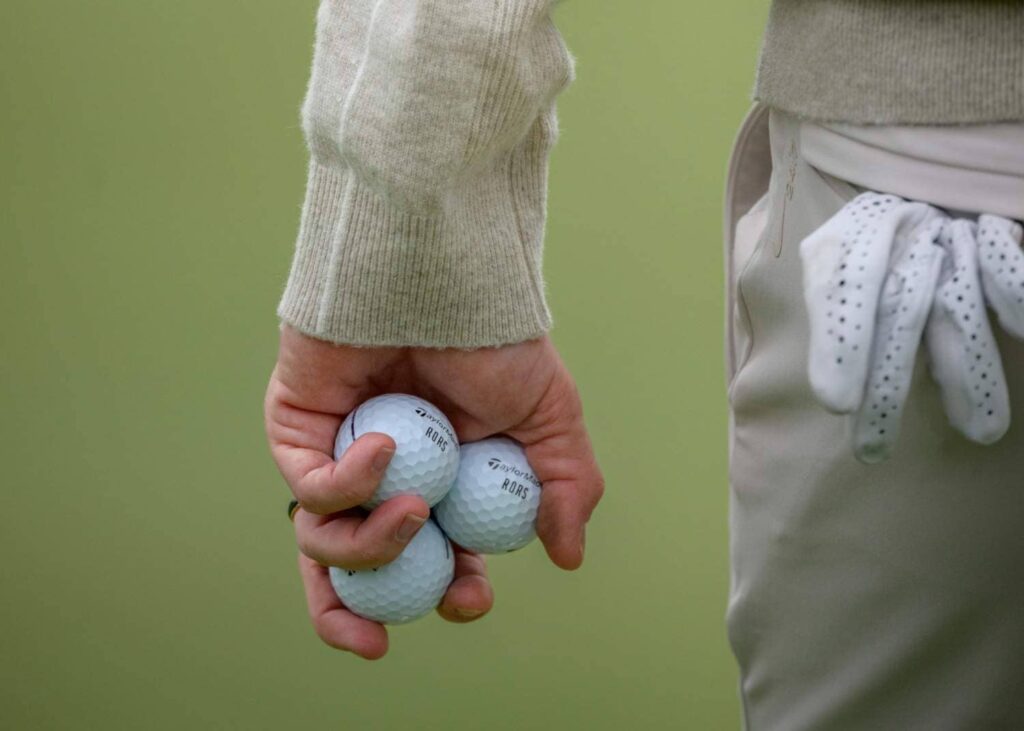
The most important change in Rory McIlroy’s setup may still be the ball.
His move to the TP5 ahead of the 2025 season has already been linked to one iconic Augusta moment, the draw into the 15th that helped deliver a career Grand Slam. The 2026 TP5 appears to have kept the same story rolling along nicely.
For McIlroy, the value is not abstract. It is practical. It is about control when he trims speed off the shot, shapes it, and still wants predictable spin. That matters everywhere, but it matters most at Augusta, where the ground can be as slippery as a politician on expenses.
“If you have a golf ball that produces consistency in spin, then you only have to worry about launch angle,” Senior Tour Manager Adrian Rietveld said. “A great player like Rory can control that.”
McIlroy explained the benefit in clearer terms than most equipment brochures ever manage.
“What the ball switch forced me to do was hit more of these half and three-quarter shots. I’ve been forced to play those because if I hit a full wedge shot it would just spin straight off the green. So, I started to get more comfortable hitting the half and three-quarter wedge shots and that started to creep sort of the whole way through the bag. I can go down to a six iron with that type of shot. It’s something I’ve developed from using this ball.”
Rory McIlroy
That is the real-world gain. Not marketing fluff. Not laboratory poetry. A tour ball that spins more consistently, launches a fraction lower with short irons, holds its line better on slight mishits, and feels softer around the greens gives a player like McIlroy more options. In Augusta terms, that means more shots he can actually use.
Against other premium tour balls in the category, the appeal here seems to be balance. Some balls are brilliant at one thing and slightly stubborn at another. The TP5, in McIlroy’s hands, looks like the rare one that allows him to chase control without sacrificing enough speed to matter.
Inside Rory McIlroy’s Qi4D driver setup
If the ball gave him artistry, the driver gave him brute force with manners.
Rory McIlroy’s Qi4D driver fitting in late 2025 was, by all accounts, a bit ridiculous. In the final round at Augusta, the results turned up like clockwork. On the four birdie holes where he hit driver, he averaged 343 yards. One of them on the 13th went 350 yards, a number that would make most club golfers consider a minor religion.
For the week, he averaged 334 yards off the tee and gained +0.92 strokes off-the-tee, seventh best in the field. In the final round he hit 71 per cent of his fairways and still averaged 325 yards, 21 yards longer than the field. That is not just long. That is rude.
“It was without a doubt the best driver testing session I’ve seen in 15 years of doing this. Within two shots he said he knew it was going straight in the bag. We hit 30 total shots and he only missed his target twice with a 117 RPM spin deviation while consistently carrying it 330.”
Adrian Rietveld
The build is revealing. A 9.0° head turned down to play at roughly 8.0°, a low-loft visual that McIlroy prefers, but with weight placed in a way that produces a more stable spin window. Two four-gram weights sit in the front, with two 11-gram weights in the back. The result is speed, yes, but also forgiveness and more reliable performance when impact drops low on the face.
That is the bit many amateurs miss. Rory McIlroy’s driver is not just about hitting it miles. It is about preserving ball speed, spin stability and direction when the strike is not absolutely perfect. Compared with other low-spin bomber setups, this one sounds cleverly less twitchy.
Rory McIlroy’s driver specs
- Head: Qi4D 9.0°
- Loft Sleeve: 2 Toward Lower
- Lie: 59°
- Front Weights: 4g, 4g
- Back Weights: 11g, 11g
- Shaft: Ventus Black 6X
- Length: 45 5/8”
- Tipping: 1”
- Swingweight: D5
- Grip: Golf Pride MCC Black/White
- Wraps: 2
The fairway wood setup built on trust
Tour players love innovation right up until Thursday morning, when many of them suddenly become sentimental.
Rory McIlroy had been using both the Qi4D 3-wood and 5-wood throughout the season, but for Augusta he went back to the familiar Qi10 3-wood while keeping the Qi4D 5-wood in play. That tells you plenty about elite players. They do not chase new for the sake of it. They chase known answers.
His 5-wood, in particular, had been an area of focus over the last two seasons, and he landed on a spec that clearly gave him the flight and confidence he wanted.
Rory McIlroy’s 5-wood specs
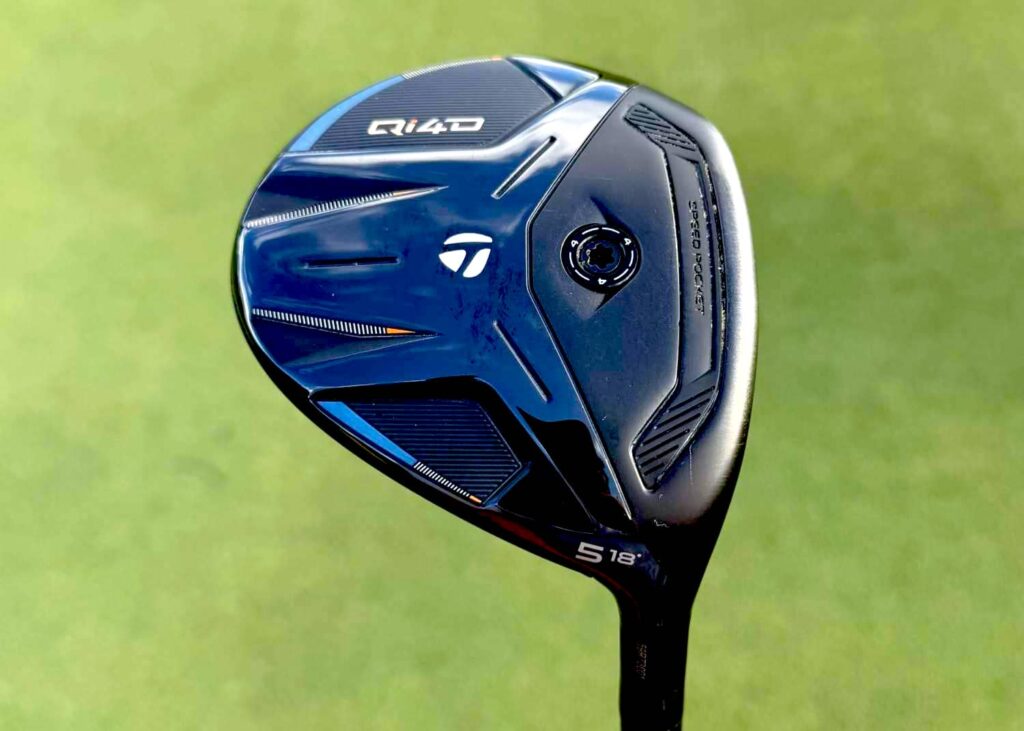
- Head: Qi4D 5-Wood
- Finished Loft: 17.5°
- Lie: 58.5°
- Shaft: Ventus Black 9X
- Tipping: 2’’
- Length: 41 5/8” EOG
- Swingweight: D4
This is the sort of club that matters disproportionately at Augusta. Long approaches, tight windows, and second shots that need to land softly enough not to scamper off into a place of sorrow.
Why Rory McIlroy has not messed with his irons
Not every part of Rory McIlroy’s bag is in constant flux. His iron setup has been remarkably steady for the better part of five years, which in tour terms is practically a silver wedding anniversary.
He continues to use a combo set featuring a P·760 4-iron and Rors Proto 5-9 irons. That continuity matters. Augusta rewards comfort and shape control, and McIlroy’s irons appear to give him both.
“The Rors Protos have a nice short blade length allowing him to turn them over when he needs to while holding spin,” said Rietveld. “His lie angles play a little bit upright, but flatten out as they get down to the end of his bag.”
In plain English, these are player’s irons for a player who wants workability without sacrificing spin control. They are not built for assistance. They are built for obedience.
For better golfers, especially low handicappers and elite ball-strikers, that is the dream. For the rest of humanity, it is a reminder that Rory McIlroy’s iron play belongs to a different tax bracket.
The wedge adjustment that suits Augusta perfectly
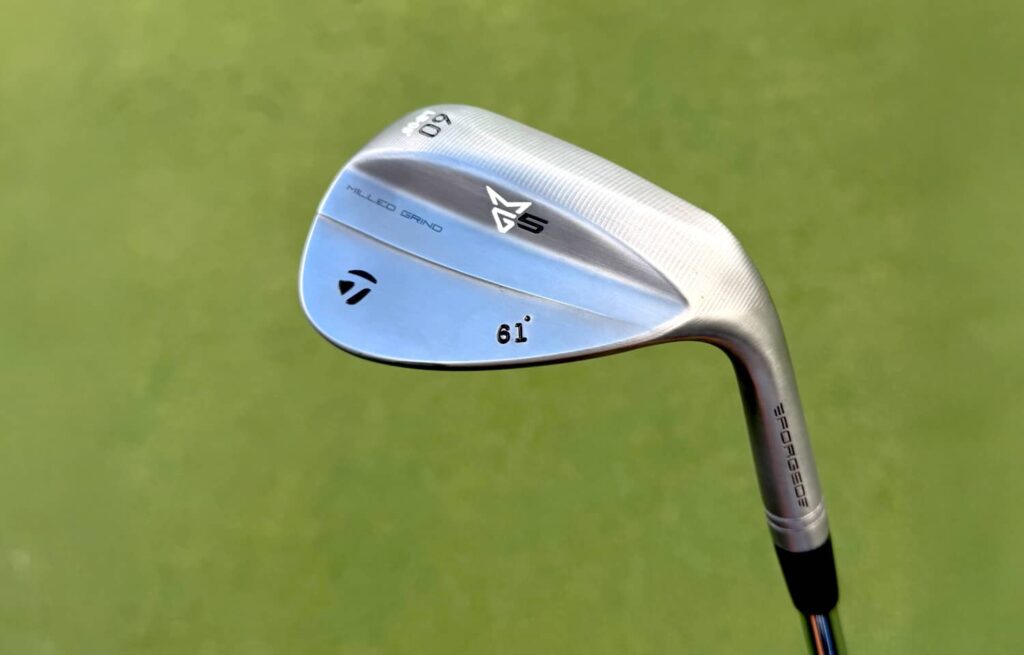
The wedge story is where things get properly interesting.
McIlroy put MG5 wedges into the bag and immediately won with them at the 2025 Amgen Irish Open. More importantly, they ticked the three boxes he clearly values most: look at address, turf interaction and feel.
Those things can sound a bit soft and philosophical until you remember what Augusta asks from a lob wedge. Tight lies. Grainy surfaces. Delicate pitches from awkward distances. Shots where a fraction too much dig or grab can leave a player staring into middle distance.
His switch to a 60° low-bounce lob wedge bent to 61° was all about making the 40-to-70-yard shot easier and improving how the club behaved on tight turf. Adding loft also helped the leading edge sit a touch higher, which reduced the risk of the club snagging in the grain.
“He creates so much speed down at the bottom that the little bit of loft just helps the ball come out a little bit softer and he can be more natural,” Rietveld told Golf.com this week.
That is exactly the kind of small technical tweak that can make a major setup sing. It is not glamorous, but it is meaningful. McIlroy gained 1.39 strokes around the greens for the tournament, and that is not an accident.
Rory McIlroy’s 60° wedge specs
- Head: MG5 60° LB
- Finished Loft: 61°
- Lie: 63.5°
- Length: 35 1/8’’ CUT
- Swingweight: D5
- Shaft: Project X 6.5 Wedge
The Spider Tour X that keeps collecting trophies

Putters are supposed to be temperamental little beasts. McIlroy’s has turned into a civil servant.
He has used his torched Spider Tour X short slant putter since the 2024 Tour Championship, and the results are difficult to argue with: four PGA Tour wins, including two majors, plus two DP World Tour victories and two Race to Dubai titles.
“Rory’s Spider Tour X has 30° of toe hang and a flatter lie angle. This helps give Rory more face rotation and arc through the stroke. Rory likes the putter to open on the backswing so he can close it on the downswing which makes the short slant a good match up for his moderate stroke arc.”
James Holley, TaylorMade Tour Representative
That combination of toe hang and face rotation suits a player who wants the putter to move naturally rather than be forced down some robotic straight-back-straight-through track. Compared with more face-balanced mallets, this setup sounds more tuned to feel and release.
Rory McIlroy’s putter specs
- Hosel: Short Slant
- Sight Line: Full Line
- Insert: Pure Roll
- Shaft: Black Stepless
- Length: 34 1/2″ EOG
- Loft: 2°
- Lie: 69°
- Grip: SuperStroke Pistol Tour
- Wraps: 1
What this setup gets right and where it is demanding
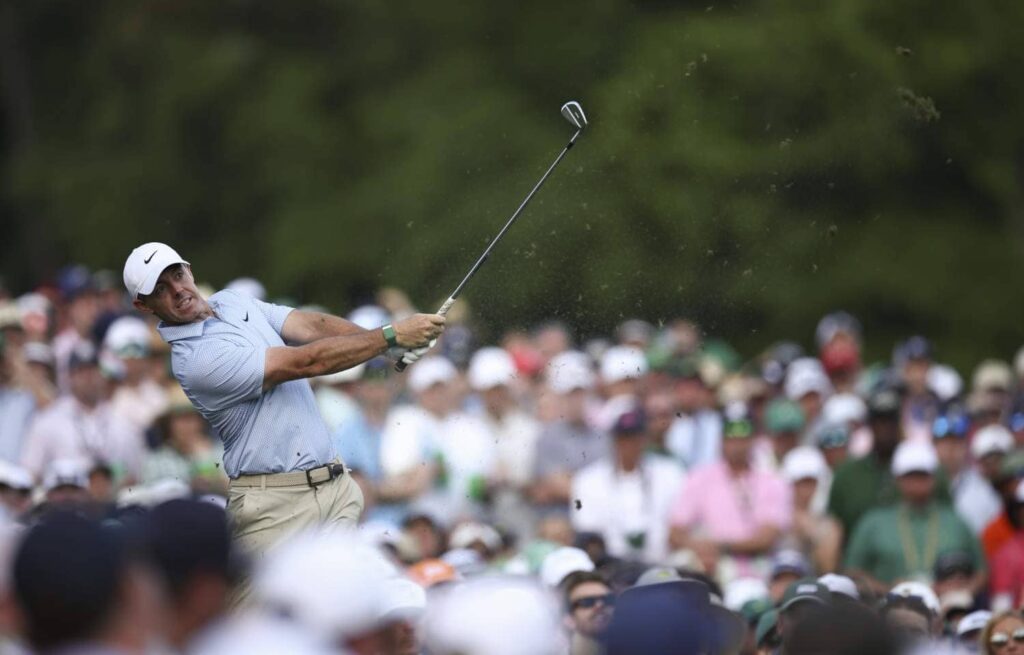
Rory McIlroy’s Augusta-winning bag is not one built for average golfers. Let us get that out of the way before anyone remortgages the dog.
Strengths
The entire setup appears designed around controlled aggression. The TP5 provides consistent spin and improved touch. The Qi4D driver delivers huge distance with a more stable spin window. The wedges are tuned for tight turf and partial shots. The putter fits his natural arc.
Weaknesses
This is still a tour-player bag in many areas. Low loft, stout shafts and precision-focused irons are not forgiving choices for the average mid-handicap golfer. There is very little here aimed at helping a poor swing survive itself.
Best suited for
This kind of setup is best understood as a model for elite players, plus strong single-figure golfers who want to learn something from how a major champion prioritises control, launch and shot shape. It is less a shopping list for the weekend golfer than a blueprint for how proper fitting creates clarity.
The verdict on Rory McIlroy’s Augusta-winning setup
The clever part of Rory McIlroy’s bag is that it does not look built around one trick. It is not purely a bomb-and-gouge arrangement, nor is it a fussy technician’s collection of niche tools. It sits in the sweet spot between power and control, which is precisely where Augusta tends to hand out green jackets and heartbreak in equal measure.
The ball switch remains the centre of gravity in the story. It appears to have unlocked more usable shots, especially at reduced speed, and that in turn has sharpened the entire bag. The driver fitting gave him speed without chaos. The wedges were adapted for Augusta’s peculiar demands. The putter continues to behave like it has seen the script.
And that is why Rory McIlroy won again.
Not because clubs play the game for you. They do not. But because at the highest level, the right equipment does not simply improve a swing. It makes a decision easier under pressure. At Augusta, that can be the difference between glory and a long walk back to the cabin with your jaw clenched.
On the 12th tee, Rory McIlroy trusted what was in his hands.
That, in the end, was the whole story.