 Andy Devaney
If you’ve ever watched a Tour pro roll in a six-footer like it’s a formality, then missed your own by a polite inch and a half, you already understand the appeal of modern mallets.
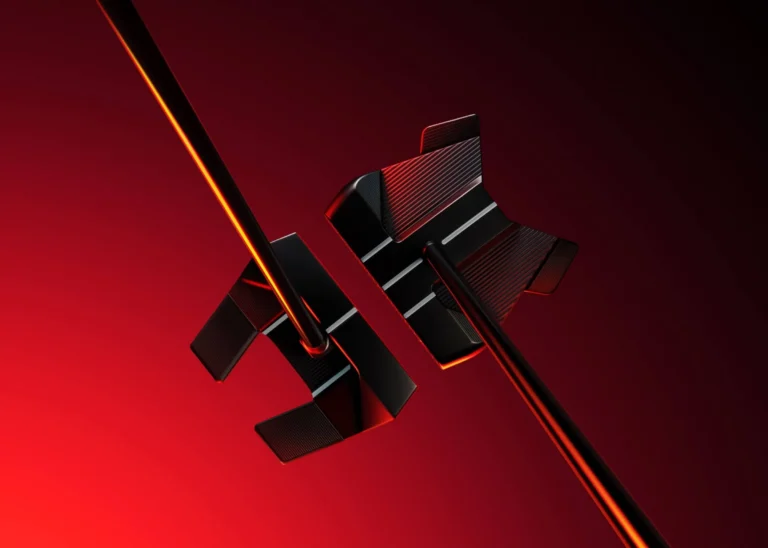
The latest Scotty Cameron Phantom mallets have turned up on the PGA TOUR and DP World Tour, with next-generation Phantom 5, 7 and 9R head designs and a buffet of neck and shaft configurations in players’ hands at the season-opening Sony Open in Hawaii and the Dubai Invitational.
This isn’t a loud, neon “look at me” launch. It’s the more interesting kind: Tour seeding, quiet confidence, and subtle tweaks that matter to the people who can actually feel the difference between “pretty good” and “that’s the one”.
What’s new in the Phantom 5, 7 and 9R family

The headline is straightforward: Phantom 5, Phantom 7 and Phantom 9R shapes are the next evolution of a mallet line that’s already become a go-to for players who want stability without feeling like they’re swinging a frying pan.
The supporting act is just as important—different neck and shaft options that let players fine-tune how the head wants to swing through impact.
In other words: same family, sharper suits.
Why Tour players keep choosing Phantom mallets: MOI and alignment
One reason players gravitate towards the Phantom family is the stability and MOI provided by a larger mallet profile. The increased footprint also creates space for different alignment offerings, from direct features like sightlines to the more subtle angles and contours of the putter head shape and design.
That’s the modern mallet bargain in plain English: more forgiveness when you don’t quite catch the middle, and more help getting the face aimed where your brain thinks it’s aimed. And yes, that last bit matters more than your pride will admit.
Cameron Young’s tell: forgiveness, visuals, and a blade that suddenly looks unfamiliar

Cameron Young has been a Phantom loyalist for the entirety of his PGA TOUR career, gaming various head shapes and neck configurations since 2021, and he explains the attraction in a way that sounds like every decent club golfer who’s ever flirted with a blade and then panicked on the third green.
“There’s an element of forgiveness to it that just I think in my head makes sense,” said long-time Phantom loyalist Cameron Young. “I’ve just grown to like the way that [Phantom mallets] look. I look at a blade now and I have more trouble lining it up.”
That’s not marketing. That’s a golfer describing confidence—how the head sits, how the target looks, how the stroke feels when you’re standing over something that suddenly feels makeable.
The neck switch that actually explains the story: toe flow vs face-balanced
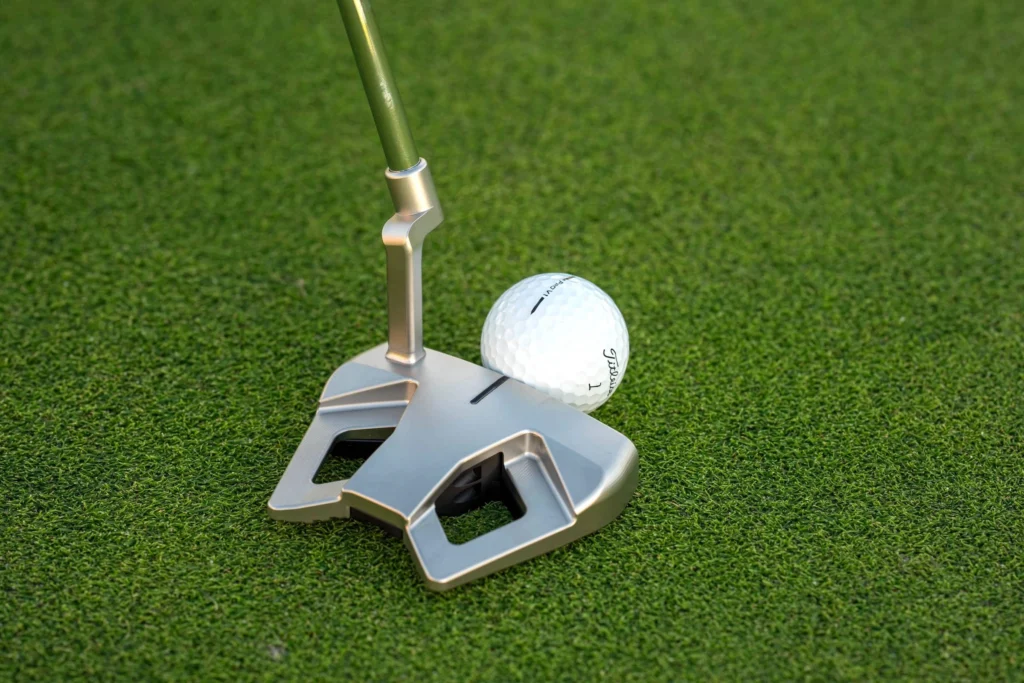
Last year, Young made an early-season move at the 2025 RBC Heritage from a plumbing neck to a jet neck within the 9R head shape, seeking more toe flow in his putting stroke. That’s the part most golfers should underline twice.
“He’s always wanted to feel flow in the putter,” said Scotty Cameron Tour Rep Brad Cloke. “We’ve started in face-balanced mallets for him and we’ve kind of worked our way down to a point where he’s felt comfortable enough to feel the toe flow the way he wants it and get the release of the putter that he wants.”
Translation: the head shape is only half the equation. Neck design can shift how the putter releases—how much it wants to rotate—so the “right” mallet isn’t just about what looks good in the shop mirror. It’s about matching the putter’s natural movement to your stroke.
And in Young’s case, the numbers backed up the feel.
The results: Young’s best putting season
The switch paid off. Young delivered the best putting season of his career, finishing the year 7th in Strokes Gained: Putting (+0.642 per round), T6 in Putting Average (1.704) and 4th in One-Putt Percentage (44.57%).
If you’re wondering what that means in real life: it means fewer anxious second putts, fewer “how did that not drop?” moments, and more rounds where the scorecard doesn’t look like it was filled in during a mild argument.
Who’s already winning with Phantom putters
The new models build upon the success and feedback of Phantom players, including 2025 winners Russell Henley (Phantom X 5), Justin Thomas (Phantom 5), Cameron Young (Phantom 9.5R), Richard Mansell (Phantom 7), Nicolai von Dellingshausen (Phantom 9.5) Michael Brennan (Phantom 7.2), Ryan Gerard (Phantom 5.2) and the 2013 U.S. Open champion (Phantom 5).
That’s a spread of shapes and setups, which is the point: the Phantom family isn’t one putter. It’s a platform—different sizes, different necks, different flows—built around the same idea of stability and aim.
What golfers should take from this before buying
If the sight of a blade makes you feel like you’re aiming with a butter knife, you’re exactly who the Scotty Cameron Phantom mallets conversation is for. But here’s the honest advice: don’t get hypnotised by head shape alone.
- If you like the look but the face feels “stuck”, you may need a setup with more release (more toe flow).
- If you tend to pull or over-rotate, a more face-balanced option can calm things down.
- If alignment is your weak link, mallet footprints and sightlines can be a genuine advantage, not a crutch.
Stay tuned to Titleist and Scotty Cameron social channels as the introduction of new Phantom mallets continues across the worldwide professional tours.
And when these finally filter from Tour hands to the shop rack, remember the lesson the pros keep showing us: the best putter isn’t the one with the fanciest name—it’s the one that makes the ball start on line when your nerves are doing everything they can to intervene.