 Andy Devaney
Titleist has decided that one of golf’s oldest little habits — staring at a line on the ball and hoping it points somewhere useful — deserves proper engineering. The brand’s new AIM designs for AVX, Tour Soft, Velocity and TruFeel are not decorative flourishes for people who enjoy stationery. They are built to help golfers aim putts more precisely, and the early numbers suggest that this is not just paint with a marketing department attached.
The headline claim is a strong one: testing showed players using Titleist AIM designs were up to 35% more precise in aligning their putts. That matters, especially once the hole starts looking smaller, the putt starts looking longer, and the human brain begins behaving like a wet Labrador in a thunderstorm.
This latest rollout also completes the picture. With Pro V1, Pro V1x and Pro V1x Left Dash already offering AIM options, Titleist has now spread advanced alignment across its full golf ball family. That is the important part. This is not a tour-only toy. It is a lineup strategy.
Why alignment matters more than golfers like to admit

Plenty of golfers think putting is all touch and temperament, with alignment treated like the dull bit before the interesting bit. That is charming. It is also wrong.
If the ball starts offline, the stroke can be as pure as a cathedral choir and still end in disappointment. Titleist has leaned into that reality by studying how players actually use markings on the ball, both on tour and among dedicated amateurs, then turning those habits into printed alignment systems rather than leaving golfers to scrawl homemade lines with a marker pen in the car park.
“We’ve conducted significant testing around alignment tendencies and how accurate players are with different types of markings,” said Scott Cooper, Titleist’s Director of Golf Ball Product Development. “The data consistently shows improvement for most golfers when they align their putts with our AIM designs. When we talk about improved performance, it needs to be discernible and impactful to the golfer.”
That last line is the heart of it. Titleist is not presenting AIM as a novelty. It is presenting it as measurable performance.
The thinking behind the new Titleist AIM range
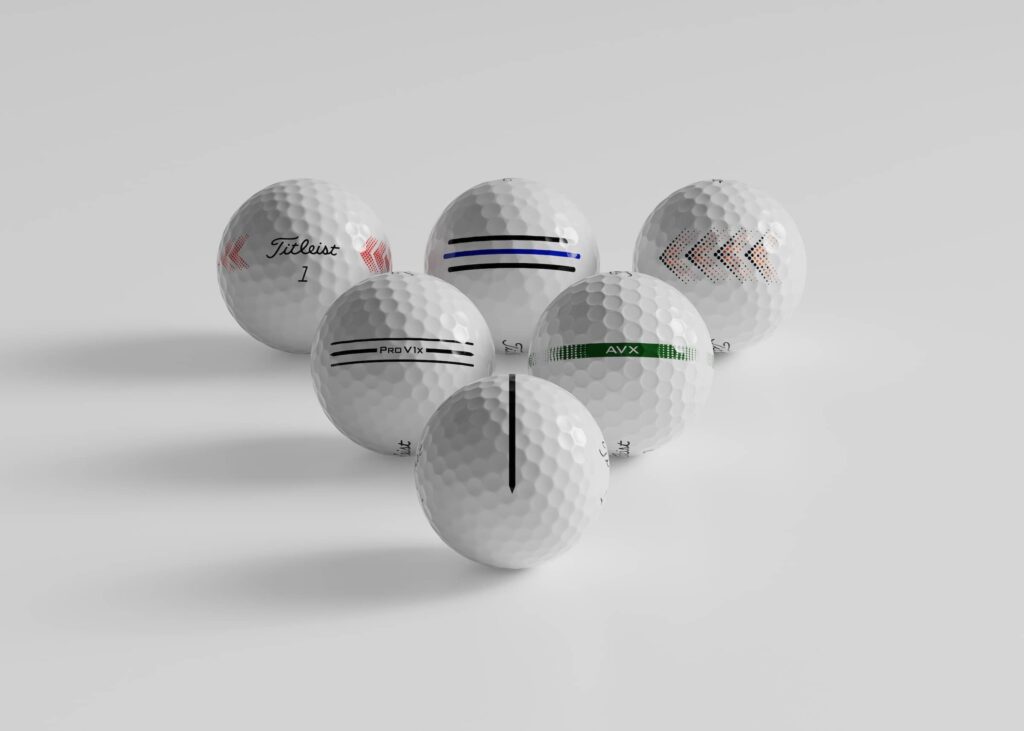
Before launching the new models, Titleist studied how golfers line the ball up in the real world. On the PGA TOUR, roughly 65% of Titleist ball players mark their Pro V1 or Pro V1x with some kind of alignment cue. That is a fairly clear hint. When the best players in the world all start doodling the same basic idea on the same product, a smart company pays attention.
“Golfers expect Titleist to deliver real performance benefits, and that was our goal from the start,” Waddell said. “As we always do, we went to the PGA TOUR and LPGA Tour to understand their use of alignment features and preferred designs.”
The company then expanded that research to committed club golfers and built a proprietary testing device to measure how precisely players aimed the ball at a target. That is where the claim of up to 35% better alignment came from, based on a tighter left-right distribution compared with using a standard sidestamp.
“Interestingly, AIM is more valuable as you get farther from the hole,” said Frederick Waddell, Director of Golf Ball Product Management. “On a four-foot putt, you might be okay lining up your ball with a standard sidestamp because it’s such a short putt. But as you go back to 12 feet or 16 feet, you could be off by up to a foot on either side of the hole as that dispersion cone gets wider. The data really illustrates that, for golfers who like a form of alignment on their ball, our AIM designs can help them be more precise on the greens.”
That is a sensible point, and a useful one. The farther you are from the hole, the more small aiming errors become large emotional events.
What each Titleist model offers
The clever part of the new Titleist release is that the AIM concept has not been bolted onto one type of ball and left there. Each model keeps its original performance identity.
AVX AIM 360
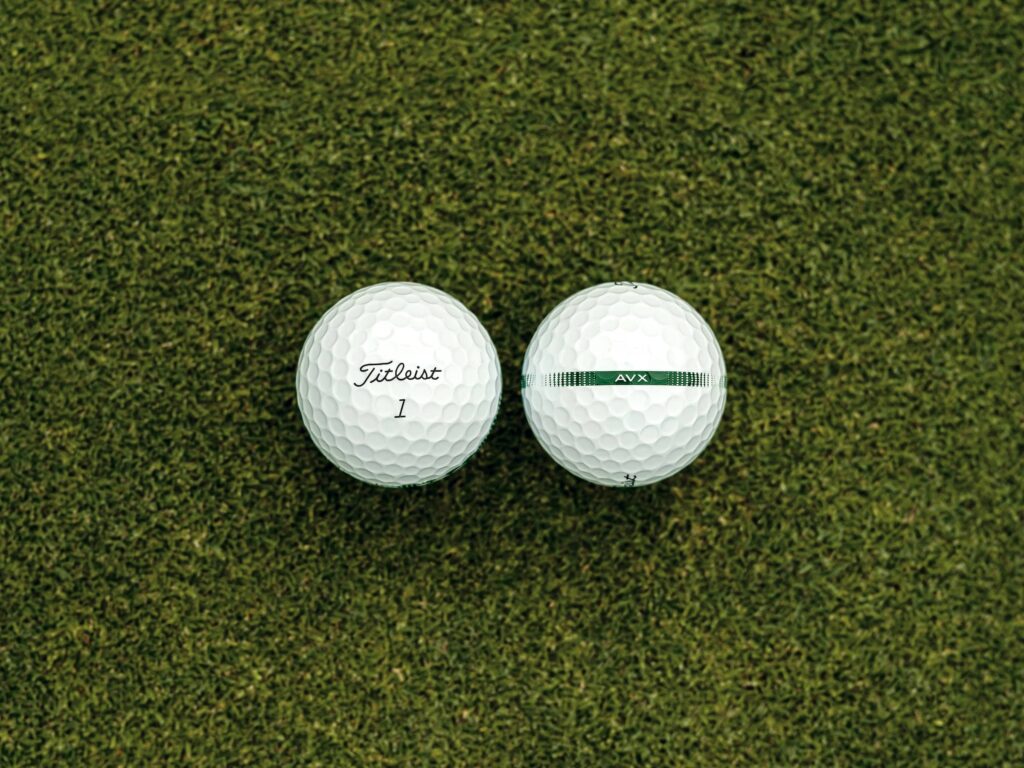
AVX gets a full-circumference AIM 360 marking that gradually softens around the ball. It is the most refined-looking of the group and suits the AVX player profile well.
AVX is aimed at golfers who want long distance, low spin, a penetrating flight, and a soft feel with control into the greens. The updated ball adds a softer urethane cover for short-game control, along with a faster core and reworked high flex casing layer for long-game performance.
At £44, this is for the player who wants premium ball performance but prefers a slightly flatter, quieter ball flight than the Pro V1 family.
Tour Soft AIM Performance
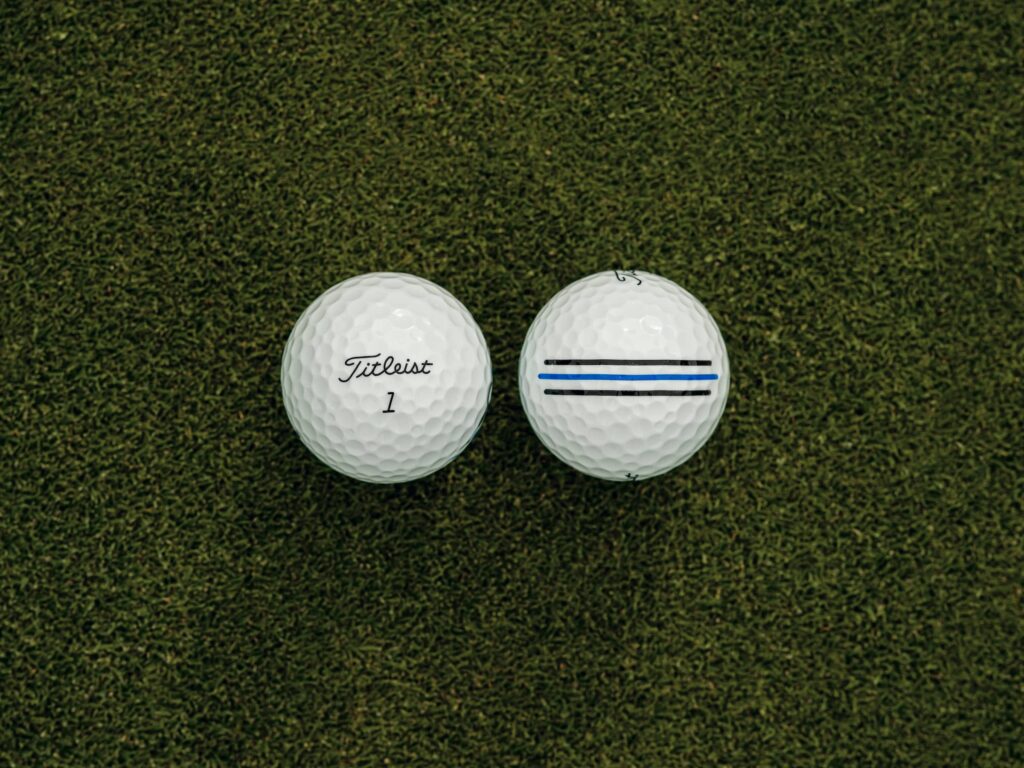
Tour Soft gets an extended three-line alignment design, available in blue and black or red and black. Visually, it is the most direct of the bunch. You set it down, and it gives you a clear answer.
Tour Soft is designed for golfers chasing the blend most club players actually want: distance, soft feel, and playable spin without premium-ball pricing. A new dimple pattern, core dimension and elastomer cover blend are designed to produce more consistent flight and better stopping power.
At £34, this may be the sweet spot of the lot for the sensible golfer who still enjoys nice things.
Velocity AIM Performance
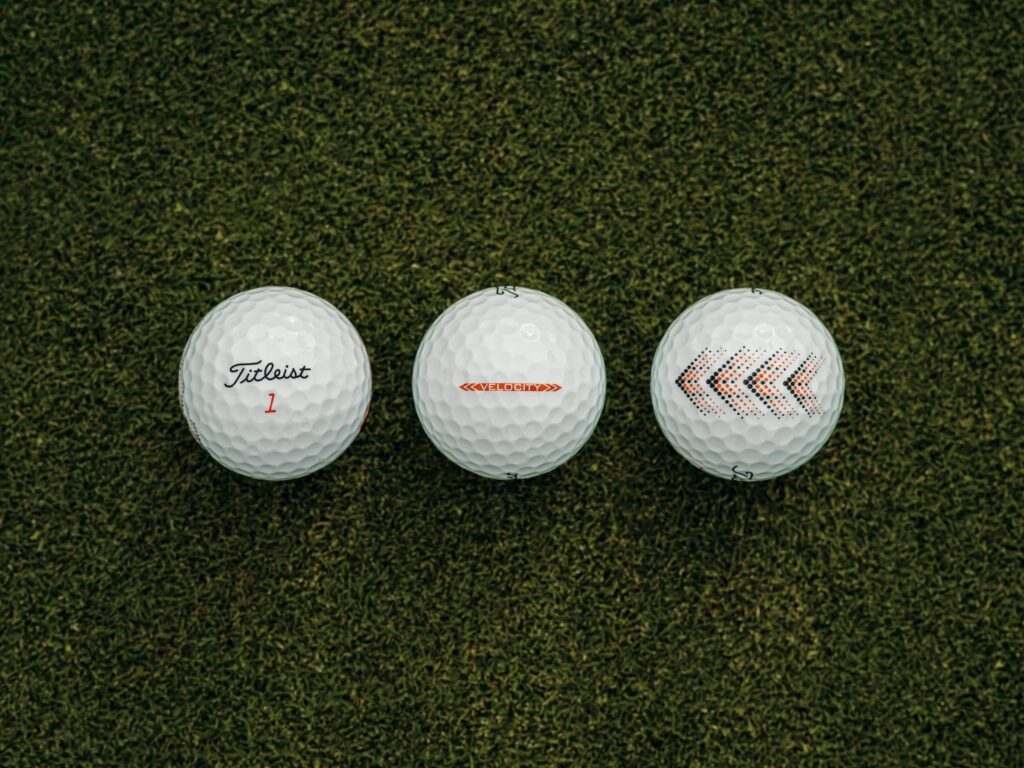
Velocity goes with an orange and black arrow design, which is probably the least subtle option here, but subtlety has never been a performance category.
This remains the distance-first ball in the Titleist family. Lower long-game spin, more speed, more penetrating flight. It is built for golfers who want the ball to get on with it.
At £28, Velocity makes a strong case for players who value tee-to-green speed more than short-game softness and like a bold visual cue on the greens.
TruFeel AIM 360
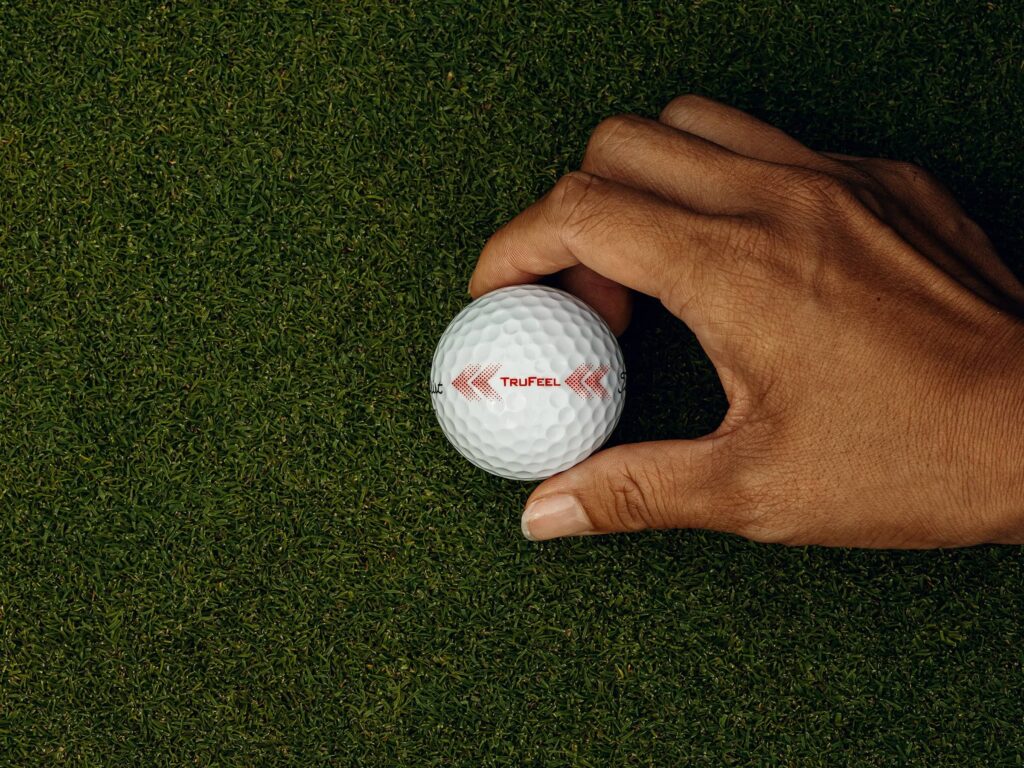
TruFeel, the softest Titleist golf ball, gets a continuous red arrow alignment design wrapped around the circumference.
It is designed for long distance, consistent greenside spin and an ultra-soft feel, which will appeal to players who want comfort and simplicity without moving into premium-ball prices.
At £26, TruFeel AIM 360 is likely to appeal to improving golfers, moderate swing-speed players, and anyone who likes a softer sensation off the face.
First impressions: what stands out immediately

The first thing Titleist has got right is restraint. These designs are visible, useful and distinct, but they do not make the ball look like a novelty item from a Christmas cracker.
That matters. Some alignment-led balls on the market can feel as though the visual aid has swallowed the product whole. Titleist has taken a more disciplined route. The marking is there to serve the golfer, not dominate the identity of the ball.
From a usability standpoint, the AIM 360 designs are especially interesting because they give golfers more flexibility when placing the ball down. The AIM Performance models, meanwhile, offer a more traditional “point and commit” experience. Between them, Titleist has catered for different eyes and different routines.
Real-world performance benefits, translated into plain English

The technical story is simple enough.
Better alignment can tighten start lines. Tighter start lines can improve consistency. Improved consistency on the greens can turn decent putting into competent putting and competent putting into something mildly profitable.
For golfers, that means fewer putts pushed fractionally right, fewer pulled efforts that never had a chance, and a better chance of starting the ball where they intended. It does not guarantee a make, of course. Pace still matters, reading greens still matters, and nerves still arrive uninvited. But if alignment is cleaner, one variable becomes less irritating.
That makes the Titleist AIM approach particularly useful for golfers who already line up their ball before putts. If you never use alignment at all and simply walk in and hit it, this may not suddenly convert you. But for the vast majority who already use some sort of visual aid, this is a cleaner, smarter version of what they were trying to do anyway.
Who each ball is best for

The beauty of this release is that golfers do not have to choose alignment or ball performance. They can choose both.
AVX AIM 360 suits the stronger player who wants premium speed, lower spin and a softer feel without the higher flight of other tour-calibre options.
Tour Soft AIM Performance is ideal for the broad middle of the market: golfers who want balanced performance, softer feel and value.
Velocity AIM Performance is best for players who prioritise raw distance and want a loud, unmistakable visual alignment cue.
TruFeel AIM 360 fits improving golfers, casual players and anyone who values softness, price and simple visual help on the greens.
Strengths, weaknesses and where Titleist sits in the market

The main strength of this Titleist launch is that it treats alignment as a proper performance feature rather than a gimmick. The company has backed the concept with testing, spread it sensibly across multiple models, and tailored the visual designs to different player types.
Another strength is familiarity. Golfers do not need to switch into an entirely new franchise just to get the alignment benefit. If they already play AVX or Tour Soft, they can stay in their lane and gain an extra aid on the greens.
The weakness is equally straightforward. Alignment technology only helps golfers who actually use it. Some players prefer a clean ball, some dislike visual clutter, and some simply trust feel over lines. For those golfers, AIM may feel like extra fuss.
There is also the question of preference. A bold alignment system can be wonderfully helpful to one player and mildly annoying to another. Golf remains gloriously irrational that way.
Compared with rival alignment-focused offerings in the category, Titleist’s advantage is that AIM now sits inside one of the deepest and most trusted ball families in the game. Rather than asking golfers to buy into a gimmick-first product, it is offering model-first performance with alignment layered on top.
Verdict: a practical step, not a cosmetic one
This is one of those releases that sounds modest until you think about how golfers actually play. People have been drawing lines on golf balls for years because they want help aiming. Titleist has simply taken that common ritual, applied research, and done the job properly.
The result is a smarter, broader and more credible AIM lineup that gives golfers genuine choice. Not every player will care. Not every golfer should. But for anyone who already uses the ball to help aim putts, this is meaningful rather than ornamental.
And that is the difference between a useful innovation and a coloured distraction.
Titleist has not reinvented putting here. It has done something better. It has made one of the game’s fiddliest little details a touch less fiddly, which, in golf, can feel like a public service.