 Andy Devaney
The Titleist GTS300 mini driver arrives on July 23 with a 305cc head, adjustable weighting and a design shaped by feedback from Justin Thomas, Cameron Young and other tour players. Its assignment is unusually clear: retain the usefulness of the smaller GT280 while making the club considerably less vindictive when contact wanders away from the middle.
Mini drivers occupy one of golf equipment’s more intriguing grey areas. They are shorter and generally easier to control than full-sized drivers, yet longer and more imposing than a conventional 3-wood. For the right player, that makes them a formidable secondary tee club. For everybody else, it can make them another expensive answer to a question they had not thought to ask.
Titleist believes the GTS300 has a broader case to make.
Why Titleist Made the GTS300 Bigger
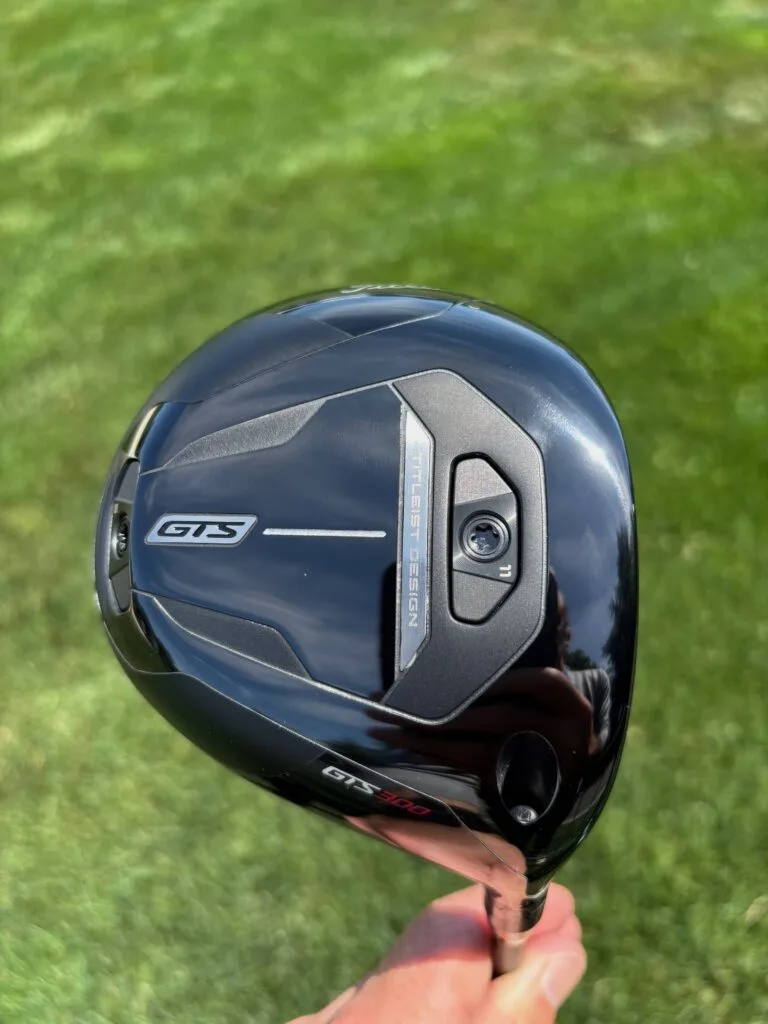
The GTS300 expands on the GT280 concept with a larger footprint, a deeper centre of gravity and greater moment of inertia. In less technical language, the head has been designed to resist twisting more effectively when the ball is struck away from the centre of the face.
That matters because mini drivers are often bought for control, yet their smaller heads have historically offered less protection than full-sized drivers when the swing becomes untidy. Golf, being golf, tends to arrange such swings precisely when accuracy is most urgently required.
Titleist says the new head produces approximately 15–20 per cent greater inertia than the previous design.
“The main goal in development was to make GTS300 a more forgiving mini driver,” said Stephanie Luttrell, Titleist’s Senior Director of Metalwood Development. “The increase in volume and shift in CG gave us approximately 15–20% greater inertia. At the same time, we still put a premium on versatility and performance off the turf with this club.”
The increase to 305cc is therefore not simply an exercise in making the club look more comforting behind the ball. It allows Titleist’s engineers to redistribute mass, move the centre of gravity deeper and improve stability.
A composite crown frees additional discretionary weight, enabling that mass to be positioned where it can influence launch and forgiveness more effectively.
Justin Thomas and Cameron Young Shaped the Brief
Tour feedback is frequently mentioned during equipment launches, sometimes with all the evidential weight of a nod across a practice ground. The GTS300’s development appears to have involved something more substantial.
Justin Thomas and Cameron Young had both responded positively to the GT280, but they also identified areas where the concept could be improved.
“We’re always looking for feedback from the best players in the world,” said JJ Van Wezenbeeck, Titleist’s Senior Director of Club Promotions. “Both those players were really excited about GT280 and also had some commentary about potential performance improvements. As we worked through some prototypes with not only JT and Cam, but other tour players as well, we were able to gather valuable feedback and put that into GTS300.”
The request was not for an entirely different club. Players wanted to preserve the GT280’s performance from the turf while gaining greater security on imperfect strikes.
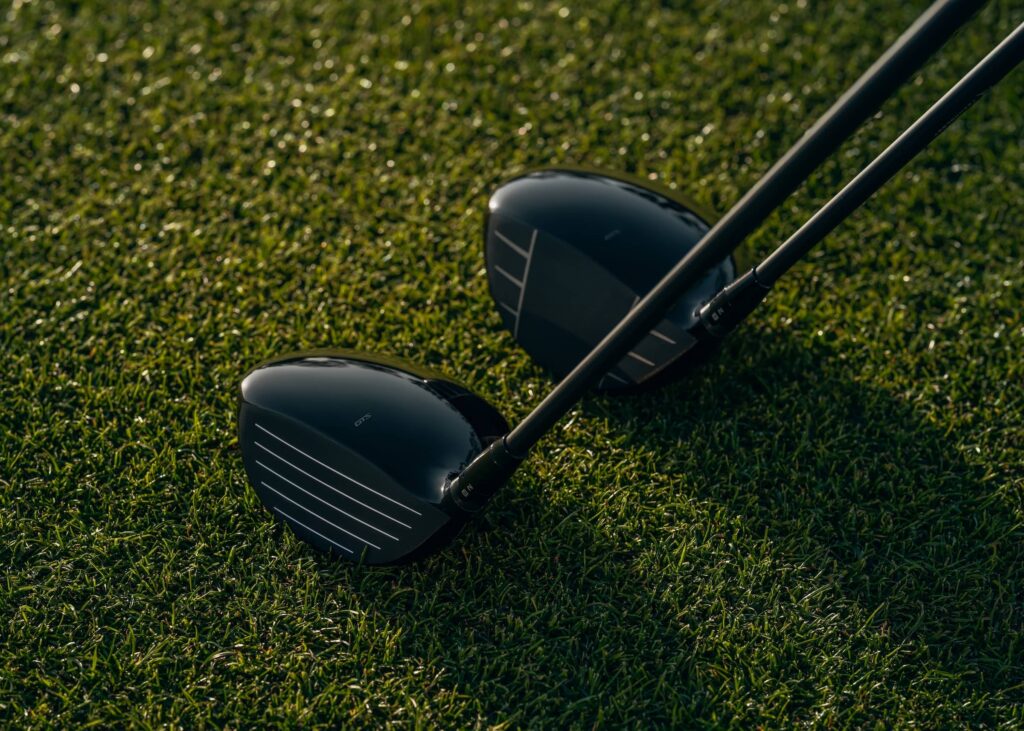
Titleist consequently retained the same face height despite increasing the overall head volume. That is an important detail. A deeper-faced club might inspire confidence from a tee but become rather less inviting when sitting on closely mown grass.
“When we originally built GT280, a lot of it was trying to make sure that we were looking for as much performance off the ground as we could,” explained Van Wezenbeeck. “Players started saying, ‘hey, I can actually hit this off the ground really well. I’m looking for some more forgiveness.’ And so there was an opportunity for R&D to make the head slightly bigger and increase MOI while still maintaining all the off the ground performance.”
A Forged Face Designed for Low Strikes
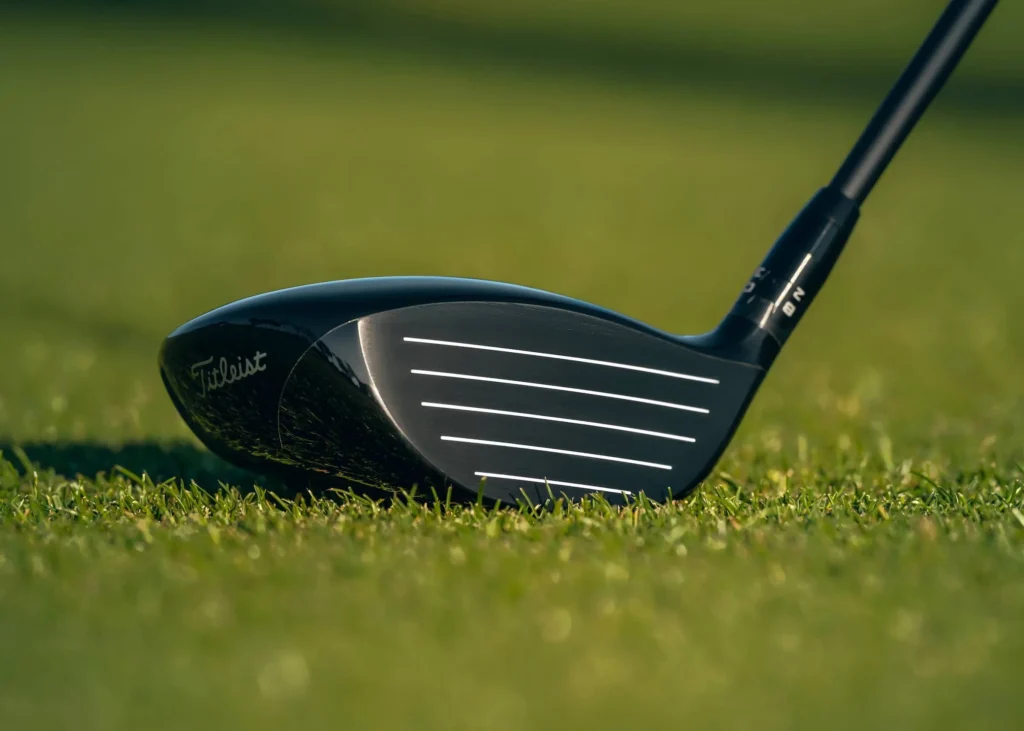
The GTS300 uses a forged L-Cup face similar to those found in Titleist’s GTS fairway woods. Its high-strength ATI 425 titanium insert wraps around the lower section of the clubface.
The practical target is the low-face strike: a common result when hitting a low-lofted club directly from the turf and one that can drain ball speed, launch and dignity in roughly equal measure.
Titleist says the L-Cup construction helps retain ball speed and launch conditions on those impacts. It is also intended to maintain a sound and feel preferred by accomplished players.
Those claims will require independent testing before they can be treated as measured performance conclusions. The engineering rationale, however, is coherent. A mini driver expected to function from both a tee and the fairway must account for impact occurring lower on the face than it would with a teed-up driver.
Dual Weights Add a Proper Fitting Dimension
The GTS300 carries two interchangeable flat weights: one positioned forward and the other towards the rear of the head.
In the standard arrangement, the heavier 11-gram weight sits forward while the lighter 3-gram weight is placed aft. Titleist says this configuration can reduce launch and spin.
Reversing the weights moves more mass rearward, which can increase launch, spin and stability. That setting should appeal to golfers who want additional assistance getting the ball airborne or who value forgiveness above a flatter, lower-spinning flight.
This is more than cosmetic adjustability. Moving eight grams between the front and rear of a 305cc head can materially alter how the club behaves, although the most suitable configuration will depend on strike location, delivery, speed and intended use.
It also reinforces the case for a proper fitting. Buying a mini driver without establishing where it fits between the driver and fairway wood risks producing an attractive but redundant passenger.
How Justin Thomas Uses the GTS300
Thomas was among the first tour players to put the GTS300 into competition, adding it at the Charles Schwab Challenge in May.
According to Titleist, he uses it particularly on courses where he does not expect to hit many 3-woods from the fairway. The GTS300 then becomes a dependable secondary option from the tee, offering greater distance than his 3-wood.
That configuration also allows Thomas to use a 46-inch shaft in his GTS2 driver when he wants to pursue additional distance.
It is an elite-player solution, certainly, but the underlying logic is relevant at club level. A golfer who rarely uses a 3-wood from the turf may gain more from a club built primarily for controlled tee shots, provided the distance gaps remain sensible.
The crucial phrase is “provided the distance gaps remain sensible”. Golf bags have only 14 available places, and sentiment is not recognised during a ruling.
The GTS300 is compatible with Titleist’s Fairway SureFit hosel sleeve. Because its hosel is longer, a 43-inch fairway shaft fitted to the GTS300 head will play at 43.5 inches.
That compatibility gives existing Titleist users useful fitting scope, but golfers should not assume that a familiar fairway shaft will automatically produce an appropriate mini-driver build.
Available Shaft Options
The featured shaft selection comprises:
- Project X Titan Black
- Mitsubishi Tensei 1K White with Rip Technology
- Mitsubishi Tensei 1K Blue with Rip Technology
- Mitsubishi Tensei 1K Red with Rip Technology
Premium options include:
- Graphite Design Tour AD DI
- Graphite Design Tour AD VF
- Graphite Design Tour AD FI
The range covers several launch and feel profiles, but shaft choice should be governed by delivery and performance rather than reputation or paintwork. Golfers have been known to make less disciplined decisions.
Strengths and Limitations
Pros
- The 305cc head should offer more stability than the smaller GT280 design.
- The unchanged face height preserves the stated emphasis on shots from the turf.
- Interchangeable front and rear weights provide meaningful launch and spin adjustment.
- The forged L-Cup face specifically targets low-face impacts.
- Right-handed and left-handed versions will be available.
- Multiple stock and premium shaft profiles broaden fitting options.
Cons
- A single 13-degree loft may not suit every distance gap or launch requirement.
- At £499, the standard model requires a clear role in the bag.
- The £669 premium-shaft price places it firmly in specialist-equipment territory.
- Golfers who frequently hit a conventional 3-wood from the turf may find the GTS300 less practical.
- Independent launch-monitor testing is still needed to assess the performance claims fully.
Who Is the Titleist GTS300 Best For?
The GTS300 appears best suited to golfers seeking a controlled alternative to the driver rather than a direct replacement for it.
It could be particularly relevant for players who:
- Prefer a shorter club from tight driving holes.
- Rarely use a 3-wood from the fairway.
- Need more forgiveness than a compact mini driver traditionally provides.
- Want a club capable of producing lower-spin tee shots.
- Generate enough speed to launch a 13-degree head effectively.
- Are prepared to undergo a proper gapping and shaft fitting.
It may be less suitable for slower swingers who require more loft, or for golfers whose fairway wood already performs reliably from both the tee and turf.
Is the GTS300 Worth £499?
The answer depends less on the head’s technology than on the vacancy in the golfer’s bag.
For someone searching for a dependable tee club between driver and 3-wood, the GTS300 offers a thoughtful combination of size, adjustability and turf capability. Its increased inertia addresses one of the category’s obvious compromises, while the dual-weight system gives fitters room to shape flight.
For a golfer who already drives accurately and depends heavily on a 3-wood from the fairway, the case is weaker. At £499 — or £669 with a premium shaft — this cannot be an occasional decorative flourish.
The GTS300 must earn its place through measurable improvement in dispersion, confidence or strategic usefulness.
The Verdict
The Titleist GTS300 is not merely a swollen GT280. Its larger head, deeper centre of gravity, low-face construction and adjustable weighting address identifiable performance needs without discarding the versatility that made the original concept interesting.
The most persuasive part of the design is its restraint. Titleist has not tried to turn the mini driver into a shrunken 460cc model. It has kept the face height, protected its turf ambitions and added forgiveness where tour players believed it was missing.
That makes the GTS300 one of the more rational interpretations of an inherently specialised club. Whether it belongs in a particular bag will be settled by launch numbers and distance gaps, not by novelty. In golf equipment, as elsewhere, being interesting gets a club an audition; being useful keeps it employed.