 Andy Devaney
The 2026 Solheim Cup trickiest holes may not be the longest at Bernardus.
They are the ones that make a player choose — attack or retreat, trust the wind or distrust it, aim at the flag or quietly accept 25 feet.
Head professional Roel Verdonschot has picked out the par-3 6th, par-3 15th and par-4 18th as the likeliest pressure points when Europe and the United States meet in the Netherlands from 11–13 September.

Firm surfaces, awkward rough and wind that can change character around Bernardus should ensure indecision is punished efficiently.
In match play, where one poor swing can cost a hole rather than merely add a stroke, that matters rather more.
Hole 6: Water first, questions later
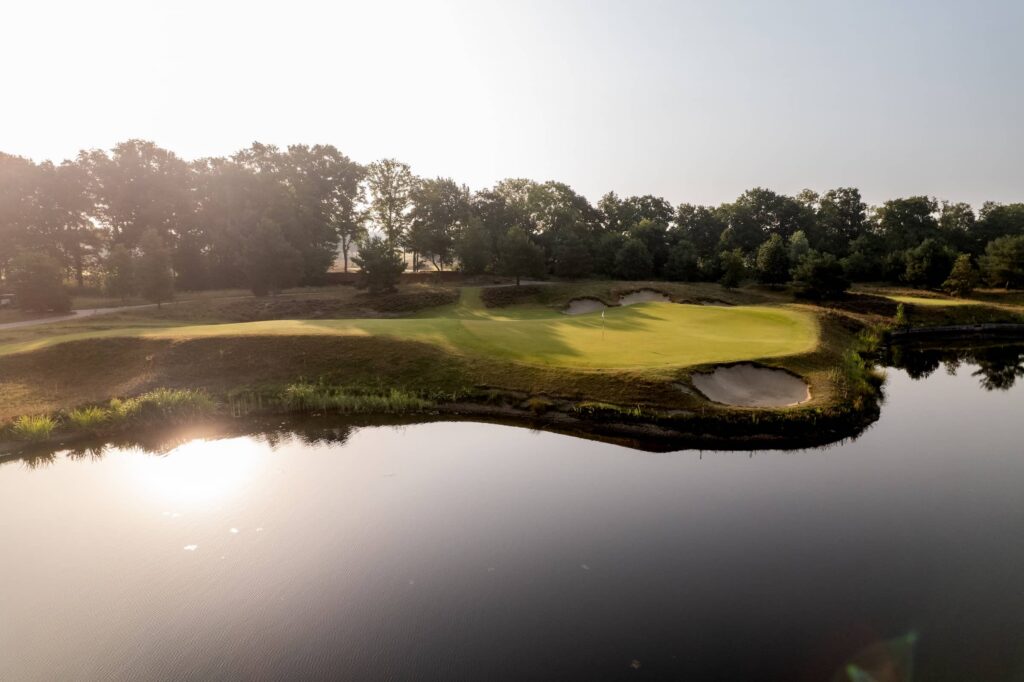
The 6th is played entirely across water to a peninsula green. The putting surface looks generous enough from a safe distance, which is one of golf architecture’s more reliable practical jokes.
“The 6th has a large green, but the area where the ball will actually hold is very narrow – in practice, it can feel like a target of only around ten metres,” shared Verdonschot.
A green can be large on a yardage book and still offer very little usable landing area once slopes, firmness and hazards join the discussion. From the Solheim Cup tee, a slight miss can become a wet one. In foursomes especially, nobody wants to hand a partner that particular apology.
Hole 15: The match-play temptation
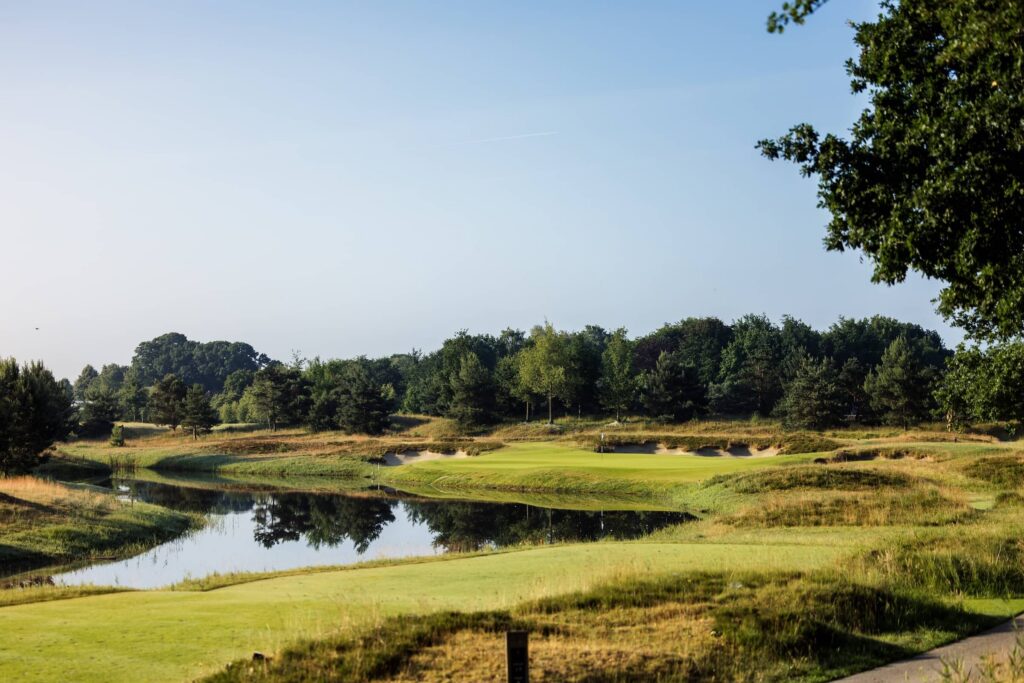
The 15th — Bernardus’ regular 17th — arrives late enough for restraint to become emotionally difficult. Water guards the par three, while the sheltered tee and surrounding trees complicate the wind.
“The 15th is my favourite hole, both visually and strategically, but I also believe it is built for drama,” shared Verdonschot. “Players must decide whether to take the risk and attack the pin for a short birdie opportunity or play towards the middle of the green and accept a longer putt. The tee is sheltered, so the wind can be difficult to feel, even though it is still influencing the shot.”
That is almost a laboratory-made match-play problem. If an opponent is safely aboard, the flag suddenly looks larger. If she has found trouble, the middle of the green can acquire the beauty of a Dutch master.
Bernardus has seen the 15th bite before
Played as the 17th during the Dutch Open, the hole featured in Victor Perez’s 2022 play-off victory when he holed a long-range putt. A year later, Pablo Larrazábal chose the more aggressive route and hit his tee shot close during his win.
Different methods, same reward. There is no single approved answer.
“We have already seen very different approaches succeed on this hole,” added Verdonschot. “That is why I believe the 15th has the greatest potential to decide a match or completely change its momentum.”
Hole 18: No comfortable side
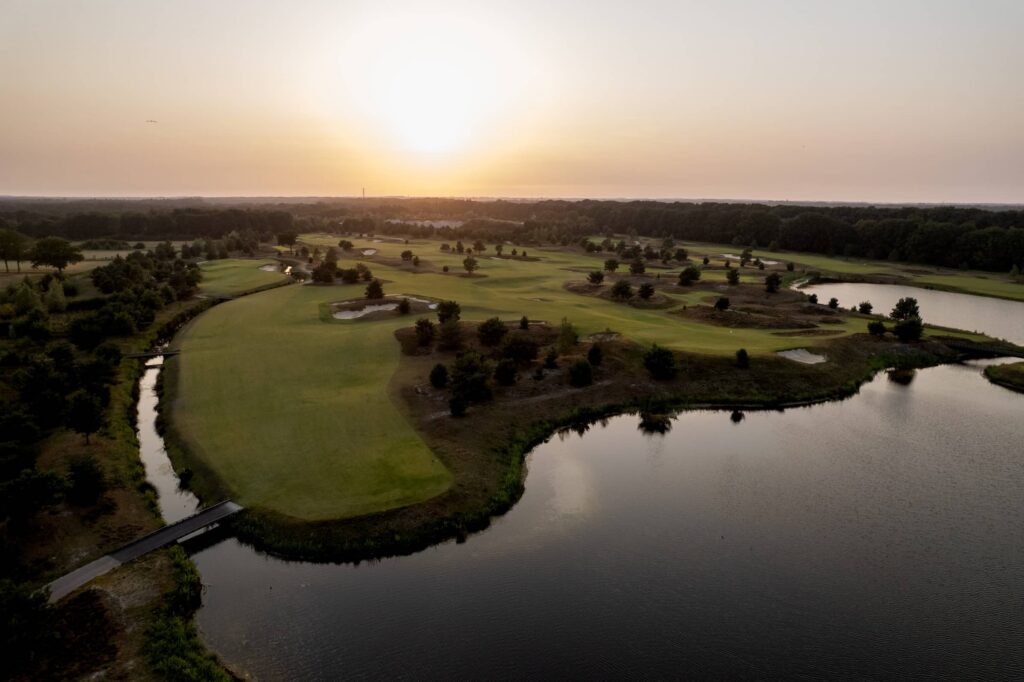
If the 15th invites ambition, the 18th tests nerve. The closing par four, Bernardus’ regular 2nd, has consistently been its hardest hole in tournament and everyday play.
Water waits left from the tee. Bunkers occupy the safer-looking line to the right. The green is small, with a deep run-off on one side and water on the other. It is not so much a finishing hole as an audit.
“The 18th is the most difficult playing hole at Bernardus and it also happens to be the final hole during the Solheim Cup,” said Verdonschot.
A match arriving all square here will have very little room for a neutral swing. “You face a tee shot that you cannot afford to miss left, but you do not want to miss right either. If a close match reaches the 18th, there is a very good chance of drama.”
Why Bernardus could reward conviction
Bernardus has no conventional semi-rough, so firm ground can send a marginal miss running into deeper grass. Tree-lined sections can also make the same wind feel different around the course.
That should favour players who commit fully to a number and shape rather than steering the ball away from disaster. Proximity can be deceptive too: being nearer the green is not automatically better if the angle is poor and the lie removes spin.
Verdonschot says Bernardus will retain the characteristics regular golfers encounter rather than becoming a one-week curiosity for television. For the Solheim Cup, though, the ingredients are concentrated: three holes, late pressure and hazards placed exactly where a player’s attention would prefer them not to be.
The winning side may remember the putts. The losing side may remember the decisions made before the club ever moved.