 Andy Devaney
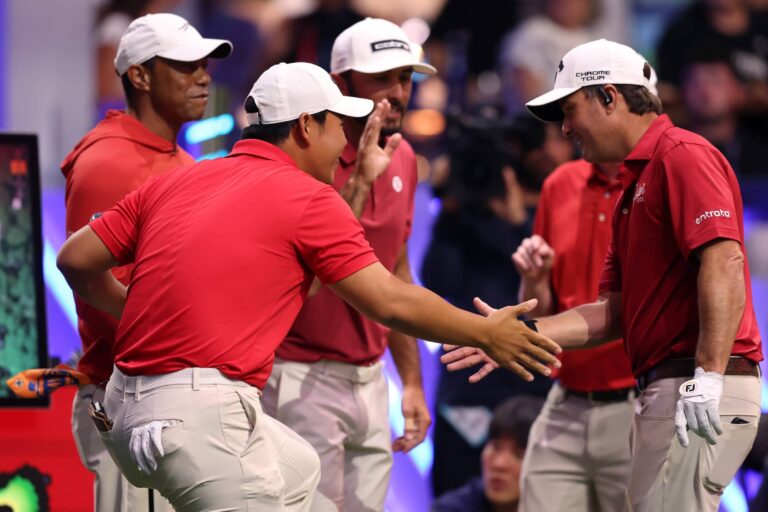
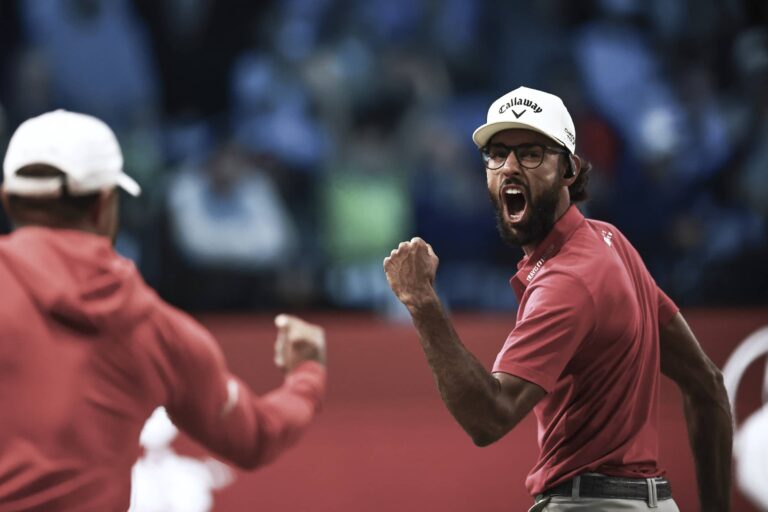
TGL has spent two seasons trying to convince the golfing world that floodlights, giant screens and indoor match play can create proper sporting drama. On Tuesday night, Los Angeles Golf Club made the argument for them. Down early, then suddenly unstoppable, LA ripped the final away from Jupiter Links Golf Club with a 9-2 victory in Match 2 to seal the 2026 SoFi Cup in just 10 holes.
For five holes, this looked like it might become Tiger Woods’ night. Jupiter led 2-0, Woods was back in competition for the first time in more than a year, and there was enough buzz around SoFi Center to light half of Florida. Then Los Angeles found another gear, the golfing equivalent of a switchblade flicking open in a dark alley.
From there, the final did not merely turn. It bolted.
LA turned a deficit into a demolition
The beauty of this TGL final was that it changed shape so quickly. Jupiter had control through the opening stretch, but LA took each of the next five holes and piled up nine points with the kind of ruthless efficiency that leaves the other side staring into the middle distance.
Justin Rose, Sahith Theegala and Tommy Fleetwood all had a hand in the swing.
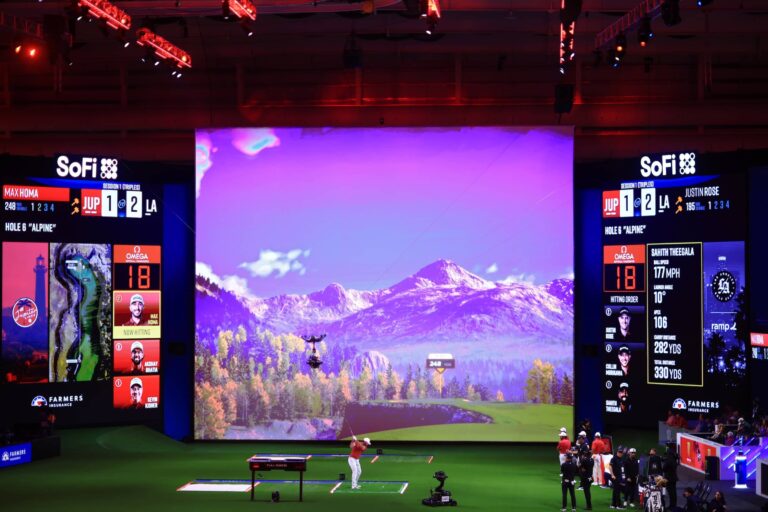
On No. 6, Rose stuffed an approach to 6 feet 6 inches, LA threw the Hammer, and Theegala converted the birdie for two points. That was the first punch.
On No. 7, Fleetwood holed from 4 feet 1 inch for par after Woods missed from 3 feet 6 inches. That was the wobble.
On No. 8, Theegala launched a 308-yard tee shot to 10 feet 11 inches and Fleetwood cleaned up the eagle. That was the moment Jupiter could probably hear the hinges coming off.
Then came the finishing burst. On No. 9, Jupiter threw the Hammer, Rose hit it to 13 feet 9 inches, and Theegala made eagle for two more points. On No. 10, with both teams lobbing Hammers around like confetti at a wedding, Rose knocked it to 4 feet 7 inches for a conceded eagle and a three-point win that clinched the SoFi Cup.
Three straight eagles to end a final is not subtle. It is the sporting equivalent of kicking the saloon doors off their hinges.
The numbers that defined the TGL title
The scoreline said 9-2, but the underlying numbers explain why Los Angeles were worthy TGL champions.
LA earned six of its nine points in Triples, precisely where it had been dangerous all season. The club entered the postseason ranked No. 2 in both Triples Holes Won with 18 and Triples Points Won with 20, and that depth showed when the pressure rose.
In the final, Los Angeles finished with:
- 6 Triples points to Jupiter’s 2
- 3 Singles points to Jupiter’s 0
- 5 total holes won to Jupiter’s 2
- 4 Hammers won, while Jupiter won none
That last stat matters. TGL’s Hammer rule can feel gimmicky in the wrong hands and devastating in the right ones. LA used it like a veteran card player uses a marked deck: coolly, deliberately, and at exactly the right time.
They also closed the season on a five-match winning streak, beginning with a 7-3 victory over defending SoFi Cup champion Atlanta Drive GC on February 23. At that stage LA had been 1-2-0 and hardly looked destined for silverware. By the time the playoffs arrived, they were the sharpest team in the league.
Tiger returned, but the night belonged to LA
There was, of course, another storyline hanging over this TGL final. Tiger Woods returned to competition for the first time in more than a year, and every sporting event involving Tiger arrives with its own weather system.
There were flashes.
On No. 2, Woods struck a second shot from 272 yards to 24 feet 1 inch as Jupiter went on to win the hole with a conceded birdie. On No. 4, he rolled an eagle putt from 45 feet 7 inches to 2 feet 3 inches, helping Jupiter take another hole with birdie. On No. 6, he pumped a 318-yard tee shot into the fairway.
But the shot that lingered longest may have been the one that did not fall. Woods missed a par putt from 3 feet 6 inches on No. 7, and from there Jupiter’s grip loosened and LA pounced.
That is sport for you. One minute the place is leaning toward the great man, the next it is watching another team leave with the furniture.
Rose, Fleetwood and Theegala looked built for this format
One of the more interesting truths about TGL is that it rewards players who can think quickly, hit aggressively and remain oddly calm while the room feels like a space station with betting-shop tension. Los Angeles had three men perfectly suited to it.
Rose was the surgeon. He produced the decisive precision on the back end, including the dart to 4 feet 7 inches on the clinching hole and a longest drive of 328 yards on No. 10.
Fleetwood was the stabiliser. He rarely looks hurried, which in this format is worth its weight in gold bars and therapy sessions. His par on No. 7 and eagle on No. 8 were central to the comeback.
Theegala was the spark. His birdie on No. 6 and eagle on No. 9 brought the electricity. Across TGL, he has the kind of improvisational nerve that makes this made-for-prime-time format feel natural rather than forced.
It is no surprise Los Angeles beat Jupiter three times in 2026, including their first win of the year over JUP on January 20 and both finals matches on March 23 and March 24. Matchups matter in every team sport. This one clearly suited LA.
A season that gathered speed at the right time
Championships are rarely won by the team with the prettiest January. They usually go to the side that figures itself out before everyone else notices.
Los Angeles lost its opener 7-5 to Boston Common Golf, split its early regular-season results, and looked ordinary enough by late February. Then the line tilted upward.
They beat Atlanta Drive GC 7-3, then New York Golf Club 6-3, then returned in the playoffs to knock Atlanta out 6-4 in the semifinals. From there, they edged Jupiter 6-5 in Monday’s first final, turning a one-point deficit into a one-point win with a late Hammer on No. 15.
That set the table for Tuesday’s blitz.
One year after losing in the semifinals in 2025, Los Angeles came back as the second seed and left with the trophy and the largest slice of the prize money, $9 million to Jupiter’s $4.5 million.
That is a decent week’s work, even before you get to the champagne.
What this means for TGL
This result matters beyond one team and one trophy. TGL needed a final with tension, recognisable stars, swings in momentum and enough quality golf to stop the cynics muttering into their sleeves. It got all of it.
It got Tiger Woods back on the tee.
It got pressure moments, aggressive strategy, and a champion that earned its title with proper shot-making rather than novelty.
Most importantly, it got a finishing sequence people will remember: three consecutive eagles, Hammers flying, Los Angeles landing blow after blow while Jupiter ran out of road.
That is how leagues grow. Not through slogans, but through nights when the format feels less like an experiment and more like a real thing.
On this evidence, TGL may still be learning its own identity, but Los Angeles Golf Club knew exactly who they were. And by the end of the final, so did everyone else.