 Robert Theodorson
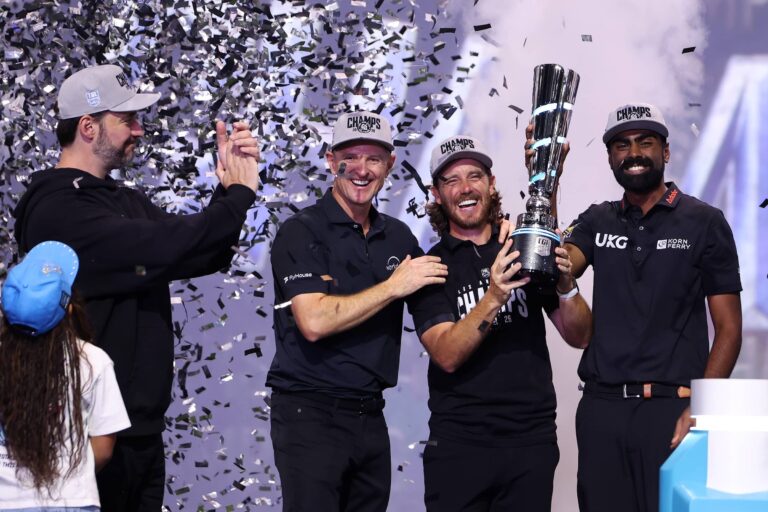
Earlier this week TGL concluded their sophomore season when The Los Angeles Golf Club consisting of Tommy Fleetwood, Justin Rose, Collin Morikawa, and Sahith Theegala lifted TGL’s ultimate prize, the SoFi Cup.
It was a season of ups and downs, PGA Tour fan favorites showing off trick shots, and the expansion of team golf all culminating in the long-awaited arrival of Tiger Woods playing in the finals of a league he helped co-create.
Season two saw a number of improvements, advancements, question marks, and head scratchers for a league still trying to capture a market share of sports fans looking to be entertained by something novel in-between Monday Night Football and the NBA/NHL playoffs.
Looking back on the TGL’s second season, we examine some of the things the tech-infused league got right, and what they got wrong. We’re commenting on things that the league should stay the course on, and where there’s need for improvement before the start of TGL Season 3.
Got Right: The Shot Clock
Ever since pro sports have become riddled with seemingly endless commercial breaks, fans have been begging for faster competition.
The slow pace of play in golf has become somewhat unbearable at times for a fanbase that has been historically more comfortable with a slower type of game than fans of other more high speed and high intensity sports.
The PGA Tour, LIV, DP World Tour, and others have seemingly abandoned pace of play rules, norms, and requirements. Over the years certain individuals in the sport have taken extreme advantage of this and have helped contribute to foster an environment that makes watching a round of golf unenjoyable at times.
TGL’s shot clock rule is draconian and applies to every single golfer without exception, and we love it. The shot clock is in play on all shots and most importantly putts.
Gone are the days of golfers approaching a green and taking four minutes to pace around a slope, consult their caddie four or five times, use aimpoint, address further, and finally take a shot.
TGL keeps rounds short and sweet, and we wish this type of innovation would move to four-day pro tournaments.
Got Wrong: Scheduling
We understand the complexity of scheduling a TGL match: It cannot be during tournament days (Thursday – Sunday), it needs to be able to reach the East and West coast audiences, and the players have prior obligations which may prohibit their participation.
The fact is that TGL matches occur on too many different days and too many different times. This makes it difficult to establish a reliable viewer base who can know, without a doubt, that TGL will be on during a certain date and time. That type of scheduling currently does not exist.
Monday Night Football is a brand in and of itself. Why can’t TGL have TGL Tuesday?
The start times for matches are all over the place – from 5:00 PM ET sharp when people are just leaving work (still at work on the West Coast) to 9:30 PM ET ensuring some matches go almost until midnight.
TGL needs one standard night for tech golf, or to condense the season and move to the fall/winter when the cadence in tournaments slows down significantly.
Got Right: Showcasing the best golfers the world has to offer
When you look at the OWGR you’ll notice that at any given time, most of those names are also TGL golfers. The league has done a fantastic job of attracting top tier talent to play on Monday and Tuesday nights in Palm Beach.
TGL’s next team expansion in Detroit will bring it at least four new top-tier PGA Tour stars, and possibly one or two more to serve as substitutes. Tiger Woods has also hinted that an eighth team might be in the mix in 2028 or later, bringing in even more talent without feeling watered down.
We understand that not everyone is going to want to participate in TGL (Scottie Scheffler), but the league does a great job of consolidating talent and presenting it to fans.
Got Wrong: The Finals
Whatever worked in Season 1 could not be replicated in Season 2.
The Los Angeles Golf Club swept Jupiter Links 2- 0 with the second match ending abruptly after 10 holes and half an hour early.
It was an anticlimactic finish that became incredibly awkward when ESPN made the odd decision to interview the losing Jupiter Links squad on the field immediately after talking to LA for all of two minutes.
Closing out the season after Game 1, a tightly contested 6 – 5 match, would have been preferrable to the Game 2 blowout that left everyone feeling unfulfilled.
Got Right: Team play feels authentic
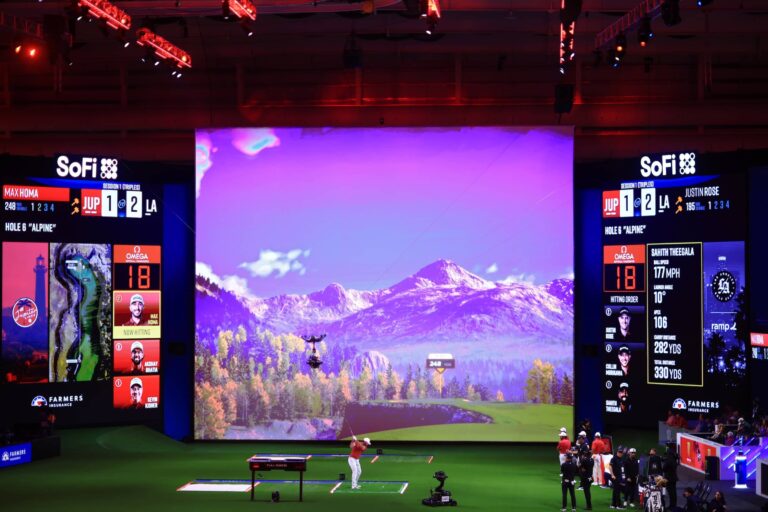
One of the many things that the PGA Tour did to counter LIV in creating TGL was to ensure that team play was centric to the product they were putting out. A lot of things from LIV were ‘borrowed’ such as pop, techno, EDM being played during matches, raucous crowds you wouldn’t normally find at golf tournaments, and advances in technology like drones and robots hovering and roaming the course to make the sport more interesting, especially for a made-for-television product like TGL.
With LIV, team play has become less interesting and important throughout the years with the exception of South Africa and Australia that feature true ‘home teams’ fans can pull for. We care infinitely more about the individual contributions of Jon Rahm and Bryson DeChambeau as opposed to if their teams won a match by way of four-man cumulative score across four days.
TGL feels the opposite.
While we certainly enjoy seeing individual spectacles like Keegan Bradley break the TGL driving distance record, only to see Rory McIlroy break that record a week later, it genuinely feels like a team effort to win the match and it’s fun to see whatever threesome takes the field celebrate with each other after well-deserved victories.
Seeing both teams congratulate Neal Shipley and Tom Kim on their holes in one really shows you that these guys have built a real comradery over a short period of time.
The TGL finals kind of exemplified this in Game 2 when Justin Rose hit a 200 yard bunker shot within fifteen feet of the flag stick, and then Sahith Theegala made the eagle putt based from where Rose’s ball landed.
Got Wrong: Overused celebrity engagement
Watching throughout the season the over-utilization of celebrities at matches came to feel extremely artificial and forced. Several times during the season I wondered to myself, “Are they contractually obligated to be here?”, as retired athletes, musicians, and movie and TV stars were interviewed in-between play. It got so bad that I genuinely pondered to myself, “Don’t these people have anything better to do?”.
I personally don’t like it, though I understand the point behind it, especially while the league is still in its infancy and trying to promote itself in any manner possible.
Got Right: New Hole Designs Featuring Trick Shots
Holes like Stinger, Caverns, The Last Toll, and Cenote are exactly why people tune in to watch TGL. Holes like Stinger and Caverns require elite golfers to hit incredibly powerful, but low shots that you don’t see all that often in normal tournaments. The potential for danger in hitting an arching rock formation or tapering stalactites and landing in the water below makes the golfer’s tee shot all the more dangerous and exciting.
The Last Toll, a post-apocalyptic version of the Golden Gate Bridge, requires golfers to thread the needle perfectly between the bridge’s chains or end up with either an impossible second shot or costly penalty making par almost impossible.
Cenote is a simple but fun hole that requires a powerful drive before the ball lands into a funnel which can either put you a foot way from a hole-in-one or give you a rather difficult two-putt. Cenote resembles plenty of mini-golf holes across the country. It doesn’t sound like much on paper, but it works on TV.
Got Wrong: TGL is the perfect venue for mixed competition
This is a huge issue because as soon as WTGL was announced nearly every single one of my colleagues and friends was asking why don’t the women just play with the men?
It seemed like such a novel idea and quite frankly an easy decision that if TGL wanted to include LPGA stars, they should just have women join the already established teams.
Right now, this idea seems like such a huge fumble, but thankfully there’s still time to rectify this decision.
Got Right: Despite the scheduling issues, the league is extremely accessible.
TGL is easy to watch.
There’s certainly room for improvement, but you know for a fact that every single match will air on an ESPN network and app.
Even the PGA Tour struggles with scheduling for most of their events throughout the season, splitting time between The Golf Channel and a major network broadcaster, and rarely, if ever, showing a complete day of golf start to finish. This is a problem that TGL has completely avoided to date.
This last point harkens back to my comments regarding scheduling. While the league is accessible for nearly all, improvements can be made and should be made to ensure that viewership numbers increase to ensure the health of a league that has a lot of potential.