 Andy Devaney
Golf-ball development can involve chemistry, aerodynamics, engineering and enough testing data to make a launch monitor feel inadequate. Eventually, though, there is a rather simpler examination: hand the thing to a Tour player and see whether he is prepared to put it into play when the score counts.
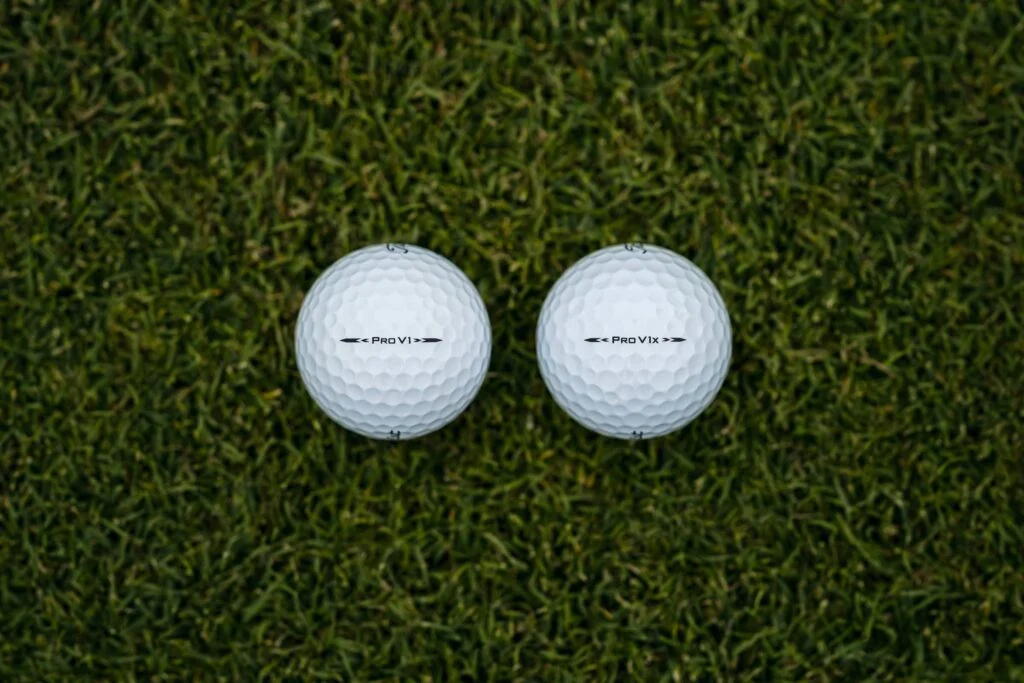
That stage has arrived for the 2027 Titleist Pro V1 and Pro V1x, with the new models beginning a global validation phase at the Baycurrent Classic in Japan.
Players at Yokohama Country Club are getting the opportunity to move from testing to tournament use, extending a development programme that has already involved some of the most recognisable names in professional golf. More importantly for anybody interested in what eventually ends up in the sleeve, a few players have already taken that step.
From Tuesday testing to Thursday golf
The latest phase comes after intensive on-course testing that began around the Arnold Palmer Invitational at Bay Hill in March.
Adam Scott, Ryan Gerard, Jordan Spieth and Harris English were among those testing final candidates during Tuesday practice rounds, giving Titleist representatives feedback after individual shots.
That process subsequently involved players including Justin Thomas, Lottie Woad, Matt Fitzpatrick, Yana Wilson and Viktor Hovland.
The significant detail is not simply the collection of famous names. Tour professionals test equipment all the time. The more revealing moment comes when curiosity turns into a request to use it in competition.
Fordie Pitts, Titleist’s Director of Tour Research & Validation, put it neatly: “When we’re in the middle of a testing session and a player asks me how soon he can play the new ball, I know we’re onto something. That’s how it’s been the last couple months.”
That does not tell us precisely what has changed inside either golf ball. Titleist has yet to provide the detailed performance story behind these 2027 models. It does, however, tell us where the development programme has reached.
The prototypes are escaping the practice ground.
Neal Shipley supplies the first notable tournament result
Four players were given the opportunity to use the 2027 models at the Biltmore Championship Asheville, the opening tournament of the PGA Tour’s FedExCup Fall season.
Among them was Neal Shipley, who moved into the new Pro V1.
His week produced an eye-catching early data point. Shipley shot 62 in the second round, the best round of his PGA Tour career, before finishing tied third — also his best PGA Tour finish.
One tournament cannot establish how much, if anything, a golf-ball change contributed to a player’s performance. Golf remains inconveniently resistant to that sort of tidy conclusion.
What Shipley’s result does provide is something much more useful at this stage: evidence that the new ball has already moved beyond controlled evaluation and into elite tournament golf.
For Titleist, that transition is fundamental. A prototype performing as intended during a practice session is one thing. A player choosing it when every shot is being recorded is rather more persuasive.
Japan opens the wider validation phase
At the Baycurrent Classic, Titleist representatives will continue working with players on the range and inside the ropes at Yokohama Country Club before further tournament adoption.
The process is expected to continue across professional tours around the world over the coming months.
It is a particularly important stage because Tour validation allows Titleist’s R&D operation to see how the final products behave across different players and genuine competitive conditions rather than relying solely on laboratory work or dedicated testing sessions.
According to Titleist, its Golf Ball R&D operation includes more than 75 associates working across areas including aerodynamics, engineering, materials research, analytical chemistry, product testing and development.
That scale is relevant because a golf ball presents a wonderfully awkward engineering problem. It has to satisfy players whose demands for flight, spin, feel and control can differ considerably, yet still arrive as one finished product.
Pro V1 enters another generation
The 2027 launch also continues a product lineage now stretching back more than a quarter of a century.
The original Pro V1 made its Tour debut at the Invensys Classic in Las Vegas in the autumn of 2000. Forty-seven players switched to it during its first week of availability, a remarkably rapid adoption of its then-new multi-component, solid-core construction.
The forthcoming Pro V1 will be the 15th generation of the model, while the new Pro V1x will represent its 13th generation.
Titleist says Pro V1 and Pro V1x balls have been used to win more than 110 men’s and women’s major championships and have been put into play on the PGA Tour more than 100,000 times.
The company also says more than 70 per cent of PGA Tour players routinely choose a Titleist golf ball, with its share rising further at major amateur championships including the NCAA Division I Championship, U.S. Amateur and U.S. Junior.
Those numbers explain why the arrival of another Pro V1 generation attracts rather more scrutiny than the usual equipment-cycle update.
The interesting details are still to come
What we do not yet have is the part golfers will eventually want to dissect: exactly how the 2027 Pro V1 and Pro V1x differ from the current models.
There are no detailed construction changes or specific performance improvements outlined at this stage. That makes extravagant conclusions premature and, frankly, rather unnecessary.
The more useful story for now is adoption.
Some of the world’s leading players have spent months testing the final candidates. Four players have already taken the new balls into PGA Tour competition. Shipley promptly produced his best round and finish at that level, without that result being proof of cause and effect.
Now the validation programme expands in Japan and onwards through the professional tours.
A prototype can impress somebody on a Tuesday afternoon. The more interesting test begins when they mark it, put it on a tee on Thursday morning and expect it to behave while the scorecard is very much alive.