 Andy Devaney
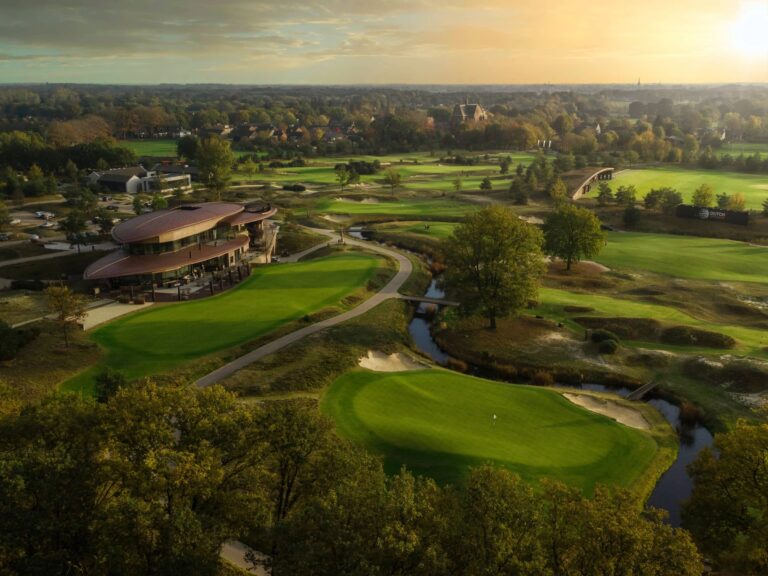
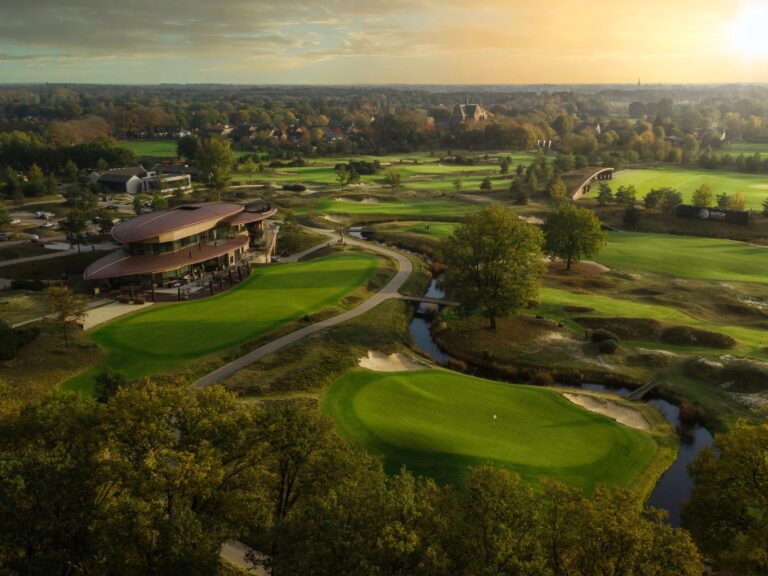
For Bernardus Golf, the 2026 Solheim Cup was both an arrival and an advert. Hosting Europe and the United States for the first Dutch staging of the contest put the venue in front of an international golf audience.
The more interesting question is what Bernardus wants golfers to notice once tournament week has passed: not simply a championship course, but a destination trying to make the round only one part of the visit.
The Solheim Cup changed the scale of the conversation
Major events can transform how a golf venue is perceived. A course may be familiar to serious players and still remain largely abstract to everybody who has never walked its fairways. The Solheim Cup gave Bernardus something harder to buy than publicity alone: context.
Spectators were not only watching one of women’s golf’s biggest team events. In the Fan Village, the Home of Bernardus brought together hospitality, Bernardus wines, merchandise and interactive experiences. That was a fairly direct statement of intent.
The risk with any branded tournament space is that it becomes a shop window with a lanyard. Bernardus was attempting something broader: to show that the venue sees itself as an experience with golf at its centre rather than a course with a few extras parked around the edges.
There is a meaningful distinction between hosting a tournament and using a tournament to explain what a place wants to become. Bernardus is plainly aiming at the latter.
Bernardus is selling a memory, not simply a tee time
Hospitality sits at the centre of that ambition. Sabine Riezebos, General Manager of Bernardus, puts the emphasis on how a visit feels rather than how grand it looks.
“At Bernardus, hospitality is about making every guest feel welcome and creating moments they will remember. We want visitors to have the opportunity to discover more of who we are beyond the golf course, from our wines and merchandise to the experiences that make Bernardus unique.”
That choice of language matters. Golf hospitality can become preoccupied with access, exclusivity and the sort of solemnity that makes sitting down for lunch feel vaguely ceremonial. Bernardus is pitching something less stiff: relaxed, personal and designed to leave a connection after the clubs are back in the car.
For travelling golfers, that is not a trivial distinction. The best golf trips are rarely remembered as a sequence of yardages and three-putts, however heroic the post-round retelling becomes. They survive in the smaller things around the round: the welcome, the atmosphere, the people and the sense that the venue had a character of its own.
Wine gives Bernardus another language
The Bernardus wine collection is an obvious part of that effort to stretch the identity beyond 18 holes.
There is nothing revolutionary about golf and wine occupying the same afternoon; the sport has never shown much hostility towards a decent bottle. The more interesting point is that Bernardus treats wine as part of the destination’s story rather than an incidental hospitality extra.
That gives the venue another way to remain recognisable when nobody is standing over a six-footer. Merchandise serves a similar purpose. Used well, these things extend the identity of a golf destination without needing to pretend they are as important as the course itself.
That distinction is important. Bernardus does not need golf to become secondary. It needs the surrounding experience to be strong enough that the course does not have to carry every part of the visit on its own.
The owner’s ambition is deliberately bigger than the course
Owner Robert van der Wallen describes that wider idea in straightforward terms. “Bernardus was created to be more than a championship golf course; it was designed as a place where sport, hospitality and shared experiences come together.”
Plenty of venues can write a similar sentence. Fewer get the chance to test it during a Solheim Cup.
Hosting the contest gave Bernardus a significant proof point. It had to accommodate elite international sport while presenting itself to visiting fans as more than the stage on which the matches happened.
The Home of Bernardus concept was the clearest expression of that, but the larger consequence is reputational.
The event is now part of the venue’s history. More importantly, it gives Bernardus something concrete to build on. A major event week may create recognition; the harder task is converting recognition into a reason to return when there is no trophy on the line.
The golf still has to be the anchor
None of this works if the golf becomes scenery.
For Love Live Golf readers, that is the useful test of any destination positioning. Wine, merchandise and warm welcomes can improve a trip, but golfers will still judge a golf destination first by the experience of playing there. Bernardus appears to understand the hierarchy: the course is the anchor, while the hospitality is intended to give the visit depth.
That is a more credible proposition than trying to inflate every surrounding detail into an attraction in its own right. The venue’s stated aim is not to distract from the golf but to make the time around it feel connected.
It also gives Bernardus a broader appeal as a destination. Some golfers travel almost entirely for the course. Others care just as much about the atmosphere around the round. The second group is increasingly important to venues that want visitors to stay emotionally attached to a place rather than merely tick it off a list.
The Solheim Cup was a milestone, not the finish line
Bernardus now has a useful problem: the Solheim Cup raised expectations.
A week on one of golf’s biggest stages can lend a venue international attention. It cannot manufacture a personality. That has to exist once tournament week is over and the occasion has returned to the record books.
Bernardus is betting that its combination of championship golf, hospitality, wine and shared experiences gives visitors something more durable than a famous tournament memory.
The proposition is simple enough. Come for the golf, notice the rest, and leave with a reason to come back.
That is a harder trick than hosting one spectacular week. It may also be the one that matters more.