 Andy Devaney
There are old clubs, there are great clubs, and then there is Carolina Country Club—the kind of place that does not need to shout because its pedigree has been doing the talking since 1910.
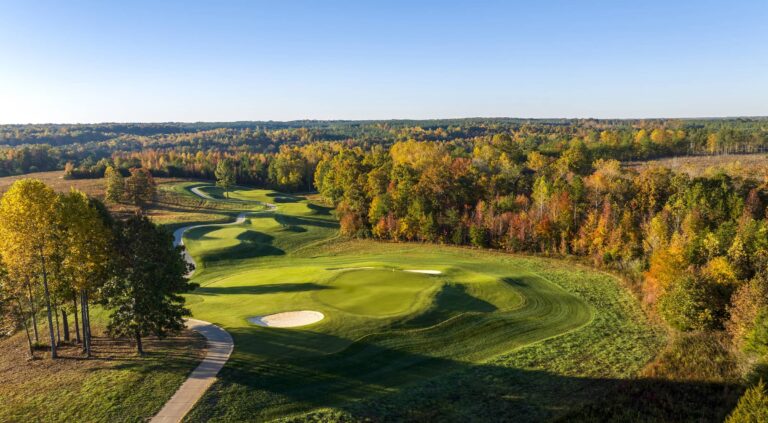
Now North Carolina’s oldest private club is nearing completion of a major golf course renovation in Raleigh, a project designed not to reinvent the place so much as tune it like a concert piano.
Set to finish in June, the work has touched all 18 holes through tee, bunker and green remodelling, fairway grassing, and full irrigation and drainage replacement.
That may sound like the plumbing and wiring of golf architecture, which in many ways it is, but the effect is far more elegant than that. This is about preserving the soul of a revered championship layout while giving it the sort of modern backbone required to stay sharp in the heat, strain and scrutiny of modern golf.
A classic course, carefully reawakened

The clever part of this renovation is that it has not tried to dress up a classic in gaudy new clothes. Carolina Country Club has leaned into its own character, preserving the spirit of the 1930s A.W. Tillinghast re-design while updating the course beneath the surface.
That is often where the smartest work lives. Golfers notice the bunker lines, the putting surfaces and the visual drama from the tee. What they may not see is the quiet science underneath: better drainage, smarter irrigation, more efficient maintenance and the kind of infrastructure that allows conditions to remain consistently first-rate without asking the earth for quite so much in return.
In other words, this is not a facelift. It is a restoration with a pulse.
Preserving Tillinghast, not embalming him
There is a temptation at storied clubs to treat history like museum glass. Stand back, do not touch, and admire what once was. The better approach is harder. It asks how a course can remain faithful to its architectural lineage while still functioning brilliantly in the present day.
That appears to be the lane Carolina Country Club has chosen.
“The team has done a wonderful job improving sustainability and modernizing the golf course while preserving the character of the 1930s A.W. Tillinghast re-design,” said Jack Slaughter, General Manager / COO of Carolina Country Club.
That balance matters. Tillinghast courses are not meant to feel polite or overly polished. They are meant to ask questions, tempt rash decisions and expose any golfer whose confidence arrives before their swing does. Preserving that strategic character while upgrading the playing surfaces and substructure is where renovation becomes craft.
The people behind the project
Landscapes Unlimited, which is leading the work, is no stranger to serious golf ground. The on-site team is headed by Chris Kelley and Roberto San Juan, both seasoned hands in restoring and refining layouts at prominent clubs across the United States.
Carolina Country Club and Landscapes Unlimited also know one another well. Their partnership stretches back more than two decades, which tends to help when the task is this delicate. Renovating a prestigious private course is not simply about construction schedules and budgets. It is about trust, timing and knowing which parts of a golf course must evolve and which parts should be left well alone.
Course architect Greg Muirhead of Rees Jones, Inc. has played a central design role, alongside Paul Roche with Golf Water and Dennis Hurley with Turf Drainage Company of America. It is a cast built less for theatre than for precision, which is exactly what a project like this requires.
Why this matters beyond appearances
A bunker can look magnificent and still be a nuisance to maintain. A green can be visually stunning and yet impossible to present consistently in difficult weather. The best modern renovations understand that championship conditioning is not just about aesthetics. It is about systems.
That is where this project at Carolina Country Club may prove especially significant. Reworked drainage and irrigation are not glamorous subjects over dinner, but they are often the difference between a course that merely survives and one that thrives. Better water movement, more efficient turf management and reduced resource use all help future-proof the layout while supporting the pristine conditions elite members expect.
That makes this renovation as practical as it is beautiful.
“The ease of working with Landscapes Unlimited and others are second to none,” said Kyle Johnson, Director of Grounds of Carolina Country Club. “Unveiling an exceptional golf course that preserves traditional and adds contemporary infrastructure and features will make members prouder than ever to call Carolina Country Club home.”
Raleigh elegance with championship teeth
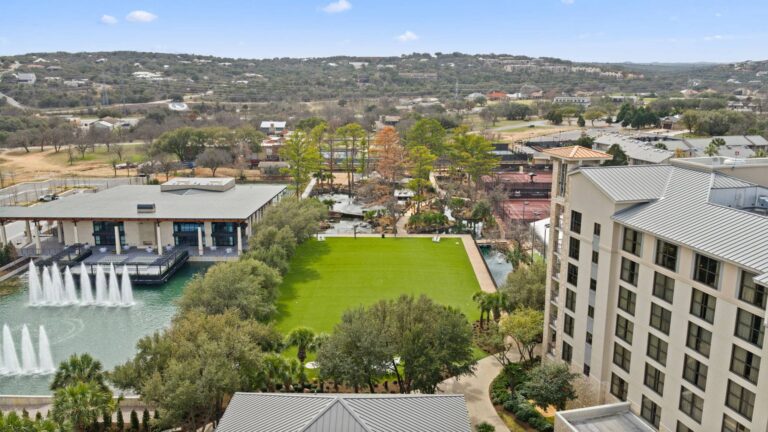
There is something especially appealing about a club that can offer refinement without becoming stiff in the collar. Carolina Country Club has long been recognised as one of the nation’s finest. The place has the broader ecosystem expected of an elite private club: first-class tennis, wellness, aquatics and dining, plus a strong social and recreational calendar for adults and younger members alike.
That wider experience matters in today’s private club world. Great clubs are no longer judged solely by the firmness of a green or the depth of a bunker lip. They are judged by the full rhythm of a day spent there—morning light on the fairways, lunch on the terrace, children at the pool, a match on the tennis courts, dinner served with a little ceremony but not too much fuss.
Carolina Country Club has that rare quality of feeling established without feeling tired. In elite-club terms, that is worth a fortune.
How Carolina Country Club compares
The finest golf destinations, whether in the Carolinas, the Northeast or the old-money corners of California, share one trait: they improve without panicking. They understand that prestige is not maintained by gimmickry. It is maintained by stewardship.
That is what places Carolina Country Club in distinguished company. The club’s standing as a five-star Platinum Club and an Elite Club of the World speaks to reputation, but reputation grows stale if it is not backed by experience. By modernising intelligently rather than noisily, the club has done what the best properties do—protect the standard, honour the architecture and keep moving.
A renovation built for the next generation
There is also a quiet confidence in choosing this kind of project now. Golf has changed. Expectations are higher. Agronomy is more sophisticated. Members are better travelled and have seen great golf in many forms. To impress them now, a club must offer authenticity and excellence in the same breath.
“We appreciate the continued trust Carolina Country Club puts into our company to deliver excellence on time and on budget,” said Dana Grode, Vice President of Landscapes Unlimited. “Seeing ear-to-ear grins from members gives us incredible enjoyment, and makes the blood, sweat and tears well worth it.”
That line about ear-to-ear grins tells you most of what you need to know. For all the engineering, architecture and operational planning, golf still comes down to emotion. The first walk onto a renewed tee. The first bunker stared into with mild regret. The first putt across a green that looks as though it has been combed by angels with very exacting standards.
When Carolina Country Club unveils this renovated course in June, members will not simply be seeing a smarter golf course. They will be seeing the next version of home—one that respects the old bones, sharpens the playing experience and reminds everyone why the best clubs endure in the first place.