 Andy Devaney
Three weeks to prepare the finishing touches. A week of professional golf, spectators, television coverage and everything else that comes with staging a major tournament. Then, almost overnight, it was gone.
For Anthony Tarchetti, general manager at Chart Hills Golf Club in Kent, one of the strangest moments of hosting the Staysure Legends Tour came after the final putt had dropped.
By the Tuesday afternoon following the tournament, the temporary fencing, flags, scoreboards and other signs of championship golf had largely disappeared. The course was returning to ordinary club life, almost as though the previous week hadn’t happened.
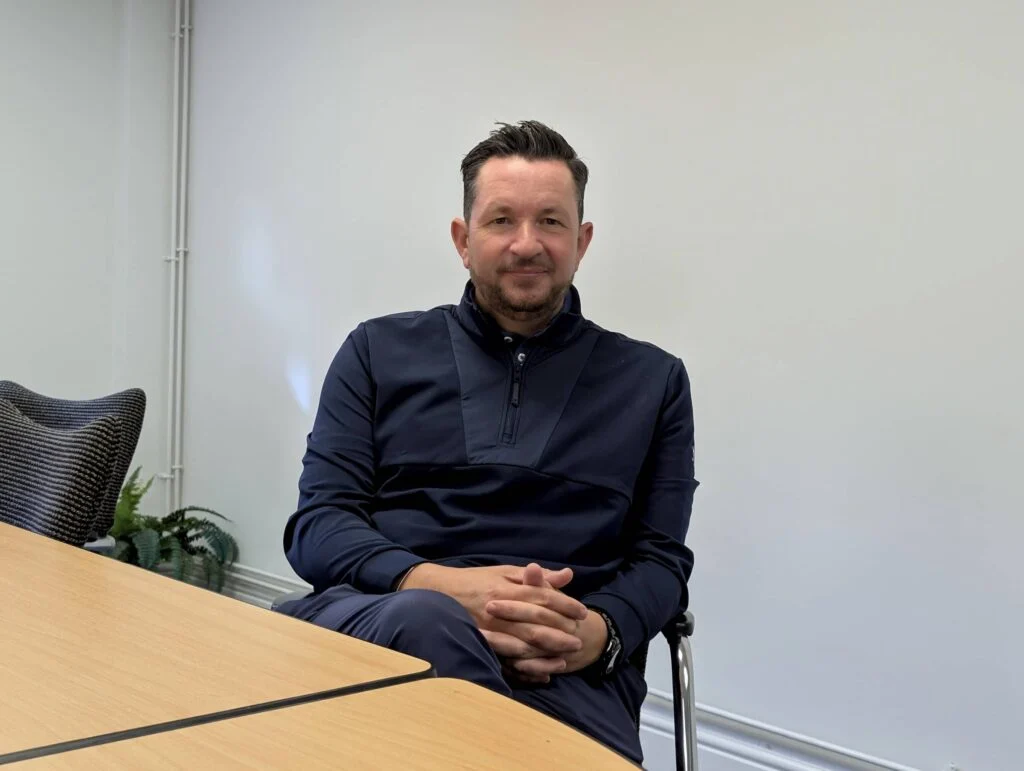
“You know what, I really enjoyed the week,” Anthony tells me when I ask whether his overriding feeling was relief.
It’s an interesting answer, particularly when you consider how little time Chart Hills had to prepare.
But as our conversation develops, it becomes clear that this wasn’t simply about putting on a successful golf tournament. For a club that has undergone considerable changes in recent years, it was an opportunity to demonstrate just how far it has come.
And, perhaps more importantly, where it intends to go next.
From March to August: The Tournament That Came Together Quickly
Professional tournaments generally require considerable planning. Courses need preparing, operational arrangements need agreeing, commercial opportunities need selling and members have to accept that their usual golfing routine will be interrupted.
Chart Hills didn’t have the luxury of an especially long run-up.
“We got approached in March time to hold it, because they didn’t have a venue,” Anthony explains.
March. For an August tournament.
Even allowing for the club’s existing facilities and experience of hosting Open Qualifying, that is a fairly demanding timetable.
Yet Anthony believes the eventual result justified the effort.
“We had about three and a half thousand people,” he says, reflecting on the turnout.
With free tickets available, the tournament gave golf followers across Kent the opportunity to watch established names competing without the usual admission cost.
I myself spent the Thursday and Friday of the Legends Tour at Chart Hills, before travelling to Birmingham for the British Masters, which unfortunately happened to fall during the same week.
That scheduling overlap was something we discussed. Anthony indicated that, should the event return, avoiding the same weekend would be preferable.
It raises an interesting question about the appetite for professional golf in Kent. The county has no shortage of respected courses, but opportunities to attend tournaments of this kind are comparatively limited.
Anthony recalls a previous women’s professional event at Chart Hills attracting somewhere between 8,000 and 10,000 spectators.
For him, the potential is there. Whether a repeat tournament happens is another matter.
“It was really excellent to do it,” he says.
But enthusiasm has to be balanced against the financial realities. Organising a tournament involves considerable work for the host venue, while the Tour faces its own challenge of securing sufficient commercial support.
Anthony is open to staging the event again, provided the arrangements make financial sense.
It is encouraging, although certainly not a confirmed return.
The Bigger Challenge Was Happening Beneath the Fairways
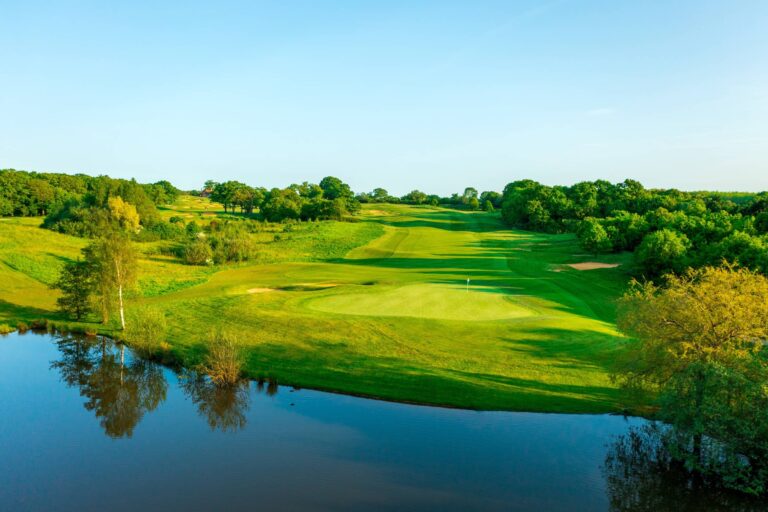
When I visited Chart Hills during the tournament, one of the first things that struck me was the condition of the course.
After the extremely hot, dry summer we’d experienced, I expected to see considerably more evidence of the weather. Instead, the fairways appeared remarkably healthy from the spectator areas.
I mentioned this to Anthony, along with something several members had told me about water being brought onto the property ahead of the event.
His explanation turned towards the substantial work undertaken since the current management arrived in 2019.
Between 2020 and 2021, the club carried out major improvements involving sand capping, drainage and water management. Anthony recalls approximately 32,000 tonnes of sand being introduced as part of that transformation.
The work was documented in the club’s Inside Chart Hills YouTube series, giving members and visitors an opportunity to see what was happening beneath the playing surfaces.
It was an investment designed to address a longstanding problem.
Anthony explains that before the improvements, the course could be closed for much of the period between November and March.
The sand-capped areas now drain considerably better, but that doesn’t mean Chart Hills is immune to the weather.
Far from it.
The club relies on collected rainwater for fairway irrigation, creating an obvious difficulty when a prolonged dry spell follows a relatively poor period of rainfall.
Water stored through winter is a finite resource. Once supplies begin running low, maintaining the same playing conditions becomes increasingly difficult.
And that was the problem facing the greenkeeping team.
Chart Hills had hosted Open Qualifying at the end of June, when Anthony felt the surfaces were in particularly good condition.
By the time the Legends Tour arrived, the summer drought had taken its toll.
Although the professional players were generally positive about the course, Anthony admits the greenkeeping team were disappointed that they couldn’t present it in quite the condition they had achieved earlier in the season.
It is a revealing distinction.
As spectators, we tend to judge a course against what we can see. The people responsible for maintaining it are measuring the same surfaces against what they know is possible.
And when months of work are affected by circumstances beyond their control, that’s understandably frustrating.
The arrival of heavy rain during the tournament weekend only added another complication.
The ground had become extremely hard in places, making the transition from prolonged dry weather to significant rainfall difficult to manage.
Since the event, the team has carried out extensive maintenance, including work across the fairways using equipment that cuts narrow slits into the surface and introduces new seed.
The tees have also received attention as part of the autumn programme.
It is a reminder that the job doesn’t finish when the television cameras leave.
In many respects, that is when the next stage begins.
A Championship Course That Still Needs to Work for Its Members
One of my questions for Anthony was how the club managed the disruption caused by hosting such a significant event.
After all, there is a difference between enjoying the prestige of belonging to a championship venue and discovering that you can’t play your usual round for an entire week.
But the response from members appears to have been overwhelmingly positive.
Anthony explained that many had belonged to Chart Hills long before the current management arrived and welcomed the return of high-profile tournament golf.
“They like the idea of having a big event here,” he says.
During my visit during the Legends tournament, I spent considerable time around the ninth green, close to where spectators could also watch the action around the 18th.
Several members were volunteering as ball spotters, while others were following the professionals.
What stood out was the pride they appeared to take in the occasion. More than once, someone made a point of telling me they were a member.
It was clearly something they wanted to be associated with.
Anthony acknowledges that closing the course is always a concern. Members pay to play golf, and asking them to give up access for an event is not a decision to take lightly.
The test comes afterwards.
Do they feel the occasion was worth the inconvenience? And, perhaps more significantly, would they welcome another one?
From the feedback Anthony has received, the answer appears to be yes.
That matters because the tournament wasn’t simply a showcase for visiting professionals. It also gave existing members something they felt proud of.
What the Professionals Saw Differently
One of the more fascinating aspects of speaking to someone who knows a course as thoroughly as Anthony is hearing how professional golfers approach holes that members play every week.
Take the 17th.
Chart Hills’ island green is an obvious talking point, but its difficulty isn’t simply about finding the putting surface.
Anthony explains that changing conditions could turn the approach from a wedge into an eight-iron.
That is a substantial difference when water surrounds the target.
“You’ve still got to hit the shot under pressure,” he says.
And it doesn’t matter how experienced you are. Knowing where the ball needs to finish and actually putting it there are two different things.
Another hole that caught Anthony attention was a short par four of approximately 300 yards.
For ordinary golfers, it presents a genuine choice: take on the green or play a more conservative shot that leaves a manageable approach.
Anthony explains that many of the club’s better players will lay up, while others attempt to reach the putting surface.
The Legends Tour professionals, however, tended towards the aggressive option.
He describes players carrying a bunker requiring approximately 260 yards of flight, using the downhill ground beyond it to move the ball towards the green.
It was a different approach from the one many members would choose.
But that doesn’t necessarily make it the right strategy for everyone.
The professionals have the distance and control to make that decision worthwhile. For the rest of us, a slightly less ambitious shot might save considerably more trouble than it creates.
Then there is the 14th, one of Anthony’s personal favourites.
Its appeal, he explains, changes depending on which tee is being used.
From the forward tees, reaching the green becomes a realistic possibility. Move back to the longer tees and the same hole can require a lay-up followed by a carefully judged approach.
Wind direction adds another layer, particularly around the pond.
He also speaks fondly of the eighth, describing a fairway framed by oak trees, running through a valley towards a green approached across a stream.
It sounds like one of those holes that deserves a little appreciation before you start worrying about where your next shot is going.
Why Chart Hills Has Moved Away From Traditional Tee Colours
Perhaps another one of the most useful changes for everyday golfers and oving with modern times has nothing to do with tournament staging.
Anthony explains that Chart Hills has moved away from relying solely on the traditional coloured tee system, introducing numbered tee complexes instead.
The decision was partly influenced by an ageing membership and the recognition that the course could become excessively long for some players.
There was also a familiar issue: certain golfers were reluctant to move forward because of the associations attached to red tees being traditionally the ladies.
By replacing those labels with numbers, the club has made the choice feel less dependent on age or gender.
The forward 55 tees represent approximately 5,500 yards, while the 71 tees (7100 yards) offer a much longer challenge.
Anthony says many of the club’s senior golfers now play from the 55 tees without questioning it.
It makes sense.
A golf course doesn’t become less enjoyable simply because you’re playing fewer yards. Quite often, the opposite is true.
And at Chart Hills, distance can be particularly deceptive.
Anthony explains that even during summer, golfers shouldn’t necessarily expect the amount of run they might enjoy elsewhere.
The softer playing surfaces mean the ball can stop relatively quickly, making the course play closer to its full measured length.
He frequently encourages visitors to consider the 61 tees rather than automatically choosing the longer 66 option.
It’s a useful piece of advice, especially for anyone booking their first round.
Choose the tees that suit your game, not the ones you feel you ought to play.
Winter Golf, Better Drainage and the Next Improvement
The conversation eventually turns towards winter golf.
I admit to Anthony that I’m something of a fair-weather golfer. Once the temperature starts dropping and the rain returns, Spain and Portugal become increasingly attractive alternatives.
Nevertheless, I wanted to know how Chart Hills holds up when conditions deteriorate.
Anthony is realistic about the limitations.
“I mean, the semi-roughs and the roughs get wet,” he explains.
Those areas didn’t receive the same sand-capping treatment as the principal playing surfaces, so golfers can still encounter softer ground between the tees, fairways and greens.
The sand-capped areas, however, drain far more effectively than they did before the renovation.
That improvement has transformed the club’s ability to offer golf during wetter months, even if it hasn’t removed every problem.
Which brings us to the next major priority: pathways.
“Our next plan really is to get some pathways connecting everything,” Anthony says.
The idea is straightforward. Golfers should be able to move from a relatively dry tee to a relatively dry fairway and onwards towards the green without constantly having to cross saturated grass.
It is the sort of improvement that might not attract the attention of a television commentator but can make a substantial difference to someone’s enjoyment of a winter round.
Anthony explains that delivering these projects is complicated by the golfing calendar.
Summer brings heavy demand for tee times, corporate events and visiting golfers. Winter creates its own difficulty, with wet ground making it harder to bring machinery onto the course.
The plan, therefore, is one of continuing improvements rather than an instant transformation.
He also wants to develop the appearance of the course’s natural features, clearing ditches and improving the presentation of streams and watercourses.
It is about making the experience better, not simply collecting another tournament.
Visitors Don’t Have to Be Members
Something else I wanted to establish was how accessible Chart Hills actually is to golfers who aren’t members.
There can be an assumption that a course hosting professional tournaments is primarily reserved for those belonging to the club.
Anthony is keen to explain that visitors are welcome.
Members receive priority when booking tee times, with arrangements designed to protect their access, while available times can subsequently be released for visiting golfers.
The club also offers corporate golf days and online booking.
For Anthony, convenience matters, but so does maintaining a personal connection with guests.
He likes the fact that some visitors still contact the club by telephone or email rather than completing every part of the experience through an automated system.
At the same time, he recognises that modern golfers increasingly expect to be able to book quickly and receive immediate confirmation.
That thinking extends to the accommodation.
Chart Hills has not so long ago converted a former derelict barn into accommodation capable of sleeping up to eight people, with an artificial chipping and putting area outside.
It gives groups another option for a golf break, while the club also uses online accommodation-booking platforms.
On the golfing side, Anthony is particularly keen to emphasise the facilities available beyond the 18 holes.
Visitors can use the driving range and practice facilities as part of their experience, with the club also developing its short-game offering.
There is a welcome emphasis on getting more from a visit than simply turning up, playing and leaving.
“We know the product’s good,” Anthony says during our discussion about value for money.
But his point is that golfers need to feel they have received something worthwhile for what they have spent.
That means the quality of the course, certainly, but also the facilities, service and overall experience.
And in a market where there are plenty of competing options, that distinction matters.
Did the Legends Tour Change How Chart Hills Sees Itself?
Towards the end of our conversation, I ask Anthony whether staging the event taught him anything about Chart Hills that he hadn’t fully appreciated before.
His answer is immediate.
“I mean, it definitely taught me that we can hold championship events and do it properly.”
There is an understandable sense of satisfaction in that response.
The tournament required months of organisation, considerable greenkeeping work and cooperation between the club, its members and the Tour.
Despite the challenges, Anthony says the week passed without the significant operational problems he might have expected.
The positive feedback from the professionals also offered some reassurance.
When you’re responsible for a property, you tend to notice the imperfections. Small details become larger issues because you’re looking at them every day.
Visiting golfers, meanwhile, may be judging the experience very differently.
Anthony recognises that distinction.
It doesn’t mean standards should slip. Rather, it provides some perspective on what genuinely matters to the people playing the course.
The event also helped reinforce the club’s broader ambitions.
Anthony talks about Chart Hills returning to prominent course rankings, hosting Open Qualifying and working towards once again being recognised as a premium golfing destination.
He acknowledges that the club experienced a period when its reputation had slipped.
The improvements of recent years are intended to change that and change that they already have.
And while the Staysure Legends Tour provided an excellent opportunity to show the course to a wider audience, the next challenge is ensuring ordinary members and visitors continue to notice the difference.
The Real Test Comes After the Tournament
When I ask Anthony what he would like me to notice if I returned in another year’s time, he doesn’t point towards a spectacular new development.
Instead, he returns to the things we’ve discussed throughout the interview.
Better pathways. Improved playing surfaces. Tidier ditches and water features. The small, continuing changes that gradually make a course more enjoyable.
It is a fairly practical ambition, but perhaps that is the point.
The Legends Tour demonstrated that Chart Hills could accommodate professional tournament golf and deliver an occasion that members and spectators appreciated.
The greenkeeping programme demonstrated how much progress had already been made, while reminding everyone that even substantial investment cannot completely overcome difficult weather.
And the changes to tee options, booking systems and visitor facilities suggest the club is thinking beyond the demands of championship players.
For Anthony, the objective is to keep improving the experience, year after year.
Whether the Staysure Legends Tour returns remains to be seen.
But the more interesting question might be what Chart Hills looks and plays like when the next tournament comes around.
Because while the grandstands, flags and scoreboards can disappear in a day, the work that makes a golf course worth visiting is considerably more permanent.