 Andy Devaney
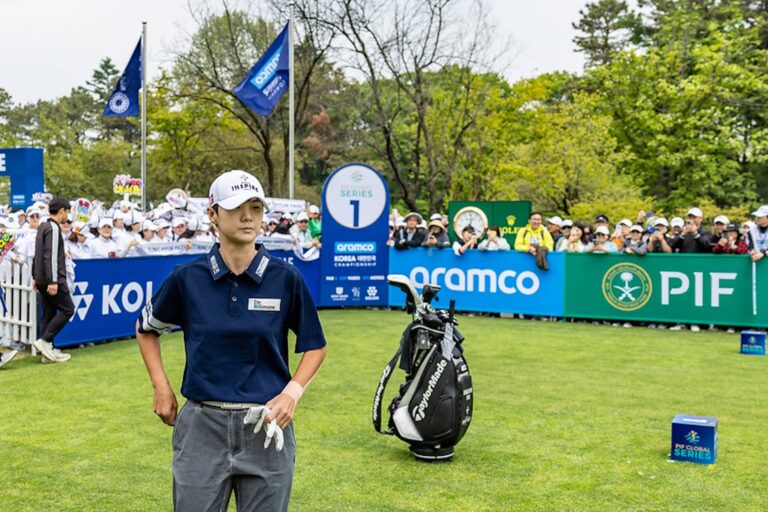
The Aramco Korea Championship 2026 has acquired an extra day and, with it, considerably less room for improvisation.
From 8–11 October, New Korea Country Club will host a US$2 million tournament now played as a conventional four-round, 72-hole individual stroke play event. That alteration sounds administrative until somebody starts missing fairways.
Danielle Kang knows the consequences rather well.
“I really do love this golf course. I haven’t played as well as people have expected the past few years, but we’re narrowing my shots down, which is good.”
Narrowing them down would appear useful here. Kang describes a course where indecision from the tee is not so much punished as escorted politely towards the trees.
“My game plan is to be very disciplined off the tee, stick to that strategy, and execute. Hopefully, that leads to a great result this week.”
Four rounds should make that discipline matter.
New Korea Country Club asks the question early
The longer format changes the complexion of the championship. A three-day sprint can occasionally accommodate one spectacular round and a certain amount of creative accounting elsewhere. Over 72 holes, weaknesses generally receive a second, third and fourth opportunity to introduce themselves.
That places additional emphasis on the demands of New Korea Country Club, particularly from the tee.
Kang’s assessment is refreshingly uncomplicated: keep the ball where it belongs.
The closing hole offers the most obvious demonstration. Asked which hole stood out, she chose the 18th.
“For me, it’s hole 18. You cannot miss long. The hole itself plays very long, requiring a longer iron in, and the green slopes severely back to front. It demands a precise tee shot—if you miss left, you’re out of bounds. A lot is going on with that closing hole, and getting up and down for par is a serious test.”
Quite. There are friendlier ways to finish a round.
Kang and Lee find something familiar in Korea
For Kang, the week also carries a significance beyond course management.
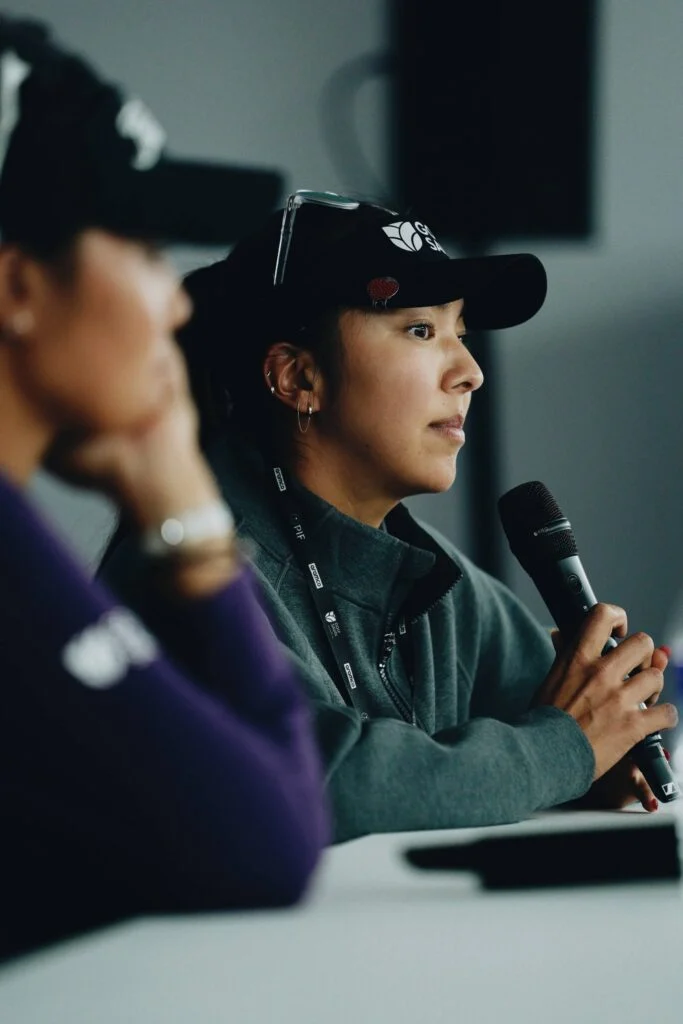
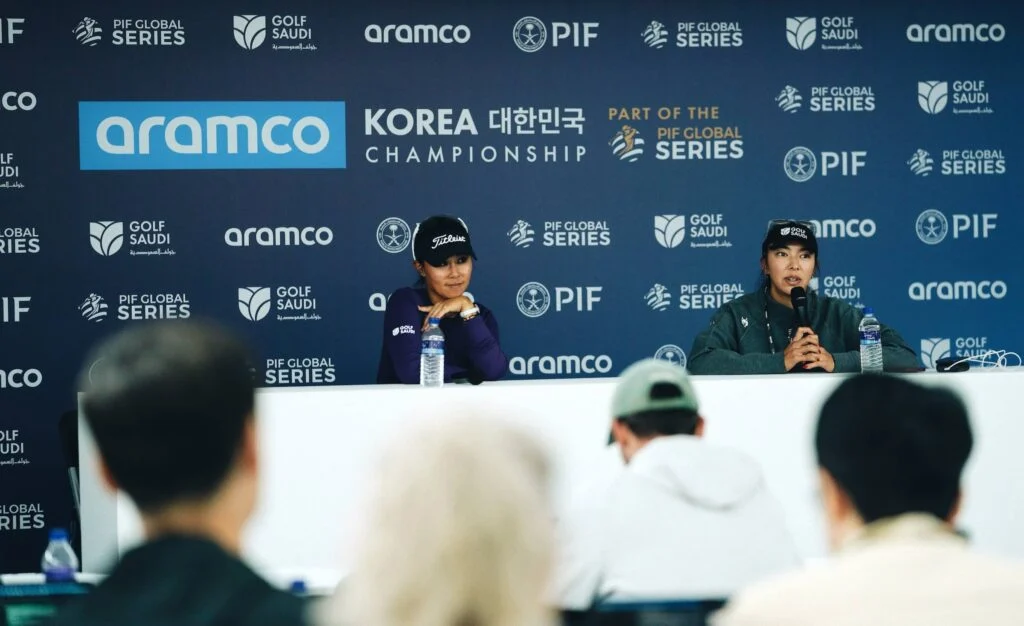
“I’m really excited to be back. I’m grateful to the global series for keeping me as an ambassador year after year, championing women’s golf, and growing the game. I love coming out to Korea, especially because I get to make an impact here. I have a lot of fans here, and I get to see friends and play in front of people I don’t get to see very often.”
Alison Lee arrives with an equally personal connection. Both her parents were born in Korea, and this time the family has travelled with her.
“My whole family made the trip to support me this week, which makes it extra special. Travelling over here with everyone was quite the journey, but having them here to watch me play is amazing. My mom is especially thrilled, she had a huge smile on her face the moment our plane touched down.”
Lee’s appreciation of Korean golf culture begins with the galleries but extends well beyond the ropes. She sees a country where professional golfers occupy an unusually visible place in sporting life.
“Korea does an amazing job fostering an appreciation for the sport from a very young age. Golf is viewed as a highly prestigious sport, and professional golfers are genuinely celebrated.”
There are other attractions. Korean food, unsurprisingly, is high on the list, as are already-booked hair and skincare appointments once the tournament is finished. Elite sport can be terribly complicated until somebody mentions lunch.
The Korean model Kang admires
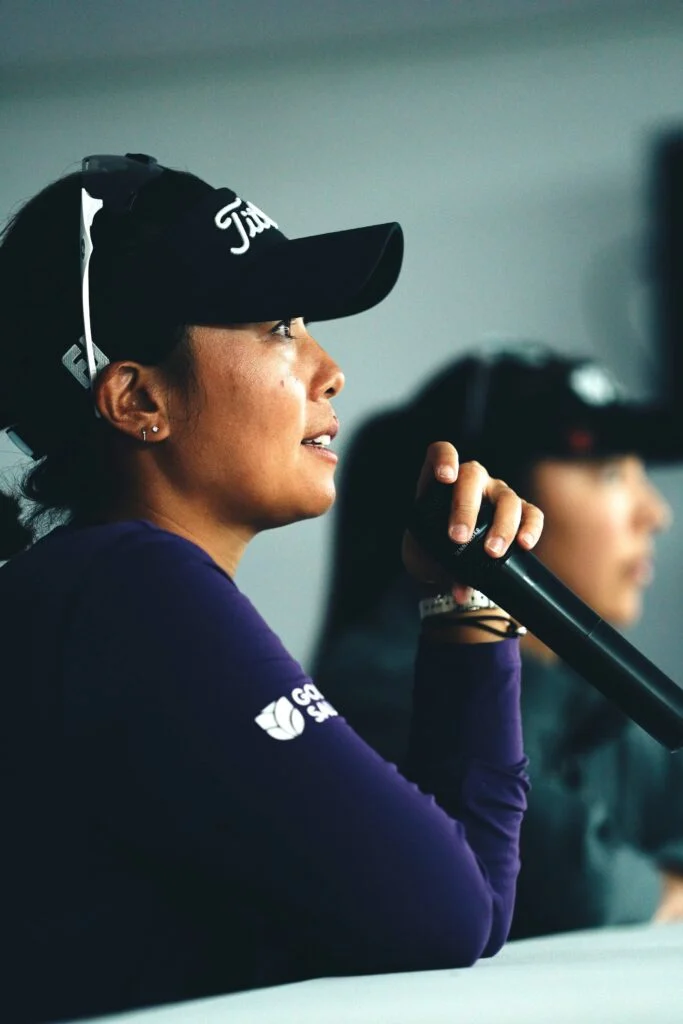
Kang’s observations are more technical.
“When I watch Korean golfers, whether seeing how they train at summer or winter camps—their tenacity, resilience, and discipline stand out. They stay remarkably even-keeled.”
For Kang, it is the emotional control that deserves particular attention.
“Their emotional control and course temperament are so refined, and that mental strength is often what separates good players from major champions.”
That point should resonate particularly strongly this week. A tight course played over four days is unlikely to reward anybody inclined towards emotional combustion after one crooked drive.
The field itself brings considerable pedigree, including South Korean Major champions returning to home soil alongside established international names. Ladies European Tour sanctioning and PIF Global Series status also mean Rolex Women’s World Golf Rankings points are available.
Reputation, however, remains wonderfully useless on the first tee.
Van Dam returns with golf in a different place
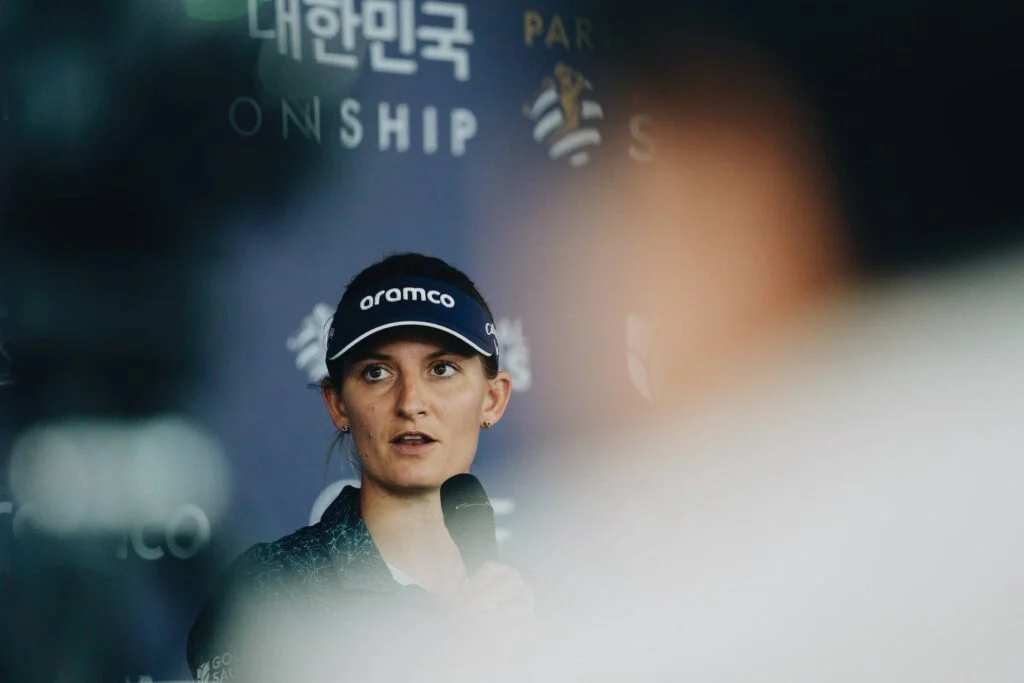
Anne van Dam arrives with a rather different relationship to tournament golf than earlier in her career.
She has been involved with these events for around six years and has watched the schedule expand from a small number of tournaments in Saudi Arabia into an international series. What has changed more dramatically is her own perspective.
Van Dam has become a mother, taken roles in the Solheim Cup and Junior Solheim Cup, and recently celebrated her wedding.
“It puts everything into perspective, and in many ways, it’s even more rewarding than personal accolades on tour.”
Her playing schedule has consequently become more selective.
“Playing a full schedule of 30 to 35 weeks a year can sometimes feel like a grind. When you play a more selective schedule, it’s far more exciting each time you tee it up. You appreciate tournament weeks much more.”
That alters her goals at New Korea Country Club. She is not arriving with an elaborate leaderboard projection pinned to the locker-room wall.
“In general, my priority is simply to enjoy the week.”
There is something to be said for that approach, particularly from a player whose recent months have included motherhood, team leadership, a Solheim Cup vice-captaincy and marriage.
Four rounds should reveal plenty
The tournament is also being staged with KOLON Group as official host partner, while the wider week includes business and cultural activity involving Saudi Arabia and South Korea.
Inside the ropes, the proposition is cleaner.
Four rounds. Tight driving corridors. A demanding finish. A US$2 million purse. A field containing Major-winning experience and players with rather different reasons for wanting to be there.
For Lee, Korea means family and familiarity. For Van Dam, it represents another chance to compete without allowing competition to dominate everything around it.
For Kang, the challenge is more immediately practical: choose the shot, commit to it and keep the ball away from the trees.
Over 72 holes at New Korea Country Club, that may prove a fairly useful philosophy.