 Andy Devaney
Harbour Town Golf Links is back in business, and the timing couldn’t be sweeter. After six months behind the ropes, the famed Harbour Town Golf Links has reopened—refreshed, restored, and ready to remind the golf world why it sits among the country’s elite public tracks.
This is a course that doesn’t just host history; it breathes it. Ranked No. 27 on Golf Digest’s Top 100 Public Courses in the U.S. and No. 5 in South Carolina, the Pete Dye–Alice Dye design—with a young Jack Nicklaus lending his fingerprints—has been the heartbeat of the PGA TOUR’s RBC Heritage Presented by Boeing since 1969. Players love it. Fans adore it. And golf architecture nerds treat it the way monks treat relics.
So when you take something that revered and shut it down for half a year, you’d better return it looking like it’s ready for another 50.
A Restoration Led by People Who Know the Land As Well As the Game
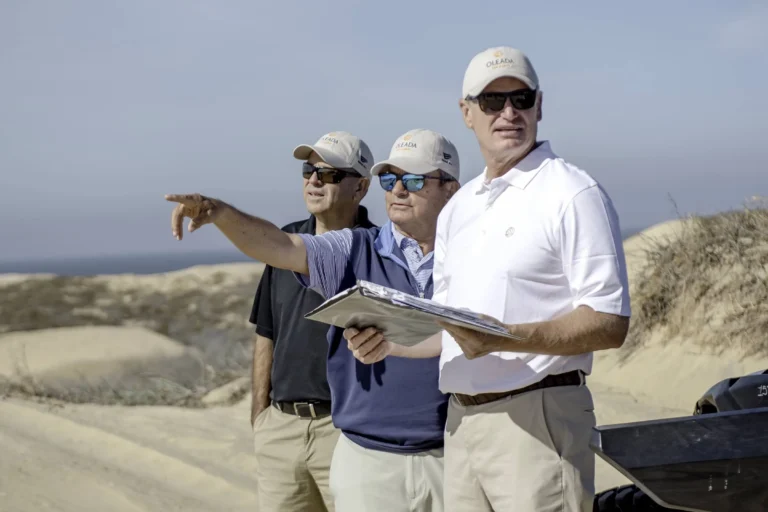
Enter Davis Love III, five-time winner at Harbour Town Golf Links, major champion, and a man who basically grew up on the same stretch of Southeast coastline that shapes the course’s personality. Acting as player-consultant for the project, he teamed up with a roster of seasoned specialists: Allan MacCurrach of MacCurrach Golf Construction; Jon Wright, Head Golf Superintendent; John Farrell, Director of Sports Operations; and ownership representatives from The Riverstone Group.
From day one, Love insisted the mission wasn’t reinvention—it was loyalty. As he put it, the aim was “protecting the strategy and integrity of Pete’s design.”
And the owners didn’t mince words about their commitment, either. “We feel very fortunate to own such a historic and popular PGA TOUR tournament venue in Harbour Town Golf Links,” said Matthew Goodwin of The Riverstone Group. “We are fully committed to maintaining the golf course to the highest possible standard, while preserving the original design integrity of Pete Dye.”
The Work: Technical, Precise, and Quietly Transformative
What started as a practical refresh—revamping infrastructure to support year-round championship conditions—evolved into something deeper. This was a chance to restore features that had been sanded down by time, footfall, and decades of tournament play.
Greens, bunkers, and bulkheads were rebuilt from the ground up. TifEagle greens and Celebration Bermuda everywhere else return unchanged, giving the course its trademark firmness and bite. Agronomy and maintenance systems were upgraded, ensuring the place keeps its shape under TOUR-level pressure.
But if you walk the fairways expecting dramatic new shapes or sudden modern flourishes, good luck finding them. Farrell made it clear that every design adjustment came from evidence, not whim. “Every ‘change’ we made had some documentation or images or video of what it was like previously.”
Among the subtle but significant fixes: greens restored to their original edges, reclaiming tucked hole locations that vanished over time; bunkers returned to their intended footprint, once again pressing right up against the greens as Dye’s mischief demanded.
Love’s input gave the project a competitor’s edge, but Farrell noted that the course still belongs to the thousands of golfers who play it the rest of the year. The goal wasn’t to turn Harbour Town Golf Links into a TOUR torture chamber—it was to honour what makes the place irresistible: playable, exacting, charismatic golf.
The Verdict
In the end, this restoration didn’t turn Harbour Town Golf Links into something new. It turned it back into what it was designed to be—a cunning, compact, deeply strategic piece of art that still tests the best in the world and thrills everyone else.
Harbour Town Golf Links didn’t just reopen. It came back with its soul burnished.
For more details on The Sea Pines Resort, visit www.seapines.com.