 Andy Devaney
Kent Golf Disability ambassador Ken Powell has already had one golfing life that would satisfy most players: Kent Boys and Kent Youth honours, a trip to Royal Liverpool for the 1974 British Boys’ Championship, and decades with the game.
Then came a spinal stroke in 2021, paralysis from the waist down and the reasonable assumption that golf had finished with him. It had not.
Powell returned using a paragolfer, restarted with a handicap of 27 and has since worked his handicap index down to 9.5. Now he is trying to make sure other golfers with disabilities know the same route back exists.
A golfing life interrupted in 2021
Powell first picked up a club at 12 after encouragement from his father. By 14 he had a full handicap; by 16 he was competing in the British Boys’ Championship at Royal Liverpool.
Those early years are more than a neat preface. They help explain the feel and instinct he would later have to call upon when the physical terms of the game changed completely.
In 2021, severe back pain led to surgery for a bulging disc. During the procedure, Powell suffered a spinal stroke and was left paralysed from the waist down. The immediate challenge was not how to get a club back on plane. Golf, understandably, was nowhere near the top of the list.
“I never thought I’d play golf again, and I didn’t want to play golf again,” said Ken. “But then I learned about the paragolfer and it sort of rejuvenated my thinking.
“I then had so much encouragement; this proved all-important.”
That distinction matters. Powell’s return was not born from some glossy notion that sport fixes everything. At first, he did not want it.
The possibility only became interesting once the equipment existed to make playing realistic and the people around him supplied enough encouragement to make the first move.
The paragolfer changed the terms of the game
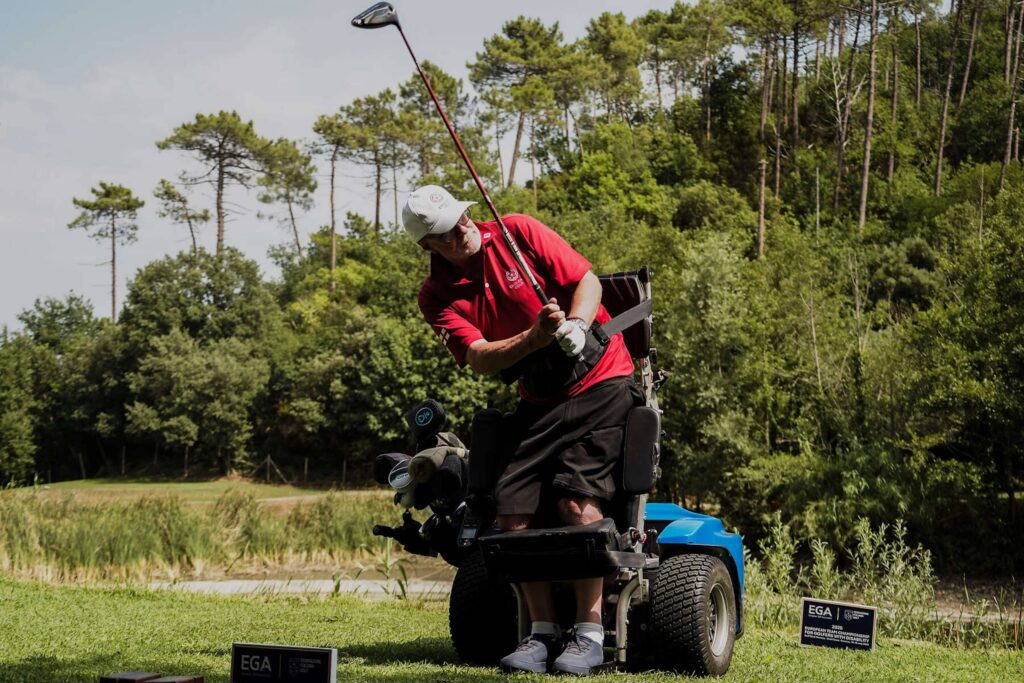
A paragolfer is a specialist all-terrain mobility device that enables people with lower-limb disabilities to stand and play. For Powell, it reopened a door he had assumed was shut.
He returned to the course in 2022 with a handicap of 27. With practice and coaching from a PGA professional, that number came down to a handicap index of 9.5.
Golfers are famously capable of turning a decimal point into a matter of national importance, but in this case the figure deserves attention. It measures not merely improvement, but the rebuilding of a game under radically different physical circumstances.
Powell believes some of the answer lies in the technique laid down decades earlier.
“Well, I have very well-educated hands,” he explained. “Right from being a boy, the hands play such an important part in the game.”
There is something pleasingly old-school about that explanation. No laboratory language, no swing-speed sermon, just educated hands. The childhood golfer had not disappeared; he had been asked to solve a much harder version of the same puzzle.
Single figures are only part of Powell’s comeback
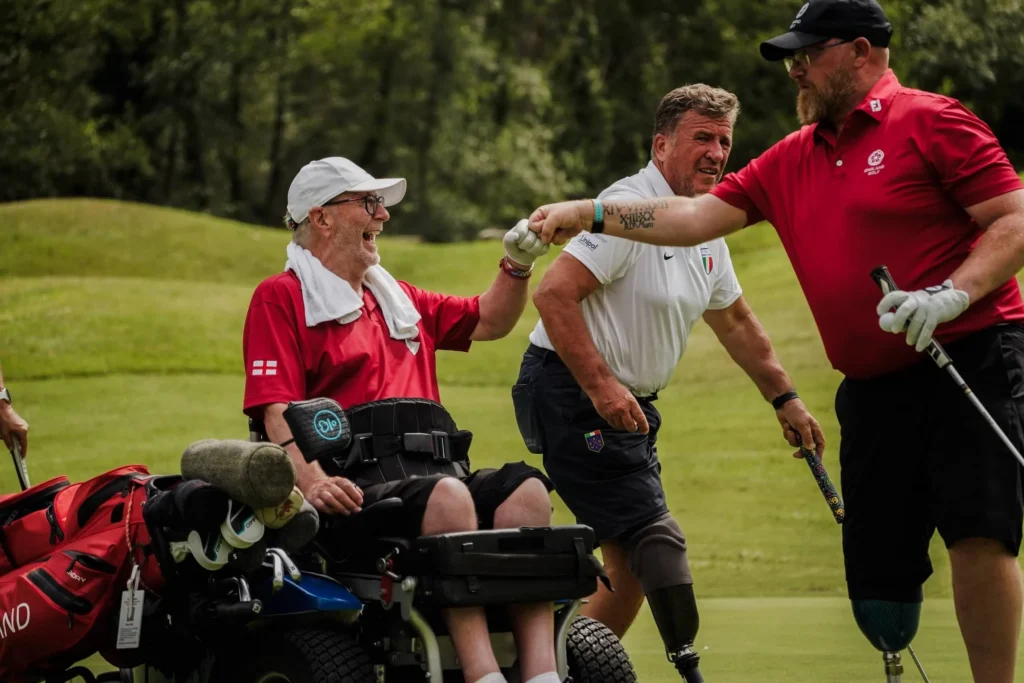
A 9.5 handicap index provides the obvious headline. Powell himself places more weight on being out there in the first place.
“I like to go out there and try my best. If that’s not good enough, well, that’s not good enough. But it’s fantastic to get out on the golf course, it’s good for your wellbeing as well.
“I get great satisfaction going to bed at night and thinking about the round I played, it sends me off to ‘la-la land’ in a good state.”
That is a more revealing account of golf than the usual obsession with cards and competitions. The round continues after the final putt: in the conversation, the recollection, the small satisfaction of having had something demanding and enjoyable to do.
Powell is equally clear that disability does not reduce golf to a watered-down version of itself.
“I’m sure a lot of people would like to know that if you’re paralysed, you can still go out and play golf, which is a tremendous asset in life,” he said.
“Whether you play one-handed or with two, you can still get so much out of this sport.
“Golf has given me immense satisfaction and a feeling of achievement. Sometimes desperation, the high moments, low moments, just fantastic to actually get out there and play, especially with friends.
“It’s great. I will always keep trying. If you give up, well, you give up. But when you’ve got something to look forward to, going out on a lovely golf course, you want to keep going.”
The line about desperation may be the most convincing endorsement of all. Powell has not returned to a sanitised therapeutic activity. He has returned to golf, complete with its capacity to delight, irritate and occupy far too much of the brain.
Kent Golf ambassador role gives the story a wider purpose
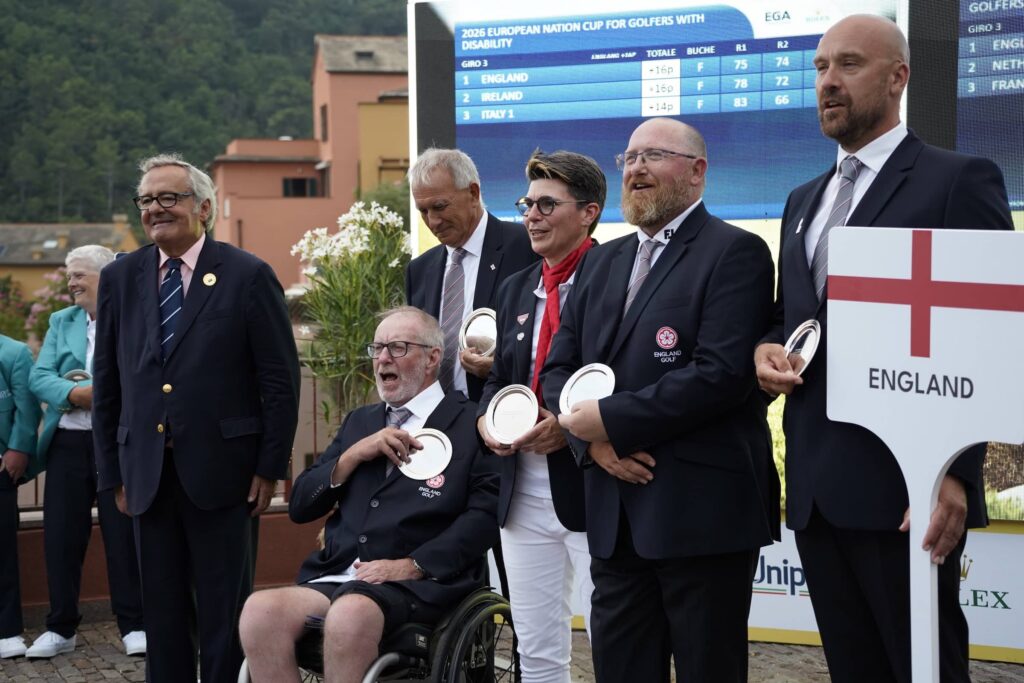
Powell, a member of North Foreland Golf Club, began serving as Kent Golf’s Disability Ambassador earlier in 2026. The role puts personal experience at the centre of Kent Golf’s effort to show people with disabilities that the game can be adapted rather than abandoned.
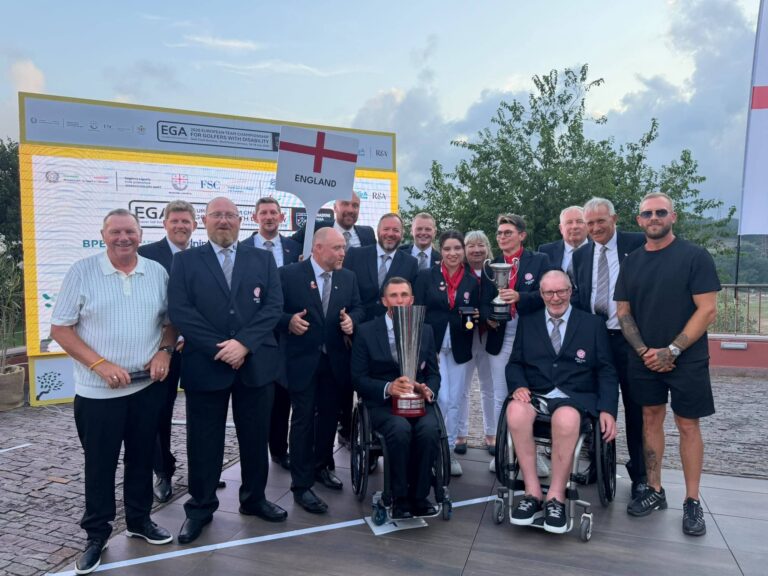
He is also a member of England Golf’s Disability Team. The team recently enjoyed a major success at Sant’Anna Golf Club in Italy, winning both the European Nations’ Cup for Golfers with Disability and the European Team Championship.
For Kent Golf, Powell brings something more useful than a slogan: evidence. He knows the reluctance that can follow a life-changing injury, the practical importance of adapted equipment and the awkward distance between being told something is possible and actually believing it.
Paragolfer Taster Day comes to Wildernesse
That experience will be put to use at Kent Golf’s Paragolfer Taster Day, held with The Golf Trust at Wildernesse Golf Club in Sevenoaks on Tuesday 15 September 2026, from 10am to 3pm.
The day is aimed at two groups: people who once played golf but can no longer play conventionally after injury, accident or a change in mobility, and people who have never played but want to try. Powell will be there to offer first-hand advice and encouragement, with fully qualified paragolfer coaches arranged by The Golf Trust also available to help participants use the equipment and explore how the game can be adapted to individual needs.
That is where Powell’s story becomes more than an impressive personal recovery. A comeback can inspire from a distance; an ambassador can hand someone a club, show them the machine and make the possibility tangible.
The handicap index says 9.5. The more interesting measure is how many people Ken Powell can now persuade to take a first swing, or another one.