 Andy Devaney
L.A.B. Golf has spent the last few years doing what most golf brands only threaten to do: upsetting old habits. Now it has turned its attention to one of the game’s most cherished pieces of tradition, unveiling LINK.2.1 and LINK.2.2, the first heel-shafted blade putters in the L.A.B. Golf lineup. It is a move that feels less like a quiet product extension and more like the company strolling into the most conservative corner of the pro shop and rearranging the furniture.
The headline is simple enough. These new LINK models marry a traditional blade shape with L.A.B.’s patented Lie Angle Balanced technology, bringing the company’s distinct approach to stability and consistency into a slimmer, more familiar profile. For a brand long associated with unconventional looks and engineering-led performance, this is a notable moment.
A traditional shape with a modern brief
There is no mystery about the intention here. L.A.B. Golf knows plenty of golfers still like a putter that looks like a putter. Not everyone wants a head shape that appears to have been designed during a lively discussion between an aerospace engineer and a geometry teacher. Some players want clean lines, a familiar silhouette and something that sits behind the ball without causing existential doubt.
LINK.2.1 is the narrower of the two, built with a classic blade appearance and a slimmer footprint. LINK.2.2 moves into square-back territory, offering a slightly wider profile and a larger footprint for those who prefer a little more substance behind the ball.
Both, however, are rooted in the same idea: give golfers the visual comfort of tradition without abandoning the performance principles that have made L.A.B. Golf one of the most distinctive names in the putting category.
Why this launch matters for L.A.B. Golf

This is an important step in the evolution of the brand.
L.A.B. Golf built its reputation on Lie Angle Balance, a concept that challenged many of the assumptions golfers had long accepted about how a putter behaves through the stroke. The technology won admirers, not least because it promised a more stable motion and less face manipulation, but the aesthetics were not always for everyone. That was part of the charm for some and part of the problem for others.
The arrival of LINK.2.1 and LINK.2.2 suggests the company has reached a new chapter. Rather than asking golfers to embrace an entirely different visual language, it is now bringing its flagship technology into shapes the wider market already understands. In other words, L.A.B. Golf is no longer simply speaking to the curious early adopter. It is speaking directly to the traditionalist.
Sam Hahn on opening the door wider
“Putters are SUCH a personal thing. Everyone prioritizes different aspects of a putter design differently. While our technology was in its adolescence, our designs were constrained by certain realities around size and shaft location, but our R&D team has been adamant that we need to have something in our lineup for everyone.”
“After years of development, we are so excited to be able to offer our technology in more traditional styles. It’s the most pure combination of tradition and technology we’ve ever produced, and we are stoked!”
Those remarks reveal the broader significance of the launch. This is not just another addition to the rack. It is L.A.B. Golf acknowledging that putter preference is rarely dictated by numbers alone. Golfers are creatures of feel, habit and vanity. They want performance, yes, but they also want something that looks right to their eye and feels familiar in their hands.
Two models, two slightly different conversations
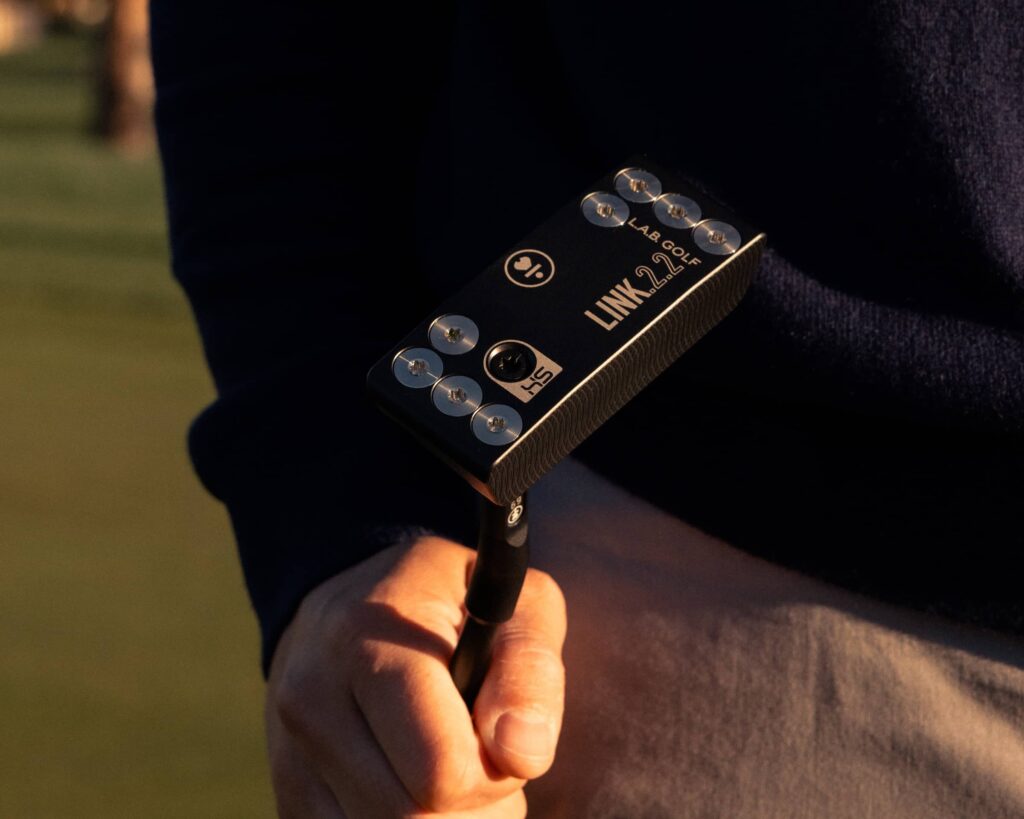
The distinction between LINK.2.1 and LINK.2.2 is subtle but smart.
LINK.2.1, with its narrow body and more classic appearance, is likely to catch the eye of golfers who prefer a cleaner, more traditional blade shape. LINK.2.2, with its square-back profile and broader footprint, offers a slightly more substantial look while staying within the same general family.
That gives L.A.B. Golf a wider reach without muddying the message. One model leans more heavily into the old-school blade aesthetic, the other provides a little more visual support. Both remain recognisably part of the same technical and design philosophy.
Premium build, familiar craftsmanship
Both putters feature a 100% CNC milled 303 stainless steel head with a black PVD finish, which places them firmly in the premium end of the market. The materials and finish signal seriousness without any need for fanfare. They look refined, precise and unapologetically modern.
L.A.B. Golf has also retained the hand-balanced and hand-assembled approach that has become part of its identity. Each LINK.2.1 and LINK.2.2 passes through up to 10 stages of craftsmanship before the process is complete, which reinforces the message that these are not off-the-shelf afterthoughts. They are engineered products, certainly, but also carefully finished ones.
Customisation remains central

As ever with L.A.B. Golf, customisation is a major part of the story.
Golfers ordering a Custom version can select lie angle, shaft length, head weight, alignment marking, shaft and grip. That is not decoration. It is central to how the brand positions itself. The putter is not merely sold; it is tailored.
For a category as personal as putting, that matters. Few clubs invite more superstition, fussiness or microscopic preference than the one used on every green. L.A.B. Golf appears to understand that fully and has built the launch around it.
A broader play in a crowded market
The putter market has never lacked noise. Every season brings another promise of cleaner roll, better alignment, softer feel or some miracle cure for the yips disguised as “innovation.” Against that backdrop, L.A.B. Golf has largely stood apart by being genuinely different.
What makes this launch interesting is that it narrows the visual gap between L.A.B. and the rest of the premium putter world, without giving away the company’s defining proposition. These are still Lie Angle Balanced putters. They still carry the engineering identity that made the brand relevant. They just happen to arrive dressed in something more familiar.
That may prove to be a shrewd move. Golfers who admired the concept but hesitated at the looks now have a more inviting entry point. Retailers, too, may find the story easier to tell when the product no longer asks the consumer to make such a dramatic aesthetic leap.
Availability and pricing
LINK.2.1 and LINK.2.2 are available now at L.A.B. Golf’s official website, with availability at authorised retailers worldwide beginning April 23.
The Stock model is priced at $499, while Custom versions start at $599.
The bigger picture
This launch feels like a marker of maturity. L.A.B. Golf has not abandoned its identity. It has simply translated it into a form more golfers have been waiting to see. In that sense, LINK.2.1 and LINK.2.2 are more than new putters. They are a statement that the brand’s technology is no longer confined to shapes that divide opinion at first glance.
The rumours of the blade putter’s demise, then, may have been a touch premature. Or perhaps the blade simply needed what golf so often does: a fresh idea, a bit of nerve, and somebody willing to ignore the muttering in the corner and build the thing properly.