 Andy Devaney
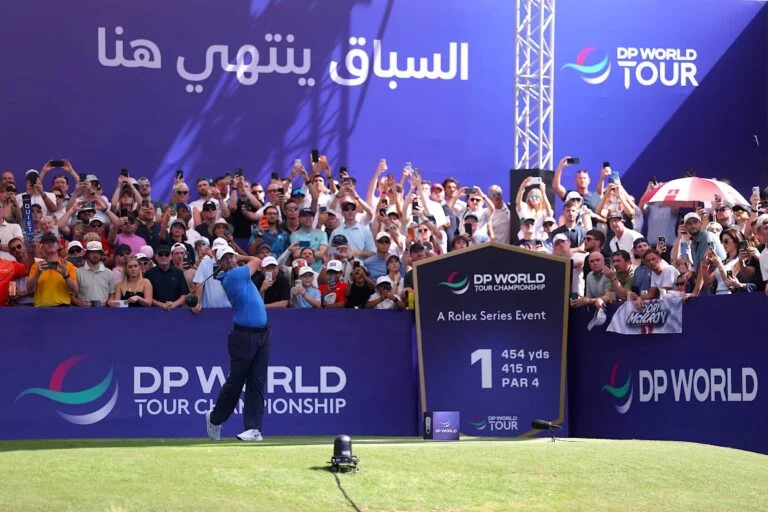
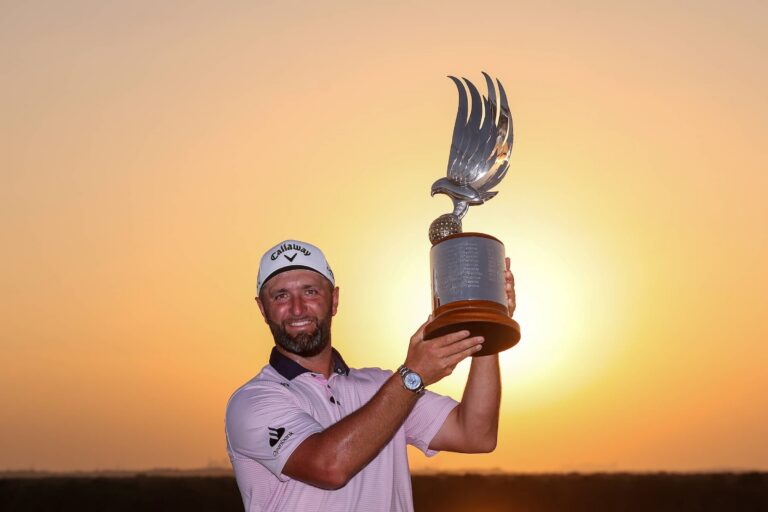
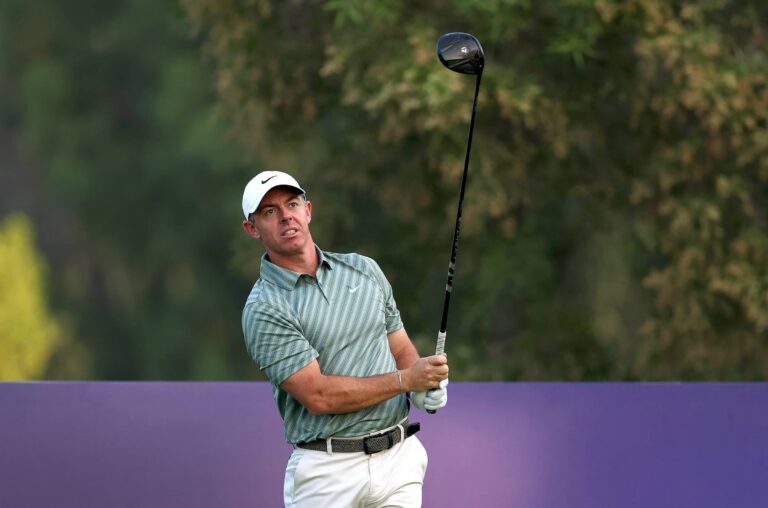
Rory McIlroy and Dubai have developed quite a relationship. Five consecutive Race to Dubai titles, eight overall, and now a share of a record that once appeared to belong exclusively to Colin Montgomerie.
Sunday’s achievement was another reminder of McIlroy’s extraordinary consistency. His eighth season-long DP World Tour crown puts him level with Montgomerie, adding another substantial entry to an already crowded golfing CV.
But while the trophies attract the headlines, the equipment behind McIlroy’s game offers a rather interesting story of its own.
Golfers could be forgiven for concentrating on the driver. After all, McIlroy has spent much of his career making the rest of us question whether we are playing the same sport. Yet his 2026 setup reveals something more nuanced than a straightforward pursuit of distance.
There is a driver configured to manage spin, a golf ball selected for greater control, irons that have remained familiar fixtures in his setup, and a lob wedge adjusted by a single degree.
Small details. Rather significant when you’re operating at McIlroy’s level.
TaylorMade Qi4D: The Driver Built Around McIlroy’s Launch Conditions
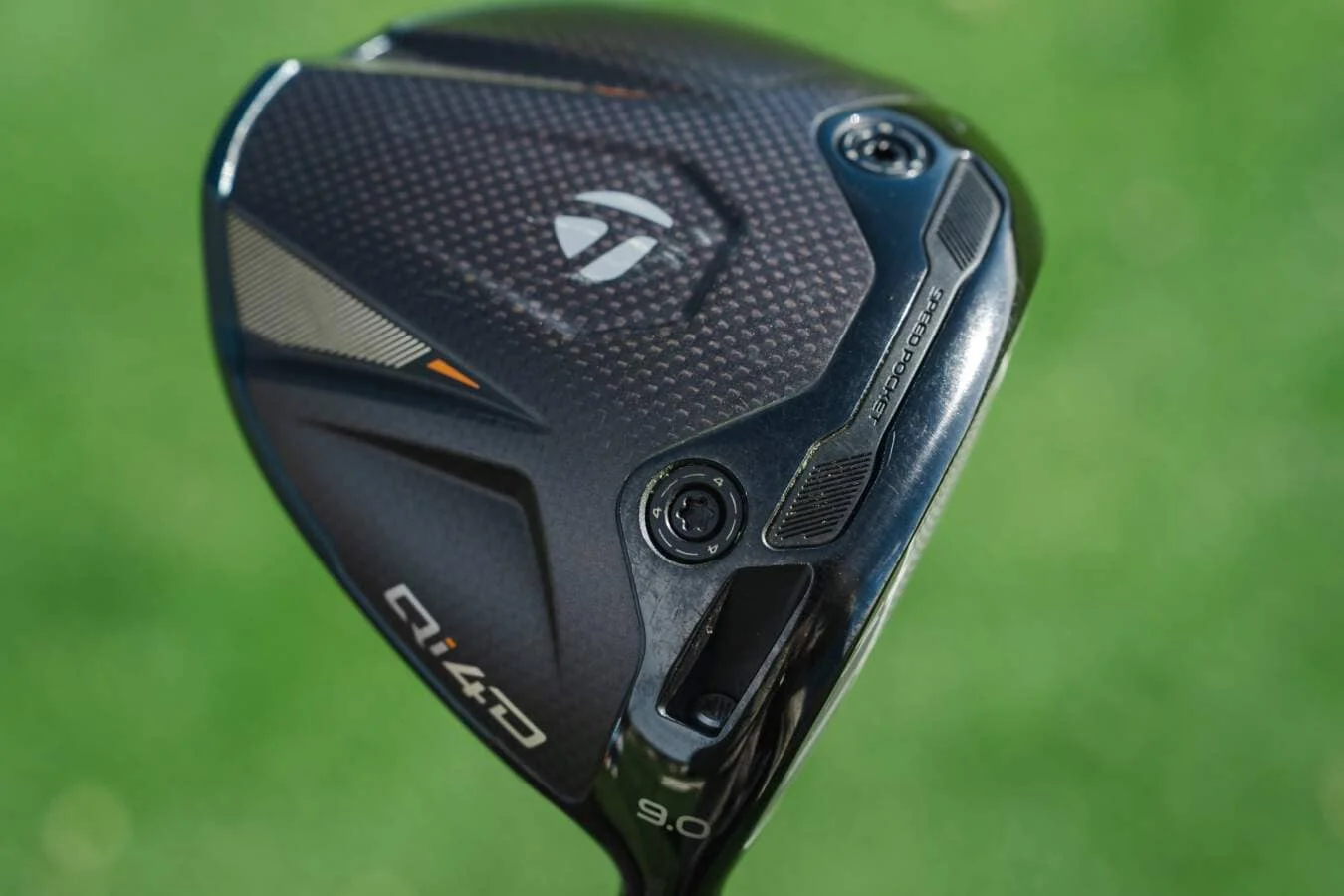
McIlroy’s driver remains one of the most recognisable weapons in professional golf, but the specifications of his TaylorMade Qi4D reveal that outright distance is only part of the thinking.
He uses a 9° Qi4D head with the adjustable loft sleeve set two clicks towards the lower position, producing a playing loft of approximately 8°.
The configuration gives McIlroy the appearance he prefers at address while helping him achieve his desired launch and spin characteristics.
The weighting is particularly interesting. Rather than loading the front of the clubhead with heavier weights, McIlroy uses two 4g weights at the front and two 13g weights at the back.
According to TaylorMade’s fitting information, the combination allows him to maintain sufficient spin through his loft setting while taking advantage of the stability associated with a rearward centre of gravity. The intended result is a more dependable spin window, particularly when impact creeps towards the lower portion of the face.
That matters for a player generating McIlroy’s speed. A driver that performs beautifully on a perfect strike is useful enough. One that remains predictable when contact is less than perfect has rather greater value.
McIlroy has also opted for reflective fitting markers on the Qi4D’s eight-inch roll face, allowing him to frame the ball against the topline in a way that suits his eye.
For more on the wider range, see our earlier look at the TaylorMade Qi4D drivers and their fitting technology.
TaylorMade’s supplied PGA Tour figures put McIlroy’s 2026 average driving distance at 330.30 yards, up 7.30 yards from 2025. His average ball speed also increased by 1.96mph to 178.93mph.
Impressive figures, although they cannot establish how much of that improvement came from the driver itself rather than McIlroy’s swing, physical preparation or other variables.
The TP5 Golf Ball: Control Becomes the Priority
Perhaps the more revealing change in McIlroy’s equipment story is the golf ball.
The 2026 TaylorMade TP5 features a revised dimple pattern designed to produce a slightly lower flight while maintaining the spin characteristics McIlroy wants from his irons and wedges.
For a player already capable of generating enormous speed, the appeal is easy to understand. Lower, more controlled approaches can offer greater flexibility when attacking pins, particularly on the partial wedge shots that demand precision rather than power.
Keith Sbarbaro, TaylorMade’s Vice President of Tour Operations, explained the thinking behind the switch:
“He liked the dimple pattern on the new one, it kept the ball out of the air a little bit, and the spin rates were great. The TP5 forced him to be a more complete player.”
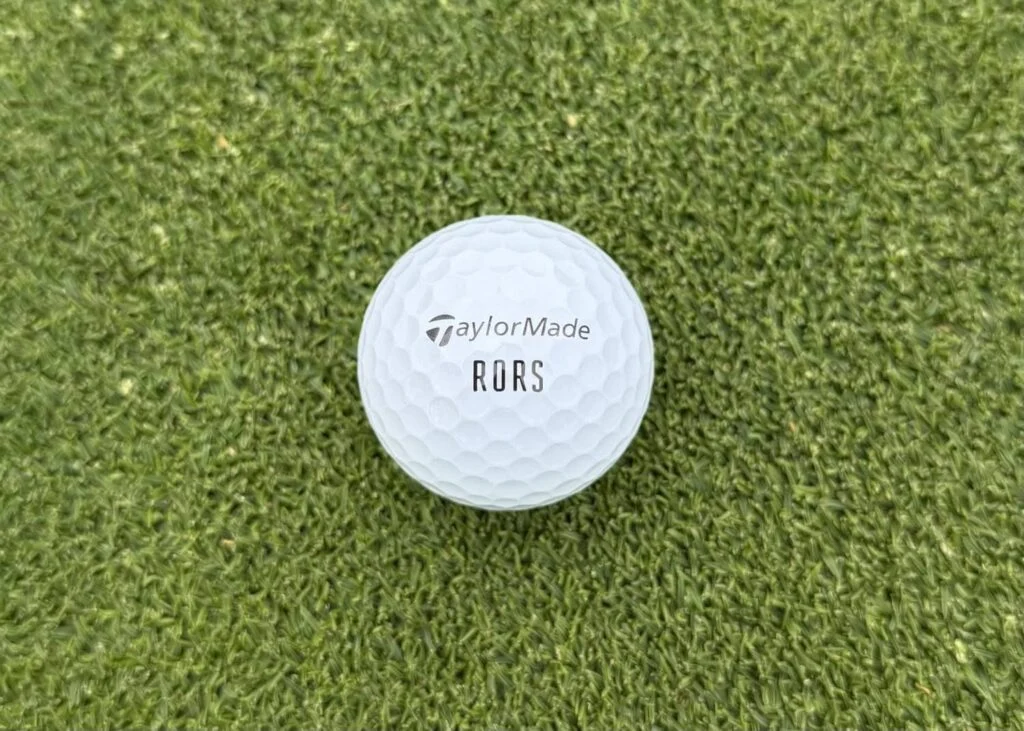
TaylorMade believes the ball has encouraged McIlroy to make greater use of three-quarter swings and controlled approaches.
There is a relevant performance statistic in the supplied figures. During 2026, McIlroy ranked eighth on the PGA Tour for proximity to the hole from 50–75 yards, averaging just under 11 feet.
That does not prove the ball caused the improvement, but it provides useful context for the type of shot McIlroy and his equipment team have been concentrating on.
Our earlier coverage of the 2026 TaylorMade TP5 and TP5x golf balls explores the technology behind the updated models.
Familiar Irons, With Some Very Precise Numbers
Despite the attention surrounding new equipment, much of McIlroy’s listed iron setup remains familiar.
His Race to Dubai bag combines a TaylorMade P·760 4-iron with RORS PROTO irons from 5 through 9, all fitted with Project X 7.0 shafts.
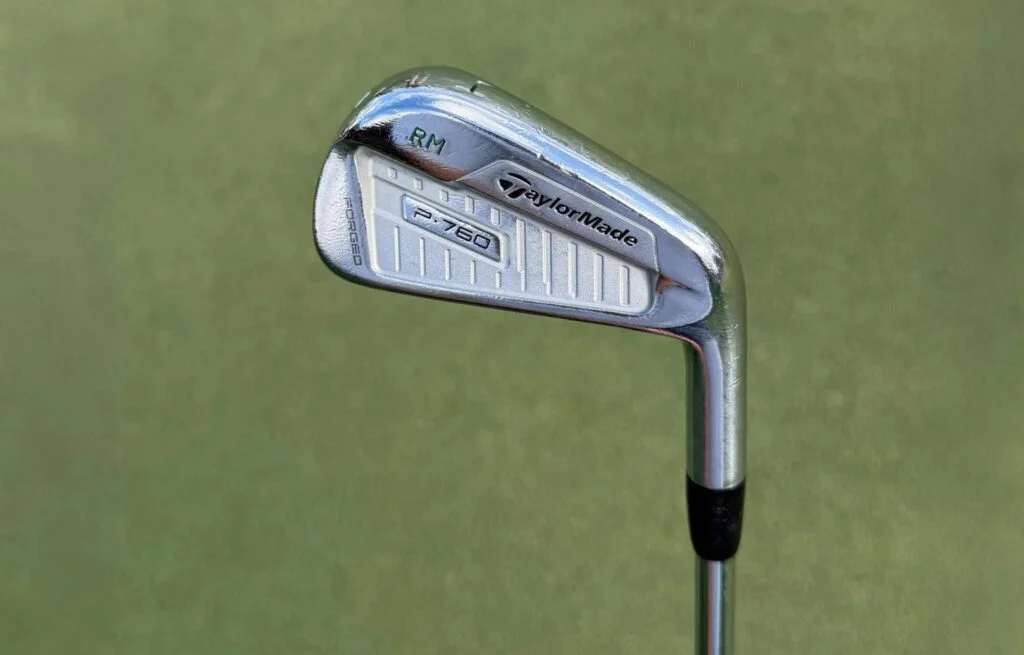
The loft progression runs from 23° in the 4-iron to 42° in the 9-iron, with 26°, 30°, 34° and 38° filling the gaps.
These are clubs configured around McIlroy’s delivery, preferred appearance and ability to manipulate ball flight. TaylorMade’s tour team describes the RORS PROTO heads as having a relatively short blade length, allowing McIlroy to work the ball while retaining spin.
The distinction matters. Professional iron setups are rarely about matching every club to the latest product family. They are about finding the flight, distance gaps and interaction with the turf that a player trusts.
MG5 Wedges: Why One Degree Matters
The bottom end of McIlroy’s bag is arguably where the most interesting fitting decisions appear.
His TaylorMade MG5 wedges are listed at 46°, 50°, 54° and 61°, with the highest-lofted club beginning life as a 60° low-bounce model before being bent one degree weaker.
It sounds like the sort of adjustment that might get lost between a club-fitting appointment and the car park. For McIlroy, however, the reasoning is specific.
He wanted a lob wedge that worked more effectively from tight turf while allowing greater control over the 40–70-yard shots that can make such a difference on demanding courses.
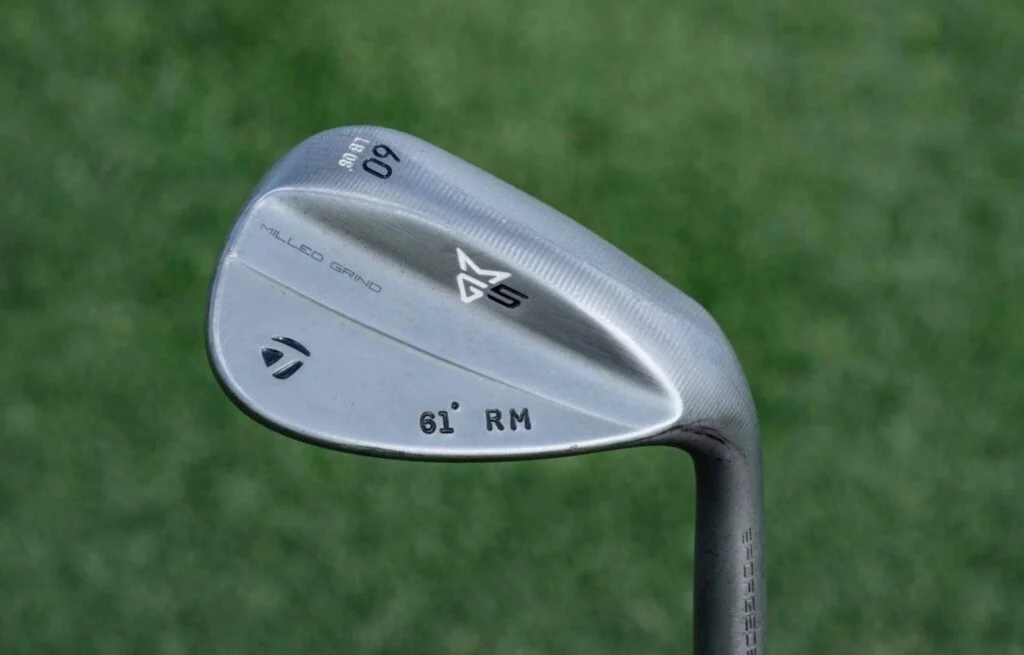
Increasing the loft slightly also raises the effective bounce and changes how the leading edge sits relative to the ground. According to TaylorMade’s fitting team, that helps reduce the tendency for the club to catch in the grain, particularly on the tight lies associated with Augusta.
The adjustment also allows McIlroy to produce a softer flight without having to manipulate his technique quite so aggressively. It is an example of equipment being adapted to the player’s movement rather than expecting the player to accommodate the equipment.
McIlroy first put the MG5 wedges into competition at the 2025 Amgen Irish Open and immediately collected a victory on home soil. We covered that memorable finish and the MG5 wedge switch in his Irish Open winning bag.
The MG5’s forged construction, Spin Tread Technology and saw-milled grooves are intended to improve feel and maintain more consistent friction and spin, particularly in wet conditions. McIlroy uses Project X 6.5 shafts in his 46° through 54° wedges and a Project X 6.5 Wedge shaft in the lob wedge.
Spider Tour X: The Putter That Has Stayed
Tour professionals are hardly renowned for their lifelong loyalty to putters, but McIlroy has found a familiar companion in his torched TaylorMade Spider Tour X.
He has used the short-slant model since the 2024 Tour Championship, retaining the same putter style through a highly successful period.
Its configuration is more revealing than simply identifying it as a mallet. The Spider Tour X has approximately 30° of toe hang, a short-slant hosel and a relatively flat 69° lie angle.
That combination suits McIlroy’s preference for allowing the putter face to open naturally during the backswing and close through impact.
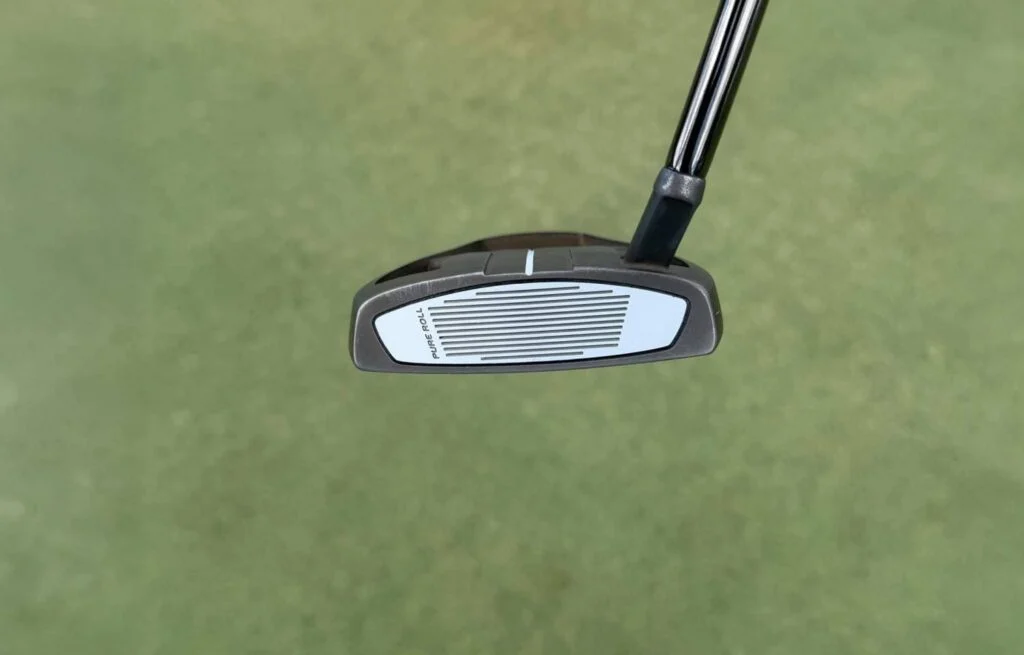
Rather than trying to eliminate face rotation, the putter is built to work with his moderate stroke arc. His specifications include a 34½-inch shaft length, 2° of loft, a Pure Roll insert and a SuperStroke Pistol Tour grip.
Once a player finds a putter that fits the movement he wants to make, the incentive to keep changing it becomes considerably smaller.
Rory McIlroy’s Full WITB – Race to Dubai 2026
According to TaylorMade’s supplied equipment breakdown, McIlroy’s setup for his record-equalling eighth Race to Dubai title was:
There is a temptation to look at a bag like this and conclude that the answer lies in buying the same clubs.
It doesn’t.
The more useful lesson is in the fitting. McIlroy’s driver balances loft against weight placement. His ball is chosen with trajectory and short-iron control in mind. His wedges address particular shots and turf conditions. His putter works with his natural stroke.
Five successive Race to Dubai titles are a remarkable achievement. The equipment story is less about a collection of expensive clubs and more about how carefully those clubs have been configured.
And if one degree on a lob wedge can be important enough to occupy McIlroy’s attention, perhaps the rest of us could benefit from looking beyond the name printed on the sole.