 Andy Devaney
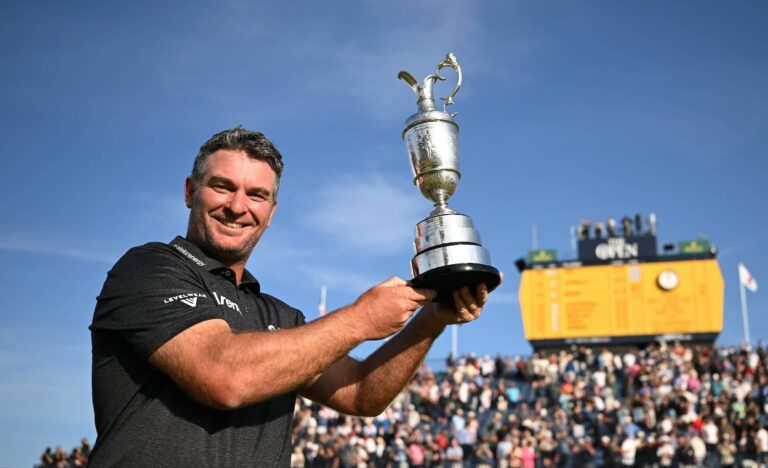
Ryan Fox entered the Royal Birkdale interview room as the Champion Golfer of the Year, having won The Open with a 10-under-par total of 270. What followed was less a polished victory speech than a revealing tour through shaking hands, aggressive decisions, family history, sporting instinct and a professional career that had once come perilously close to ending before it had properly begun.
Mike Woodcock opened proceedings with the formal confirmation.
“Good evening, everyone. I’m delighted to welcome the Champion Golfer of the Year, Ryan Fox, to the interview room. With a 10-under-par total of 270, he’s won The Open. Ryan, how does it feel?”
Fox’s answer was suitably unvarnished. There are moments when eloquence becomes overrated, usually because the trophy sitting nearby has rendered the vocabulary department temporarily useless.
“Surreal, to be honest. It’s something you dream of. I used to get up in the middle of the night to watch this tournament back home. It was always something that was there just to be able to play in it, first up, and now to be an Open champion, to be the Champion Golfer of the Year, it’s unbelievable, surreal, crazy. I don’t have enough words in my vocabulary to explain it, to be honest.”
Joining New Zealand’s Major Champions
Fox’s victory placed him alongside Sir Bob Charles as only the second New Zealander to become Champion Golfer of the Year.
The historical company is scarce and rather distinguished. Fox was fully aware of the scale of the achievement, even if he was still adjusting to the improbable fact that it belonged to him.
“It is. 1963, wasn’t it, at Lytham? So yeah, that’s huge for New Zealand golf. I think we’ve got four major champions from New Zealand now: Michael Campbell, Lydia Ko, a multi-major champion, and Sir Bob, so to be able to join them is amazing. To have my own little piece of history, too, it’s — I don’t know if it’s something I’ve dreamed of. I don’t know if it’s something I ever thought was possible, but we’re here now.”
His place in New Zealand sporting history also carries a family dimension.
Fox is the son of former All Black Grant Fox, while his grandfather captained New Zealand at cricket. That is enough sporting pedigree to make an ordinary family gathering feel faintly like a selection meeting.
Yet Fox said the most valuable part of that inheritance was the freedom to find his own arena.
“Yeah, we’ve got a great history in our family. I think the other great thing is I had no pressure on me to follow in any of their footsteps. I was lucky enough to carve my own path there and had support from both my grandfather early on and obviously Mom and Dad through the whole thing.
Yeah, to — I don’t know if this tops their achievements, but it’s certainly right up there. I guess there’s no pressure on my kids going forward now (laughter).”
‘I Was Going to Try to Win the Tournament’
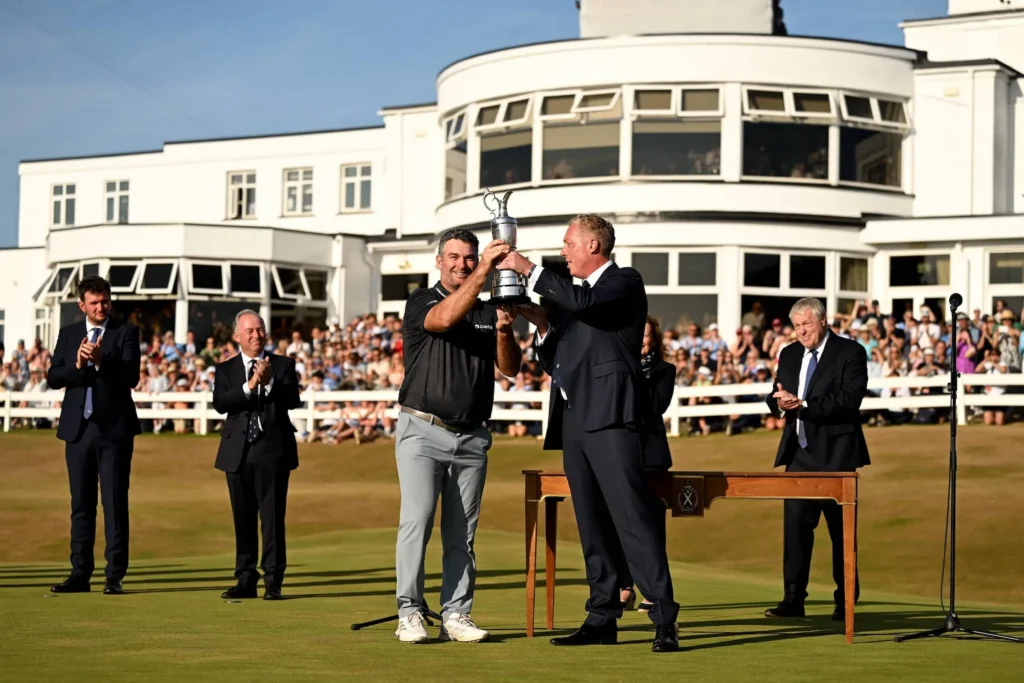
The decisive hole revealed more about Fox than any convenient summary could manage.
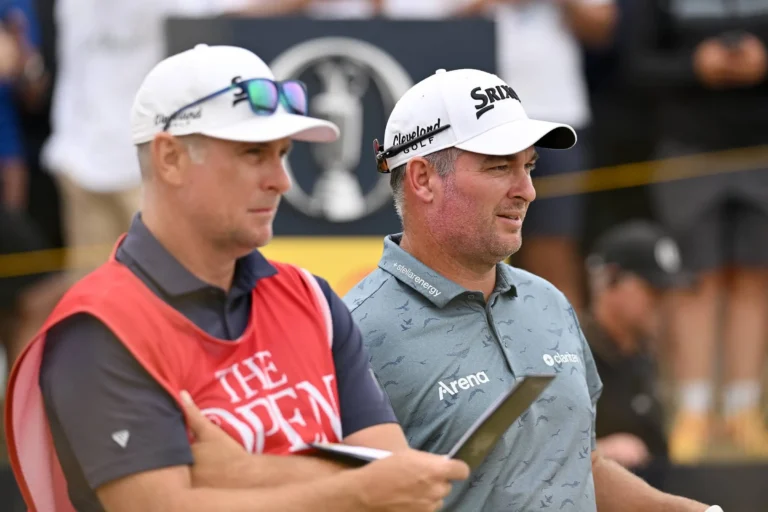
He did not arrive at the 18th tee hoping to avoid catastrophe. He informed his caddie, Dean, that he intended to attack the hole and accept whatever followed.
It is an admirable philosophy when the execution matches the declaration. Otherwise it becomes a very expensive anecdote.
Fox struck his drive and approach exactly as intended. The putt was another matter. His technique survived; his nervous system had apparently gone elsewhere.
“Yeah, definitely the first part. I mean, I hit two shots exactly how I wanted to hit them. I didn’t feel anything for the putt; everything was shaking that much. I was just happy to hit it somewhat near the hole, and to see it go in was incredible.
I did say to my caddie, Dean, on the tee that we were going to take it on, that I was going to try to win the tournament, and I’d live with the consequences if I stuffed it up. To go out there and execute, that drive is not a very comfortable tee shot, obviously, and to hit it in the fairway and give myself a chance was huge.
Then I landed on a good number. I think I had 160 metres to the hole. The breeze was a little down off the left. Obviously everything is a bit jammed up there, so it was just a solid 9, and I hit it exactly where I wanted to hit it. I think I screamed to it, “Please be good,” in the air, and it was.
To cap it off with a putt — everyone practises on the green, I guess, you’ve got to a putt to win a major championship, to win The Open. It’s not like that in real life. It’s not a very comfortable feeling. It’s certainly very enjoyable when you see it go in.”
Asked later to provide the exact calculation behind the approach, Fox returned to the shot with the clarity of a man who had replayed it several times already.
“I had 160 metres. What’s that, 175-ish? That was — I had a good number for a 9-iron. I normally pitch 9-iron about 150. I just saw, kind of start it middle of the green and hit a little cut in there with the wind. Figured I’d probably hit it just a little bit further because the adrenaline was up. I hit it exactly how I wanted to.
To see it land and get relatively close there was pretty cool. Yeah, that’s one of the shots you dream of hitting, to execute like that under pressure. Yeah, very proud of myself to do that.”
Why Links Golf Fits Ryan Fox
Fox’s previous best finish in The Open had been tied 16th, but his affection for links golf was established long before Royal Birkdale supplied the defining result.
The appeal lies in invention. Links golf permits, and occasionally demands, shots that would look peculiar elsewhere. Growing up in New Zealand weather helped. Wind tends to discourage dogma rather efficiently.
“I’ve just always loved links golf from the first time I played it. I just love the creativity needed. I think growing up in New Zealand, we play in a fair bit of wind, so getting to do that and having to control your ball and hit some not proper golf shots or not normal golf shots is really cool, and I enjoy — that’s probably what I enjoy about golf and links golf the most.
I feel like I’ve played well in Opens before but just never really put four rounds together. I probably wouldn’t say I put four rounds together this week either. I put three together, obviously, to give myself even a chance today after yesterday’s round. You’re not expecting that going out, even though you feel like you can shoot a low score early, to go out and shoot 62 and go from 52nd or whatever I was into the last group. That doesn’t happen very often.
And to, completely different circumstances today, go out with the pressure on, with a chance to win The Open, and to actually do it — I didn’t know what I was going to feel going out there today. I did say to my caddie a few holes in, I feel better than I thought I was going to feel, but I probably still didn’t feel that comfortable. But got a little bit more comfortable down the stretch.”
Royal Birkdale, in particular, suited both his eye and his willingness to take on risk.
Fox had liked the course even while missing the cut there in 2017. This time, its firm and fast conditions rewarded conviction.
“Honestly, I don’t know. I played here in ’17 and really liked the course. Even though I missed the cut, something felt good about it.
I don’t know, it’s a golf course I felt comfortable on. I liked how I played this week, firm and fast, and that you could take it on a little bit. If you were aggressive and pulled it off, you could shoot a score.
Look, I think it’s one of the best courses on The Open rota, and the changes they made for this year were incredible. I can now say I’m looking forward to coming back whenever it is going to be here next time.”
The Bogey That Kept the Round Alive
Not every decisive moment looked heroic at first glance.
At the 15th, Fox discovered a lie that caused those nearby to inspect the problem with rather too much interest. That is rarely an encouraging sign. Spectators glance at easy shots. They crouch around disasters.
“I probably can’t say exactly what I thought, but I knew pretty early I saw — I think it was Radar Riley and Thomas Levet, they were following our group, and I saw them all go up, and if they just look at a bunker and walk past, you know it’s okay. But when they sort of get down and look at it and almost rehearse the shot themselves, I’m like, oh, this is no good. When I got there, it was probably worse than I thought it was or thought it was going to be.
I had no — there was no other option than to hack it out how I did 20, 30 short of the green. To get that up-and-down really kept the momentum going obviously. I made a couple of birdies going in. I felt like I made a really good shot on 15 too. It was probably a yard away from being 25 feet away.
Sometimes bogeys are a good — I felt a whole lot better walking off that green making bogey that way than probably even if I’d have made par, to be honest. I hit a couple of really good shots down the stretch obviously to get it done. I think that was a pretty pivotal hole for me, 15.”
The momentum had begun two holes earlier.
After untidy approaches at the 11th and 12th, Fox attacked the 13th with the same logic that later governed his decision at the final hole. A committed aggressive shot, in his view, left a more manageable failure than a tentative one.
“Yeah, obviously not — I’d hit a bad shot into 11 and 12. It was a pretty good up-and-down on 12 to kind of not do too much damage. That tee shot on 13, I hit driver off it every day this week and executed it twice and not executed it twice, but played it even-par for the week, which I guess is pretty good overall.
I kind of took the theory around the whole golf course this week that, if you take it on, at least if you miss it, you can kind of get it up to a wedge out. If you don’t take it on and lay back and stuff it up, you’re in a really bad place.
So that tee shot was huge. I hit it exactly where I wanted to hit it and kind of had a laugh with Radar saying, is that the right club down there or not? He’s like, it doesn’t matter when you hit it there.
To take advantage of that, obviously I hit a lob wedge in there and holed a 12-, 15-footer, probably just snuck in the right edge. But yeah, that started the momentum on that back nine.”
A Major Champion at 39
Fox did not turn professional until his mid-20s. He became a rookie on the DP World Tour at 30 and a PGA TOUR rookie at 37.
That career path belongs to a different age from the polished teenage prospects who arrive on tour carrying launch-monitor data, extensive entourages and very little evidence of adult dental work.
Fox’s ambitions were initially modest: reach a major tour, build a career and see where it went.
“When I turned pro, I mean, just to — I think the goal was just to get on a major tour, to be honest. I think I said to my team last night, you know, at dinner, if you’d have given me my career up till yesterday when I turned pro, I’d have jumped at that. I don’t know what to think now, to be honest.
Yeah, it is something that’s always there. You dream of being a major champion. You want to do it whether you think it’s a reality or not. I guess I probably didn’t until the last couple of years. I wasn’t in the major championships consistently until the last couple of years.
Yeah, to be sitting in front of you guys now as the Champion Golfer of the Year is a bit crazy. As I said earlier, it’s surreal. I don’t have the vocabulary to explain it.”
The polished version of any late-blooming career tends to look inevitable in hindsight. Fox’s was not.
During his second season on the Australian circuit, he was close to walking away. Poor results had drained the enjoyment from the game and threatened his playing status.
Then his father asked a disarmingly simple question.
“I’ll answer the second bit first. My second year on the Aussie Tour, I was pretty close to giving it up. I think I had three events left in the season, and I was not enjoying it. I played well enough in pro-ams to make a little money, but I had not played well on Tour, and I was well outside keeping my card.
I remember getting to the Aussie Masters at Royal Melbourne. It was the second-to-last event of the year. I had just missed the cut at the Aussie PGA badly. My dad came over and caddied for me, and he said to me, why do you play this game? And I said, well, it’s supposed to be fun. But it wasn’t really very fun at the time. He goes, well, let’s just go out this week and try to have some fun.
I think I finished fifth that week, and that made enough to keep my card for the year. Took the pressure off the rest of the year, and I came back the following year and played really, really well.
Yeah, that was — I was very close to giving it up at that point.
Why it’s a slow burn? I don’t know. It took — I was a rookie on the DP World Tour at 30. I was a rookie on the PGA TOUR at 37 and now a major champion at 39. I’m definitely not following the trend at the moment. But if I can keep getting better a little bit every year, I’ll be pretty happy.
I said it earlier; if you’d have given me my career up till yesterday when I first turned pro, I would have jumped at it. Now I probably would have killed people for it (laughter).”
The Australian Tour Education
Fox credits the Australian circuit with teaching him the less glamorous mechanics of professional golf: the travel, the repetition, the grind and the requirement to play properly if one hoped to contend.
It was not merely a place to collect results. It was where he learned whether his game could survive beyond comfortable surroundings.
“Look, the Aussie Tour was the first tour I played on. It was where I learned professional golf and everything to do, the travel that’s involved, the grind that’s involved. It’s a really underrated tour. I think obviously the big events, the Aussie Open especially, is very well regarded around the world.
The fields in the smaller events, I always thought were really, really strong, and you felt like you had to play really well to contend at an Aussie Tour event back in the day. When I first got over to Europe, I kind of felt ready to compete with those guys purely from being on the Aussie Tour and having won a couple times. Knowing I could compete with those guys made me feel good about competing elsewhere in the world.
It’s a great pathway into other tours now. Obviously you get a DP World Tour card for winning the Order of Merit, which happened after I won the Order of Merit actually.
Yeah, look, it’s a great tour, and I would recommend anyone from the southern hemisphere to give it a crack if they want to do it. It’s a great place to learn the game.”
Why Ryan Fox Plays So Quickly
Fox’s pace of play was conspicuous throughout the championship.
Where some players appear to require a committee meeting before selecting a club, Fox processes the picture, makes the choice and swings. It is not a manufactured routine. He says his brain has always worked that way.
“I was always that way as a kid. I see things fast. I was the same when I was playing cricket growing up. I played almost every sport growing up, and tennis I wanted to hit the ball hard, and cricket I wanted to hit the ball hard. Everything just happened fast. I was never methodical at anything, to be honest, and it just carried over into golf.
For me it’s — I don’t feel like it’s — I need to make sure this comes across right. It’s not that difficult to pick a shot and pick a club. I get in there, and it all happens quick. You hit — it’s always going to be between one or two clubs into a green, and I just see the shot quickly, pick a shot quickly, and the less time I have to think about it, the less bad stuff can creep in there.”
Could he name anyone quicker?
Only one player came immediately to mind, followed by a Scottie Scheffler story whose classification remains open to debate.
“I can think of one maybe, Renato Paratore, back in the day. He used to hit while his name was getting announced on the 1st tee. (Laughter.)
He’s probably the only one that did it. I’ll go a little while — I played with Scottie Scheffler earlier in the year, and I can’t work out if this was a burn or a compliment. We played at Phoenix, and we’re in a three-ball on Saturday. We walk off the 9th tee, and he goes, Foxy, it doesn’t even feel like you’re in the group. It just feels like we’re playing in a two-ball, you hit it so fast. It’s just in the air.
You guys can tell me if it’s a burn or a compliment. It is just always how I’ve played. I’m kinda glad I kept that routine down the stretch.”
Professional tournament golf does not always move at Fox’s preferred speed. Earlier in his career, the waiting irritated him. Experience taught him to stop wasting concentration between shots.
“I think just playing professional golf in general, it used to frustrate me a lot early on, and I’ve just got better at switching off and talking to Dean, my caddie, or talking to my playing partners.
Xander and I did a great job of that yesterday. I get along with Sam really well. There was a few chats going on down there, but we were probably a bit more focused today than we were yesterday.
Yeah, like I just — you only really need to concentrate properly 30 seconds, a minute before hitting a shot, and then you can switch off again. That’s just the strategy I’ve had going pretty much my whole golf career.”
The speed is not limited to the golf course, although New Zealand traffic enforcement apparently places practical restrictions on the full expression of it.
“I can’t really — I can’t drive fast in New Zealand because we get too many speeding tickets. Yeah, I would say just my brain works fast. That’s just how everything is. Yeah, it’s just always how I’ve seen it on the golf course.
If you tried to slow me down and make me do everything slowly, I think I’d be pretty useless, to be honest.”
Owning the Decision Under Pressure
Fox and his team adjusted the caddie-player dynamic during Open week.
Rather than debate every club in depth, caddie Dean supplied the information and Fox took greater ownership of the shot. The change was developed with sports psychologist Karl Morris.
The method suited a player whose instinct is strongest when he can see and create the shot for himself.
“Yeah, we changed things up this week a little bit. We actually had less discussion on clubs so I could own it a little bit more. He probably was getting a few earfuls from me being in between clubs and taking it out on him. Talking with my sports psych, Karl Morris, he was here earlier this week, and we kind of chatted about I’m better when I create a shot, and creating a shot is almost getting the data off Dean, my caddie, and then I make the decision on kind of everything else, and then I verbalise what I’m going to do to him.
I did that really well the whole of this week, especially coming down the stretch today. The other thing we worked on was, especially over the putter, just take some deep breaths. I do tend to get a little quick at times, and just taking a second longer, especially over a putt, just get myself ready, get myself relaxed. I did that a lot down the stretch. I’m pretty sure you could probably see it on camera as well. There was a lot of deep breaths walking down some fairways just trying to compose myself.
It obviously worked pretty well.”
That final sentence may qualify as the least extravagant assessment ever offered by a newly crowned Open champion.
The Sound of Royal Birkdale
Fox heard New Zealand voices throughout the week, particularly during the final round. He also sensed the wider galleries moving behind him as the championship tightened.
The reaction on the 18th began before the winning putt fell. Afterwards, restraint ceased to be relevant.
“The crowd was amazing. There was a lot of Kiwi accents in the crowd. There seems to be Kiwis everywhere, especially in the UK. You could definitely hear them loudly over all of this week, especially today.
It felt like the English crowd got behind me for whatever reason. I was trying not to get too caught up in it coming down the stretch, just kind of focus on what I could control.
Yeah, the reception coming into 18 was — even before I’d hit the putt was one of the coolest things I’ve ever experienced. Obviously after making it was unreal. I can’t thank the fans enough for their support. It was awesome.”
A Victory for New Zealand Golf
The R&A’s work in New Zealand, the Open place awarded through the New Zealand Open and the Asia-Pacific Amateur’s scheduled visit formed part of the wider discussion around Fox’s victory.
When the timing of the Asia-Pacific Amateur was misstated, Fox corrected it with the same economy he brings to club selection.
“This year.”
On the potential effect of his victory at home, Fox balanced perspective with a warning for anyone expecting an especially productive Monday morning.
“It will be pretty big. I know it’s going to ruin a lot of guys’ Monday mornings, but, yeah, look, I think we punch above our weight a little bit in New Zealand anyway. Dame Lydia Ko has won, what, three majors, and she’s not even 30 yet. It’s pretty crazy. I think this will be huge for New Zealand golf.
Recreationally the game has been booming pretty much since COVID, and that momentum has kept going. Hopefully this adds a little bit to that.”
Fox will return the Claret Jug to St Andrews, where he has previously won at the Dunhill. The symmetry had not occurred to him until it was raised in the interview room.
“I hadn’t thought about that, but yeah, that sounds pretty cool.”
The Champion Golfer Signs Off
At the end of an extraordinary evening, Woodcock closed the interview with the formal congratulations.
“Ryan, congratulations on a fantastic victory. Well done. Thank you.”
Fox answered as he had played: no dawdling, no unnecessary flourish and no need for a second attempt.
“Thanks, everyone.”
Ryan Fox had spent years arriving later than the game’s fashionable schedule suggested. At Royal Birkdale, when the defining moment finally appeared, he reached it before doubt had time to catch up.