 Andy Devaney
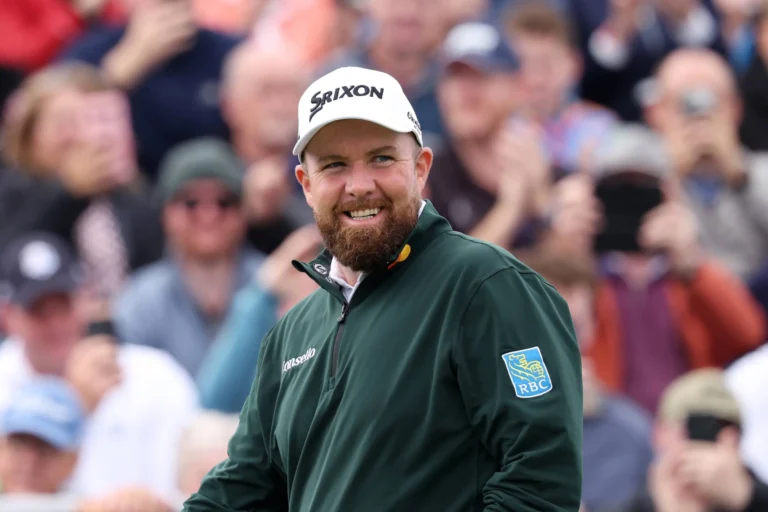
Shane Lowry’s Doonbeg course record did more than tidy up Friday’s numbers at the Amgen Irish Open.
His eight-under 62 moved him to 11 under, three shots clear, and altered the shape of the weekend: everyone else now has a very obvious man to catch.
A Friday built in bursts
Lowry had opened with a 67, useful enough without suggesting that Doonbeg was about to be reduced to target practice. Friday was different. With the conditions considerably more accommodating, he took the hint.
Birdies at the third, fourth and fifth got the round moving, the middle one arriving from 22 feet. He then added three more at seven, eight and nine to turn in 30. Six birdies in seven holes will generally improve the mood of a links crowd, particularly when the man making them won this event as an amateur in 2009 and has played every edition since.
Lowry later described the round with suitable economy: “I got off to a nice start and then I just kept going. I felt great out there. Just kept my foot on the gas and tried to keep hitting good shots and keep holing putts and it was a nice day.”
That was essentially the round. Doonbeg offered an opening and Lowry was in no mood to leave it ajar.
The tenth mattered more than it looked
The most important moment may not have been one of the birdies.
A par save at the tenth stopped the first hint of interruption, and Lowry immediately followed it with gains at 11 and 12. At that point he was eight under for the round and threatening something even lower.
The three-putt bogey at 13 was his only dropped shot. Rather than allowing it to spread, he holed a 19-footer at the 15th and arrived at the last with a chance to sign for 61. A five-iron created the opportunity; the putt did not fall.
There are worse consolations than a course record.
His 62 is the lowest score recorded at Doonbeg and could also earn him the $30,000 Course Record Presented By Nexo bonus if nobody beats it before the tournament ends.
Three shots is useful, not comfortable
Lowry leads Niklas Nørgaard, Jacob Skov Olesen and Haotong Li by three, with all three sitting at eight under. It is a healthy advantage rather than a permission slip to coast.
Olesen’s assessment of Friday explained part of the scoring shift. “Now it’s blowing to where you feel like you can control almost all of your shots,” he said, contrasting it with a first round in which the stronger wind could take control away even after a good strike.
That matters because Lowry is expecting conditions to become more demanding again.
“I know the conditions are going to be tough tomorrow, so I knew I needed to go and shoot a good score today,” he said.
He has done precisely that. The trade-off is that the weekend now comes with the peculiar pressure of protecting a lead on a course where weather can redraw the examination between breakfast and the first tee.
McIlroy’s problem is at the quieter end
Rory McIlroy’s frustration has been less dramatic, though hardly less irritating. His long game has given him encouragement; the greens have not.
“Frustration. I just didn’t have it on the greens. I really struggled to read them,” McIlroy said.
It is a revealing contrast with Lowry, whose round was built not only on strong approach play but on a collection of putts that kept turning good holes into birdies. McIlroy believes the rest of his game is functioning well enough to make progress over the weekend.
The problem is rather basic: eventually, the ball has to disappear.
Doonbeg has given Lowry another marker
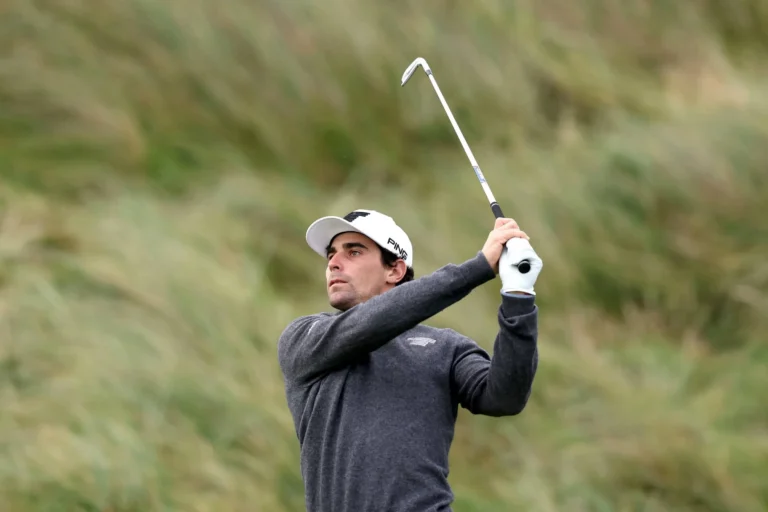
Rasmus Højgaard also took advantage of Friday’s scoring conditions, shooting 63 to move to five under alongside Kazuma Kobori, Ewen Ferguson, Tom McKibbin and Joaquim Niemann.
Round three begins at 10:07 local time in three-balls, with Lowry carrying both a three-shot lead and the weight of familiarity. He is a six-time DP World Tour winner, the 2019 Champion Golfer of the Year and, most pertinently this week, the man who first won the Irish Open as an amateur in 2009.
None of that guarantees a quiet weekend. Links golf rarely signs those agreements.
But Friday gave Lowry something more useful than nostalgia: a record, a cushion and control of the tournament. At Doonbeg, the wind may yet change its mind. Lowry has already changed the Irish Open.