 Andy Devaney
Most golfers can recall the drive that found the trees or the three-putt that spoiled an otherwise respectable hole. Knowing whether either was a recurring problem, rather than simply the mistake that lingered on the journey home, is another matter.
That is the idea behind Shot Scope’s new personalised Data Reports. The golf technology company is taking information recorded during previous rounds and turning it into a more detailed account of what players do well, where they struggle and which parts of their game might deserve more practice.
The reports are available to existing Shot Scope shot-tracking users, including owners of its V5 and X5 GPS watches, earlier watch models and other shot-tracking products. They are separate, paid reports rather than a new watch or an on-course feature.
Beyond the Scorecard
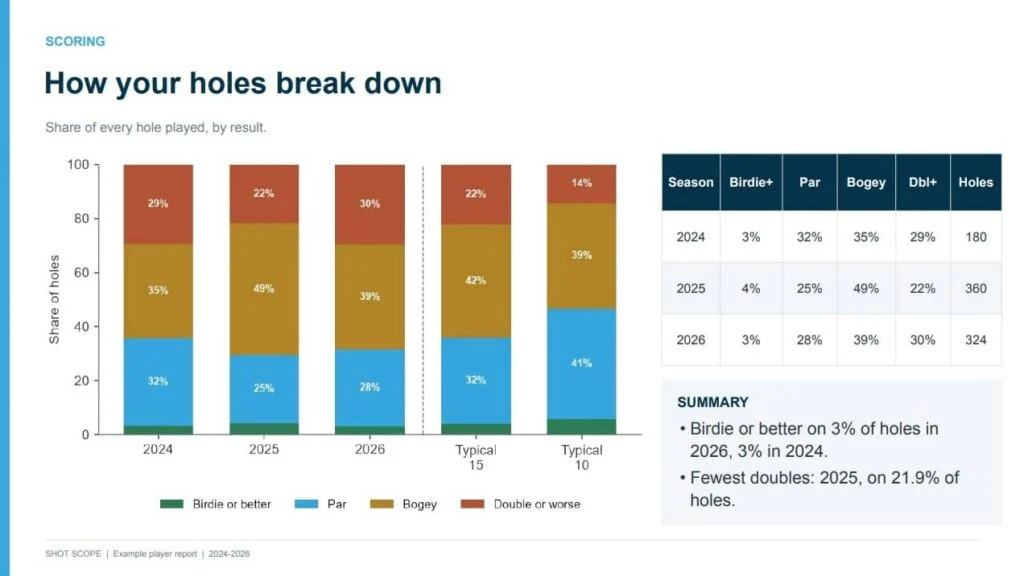
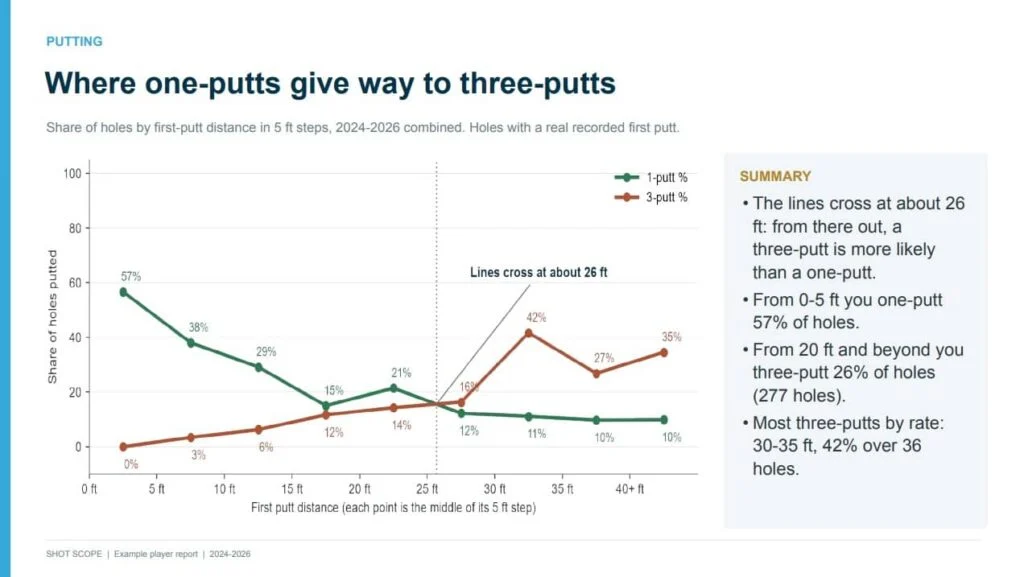
Each report draws on a golfer’s own playing history, looking at driving, approach shots, the short game and putting. Strokes gained figures, scoring trends, graphs and written analysis are intended to reveal patterns that a final score alone cannot explain.
There is a useful distinction here. Remembering one dreadful chip does not necessarily mean the short game is where most shots are disappearing. Equally, a golfer who feels comfortable with their driver might discover that their results tell a different story.
The appeal is not having more numbers for their own sake. It is having a clearer idea of what to work on when practice time is limited — and, potentially, where smarter decisions on the course could save shots.
Which Shot Scope Report Does What?
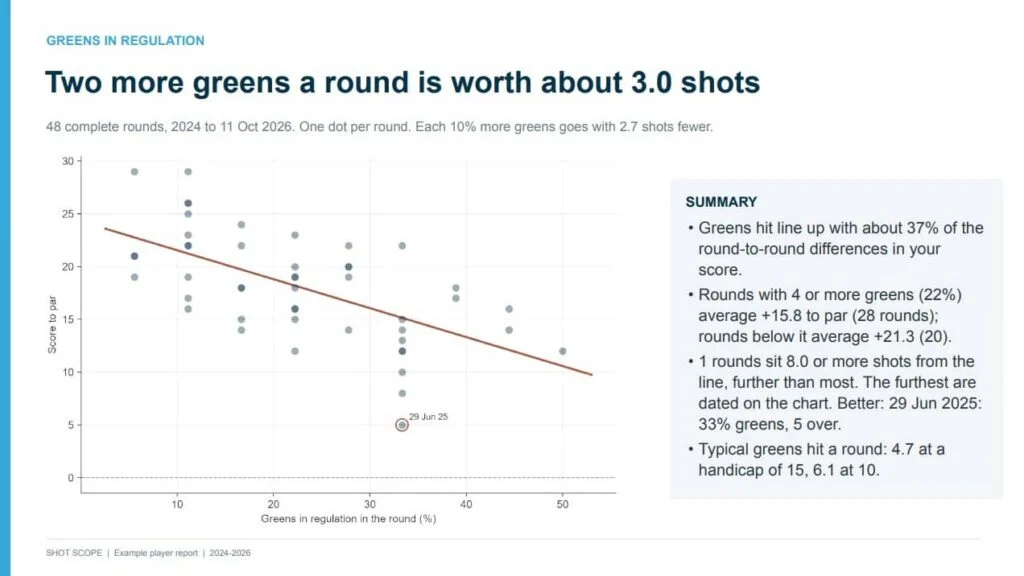
Shot Scope is offering three versions, with the amount and focus of the analysis changing considerably between them.
The Starter is the entry-level option, delivered in approximately 8–15 slides. It covers headline performance statistics, strengths and areas for improvement, giving golfers an overview without the deeper examination of the larger reports.
The Caddie concentrates on a player’s most-played course. Rather than assessing every aspect of a season equally, it looks at scoring patterns and possible course-management improvements on familiar ground. For golfers who repeatedly play the same layout, that is a distinctly different proposition.
The Analyst goes further, at approximately 40–50 pages. It examines longer-term performance trends, strokes gained, scoring patterns and all four main areas of the game. It also incorporates The Caddie’s course-specific analysis.
That makes the choice less about buying the biggest document and more about the question a golfer wants answered. A broad snapshot, a plan for a familiar course or a deeper investigation of the game as a whole: they are not quite the same job.
Will More Data Mean Lower Scores?
Shot Scope says more than 500 million shots have been tracked across its platforms and that golfers using its ecosystem improve by an average of 4.1 shots. Those are company-reported figures; the improvement number should not be read as a promise that purchasing one of these new reports will produce the same result.
What the reports can offer, at least in principle, is a way to replace guesswork with a more organised look at previous rounds. With the 2027 golf season on the horizon, that could help golfers set targets based on how they actually played, rather than what they most vividly remember playing badly.
There are still some practical details worth checking before ordering, including how much each tier costs and what the finished reports look like. Shot Scope has made example reports available through its website.
The personalised Data Reports are available now, with prices starting at £39.99/€49.99. Further details and sample reports are available from Shot Scope.
As ever, the numbers will not hit the next fairway or hole the next putt. They might, though, make the next practice session a little less of a guessing game.