 Chandni Canan Bauer
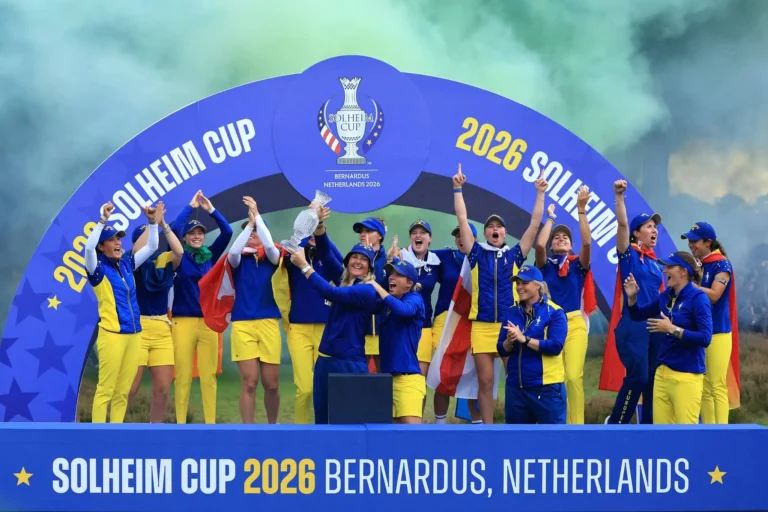
The Solheim Cup 2026 arrives at Bernardus Golf in the Netherlands from 11–13 September with an unusual symmetry at the top: Europe and the United States will both be led by first-time captains who have spent years learning exactly how uncomfortable this contest can become. Anna Nordqvist and Angela Stanford are new to the job, but hardly new to the noise.
Two first-time captains, decades of Solheim Cup scar tissue

Nordqvist’s appointment is the more dramatic change of role. The Swede played in nine consecutive Solheim Cups from 2009, contributing to four European victories and the 2023 retention after the match finished tied. Her individual record — 17 wins and three halves — is the sort of résumé that usually ends arguments before they have properly begun.
Now she has to make the decisions rather than merely execute them.
Nordqvist puts the attraction of the contest rather neatly: “There is no better feeling than doing something with your team, winning together or sharing those moments with your teammates.
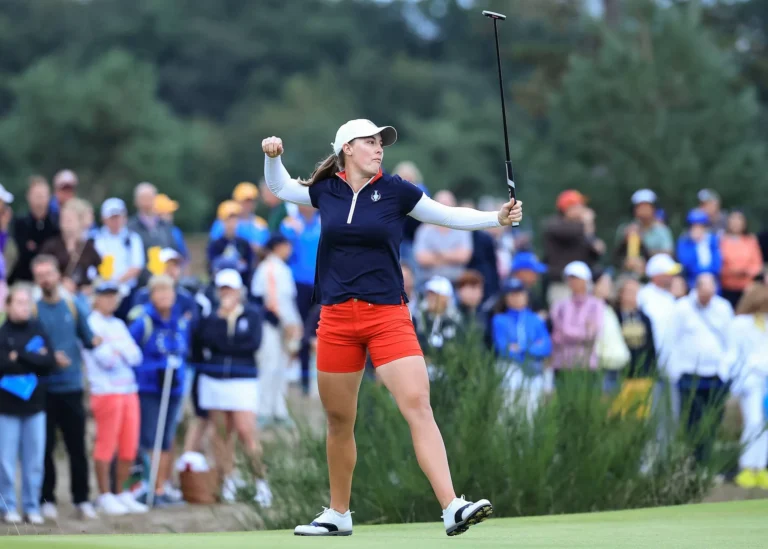
When you look back, you really come to appreciate it; the feeling of standing on the first tee with all the pressure, the fans singing for you and making those pressure putts in the moment.”
That description catches the peculiar appeal of the Solheim Cup. Golf spends most of the year asking players to be ruthlessly self-contained. Then, for three days, it hands them team colours, partners, songs, nerves and the knowledge that a missed six-footer suddenly has several flags attached to it.
Stanford knows the American side from every angle

Stanford comes to the captaincy by a different route. She played in six Solheim Cups, helped the United States to three victories and then served as assistant captain in three consecutive editions from 2021, including the American win on home soil in 2024.
The transition should therefore contain fewer surprises than the title “rookie captain” suggests. Stanford has already seen the machinery from inside the room; now she owns the final call.
“I cannot explain the adrenaline around a Solheim Cup, whether I was playing or as an assistant captain. It’s a completely different type of adrenaline and I love it. I’m having a blast, I’m living a dream.”
There is a useful contrast here. Nordqvist arrives directly from one of the competition’s most formidable playing careers. Stanford has spent recent editions watching, advising and absorbing the captaincy at close range. Both understand the event. They simply understand it from slightly different seats.
Bernardus Golf gives the rivalry a new stage
This is the first Solheim Cup to be staged in the Netherlands, and Bernardus Golf supplies a suitably exacting setting. Its vast, undulating greens should reward precise approach play and punish the sort of tentative putting stroke that team golf has a habit of manufacturing at the worst possible moment.
The format does the rest. Foursomes demand trust, fourballs invite aggression and Sunday singles remove the shelter of a partner. Momentum can change in minutes, which is why Solheim Cups so often feel less like orderly golf tournaments and more like three-day negotiations conducted with wedges.
For Europe, the task is to reclaim the trophy after the United States won the most recent edition in 2024. For the Americans, the challenge is to defend it on unfamiliar ground against a European captain whose personal history in the event is difficult to ignore.
A rivalry old enough to have its own mythology
The 2026 contest is the 20th edition since the Solheim Cup began in 1990. Across that span, players including Nancy Lopez, Annika Sörenstam, Lexi Thompson and Albane Valenzuela have contributed to its history, while Rose Zhang is due to make her third appearance for the United States this year.
Rolex has been Official Timekeeper and Worldwide Partner of the competition since 1994, part of a wider relationship with golf dating to 1967. Longevity of that kind matters because the Solheim Cup’s status was not created overnight; it has been built through repeated exposure, memorable matches and generations of players treating the week as something distinct from the rest of the calendar.
The captains may decide where the margins fall
At Bernardus, the obvious attention will settle on the players who hole the putts. The quieter intrigue sits one step behind them.
Pairings, rest, momentum and instinct can make a captain look inspired or overcomplicated with alarming speed. Nordqvist and Stanford have lived enough Solheim Cups to know that certainty is usually temporary.
The rookie label fits both captains. The nerves, the rivalry and the consequences certainly will not be new.