 Andy Devaney
If you were scripting a sports league built for prime-time drama, you would probably start TGL Season 2 by recreating the last scene of Season 1 — then turning the lights up, widening the stage, and daring the same cast to top it.
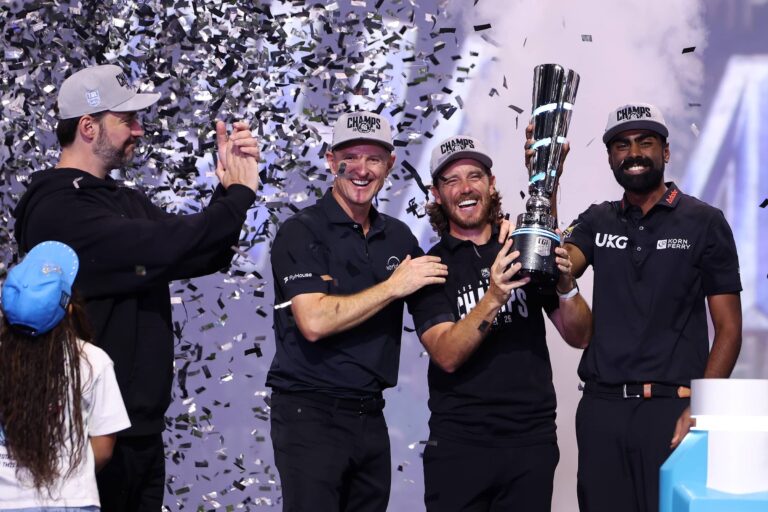
That is precisely what we are getting on Sunday, Dec. 28 at 3:00 p.m. ET (that’s 8:00 p.m. GMT for UK viewers), as New York Golf Club (0-0-0) face Atlanta Drive GC (0-0-0) in a rematch of last season’s Finals — the one Atlanta won by a single point, twice, on the final hole, like a villain who insists on leaving fingerprints.
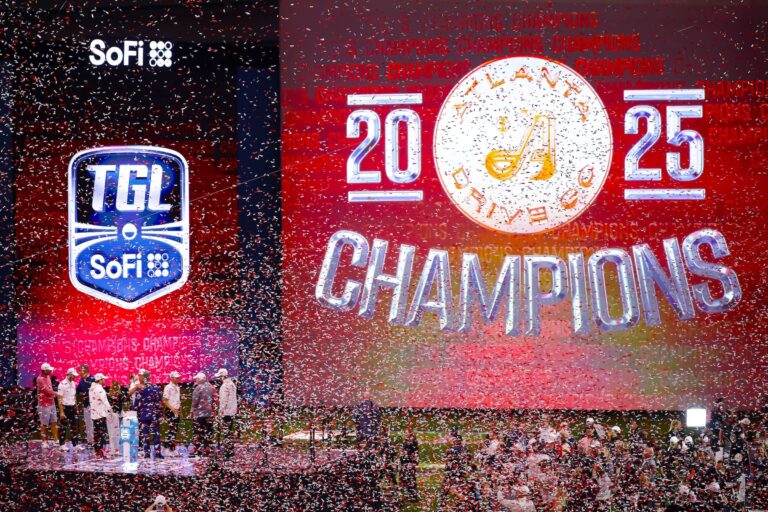
Before a ball is struck at SoFi Center, TGL will raise Atlanta Drive GC’s inaugural championship banner into the rafters. The SoFi Cup also did a wardrobe change after ATL’s title, switching from blue to Atlanta’s primary colour (red). For Season 2, it goes back to SoFi blue — at least until someone takes it off their hands again.
And if you are New York, the symbolism is clear: the banner is up, the cup is polished, and the champions are standing there grinning. Your move.
The match format: same order, same edge, three Hammers each — and Atlanta hits first
🚨 LINEUP ORDER SET
— TGL (@TGL) December 23, 2025
Here's how @nygolfclub and @atlantadrivegc are lining up to tee off Season 2 on Sunday, Dec. 28 on ABC! ⛳️ pic.twitter.com/9wQWyk4uXN
The lineup order will be the same for both the Triples and Singles sessions, and Atlanta Drive GC will tee off first on the opening hole. Each side starts with three Hammers, because nothing says “friendly competition” like a rule that lets you raise the stakes mid-hole and watch grown adults make decisions they’ll regret.
Match lineup and order
New York Golf Club
1 – Cameron Young
2 – Matt Fitzpatrick
3 – Xander Schauffele
Atlanta Drive GC
1 – Patrick Cantlay
2 – Lucas Glover
3 – Billy Horschel
If you like your sport tidy and predictable, TGL is not here to help you. If you like momentum swings, pressure putts, and the occasional strategic gamble that looks brilliant or ridiculous depending on whether the ball falls in, welcome home.
Finals rematch: Atlanta’s late-game teeth vs New York’s “we’re not done yet” energy
Atlanta were the inaugural pace-setters, and not just because they ended the season holding the Cup. They caught fire at the right time — winning seven of their final eight matches — and their Finals win over New York was the sort of comeback that makes opponents want to check whether the rulebook includes an opt-out clause for emotional damage.
In the second match of the Finals, ATL were down 3-0 heading into the 12th hole and somehow dragged the whole thing back with four points across holes 12-14 to win 4-3. The headline moment: Billy Horschel’s 17-foot birdie putt that essentially slammed the door and then leaned on it for good measure.
New York, meanwhile, was a different team after a slow start. They began 0-2, then stabilised, qualified for the playoffs with a 10-6 win over Boston Common Golf, shocked top seed Los Angeles Golf Club 6-4 in the Semifinals, and ran into Atlanta again at the last fence.
If Season 1 taught us anything, it is that these two can make a one-point margin feel like a five-act drama.
The GreenZone gets bigger (and meaner): more space, more slopes, more ways to suffer
Season 2 also arrives with a fresh coat of competitive paint. Based on data, analytics and player feedback, TGL will debut new competition elements, including a reconstructed GreenZone and new hole designs.
The headline change is the enhanced GreenZone:
- Putting surface increased by 38% from 3,800 to 5,270 square feet, nudging closer to the PGA TOUR average (5,701).
- Hole locations jump to 12 (up from seven).
- The two Full Swing Virtual Greens under the turf are now 1,250 square feet, with 608 actuators morphing the surface (up from 1,215 square feet and 567 actuators).
In plain language: more room to putt, more ways the putt can break, and more opportunities for a confident stroke to turn into a nervous apology.
Atlanta’s edge: Singles nerves, Hammer timing, and Billy being Billy
Two things powered Atlanta’s title run: Singles execution and Hammer usage.
They posted the second-most Singles Holes Won (11) and the Most Points Won in Singles (18) in Season 1, and they were the best in the league at turning Hammer throws into points — 17 points from Hammer throws in the regular season and another 13 in the playoffs.
Against New York specifically, the numbers are blunt. Over the three matchups (regular season and playoffs), Horschel and Cantlay went undefeated in Singles, combining for 6-0-6. Horschel’s Singles record against NY was 4-0-2.
And yes, TGL absolutely leaned into Horschel’s flair. From his memorable “Dirty Bird” entrance to the putt that clinched the Cup, the format looked custom-built for his blend of competitive bite and theatre.
Atlanta also had the tidy statistical backbone you want behind the show:
- Best regular-season scrambling at 77.3%
- Led Medium-Putt Efficiency, making 29.4% from 10-30 feet
- In the playoffs, led Short-Putt Efficiency at 83.3% from 0-10 feet
That is the profile of a team that can win ugly, win late, and win while the other side is still arguing with itself about whether to throw the Hammer.
New York’s path: power, touch, and Schauffele’s return to the spotlight
If Atlanta’s identity is ruthless timing, New York’s is firepower plus touch. They finished No. 1 in the regular season in Long-Putt Efficiency at 28.6% from 30+ feet and were strong in Triples, finishing No. 2 in Triples Holes Won (15) and tied for No. 2 in Triples Points Won (17).
Cameron Young was the headline act statistically — most total points (29), one of the longest hitters, and the man responsible for the season’s longest made putt (38’ 6”). He also owned the “hit it miles” section of the record book, including the longest drive on five different holes.
Matt Fitzpatrick delivered one of the neatest momentum-turning stretches New York had all season, including a three-hole run against Jupiter Links GC that featured a Hammer throw, a bunker pitch to three feet, and a birdie putt to keep the foot on the throat.
And then there is Xander Schauffele, who played TGL’s opening match last season before stepping away with a rib cage injury, then returned late and still ended up among the more heavily used players overall. He also brings a particular kind of threat in this setting: calm under noise, methodical under pressure, and very difficult to rattle even when the arena is trying its best.
New holes, new looks, same risk-reward chaos (now in Unity 6)
Season 2’s course catalogue adds fresh teeth. Gil Hanse joins returning design groups Beau Welling Design, Pizá Golf and Nicklaus Design for the full Season 2 hole list, and TGL and Full Swing upgraded the game engine software to Unity 6 to sharpen the realism.
Among the new debuts in Match 1:
- Stone & Steeple (Par 5): cross bunkers, a stone wall, and a churchyard vibe that politely suggests you keep it straight.
- Stinger (Par 4): built to tempt Tiger Woods-style low bullets — and to punish anyone trying to be a hero without the skill.
- Cenote (Par 3): two routes, both intimidating, with a “precision or power” choice that will feel brilliant right up until it doesn’t.
Add the new Team Holes — Fore-0-Fore for Atlanta Drive GC and Big Apple for New York Golf Club — and the league is clearly doubling down on identity, spectacle and high-leverage decisions.
The bottom line: it’s a rematch, but it’s not a rerun
This is TGL doing what modern sport does best: taking something that already worked, then sharpening the edges so it can cut a little deeper.
Atlanta arrive as champs with a banner going up and a history of winning the tight moments. New York arrive with the kind of roster that can flip a hole — and a match — in the time it takes a Hammer to land.
If Season 2 is going to announce itself properly, it will do it here: under the lights, with a new GreenZone, new holes, and two teams that already know exactly how painful one point can feel.