
 Gary Vogel
Over the past five years, I’ve been fortunate enough to play with hundreds of golfers around the world. In 2026, I also began golf coaching.
Some have been younger, others older. Different abilities, different cultures, different backgrounds. Yet they all share the same desire: to get out on the course and be part of this great game.
If you asked any of my regular playing partners about me, they would probably give you much the same answer. Gary loves playing golf, exploring new courses and, perhaps most importantly, he “collects humans”.
By that, I mean finding new playing partners, people I connect with and would happily meet up with again, both on and off the course.
What most of my regulars don’t realise is that there’s a simple framework behind this collection of individuals.
You might assume it has something to do with shooting a low score. It doesn’t.
I couldn’t care less whether you’re Scottie Scheffler or Norm Average, who dusts off his clubs once a year.
What matters to me comes down to three simple questions.
Did you make the round enjoyable?
Did you show respect for the course and those around you?
Did you make the game better for others?
If the answer was yes to just one of those questions, fine. We had a good round, and I’d be happy to see you again.
Two out of three? Chances are we exchanged numbers and would arrange another game.
But if you ticked all three boxes, sorry, you’ve got no chance. You’ve officially been collected.
Why have I come up with these criteria?
Because, at times, golf has become almost unbearable out on the course. Increasingly, it feels as though we’re forgetting that how we treat each other matters just as much as how we play.
1. Make the Round Enjoyable
Sadly, my own shortcomings were the inspiration for this first principle.
If I’d been one of my playing partners that day, I wouldn’t have walked away. I would have run.
The moment that should have sent everyone fleeing happened on the seventh hole of a course in Florida.
After yet another wayward shot, I threw my driver.
The club flew through the air with all the grace of a one-winged duck heading for an alligator-infested pond.
But, if I’m being honest, the meltdown had started long before I arrived at the course.
I’d brought my aggression and bad attitude with me on the drive there. It was still simmering on the first tee. By the seventh, I finally exploded.
Even worse, I spent the next 11 holes muttering and complaining about my game.
The atmosphere changed completely.
I’d made myself the centre of attention for all the wrong reasons. Nobody wanted to talk to me. Nobody particularly wanted to be around me. Not even my dad.
And the worst part? Nobody had cared how I was playing in the first place.
I was the one who had made the entire round about my game and my terrible attitude.
The usual exchanges of “good shot” disappeared. Heads went down. The friendly banter dried up.
What should have been an enjoyable day had become a miserable round for everyone.
Looking back, I remember the almost immediate sense of relief among my playing partners as we stepped off the 18th green.
A few half-hearted handshakes were exchanged before everyone made a beeline for their cars.
No post-round drink. No plans for another game. Certainly no collecting.
Just me, sitting with my own thoughts, actions and misery.
The reality is that we all have our moments. That’s fine.
Golf is tough. Really tough.
We rarely live up to our own expectations. We get frustrated. Some of us deal with that frustration in silence, while others are rather more animated.
You do you.
But the moment your behaviour takes away someone else’s enjoyment of the game, you become the problem.
We’re fortunate to have the opportunity to spend time with others playing a game we love.
You’re entitled to bad shots and bad rounds. We all have them.
What you’re not entitled to do is make everyone else have a bad round with you.
2. Respect the Course and Everyone Around You
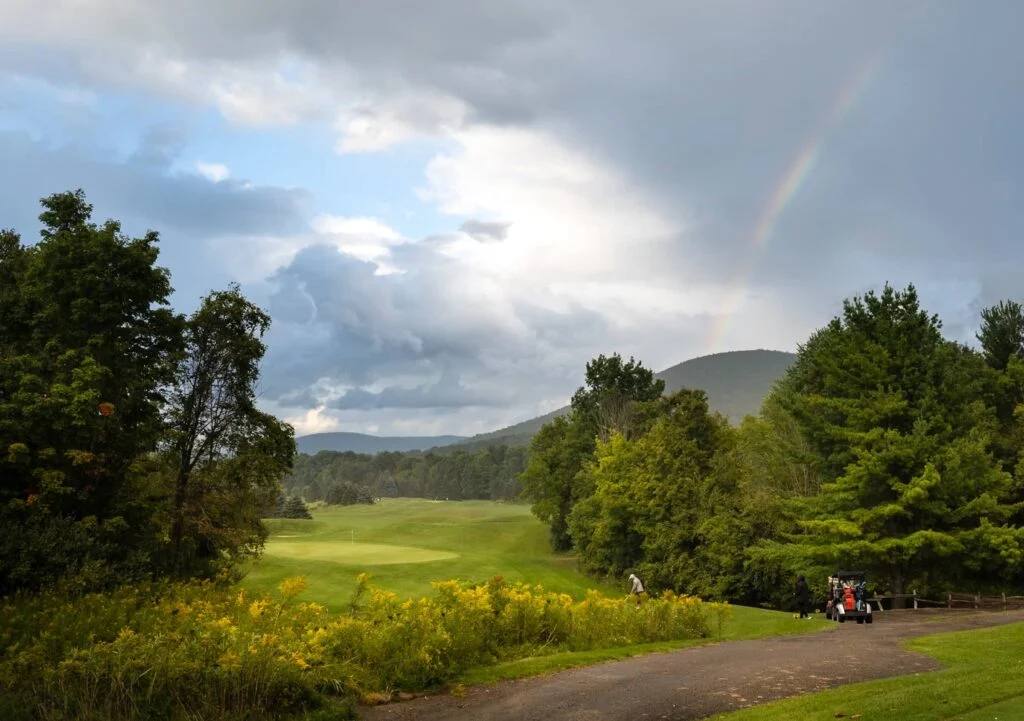
Whether you play a municipal course or a premium private club, we all share a responsibility to the people around us, including fellow golfers and course staff.
Showing respect for the course and those who use it should be a fundamental part of the game.
It doesn’t require much effort, but it says an awful lot about someone’s sense of personal responsibility.
Think about the last golf course that really disappointed you.
Put aside the general maintenance of the greens, fairways and tee boxes. Those things are largely outside a player’s control.
Instead, think about the conditions that golfers themselves could have improved.
Were there divots scattered across the fairways, with great chunks of turf lying several feet from where they belonged?
Were bunkers left unraked, leaving your ball sitting in somebody else’s enormous footprint?
Were there so many unrepaired pitch marks on the greens that putting felt like navigating a minefield?
Playing a shot from an easily repairable divot that the previous golfer couldn’t be bothered to replace?
To borrow the immortal words of NBA legend Charles Barkley: “Turrible.”
Trying to escape a bunker from somebody else’s unraked footprint?
Turrible.
Watching your birdie putt knocked off line by an unrepaired pitch mark?
You guessed it. Turrible.
We all have a responsibility to leave the course in better condition than we found it.
And that same sense of responsibility should extend to the atmosphere we create for everyone else.
Take pace of play, for example.
It’s about keeping up with the groups ahead of you and being considerate of those behind.
There are few things more frustrating than seeing one or two completely empty holes ahead of the group in front of you, while they make no effort to wave you through.
If you’re holding others up, let them play through.
Everybody benefits.
Then there’s one word that should be shouted far more freely on a golf course: “Fore!”
Looking after the safety of others is our responsibility. Your ego doesn’t come into it.
If you’ve never been struck by a golf ball during play, believe me when I say it hurts. It can also be extremely dangerous.
I was hit twice in 2024, and on neither occasion did anyone shout a warning.
Since then, I’ve made a conscious effort to call “Fore!” whenever one of my shots, or those of my playing partners, heads towards another golfer.
It’s a simple courtesy that could prevent somebody from being seriously injured.
And let’s not forget the people who make our rounds possible in the first place.
Running a golf course takes a considerable amount of work. From the clubhouse and maintenance teams to the starters, course rangers and cart attendants, there are plenty of people working behind the scenes to make our experience enjoyable.
Every one of them deserves our respect.
I’ve witnessed golfers become involved in physical altercations with course rangers simply because they didn’t like being challenged over their behaviour.
A ranger is there to monitor pace of play, safety and course conditions. They are not there to be your punching bag.
Being frustrated with your game is one thing. Taking that frustration out on the people around you is something else entirely.
Ultimately, the decisions you make, and the things you choose not to do, reveal far more about your character than anything written on your scorecard.
3. Make the Game Better for Others

This brings me back to the idea of “collecting humans”.
At its heart, it’s about building a community that makes golf better for everyone.
It means opening the door to people you meet on the course, welcoming them in and helping them enjoy, learn and grow through the game.
One of my favourite things is watching two people who have never played together walk down a fairway and suddenly discover just how small the world really is.
Perhaps they know the same person. Maybe they work for the same company but have somehow never crossed paths.
You can almost see the moment of recognition.
Their faces light up, the conversation becomes more animated and, suddenly, two strangers have found something in common.
Those are the moments that make me smile.
Sometimes, it’s something as simple as one golfer feeling comfortable enough to ask another for advice about their swing.
I’m not talking about the unsolicited coaching that makes everyone roll their eyes.
I mean a genuine conversation between two people who are enthusiastic about the game and happy to help each other improve.
But my favourite moments come before we’ve even reached the first tee.
It’s when someone gets in touch ahead of one of our organised games and asks whether they can be paired with a particular person.
Not because that golfer plays off a low handicap or might help them shoot a better score.
Simply because they enjoy that person’s company and want to spend a few hours together on the course.
They’re not chasing a number.
They want to be part of something bigger than the score at the end of the round.
Over the past five years, that’s exactly the sort of atmosphere we’ve tried to create through our regular Saturday games.
And something interesting has happened along the way.
Everyone has become a substantially better golfer.
I believe that improvement has come from growing in confidence, learning from one another and simply spending more time enjoying the game together.
The course has become our sanctuary.
Of course, everyone has a slightly different idea of what that sanctuary should look like.
For some, it’s about competition. For others, it’s the chance to escape the pressures of everyday life, enjoy good company or spend a few hours outdoors.
There’s room for all of those things.
But whatever brings us to the course, the experience becomes better when we make an effort to look after it and the people around us.
It’s About More Than Golf
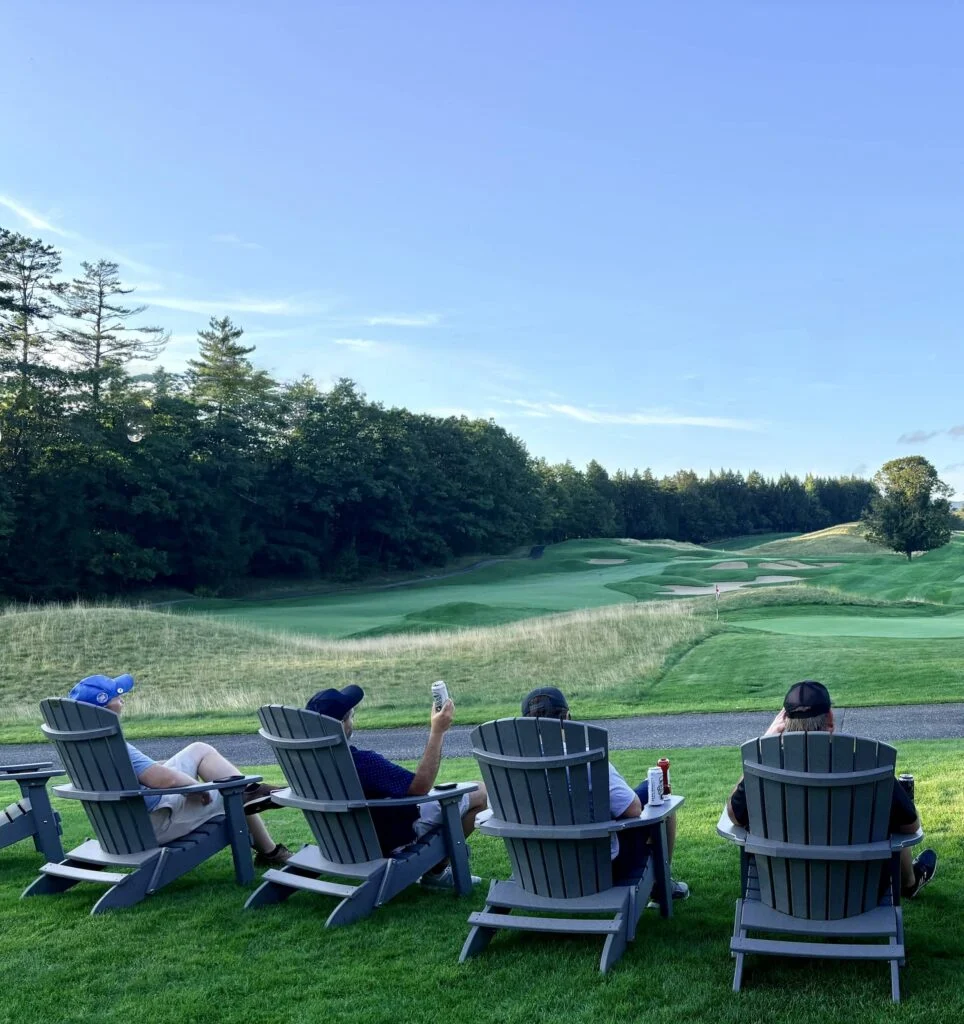
None of these principles requires you to be a scratch golfer.
Your handicap doesn’t matter. Your score doesn’t matter.
What matters is how you choose to behave, the decisions you make and what you contribute to the experience of those around you.
We’re not always going to get everything right first time.
We all deserve a little grace. Life happens. We have bad days, lose our temper and occasionally behave in ways we’re not particularly proud of.
I certainly have.
But a little humility, along with a genuine commitment to do better next time, can go a long way.
I know that “collecting humans” has a certain cringe factor. It usually gets a reaction whenever I say it.
But it’s simply my slightly quirky way of describing something that means a great deal to me.
Finding people who accept me for who I am, while I accept them for who they are.
The golf is what brings us together.
Enjoyable golf is the reward.
Community is the outcome.