 Andy Devaney
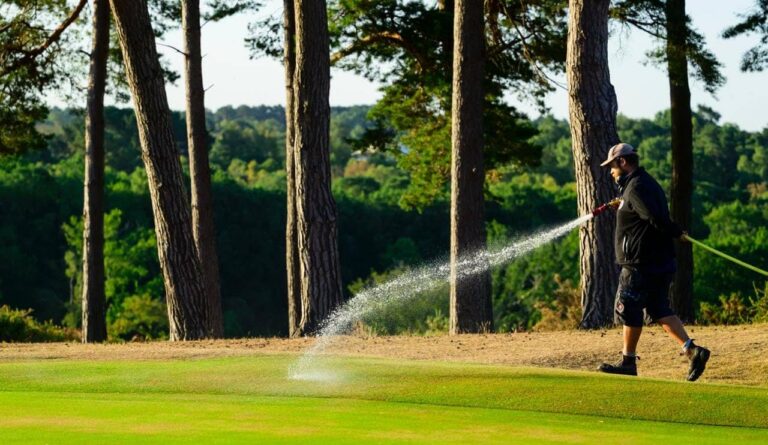
Water use at golf clubs has become one of the game’s least glamorous and most important arguments.
England’s prolonged dry weather is forcing clubs to decide what genuinely needs irrigation, what can be allowed to fade to biscuit-brown, and how long the old habit of relying on mains water can sensibly continue.
The answer, increasingly, is that green everywhere is not a badge of quality. Sometimes it is merely evidence that a sprinkler has been left with too much authority.
Hosepipe bans put golf-course irrigation under scrutiny
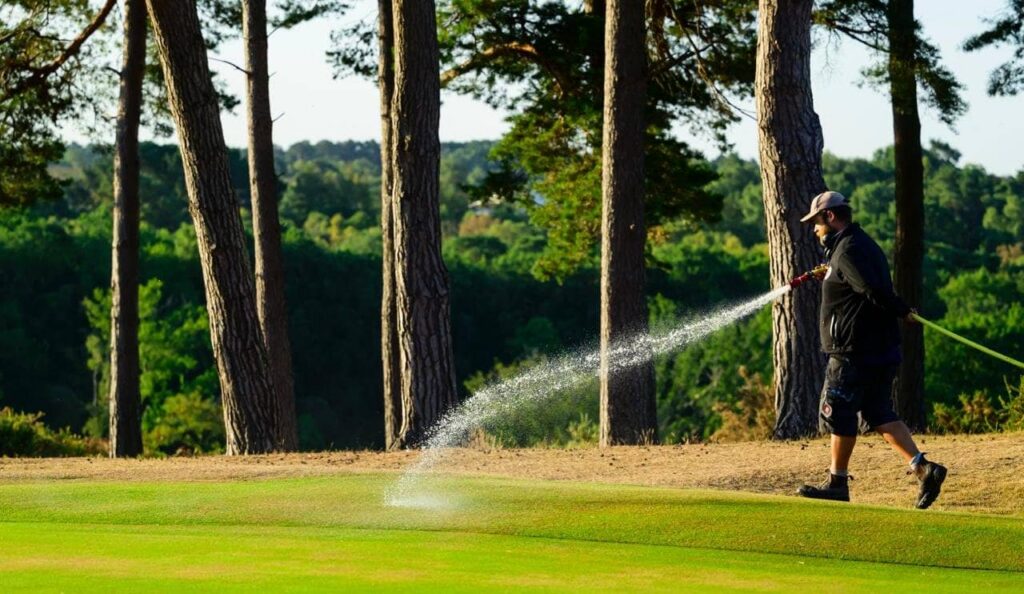
Temporary Use Bans, or hosepipe bans, are no longer somebody else’s problem. For clubs covered by a TUB, the guidance outlined for golf permits mains potable water on greens and teeing areas, while fairways, approaches, rough, ornamental grass and decorative planting fall outside that essential-use allowance.
The detail matters because water-company wording can vary. A club that assumes last month’s rule still applies is taking an unnecessary risk; managers and greenkeepers need to check their supplier’s current restrictions rather than operate by clubhouse folklore.
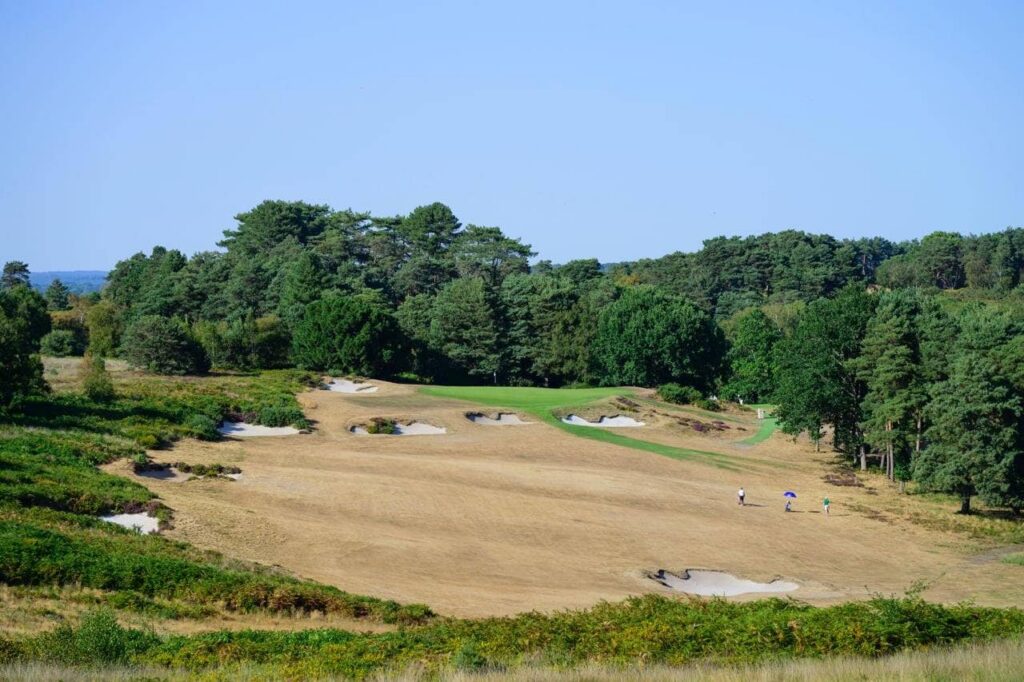
That hierarchy also makes agronomic sense. Greens and tees carry concentrated wear and are fundamental to play. A fairway losing some summer colour is inconvenient mostly to those who believe every course should resemble a television advert.
Brown fairways are not bad greenkeeping

Golf has spent decades training players to equate lushness with excellence. Drought rather rudely exposes the weakness in that idea. Firm, running fairways are part of the game’s architecture, not a maintenance failure, and clubs may need to say so more clearly.
Communication matters because restrictions become harder to manage when members see dry rough and assume standards have slipped. A sensible drought policy should explain where water is being used, why it is being prioritised and which areas will be allowed to respond naturally to the weather.
The water problem runs beyond one dry summer
The larger pressure is structural. England’s water policy is moving towards lower demand from both households and businesses, with the Environmental Targets (Water) (England) Regulations 2023 forming part of that direction. Golf clubs therefore face a longer-term question than how to survive the next few rainless weeks.
England Golf has made water one of three priorities in its Sustainability Drive 2025–2030. Its Water Security Toolkit asks clubs to assess present consumption, plan for restrictions and consider alternatives to mains supply. The R&A’s Golf Course 2030 work pushes in the same direction through its water guidance and case studies.
The useful shift here is from conservation as a worthy extra to resilience as basic course management.
Reservoirs, boreholes and rainwater need a business case
Alternative water sources sound reassuring on a committee paper; they are less charming once planning, abstraction rules, storage, capital cost and maintenance enter the room. Even so, clubs that understand their water balance now will be better placed than those discovering their vulnerability during the next ban.
Reservoirs, boreholes and rainwater harvesting can reduce dependence on potable mains water, but no single answer suits every site. Soil, geology, rainfall, course design, irrigation efficiency and local regulation all shape the decision.
The first investment may simply be better measurement: knowing where the water goes before spending heavily to find more of it.
Golf’s next status symbol may be resilience
The game will not solve England’s water shortage, nor should clubs pretend it can. But golf is unusually visible: acres of managed land, watched by members who notice every shade of green and every dry patch. That makes responsible water use at golf clubs both an operational necessity and a reputational test.
The clubs that handle this well will not be the ones that keep every blade emerald through August. They will be the ones that can explain, measure and defend every litre they use — and still present a golf course worth playing.