 Andy Devaney
Joe Dean may have won the British Masters at The Belfry, but there was another intriguing story buried just beneath him on the final leaderboard.
When the weather-battered tournament finally concluded on 30 August, Danish pair Jacob Skov Olesen and Niklas Nørgaard shared second place at 11 under, while Northern Ireland’s Tom McKibbin finished tied sixth on ten under after spending much of the week in contention.
McKibbin had even led during the opening round and was still within striking distance on Sunday before a triple-bogey seven effectively ended his challenge.
One tournament cannot diagnose the health of a country’s golf system. Fields are shaped by tour membership, exemptions, scheduling and, in McKibbin’s case, the cancellation of LIV Golf’s planned Team Championship. But The Belfry offered a useful snapshot of a broader question.
Why are Scandinavian countries producing such a conspicuous crop of elite male golfers — and does Ireland have anything to learn from them?
Scandinavian golf is thriving, but there is no single Scandinavian model
The first mistake is to lump Norway, Sweden, Denmark and Finland together as though they operate one giant Nordic production line.
They do not.
Sweden has the deepest established infrastructure and a long history of producing elite golfers. Denmark is arguably producing the most impressive current depth relative to its population. Finland is emerging. Norway, meanwhile, is the most striking recent success story because it has produced exceptional results from a comparatively small golfing base.
The Official World Golf Ranking dated 6 September 2026 illustrates the distinction.
Norway has Viktor Hovland at world No. 12 and Kristoffer Reitan at No. 32. Sweden has Ludvig Åberg at No. 16 and Alex Noren at No. 20. Denmark has Nicolai Højgaard at No. 39, Rasmus Højgaard at No. 73 and Rasmus Neergaard-Petersen at No. 85.
Ireland, meanwhile, still possesses the best-ranked golfer of any of them.
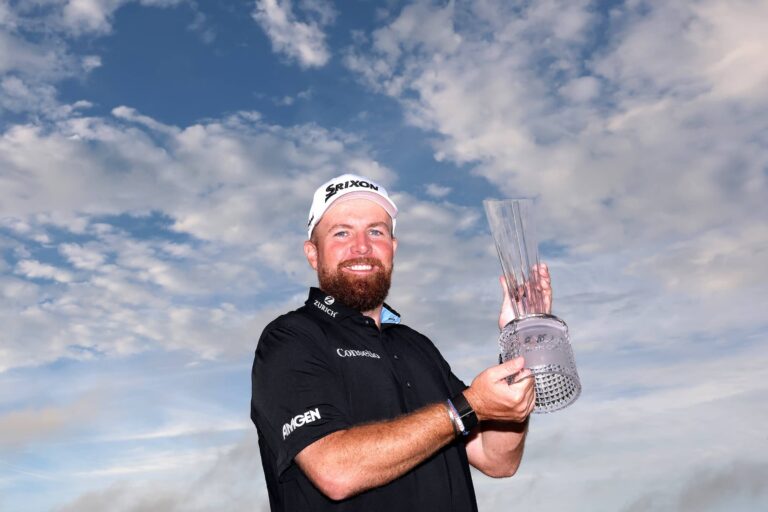
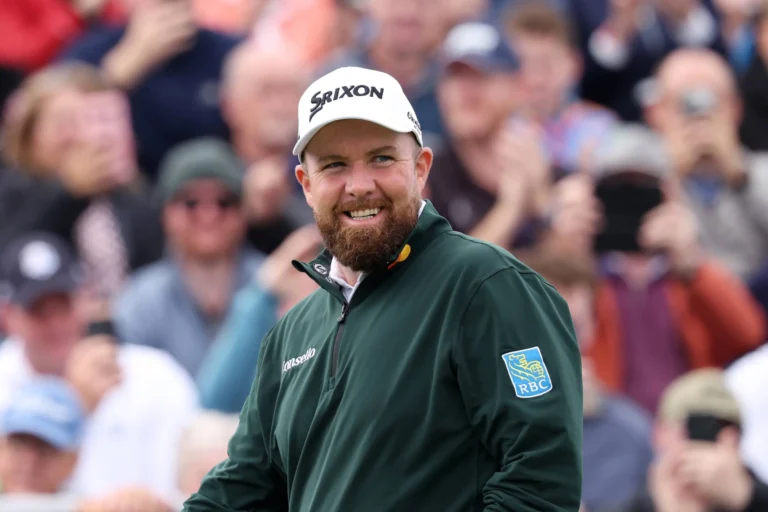
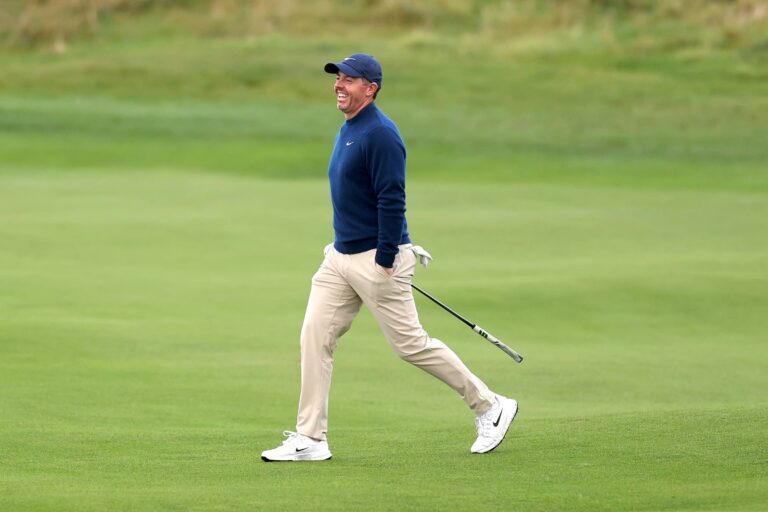
Rory McIlroy is world No. 2 and Shane Lowry No. 53. Tom McKibbin, at No. 135, is the most obvious representative of the generation trying to establish itself behind them.
That distinction matters. Ireland does not have an elite-golf crisis. What it currently lacks is the cluster of established players immediately behind McIlroy and Lowry that Denmark and Sweden, in particular, have begun to develop.
Ireland’s problem is not a shortage of golfers or golf courses
The obvious explanation for Scandinavian success might be participation. More golfers should, in theory, give a country a larger pool from which to discover exceptional players.
That explanation works reasonably well for Sweden. It works much less convincingly for Norway.
Comparable R&A data for 2024 recorded 225,363 registered golfers across the island of Ireland, compared with 149,288 in Norway. Ireland also had 377 nine- or 18-hole courses against Norway’s 174.
Adjusted for population, Ireland had approximately 52 courses per million people compared with roughly 32 in Norway. Its registered participation rate was also higher — 3.12 per cent of the population against Norway’s 2.70 per cent.
In other words, Norway has not overtaken expectations because it possesses more conventional golf infrastructure.
Ireland has considerably more of it per head.
Nor is there much evidence of a grassroots collapse in Irish golf. Golf Ireland reported affiliated membership of 236,384 by the end of October 2025, its highest figure since the organisation was formed. Membership had risen eight per cent during the year, with junior membership up 25 per cent.
So the more useful question is not why Ireland has stopped producing golfers.
It is how effectively promising golfers are moved from junior and elite amateur golf into sustainable international professional careers.
Norway has built a remarkably deliberate pathway
Norway is particularly interesting because its climate should be a disadvantage.
Long winters restrict outdoor golf considerably more than in Ireland. Instead of accepting that as an unavoidable weakness, Norwegian golf has increasingly built systems around it.
The Norwegian Golf Federation’s Team Norway programme covers players aged 13 and above. Its high-performance system uses results, world rankings, tour status and age as part of the assessment process, while its Future Camp introduces ambitious 13-to-15-year-olds to the national development structure.
That early structure is significant because it links the golfer, parents, club coaches and national coaches rather than leaving talented teenagers to assemble an elite programme largely by themselves.
Education is part of the picture too. Norwegian schools offer routes combining academic study with serious golf training, with links between school programmes, clubs and Team Norway coaches.
Then comes one of the most revealing statistics in Norwegian golf.
The federation says there are currently around 70 Norwegian golfers playing college golf in the United States.
It actively describes the American college system as a natural pathway because players can combine education with year-round facilities, coaching and high-level competition.
For a country of roughly 5.5 million people, that is a substantial overseas development network.
The lesson is not that Ireland should simply send every talented teenager to America. It is that Norway appears comfortable treating US college golf as an extension of its own player-development system rather than as the point at which a golfer leaves it.
Sweden shows what a mature production system looks like
If Norway is the eye-catching new case study, Sweden arguably provides the more complete model.
The Swedish Golf Federation currently lists two national RIG golf schools and 25 certified NIU golf schools, allowing talented players to combine secondary education with structured elite golf training.
That sits alongside junior competition, federation coaching, elite environments and established routes into US college golf and professional competition.
The result is less dependent on one extraordinary generation.
Sweden has produced major champions, Ryder Cup players and leading professionals across several decades, while Åberg’s rapid rise represents the modern version of the pathway: Swedish development, US college golf at Texas Tech, PGA Tour University and almost immediate success at the highest professional level.
There is another benefit to a structure like Sweden’s. High-level practice becomes part of an athlete’s education and weekly timetable rather than something that has to be squeezed around school, travel and whatever facilities happen to be locally available.
That is potentially more important than simply counting how many golf courses exist.
Could the Scandinavian winter actually be forcing better practice?
There is an appealing theory lurking behind all this.
Norway, Sweden and Finland cannot rely on playing 18 holes outdoors throughout the year, so they have invested more heavily in indoor golf, simulators, structured winter practice and warm-weather training.
Sweden has incorporated indoor competition into junior golf, while Norway uses simulators and overseas training as part of the broader high-performance environment.
It is tempting to conclude that bad weather has inadvertently made Scandinavian golfers practise more intelligently.
That may be true. It has not, however, been proved.
There is no convincing international study demonstrating that simulator-heavy winters produce better elite golfers than Ireland’s longer outdoor season. What can be said is that Scandinavian systems have developed organised ways of reducing the disadvantage created by winter.
That distinction matters.
A launch monitor does not produce Viktor Hovland. But a system that encourages young players to practise with purpose, record performance, receive coaching throughout winter and remain in structured competition may make geographical disadvantages less important than they once were.
Ireland is already investing heavily
It would also be misleading to portray Irish golf as neglected or starved of money.
Sport Ireland increased Golf Ireland’s High Performance Programme allocation from €650,000 in 2025 to €683,000 in 2026, while the Golf Ireland Professional Scheme increased from €350,000 to €375,000. Thirteen golfers are receiving support through the professional scheme this year.
Ireland therefore already possesses many of the ingredients normally associated with a successful golf country: participation, clubs, courses, coaching, elite funding, major champions and globally recognised role models.
Few young golfers anywhere have a more obvious line of inspiration than McIlroy, Lowry, Pádraig Harrington, Darren Clarke, Graeme McDowell and Leona Maguire.
The issue is not inspiration.
It is conversion.
How many excellent teenage golfers become internationally competitive amateurs? How many of those become professionals? And how many are still progressing towards the world’s top 250 three or four years after turning professional?
Those are potentially more revealing measures of a development system than simply counting championships won at junior level.
What Ireland could realistically borrow from Scandinavia
Copying Norway wholesale would make little sense. Ireland has different weather, a different club culture and far greater traditional course density.
But some Scandinavian ideas deserve attention.
The most obvious is creating a clearer development bridge from roughly 15 to 23 — the years in which school, university, international amateur golf and the decision to turn professional collide.
More regional year-round performance centres incorporating simulators, short-game facilities, strength and conditioning and performance analysis could complement Ireland’s existing courses rather than replace them.
A stronger formal relationship with Irish golfers at US colleges could ensure that players who leave for America remain connected to the national coaching and performance structure.
More partnerships between schools, clubs and Golf Ireland could also reduce the amount of development planning that currently depends upon individual families.
And support should not suddenly disappear when a good amateur turns professional. Those first two or three seasons, often played far from television cameras and for relatively little money, may be the most fragile stage of the entire pathway.
Ireland should study the system, not envy the results
There is a danger in reading too much into the current Scandinavian wave.
Elite golf is volatile. Norway having Hovland and Reitan inside the world’s top 35 is an extraordinary achievement, but two players are still too small a sample from which to declare one national system definitively superior to another.
Ireland’s own history demonstrates how quickly the picture can change. Harrington, McIlroy, Clarke and Lowry helped produce five Open Championship victories between 2007 and 2019, while McIlroy completed the career Grand Slam at the 2025 Masters.
The sensible conclusion is therefore not that Irish golf is failing while Scandinavian golf has discovered a secret formula.
It is that several Nordic countries have become unusually good at connecting the stages between talented junior, serious amateur, student-athlete and touring professional.
The late-August British Masters offered a neat illustration rather than proof. McKibbin was good enough to contend and finish sixth; two Danes finished above him; and an Englishman ultimately beat them all.
Ireland still produces outstanding golfers. The more interesting challenge is making sure that, behind McIlroy and Lowry, outstanding no longer has to be exceptional enough to emerge almost alone.