 Andy Devaney
In 2006, Debbie White gave up golf. Sight loss changed her relationship with the game, and the competitive future she once imagined seemed to disappear with it.
For 18 years, golf remained part of her past.
Then, in 2024, she discovered England & Wales Blind Golf (EWBG). Two years later, she was representing England and Wales in the inaugural GB&I Four Nations, fulfilling an ambition she had once thought was beyond her reach.
Now White, a player and trustee of the charity, wants to make sure others living with sight loss know that putting their clubs away does not necessarily mean putting them away for good.
Her latest effort is The Big Blind Drive Challenge, a national fundraising initiative asking golfers to contribute towards a collective target of 200,000 yards while raising money and awareness for blind and visually impaired golf.
And she has already supplied the opening distance: 163 yards.
From giving up golf to representing her country
White’s journey back to competitive golf explains why this particular fundraising campaign matters to her.
Sight loss forced her to reconsider a sport that had previously been an important part of her life. Returning to the course was not something she expected, let alone returning to international competition.
That changed when she found EWBG in 2024.
“I never imagined I would return, but discovering EWBG in 2024 gave me back competition, friendship and confidence.”
Those three things help explain what is at stake. Golf provides a competitive outlet, certainly, but it also creates friendships, routines and a sense of belonging that can be difficult to replace when somebody feels they can no longer participate.
Representing England and Wales at the inaugural Four Nations in 2026 was particularly significant for White, who describes playing for her country as a long-held dream.
It was a remarkable turnaround for someone who had spent nearly two decades away from the game.
And it has given her a reason to look beyond her own achievements.
How England & Wales Blind Golf helps people play
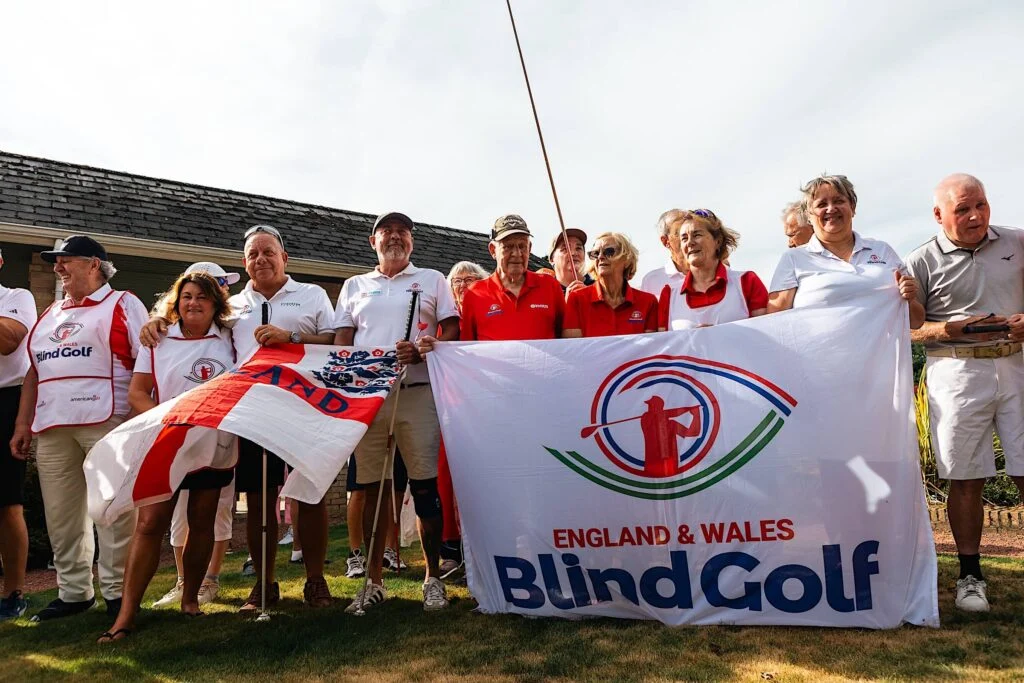
Established in 1984, England & Wales Blind Golf is a registered charity supporting blind and visually impaired people who want to learn, play and compete in golf.
Its work is built around making the game accessible through practical support, including the involvement of sighted guides.
In blind golf, the relationship between player and guide is essential. The guide helps assess distances, explain the layout of the course, align shots and follow the flight of the ball.
The golfer still has to make the swing, judge the challenge and execute the shot.
That distinction matters.
Blind golf is not simply a novelty version of the conventional game. It is a competitive sport in which players use their skills alongside the assistance that makes participation possible.
The importance of finding an appropriate route back into golf is something Love Live Golf has previously explored through Ken Powell’s return to the sport after paralysis.
White’s circumstances are different, but the underlying issue is familiar: knowing that a way back exists is one thing. Finding the people and practical support to make it happen is another.
How The Big Blind Drive Challenge works
The challenge has been designed to give individual golfers, clubs, driving ranges and simulator venues a straightforward way to take part.
Sighted participants are invited to attempt a drive while wearing a blindfold, with appropriate supervision in a controlled environment.
That could be a driving range, golf simulator or suitable practice area at a golf club. Safety is essential, and blindfolded shots should never be attempted without suitable supervision.
Blind and visually impaired golfers can participate using their normal playing arrangements.
Participants are asked to measure the distance of their drive using a simulator, launch monitor or comparable device, record their attempt on video and contribute £5 for each registered drive.
They are also encouraged to share their attempt on social media, tag @ewblindgolf and challenge three friends or another golf club to get involved.
Every registered distance is intended to contribute towards the national target of 200,000 yards by 31 January 2027.
Although the campaign is already under way, January 2027 has been designated as its main participation month.
The organisers are also planning recognition for the longest drives across men’s, women’s and professional categories, with clubs able to arrange their own supporting events.
The campaign website is now live, with donations officially open. Anyone wishing to support this great cause can make a contribution today through the campaign’s dedicated donation link. Every donation, however large or small, offers an opportunity to make a difference.
A golfing challenge with a bigger purpose
There is an obvious opportunity here for clubs looking to make their facilities useful beyond the usual competitions and practice sessions.
A supervised simulator evening, a driving-range challenge or a club-versus-club competition could provide a way for members to participate without turning the event into a major logistical undertaking.
But the most important part of The Big Blind Drive is not necessarily the distance somebody manages while blindfolded.
A single blindfolded shot cannot recreate the experience of living with sight loss, nor does it fully represent the skill involved in playing blind golf.
Its value lies in encouraging golfers to pay attention to a part of the sport they may know very little about, while helping a charity create more opportunities for people to participate.
For White, that opportunity is deeply personal.
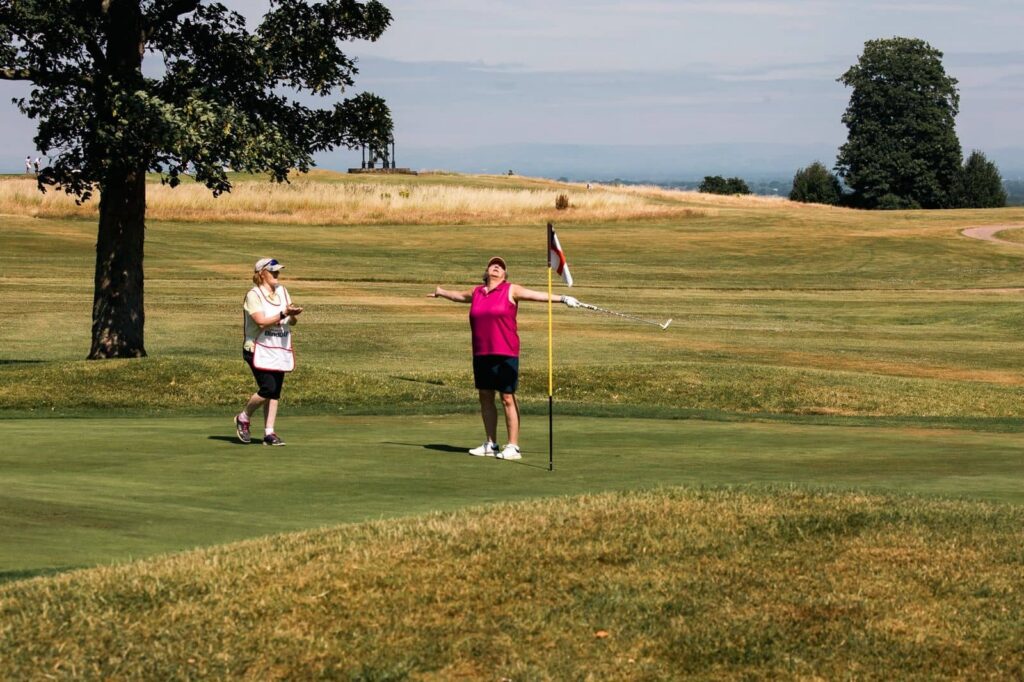
“Now I want others living with sight loss to know that golf is still possible.”
She knows that from experience. Golf was once something she believed she had lost. In 2026, she was representing her country.
The challenge now is to help more people discover that their own golfing story might not be finished.
The target is 200,000 yards. The more meaningful result could be somebody picking up a club again.
To find out more about the challenge, participation arrangements and fundraising, visit The Big Blind Drive Challenge website.