 Andy Devaney
Jordan Spieth’s coach Cameron McCormick has a refreshingly unglamorous answer to a putting slump: stop collecting fixes and rediscover the set-up, stroke and feedback that worked in the first place.
A putting slump is one of golf’s crueller little tricks. The stroke that felt automatic a month ago suddenly requires committee approval, a witness statement and perhaps a small prayer. Longer putts become exercises in avoiding disaster. Three-and four-footers start looking as though somebody has quietly moved the hole.
For anyone wondering how to fix a putting slump, Cameron McCormick’s answer is less dramatic than a rebuild. The coach best known for his work with three-time major winner Jordan Spieth wants golfers to recover the blueprint that worked before the trouble began.
That sounds almost suspiciously sensible.
Start with the version of you that could putt
McCormick’s first concern is not some fashionable move of the month. It is the basic geometry of a golfer’s own set-up: distance from the ball, ball position and eye position, followed by the movement of the putter itself.
“A blueprint or template would start with things as simple as distance from the ball, ball position, the eye position over the ball, and then we go into how they are going to move the putter to accomplish the task of start line control and just as much as that, speed control,” he says.
The important word is blueprint. A golfer in poor form tends to become an enthusiastic collector of cures. One tip alters the stance. Another changes the grip. A third tinkers with tempo. By the end of the week, the original problem has acquired several friends.
McCormick describes that as riding “that carousel of trying X, Y, and Z without it being connected and getting back to the best version of their former self.”
His point is practical: before changing anything, know what your good putting actually looked like.
When feel goes missing, use feedback

Putting is often discussed as an art of touch and instinct, which is lovely until the touch disappears and instinct starts charging appearance money.
That is where feedback matters. McCormick points to the stance aids, ball-position tools and mirrors regularly seen around tour practice greens. They are not glamorous, but glamour has never holed a four-footer.
“You’ve got to know what you do when you do it well, and you have to have means of feedback to ensure you’re doing it as you’re supposed to be doing it,” McCormick says. “When there’s a disconnect between what you’re doing and what you should be doing, you have to have ways to get it back on track.”
The distinction matters. A golfer can feel square while aiming somewhere else entirely. A familiar ball position can drift. Eye line can move. Small changes are difficult to diagnose when the only reference point is what the stroke feels like that day.
A useful putting routine therefore needs something measurable enough to return to. Not because every player should look identical, but because each player needs to recognise his or her own normal.
Xander Schauffele and J.T. Poston make the case against copying
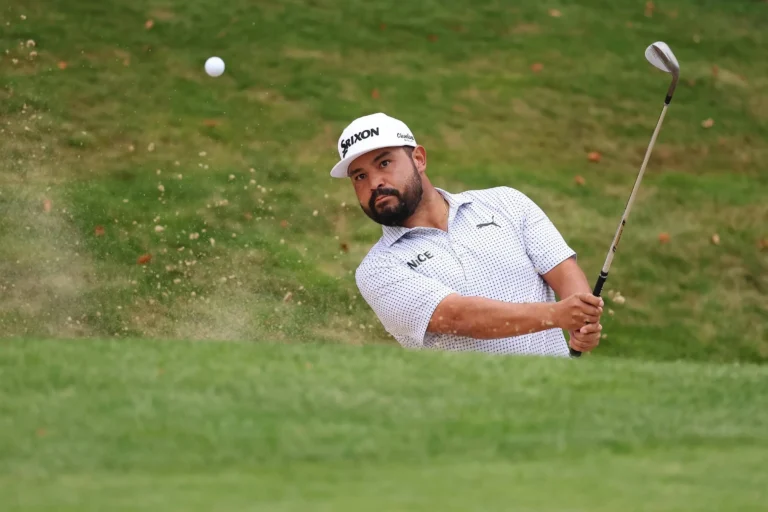
McCormick uses Xander Schauffele and J.T. Poston to make a point that amateur golfers occasionally forget while borrowing somebody else’s method wholesale: elite putting does not come in one shape.
“They putt so completely differently – like their distance to the ball, the way they move it. It’s on two ends of the spectrum. And that doesn’t mean that either is right for any specific person. But there’s one that’s right for JT and one that’s correct for Xander. They’ve both figured that out,” McCormick says.
That is a more useful lesson than trying to decide which of the two has the prettier action. The target is not a textbook pose. It is a repeatable arrangement that gives the player control of start line and speed.
The same applies to the grip. Poston, in McCormick’s example, uses his hands more than many tour players and may therefore favour a smaller grip. A golfer trying to quiet the hands may prefer something larger in diameter.
Different job, different tool.
The grip should support the stroke, not become the stroke
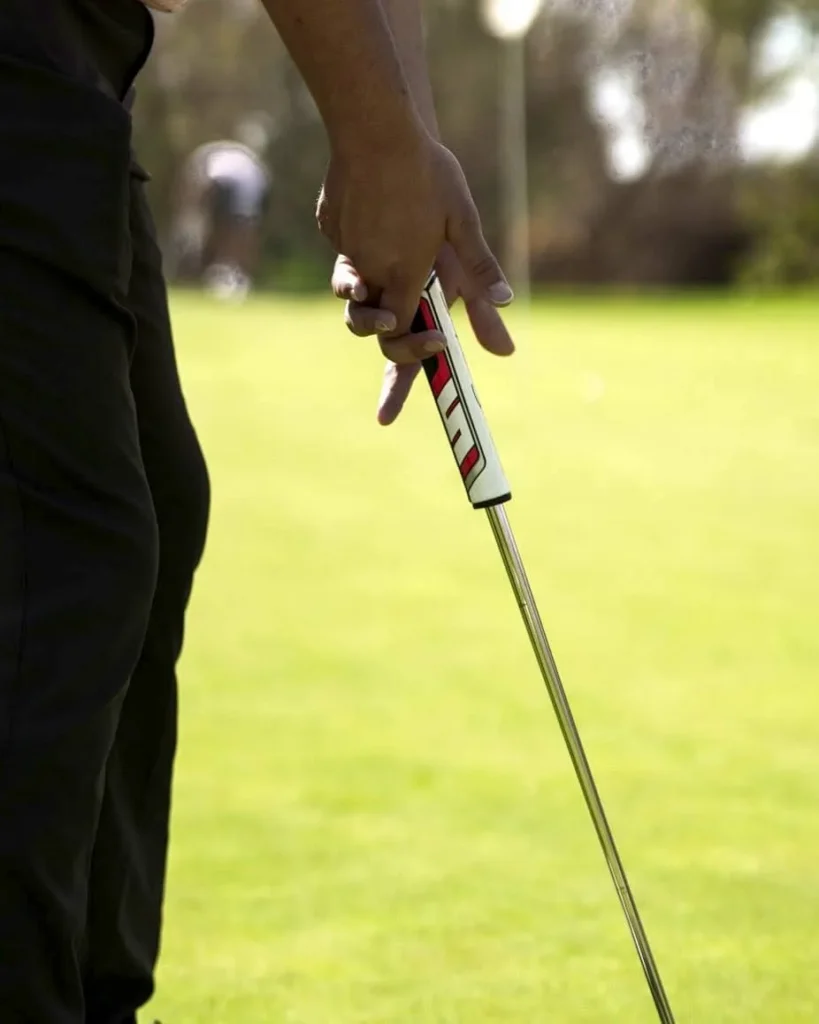
McCormick is a SuperStroke brand ambassador, so his comments on grip choice sit within that relationship. The broader coaching idea is still worth separating from the product catalogue: fitting makes more sense when the player knows what he or she is trying to accomplish.
SuperStroke’s putter range includes different shapes and sizes, from the Zenergy Flatso 2.0 and Wrist Lock to the Zenergy TLT Off Axis. The TLT is designed for zero-torque and lie-angle balanced putter heads, with a set-up intended to promote forward shaft lean without requiring the golfer to add a forward press.
McCormick has been using the TLT on his own putter and explains the intention this way:
“With the TLT, we’ve got some lower loft impact built at address, so a player doesn’t need to accomplish that necessarily with a forward press or some sort of dynamic loading of the clubhead behind the handle to accomplish the desired launch angle by using that grip,” he says.
The technical detail is less important than the sequence of decisions. Decide what the stroke needs to do. Understand the golfer’s tendencies. Then choose equipment that supports those aims.
As McCormick puts it: “But now with the options that SuperStroke provides, you can fit a grip for what a person is trying to accomplish.”
That is considerably more useful than choosing a putter grip because it happens to look reassuringly substantial in the shop.
A slump naturally makes golfers want change. McCormick’s argument is almost the opposite. Before reaching for a new theory, recover the old reference points: where you stood, where the ball sat, what your eyes saw and how the putter moved when the whole thing behaved itself.
The clever part is not finding a new stroke. It is knowing precisely what your good one looked like before it disappeared.