 Andy Devaney
A golf course can have immaculate greens, an impressive irrigation system and a maintenance team that knows every blade of grass. But none of that counts for much if the water supply becomes unreliable.
It is an uncomfortable reality for a sport that depends heavily on maintaining playing surfaces, particularly as droughts become more frequent and competition for water resources increases.
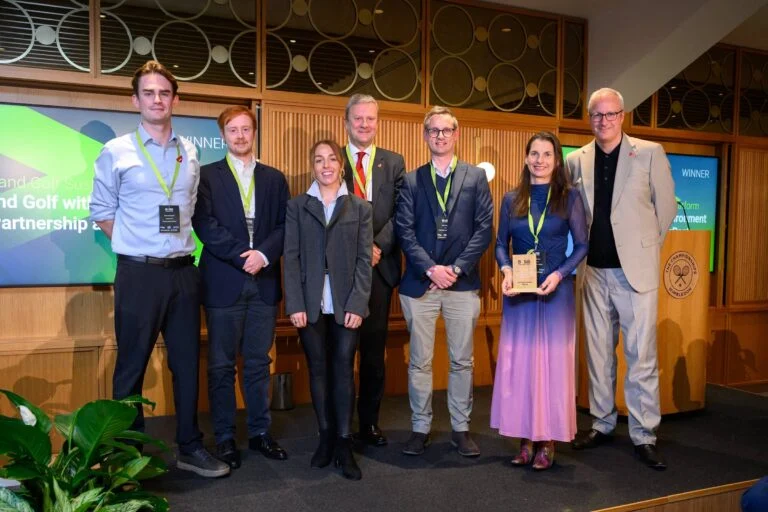
The R&A is attempting to get ahead of that problem, and its work has now earned recognition at the BASIS Awards, where its Water Security Index, developed alongside The Environmental Partnership (TEP), won the Adaptation Award.
The initiative has already been used to assess 46 golf venues, providing clubs with a clearer picture of their water security and, crucially, what they can do to improve it.
Putting Golf’s Water Security Under the Microscope
Developed through The R&A’s Golf Course 2030 (GC2030) programme, the Water Security Index is described by the organisation as the world’s first assessment framework of its kind specifically designed for golf.
Rather than leaving clubs to work out their exposure to water shortages independently, the framework provides a structured way to examine current water requirements, identify potential vulnerabilities and plan for future pressures.
Each participating venue receives a water security score, accompanied by a prioritised action plan.
Those recommendations can cover irrigation efficiency, water storage, resource management and measures intended to strengthen the course’s ability to cope with changing environmental conditions.
For course managers facing decisions about infrastructure and long-term investment, that is the important part. Knowing water may become a problem is one thing. Understanding where the risks lie, and which improvements deserve attention first, is considerably more useful.
From Open Venues to Clubs Across Europe
The project began with pilot assessments at Open venues before expanding across the UK and into other parts of Europe.
According to The R&A, 46 venues have now undergone assessments, giving the initiative a broader reach beyond its initial testing phase.
That expansion is significant, although the number of assessments tells only part of the story. The longer-term measure of success will be how effectively clubs turn their individual action plans into improvements in water management.
Daniel Lightfoot, Director of Sustainable Golf at The R&A, welcomed the award.
“We’re delighted to receive this award, which is fantastic recognition of the work being undertaken to address one of the most significant long-term challenges facing golf.”
Lightfoot also highlighted the importance of the collaboration with TEP and the organisation’s ambition to extend the initiative to more clubs internationally.
A Bigger Sustainability Picture for The R&A
The Water Security Index forms part of The R&A’s broader Golf Course 2030 programme, which is focused on helping golf adapt to environmental challenges and develop more sustainable approaches to course management.
Water security is an obvious priority, but the BASIS Awards also recognised other areas of the organisation’s sustainability work.
The R&A received a nomination for the Partnership Award for its work with You. Smart. Thing. on scaling sustainable travel across its major championships.
Meanwhile, Owen James, The R&A’s Sustainability Manager, was nominated for the Leadership Award in recognition of his mentoring work with people moving into sustainability roles.
For golf clubs, however, the most immediate value of the Water Security Index lies in its practical application.
Awards are welcome recognition, but a water security score and a workable plan could prove rather more valuable when the next prolonged dry spell arrives.
The challenge now is turning those assessments into measurable improvements, so clubs are better prepared for the conditions they may face in the years ahead.