
 Andy Devaney
Scotty Cameron has taken its lowest-torque Phantom concept and given it the full blackout treatment, with two limited Spec III mallets arriving at £729.
There is something pleasingly unnecessary about an all-black putter. Nobody has ever missed a six-footer because the flange lacked menace, yet here we are — and Scotty Cameron’s new Phantom OC Spec III putters certainly look as though they have been issued with night-vision goggles and told not to make a fuss.
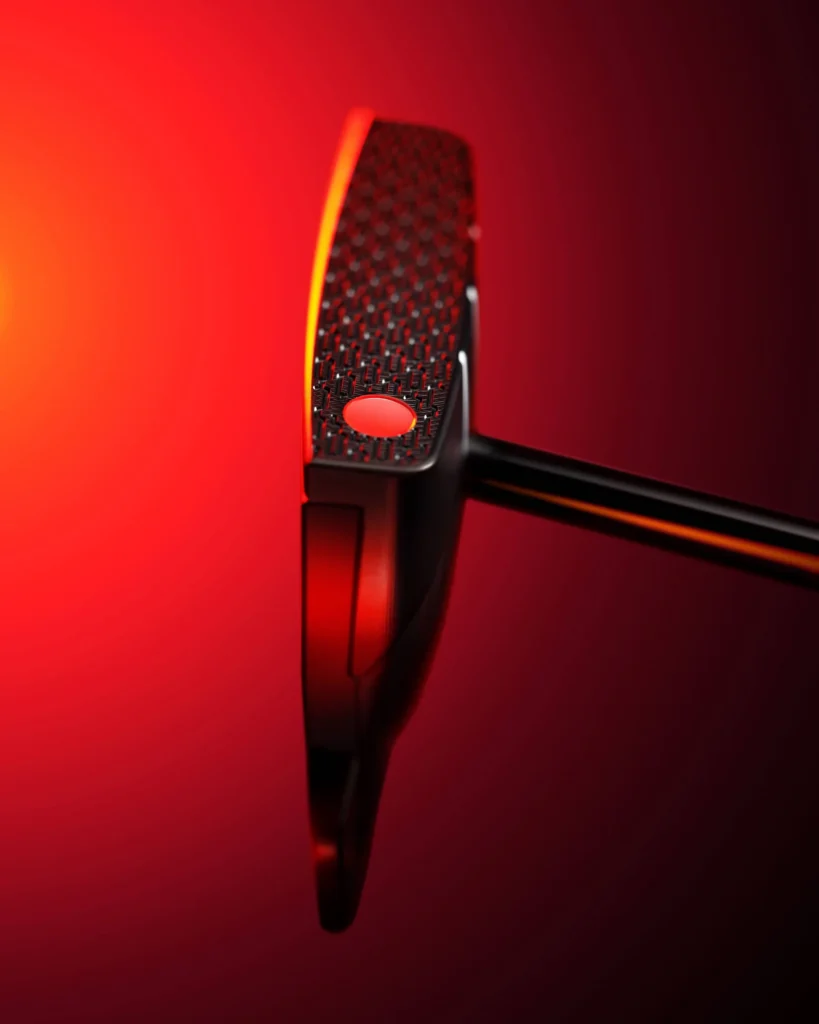
The limited-edition range takes the low-torque Phantom 5 OC and Phantom 11R OC designs and dresses them in a glare-resistant black PVD finish, black steel shafts and black mid-size Matador grips. Against all that darkness sit three bright sightlines intended to frame the ball and make alignment decidedly less mysterious.
They will reach golf shops in limited quantities from 24 September, priced at £729.
The important bit is underneath the black paint
The obvious attraction is cosmetic, but the more interesting story is the OC construction.
OC stands for Onset Centre, describing a shaft position set behind the leading edge of the putter head and aligned with its centre of gravity. The purpose is to reduce torque and encourage the face to remain square to the path through the stroke.
Scotty Cameron stops short of calling these zero-torque putters. Its position is that putting inevitably creates some torque, regardless of design, but that the OC models produce the lowest torque within its own range.
That distinction matters. “Zero torque” has become one of equipment golf’s more fashionable expressions, but the Spec III models are being presented instead as a way of reducing unwanted face rotation without making the putter feel completely alien to somebody coming from a conventional setup.
Both models have just one degree of shaft lean, while retaining familiar Phantom head shapes and a tapered mid-size Matador grip.
Phantom 5 OC Spec III keeps things compact
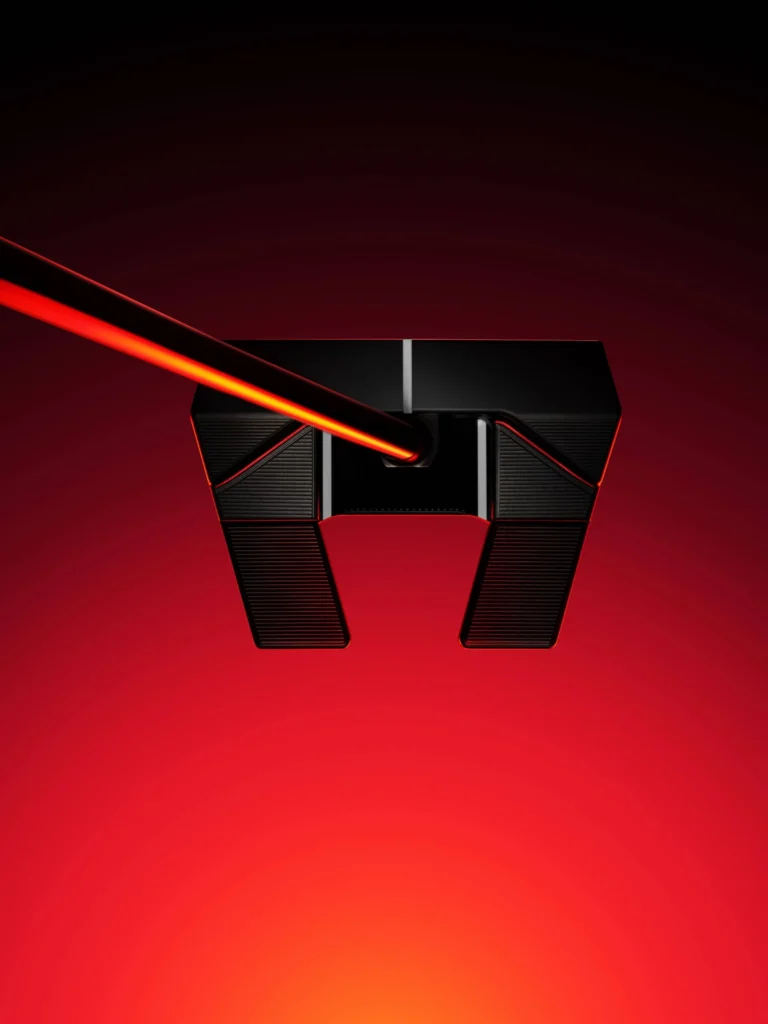
Of the pair, the Phantom 5 OC Spec III is the more compact-looking proposition.
Its wingback shape is already established within Scotty Cameron’s Phantom family and has been a familiar presence on professional tours. Here it receives the OC treatment alongside that black PVD finish and the trio of contrasting alignment lines.
The face is fitted with Scotty Cameron’s full-face Studio Carbon Steel insert, using chain-link milling. The intention is to retain a softer sound and feel at impact rather than allowing the pursuit of stability to turn the thing into a very expensive tuning fork.
That question of feel is particularly relevant with low-torque designs. Moving mass, shaft position and overall balance in pursuit of a quieter face can alter the feedback golfers are accustomed to receiving through their hands.
Scotty Cameron has therefore paired the OC head design with a slightly stiffer shaft and head weights that are 15 grams heavier, aiming to preserve suitable flex characteristics and a recognisable sense of where the putter head is during the stroke.
Phantom 11R OC Spec III offers the bigger footprint
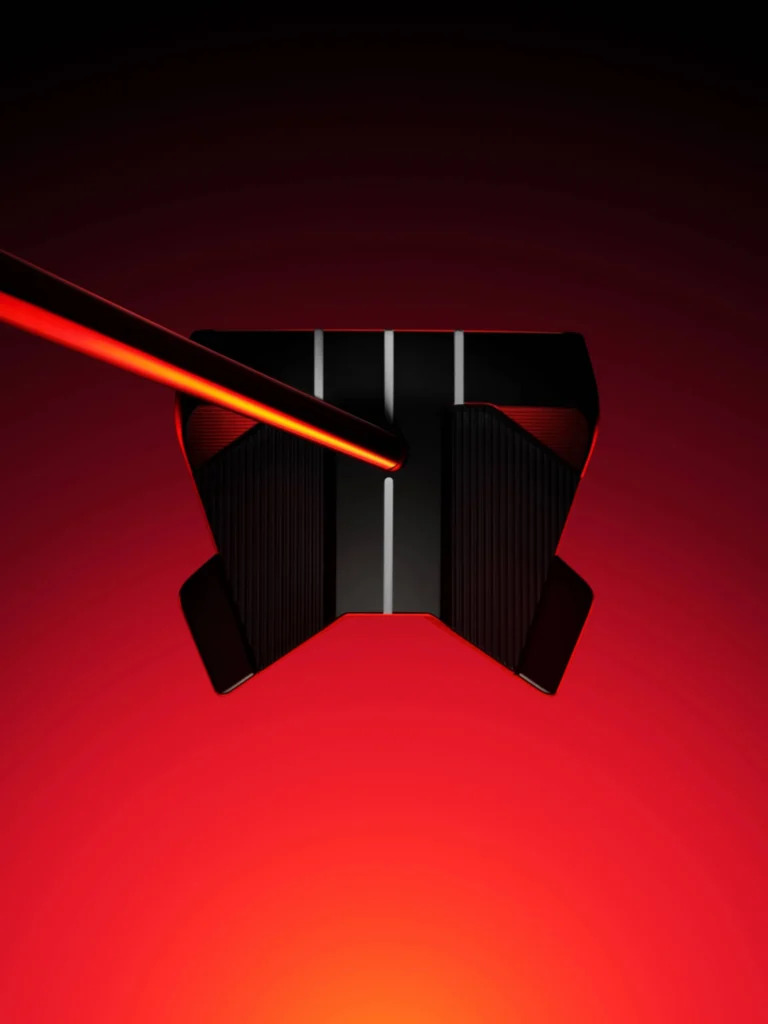
The Phantom 11R OC Spec III takes the same broad idea and applies it to a larger, high-MOI mallet.
Its shape is rounder and more substantial than the Phantom 5, providing the more planted appearance many mallet users prefer. The three sightlines again provide a stark contrast against the black head, creating a clear visual channel around the ball at address.
Rather than using the Phantom 5’s Studio Carbon Steel insert, the 11R carries a full-face chain-link milling pattern, intended to provide a similarly soft, responsive sensation at impact.
There is another practical difference: the Phantom 11R OC Spec III will also be offered left-handed. The Phantom 5 version is right-handed only.
Who is the OC design actually for?
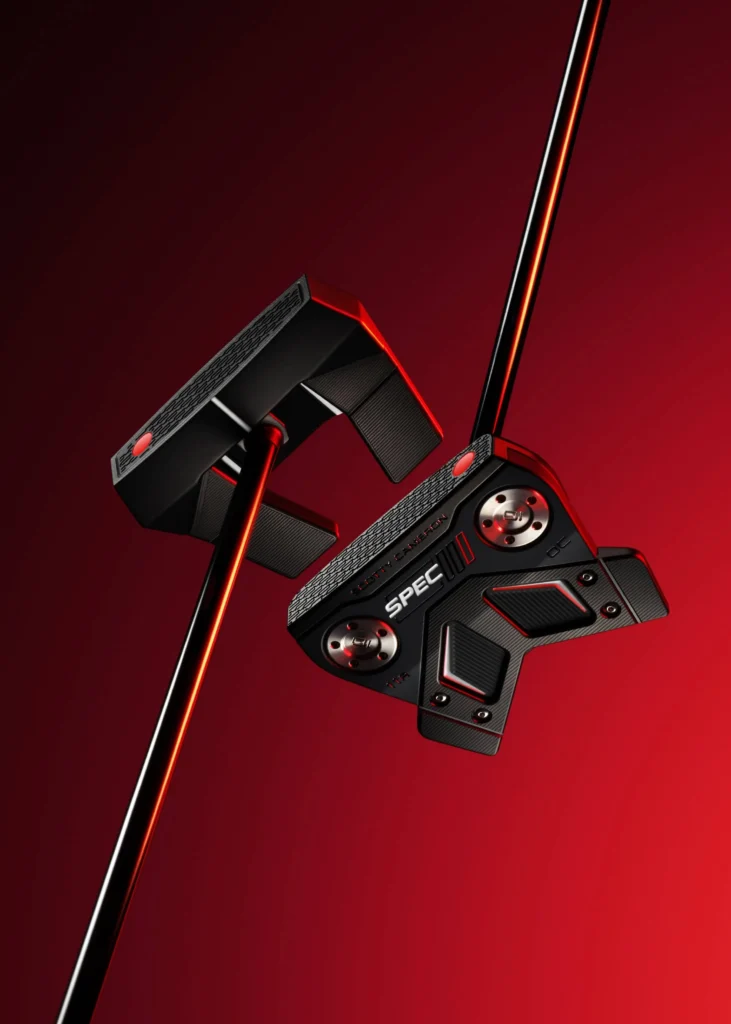
Scotty Cameron positions the OC models towards golfers who want less face rotation and prefer the sensation of a straighter-back-and-through stroke.
That does not make them a universal prescription for poor putting. Equipment remains stubbornly unwilling to read greens on your behalf.
What the design does offer is a different relationship between the shaft, centre of gravity and putter face while retaining several conventional cues. The grip still looks and feels like a recognisable putter grip. The Phantom shapes are familiar. Shaft lean is minimal rather than visually dramatic.
For somebody intrigued by low-torque putting but unconvinced by some of the more unconventional shapes and setups associated with the category, that may be the strongest part of the proposition.
Scotty Cameron Phantom OC Spec III specifications
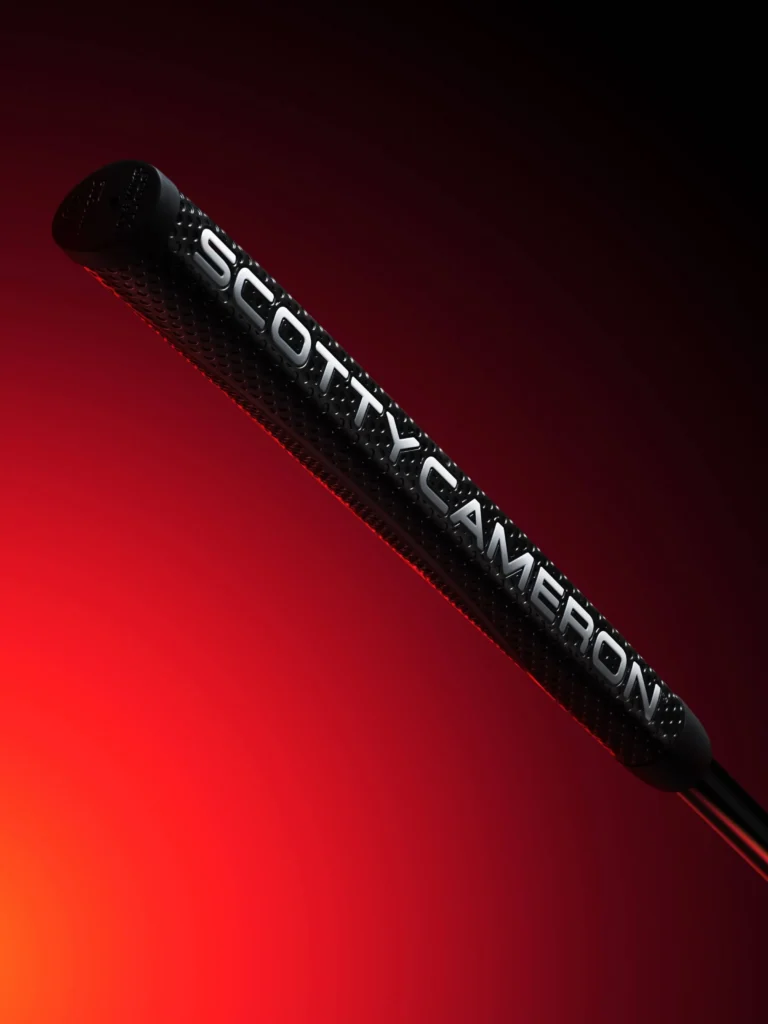
Both putters are available in 33, 34 and 35-inch lengths, with 3.5 degrees of loft, a 70-degree lie angle and one degree of shaft lean.
Dexterity is split as follows:
- Phantom 5 OC Spec III: right-handed
- Phantom 11R OC Spec III: right- and left-handed
The recommended selling price is £729.
The “Spec III” name borrows from the language of highly optimised automotive builds, where individual components are meant to work as a complete performance package. In this case, that package consists of the OC shaft location, heavier head, revised shaft characteristics, distinctive face treatments and a thoroughly blacked-out appearance.
At £729 and with limited availability, subtlety was never really going to be the selling point. The more interesting question is whether golfers who want low-torque behaviour without abandoning the familiar Scotty Cameron look will see this as the neat middle ground they have been waiting for.