 Andy Devaney
With a Brian Curley-designed course, shoreline holes, luxury resorts and improving air access, Shura Links is attempting to turn the Gulf summer into a season for golf travel rather than retreat.
There are easier places to build a golf destination than an island in the Red Sea. There are also considerably less interesting ones.
Shura Links sits at the heart of Shura Island, part of Saudi Arabia’s expanding Red Sea tourism development, where the proposition is less about squeezing in a round between city meetings and more about disappearing for several days with golf shoes, swimwear and very little interest in email.
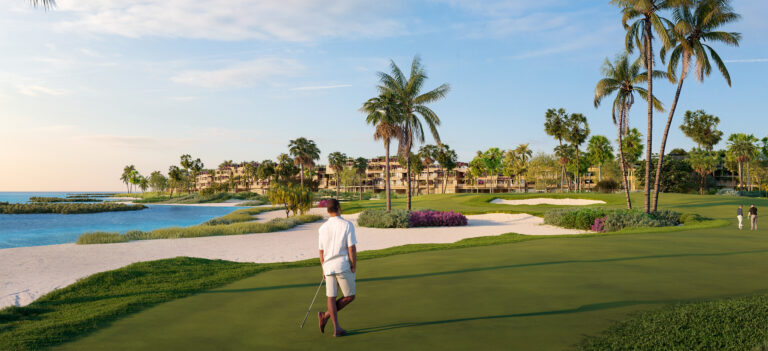
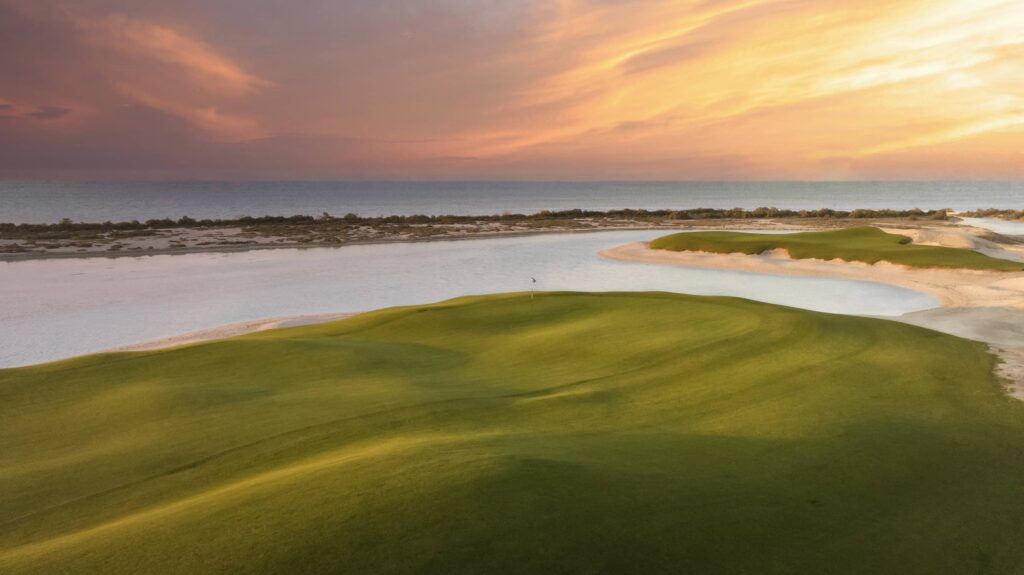
The 18-hole championship course is surrounded by clear water, low horizons and a collection of luxury hotels. Several holes run beside the shoreline. The clubhouse is designed by Foster + Partners. Boats, diving equipment and sun loungers wait beyond the final green.
It is golf travel with the edges deliberately softened.
More importantly, Shura Links is attempting to solve one of the region’s least negotiable problems: summer.
An island alternative to Gulf summer golf
Across much of the Gulf, summer golf becomes an exercise in careful scheduling. Tee off early enough and the opening holes can be manageable. Misjudge the alarm clock and the back nine begins to resemble a lengthy discussion with a hairdryer.
Shura Island makes a different case.
Its low-lying marine geography exposes the course to a regular Red Sea breeze, reported at between 9 and 16mph during summer. That movement of air is central to the destination’s claim that golfers can continue playing outdoors while inland and urban courses contend with heavier, more stagnant conditions.
Nobody should mistake a coastal breeze for air-conditioning. Saudi Arabia remains warm in summer, and sensible travellers will still favour morning tee times, drink more water than they think necessary and leave the heroic dehydration to someone else.
Yet moving air matters. On an exposed coastal course, it can change both the physical experience and the golf itself.
A breeze of 9mph adds comfort and character. At 16mph, it begins asking questions of trajectory, club selection and nerve. The Red Sea may cool the golfer, but it has no obligation to assist with the scorecard.
Brian Curley’s course makes use of the coastline
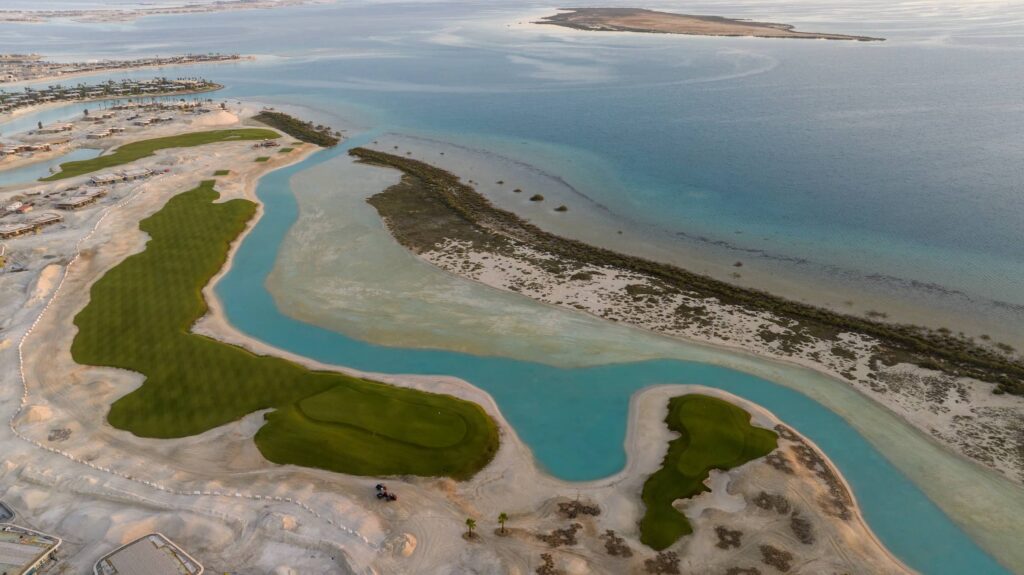
Designed by Brian Curley, Shura Links is a par-72 layout shaped around the contours of the island. The course is intended to provide strategic choices without becoming oppressive, an important distinction for a resort where the daily starting sheet may include low-handicap golfers, occasional players and holidaymakers whose swing has not been seen since last summer.
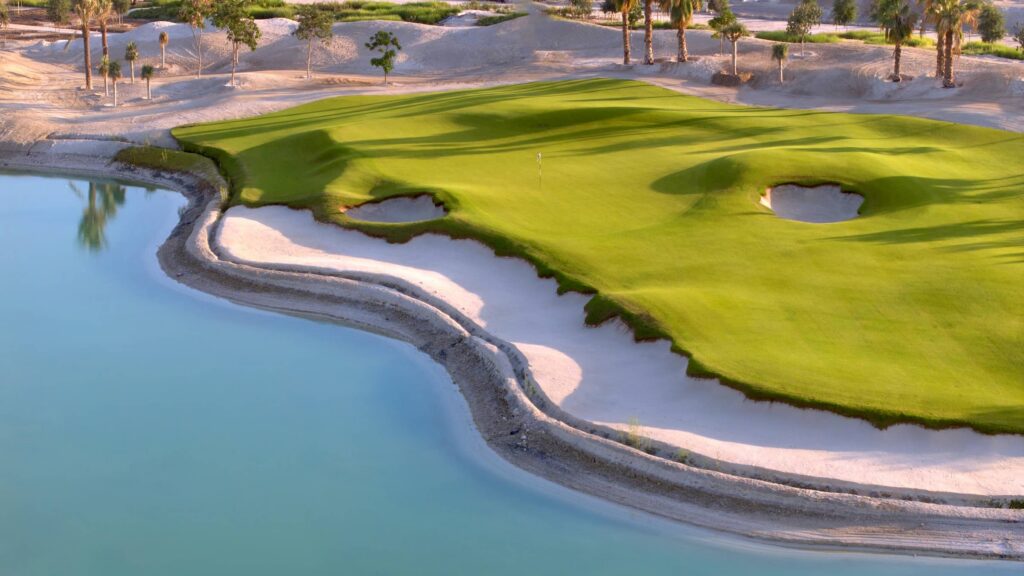
The available imagery suggests a course of broad coastal views, shaped fairways and holes that sit naturally against the water. Several play directly beside the turquoise shoreline, giving the routing a visual identity that cannot be reproduced with ornamental lakes and enthusiastic landscaping.
For travelling golfers, that sense of place is crucial.
The strongest destination courses could not belong anywhere else. Their ground, climate and surroundings influence every shot. At Shura Links, the coastal wind should become part of the architecture, changing the preferred line from the tee and asking players to control rather than merely launch the ball.
Resort golf can sometimes become too polite. Wide fairways, forgiving greens and pleasant scenery send everyone home unharmed, if not especially moved. Shura Links appears to be aiming for a more useful balance: generous enough for holiday golf, but varied enough to reward repeat play.
That matters because this is not being presented as a course to visit once, photograph extensively and leave. It is intended to anchor a complete Red Sea golf break.
From the 18th green to the water
The most appealing feature of Shura Island may be how easily golf fits into the rest of the day.
A morning round can be followed by diving, snorkelling or yachting in the Red Sea, where summer sea-surface temperatures are reported to hover around 30C. The water is warm, the coastline is close and nobody needs to spend the afternoon pretending to enjoy a hotel treadmill.
For couples and groups with mixed interests, that breadth is valuable. Golf travel works best when the course does not hold the entire holiday hostage.
A serious golfer may want to play every morning. Their partner may prefer the beach, spa, boat or reef. Friends can separate for a few hours, reconvene for lunch and avoid the negotiation that occurs when one member of the party regards 36 holes as a cultural programme.
The Red Sea setting gives the destination an obvious advantage over landlocked golf resorts. Here, the course is part of an island experience rather than the sole reason for enduring the journey.
A growing collection of luxury hotels
Shura Links is flanked by 11 high-end hotel properties, including Four Seasons Resort, SLS and The Red Sea EDITION.
That concentration of hospitality gives travelling golfers a choice of style without requiring them to leave the island. It also signals the scale of the ambition. Shura is not a small golf retreat with a few rooms beside the first tee. It is being built as a complete resort destination in which the golf course, hotels, beaches, restaurants and water activities support one another.
The Foster + Partners-designed clubhouse provides the architectural centrepiece, although the course will ultimately be judged less by the sweep of its roofline than by the quality of its greens and the welcome at the first tee.
Luxury golf resorts tend to excel at surfaces. Marble gleams. Towels appear in improbable quantities. Breakfast buffets require maps.
The more difficult task is creating personality.
Shura Island’s best chance lies in allowing the Red Sea to lead. Its marine landscape, coastal light and open views are more distinctive than any generic version of luxury. The experience will feel convincing if the hotels and golf course remain connected to that setting rather than floating above it in a carefully scented bubble.
Direct flights make the journey more realistic
An island course can be magnificent and still struggle if reaching it requires the patience of a touring professional during a weather delay.
Access is therefore a significant part of the Shura Links story.
Red Sea International Airport has partnered with BeOnd to introduce direct connections from London, Paris, Munich, Moscow and Zurich, adding to existing flights from Milan and Malé in the Maldives. The expanded network is reported to operate more than 30 weekly services.
Connections through Doha and Dubai provide additional options for travellers from the Gulf and wider international markets.
For golfers in Britain and continental Europe, direct access changes the character of the trip. Shura Links begins to look less like a complicated expedition and more like a credible long weekend or extended golf holiday.
It also places the destination in competition with established winter and shoulder-season golf markets. Travellers already accustomed to flying for golf now have another choice, although Shura Island’s summer proposition is the more unusual one.
Rather than offering escape from rain, cold and temporary greens, it offers an alternative to the traditional Gulf summer routine of indoor leisure and carefully managed exposure to daylight.
A new kind of Red Sea golf break
“Shura Links sets a completely new benchmark for golf in the region,” said Jon Brook, General Manager of Shura Links, “It’s more than just a course; it is a place to connect and experience the raw, natural beauty of the Red Sea. With improved international connectivity making it easier than ever to visit, guests can enjoy an outdoor summer escape that is highly playable, highly scenic and entirely sustainable.”
The sustainability claim will require substance. Golf developments in dry regions face legitimate questions about irrigation, turf selection, energy use, construction and ecological impact. A coastal setting and attractive architecture do not settle those matters.
Travelling golfers are increasingly alert to the footprint of the places they visit, particularly when a destination makes environmental responsibility part of its identity. Shura Links will be expected to support that language with transparent evidence as the course and wider island development mature.
From a golf travel perspective, however, the concept is coherent.
There is a championship course with a recognised architect. There are shoreline holes and a wind that should influence play. There is a substantial collection of hotels, direct access from major European cities and enough activity beyond golf to justify a longer stay.
The destination’s success will depend on the details: course conditioning through summer, pace of play, service, transfer times and the ability of the resort to retain a genuine sense of place.
Those are the elements that separate an impressive development from a memorable golf trip.
Shura Links is not merely asking golfers to visit Saudi Arabia and play beside the sea. It is asking them to reconsider when a Red Sea golf holiday might make sense.
The view will attract them. The course must bring them back. And the breeze, rather unusually, may be the best travelling companion of all.
For more information, tee time bookings, or resort packages, visit shuralinks.com