 Andy Devaney
A simulator bay can be a busy place on a weekend evening. Filling it when demand falls away is a different challenge. Across the international simulator golf market, average off-peak usage sits at around 20%, according to research from Golf Genius. It is an awkward figure for a business built around selling time by the hour.
The findings suggest a significant shift in how indoor golf venues need to operate. Getting someone to book a session is useful. Making golf part of their weekly routine is worth considerably more.
A fast-growing market, with some important gaps

The Simulator Golf Market Insights Report, produced by Golf Genius in partnership with ION 54 and played.co, maps 2,683 venues and 9,580 simulator bays across 238 cities in 12 countries.
Its coverage includes Japan, Scandinavia, the UK and Ireland, and Australia and New Zealand. Two enormous simulator markets, the United States and South Korea, fall outside the research.
Of the venues mapped, 43% opened after 2020. The researchers also estimate around 15,000 simulator venues worldwide, alongside 102 million off-course golfers, although that wider participation figure should not be mistaken for a count of simulator users.
Japan leads the surveyed markets by venue numbers, with 1,033. Tokyo accounts for 365 of them, more than Australia and New Zealand combined.
Scandinavia, meanwhile, emerges as the most developed of the studied regions on measures including venue density, technology adoption, service variety and multi-site operators.
Simulator golf memberships are common. Leagues are not
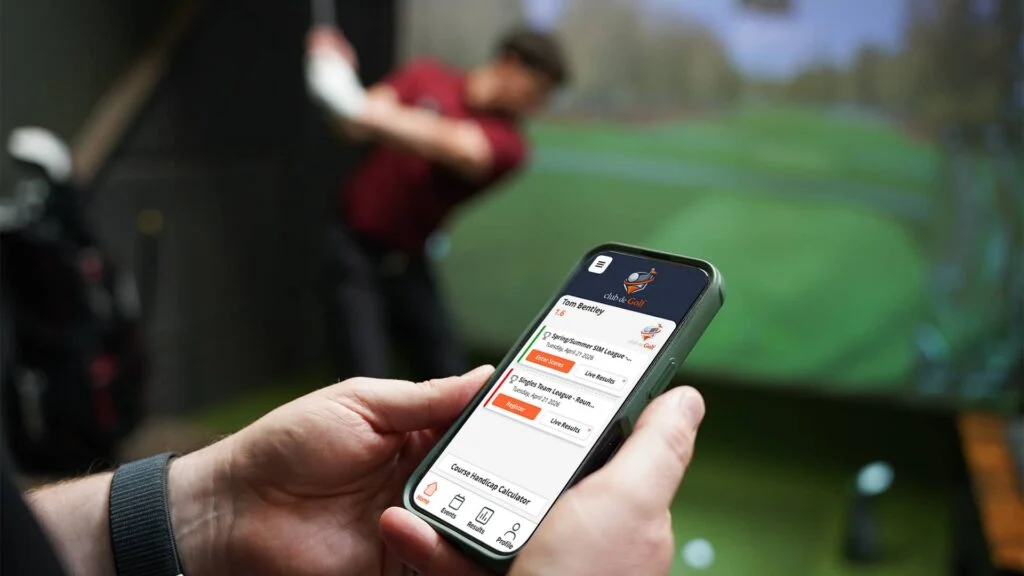
Some 58% of mapped venues offer memberships, yet only 32% run any kind of golf league.
That difference goes to the heart of the next phase of simulator golf.
A membership may make returning easier or more attractive. A league supplies a fixture, a result and potentially somebody waiting to see whether you can repeat last week’s score.
For the golfer, it introduces a competitive element into a format that can otherwise become another casual booking. For the operator, it offers a route towards more predictable visits.
There is another revealing contrast in the technology.
Booking infrastructure is present at 73% of venues, but the research records a competition or league platform at only 11%, and a customer relationship management system or app at just 0.5%.
Those last two figures describe what the researchers could identify. They should not automatically be read as proof that every other venue lacks the technology.
Still, the imbalance is striking. Venues have become proficient at letting people reserve a bay. Far fewer have an identifiable system for keeping their golfing lives connected once they leave it.
The hours nobody wants to book
The median simulator-bay price in the research is $28 an hour. Demand clusters around evenings and weekends, leaving substantial gaps during quieter periods.
Extra bays alone cannot solve that scheduling problem.
Coaching, regular competitions, member events and connected player records offer reasons to return beyond the obvious peaks.
None guarantees fuller bays, and the report does not establish which approach produces the best financial return. But it illustrates why a business model based largely on occasional social visits represents only part of the commercial opportunity.
It also suggests that competition may become as important to an indoor venue’s long-term appeal as the quality of its launch monitors.
Could indoor golf become part of the player pathway?
The opportunity extends beyond venue operators.
For national golf bodies, connected competitions and simulator handicaps could provide continuity between an introductory indoor session and longer-term participation in the sport.
PGA Holland is already running a national programme of cross-venue simulator leagues designed to encourage repeat play and simulator-handicap adoption.
That offers a practical example of how indoor facilities can operate as part of a connected golfing network rather than a collection of isolated businesses.
There are limits to the evidence. The research maps the market and its identifiable services; it does not prove that joining a simulator league makes somebody more likely to take up outdoor golf, or that software alone produces loyal customers.
Those outcomes still need measuring.
Yet the commercial challenge is becoming clearer. The hardware can put a convincing version of golf in a room. The tougher task is giving somebody a reason to turn up again next week.