 Andy Devaney
The Institute Golf Club has spent much of its life doing the one thing modern golf properties are rarely allowed to do: keeping quiet. Set just south of San Jose and built by Randy and John Fry, the family behind Fry’s Electronics, it has remained an ultra-select curiosity rather than a familiar stop on the championship circuit.
Photographer Channing Benjamin was among the first photographers allowed behind its curtain, and after two days on the ground his verdict was disarmingly simple: ‘It’s just golf, and I think that’s becoming increasingly rare.’
A golf course that refuses to perform
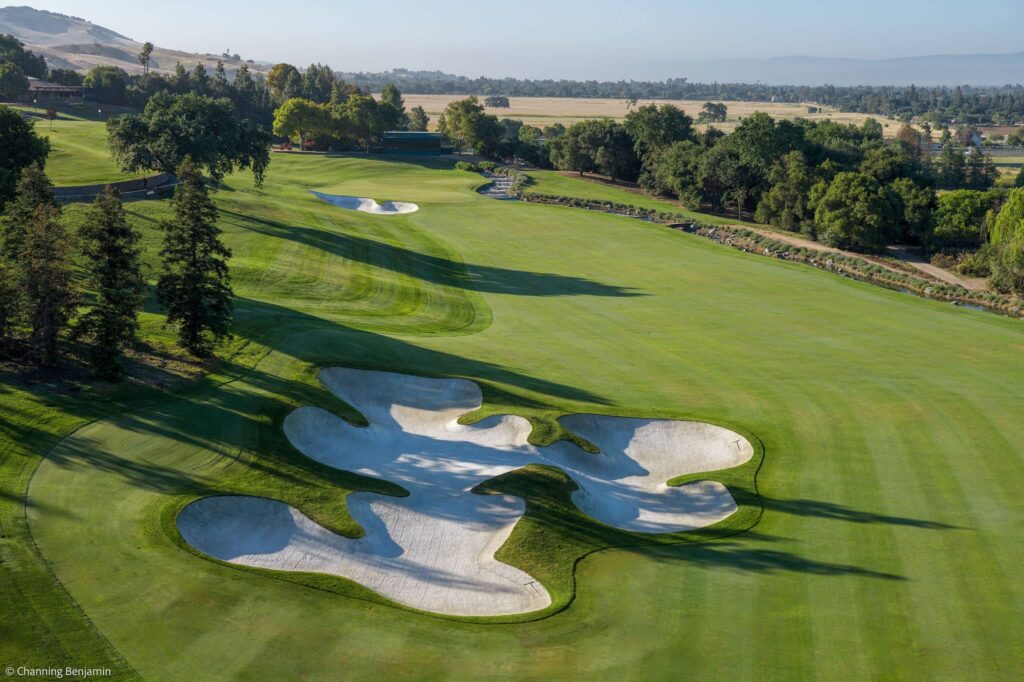
Benjamin has photographed Pebble Beach Resorts, The Los Angeles Country Club, Ladera Golf Club and Castle Pines Golf Club. He is not easily distracted by a handsome bunker and a cooperative sunset. At The Institute, the absence of visual clutter became part of the story.
“The first thing I noticed was just how peaceful it is.
Once you’re on a property, everything else disappears. There aren’t houses lining the fairways or outside distractions competing for your attention. It’s just golf, and I think that’s becoming increasingly rare.
The other thing that struck me was how understated the course is. It doesn’t try to overwhelm you. Instead, it quietly grows on you. Every day I spent walking and photographing it, I noticed something different. That’s usually a sign you’re looking at a golf course with real depth.”
That restraint matters. Plenty of new courses announce themselves with the architectural subtlety of a marching band in a library. The Institute appears happier to let the land, routing and decisions do the talking.
Why The Institute rewards a patient eye

Golf photography can flatter almost anything at daybreak. Benjamin’s test is sterner: does the course continue to disclose new detail after the first sweep of flattering light?
“The best courses don’t always impress you immediately. In my experience, they’re the ones that get better the longer you spend on them.
As both a golfer and a photographer, I probably see things a little differently. I’m looking at how the holes flow together, how the land influences the strategy, how the light changes the character of the course throughout the day, and whether the design feels natural rather than forced.
The courses I remember most are the ones that never stop revealing something new. Every time you walk them, you notice another detail you missed before.”
The Institute passed that test. Its higher ground gave Benjamin views across several holes at once, exposing the logic of the routing rather than merely presenting isolated postcard scenes. The surrounding hills altered the frame as the sun moved, while the early-morning stillness made the property feel almost untouched.
Familiar echoes, but an identity of its own
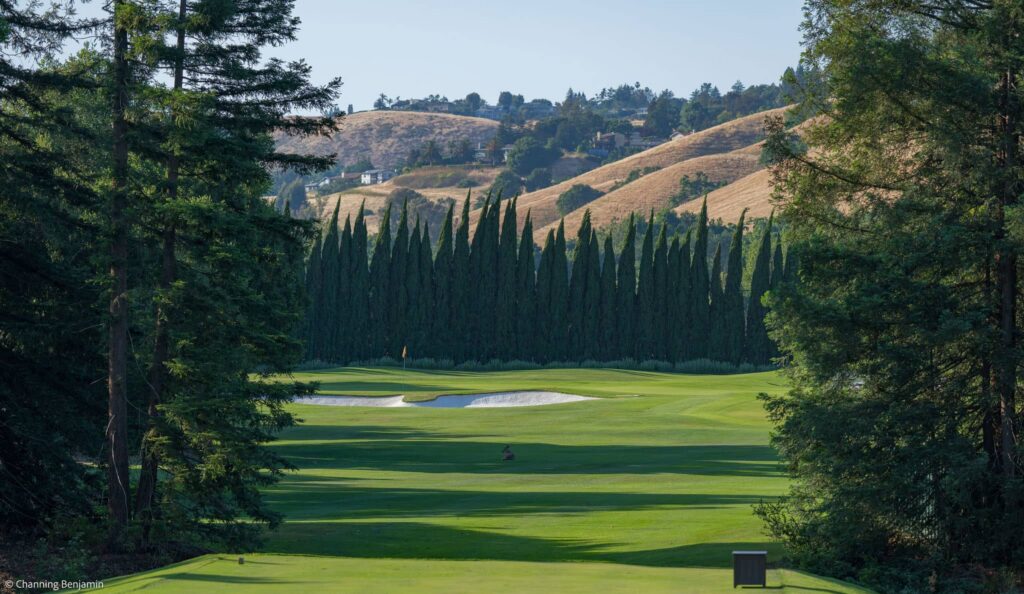
Benjamin detected a nod to Augusta National at the par-three 13th, which immediately recalled the famous 12th. That could have become an awkward comparison; borrowed grandeur has ruined more than a few ambitious golf projects. His judgement was that the reference never swallowed the course.
“I’ve photographed a number of clubs that were built as true passion projects, and you can usually sense that from the moment you arrive. The Institute definitely has that feeling.
At the same time, there are subtle nods to some of golf’s most iconic holes. I remember the par-3 13th immediately making me think of Augusta National’s famous 12th. It’s not a copy, but you can certainly appreciate the inspiration.
What I like is that those influences never define the course. They simply become part of its personality. By the end of the round, The Institute feels like its own place rather than a collection of famous golf holes.”
That distinction is crucial. Recognition may catch the eye, but coherence is what makes a course memorable.
The 16th asks the right question
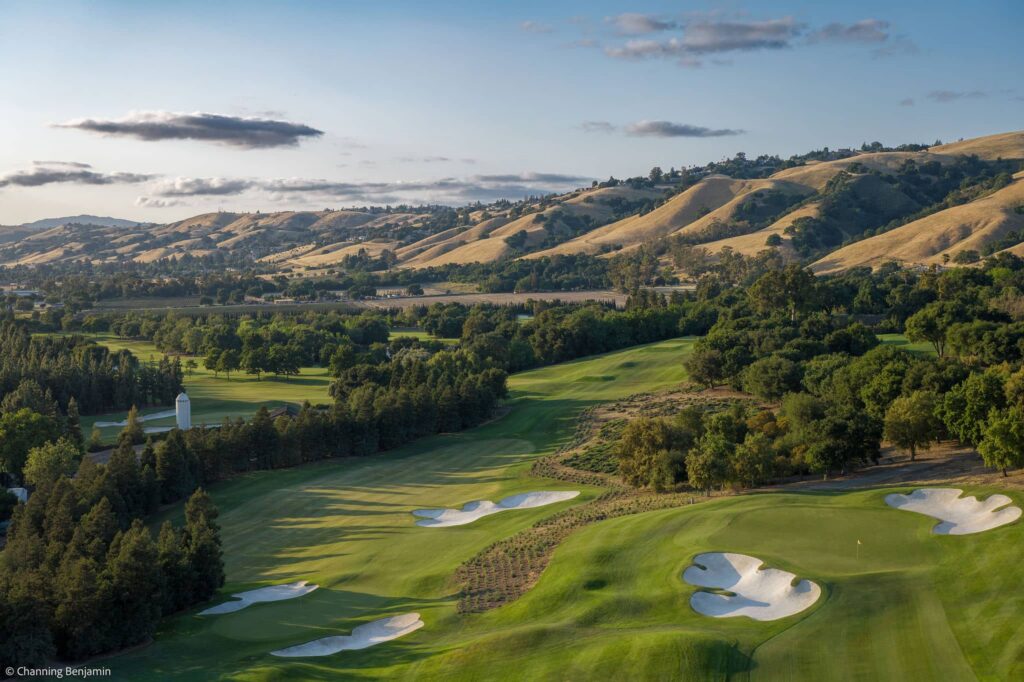
Benjamin’s favourite hole was the short, drivable par-four 16th. There is a personal reason: he drove the green during his scouting round and converted the eagle putt. Photographers, like anglers, are entitled to one immaculate story.
“That’s an easy one – the short, drivable par-4 16th.
I’ll admit I’m a little biased because during my scouting round I actually drove the green and made the eagle putt. That’s a pretty good way to make a lasting impression.
Even if that hadn’t happened, I’d still love the hole. It asks a question the moment you step onto the tee. Do you play it safe, or do you take on the challenge?
I love golf holes that give you options instead of telling you exactly how they should be played. Those are the holes golfers remember long after the scorecard is put away.”
The appeal lies in agency. A good short par four offers temptation without issuing instructions. The golfer supplies the bravery, the arithmetic and, quite often, the apology.
Could The Institute host elite tournament golf?
The club hopes to stage significant tournaments, although no event, date or governing body was identified in the supplied material. Benjamin believes the course has the scale and strategic weight to test elite players rather than merely provide an expensive backdrop.
“Absolutely.
One of the first things that struck me was the overall scale of the golf course. Standing on some of those back tees during my scouting round, I remember thinking, “Wow… this is going to be a serious test of golf.”
There are multiple sets of tees, so golfers of all abilities can enjoy it, but if you tip it out, it’s one of the toughest tests of golf I’ve played.
What impressed me most is that the challenge doesn’t come from length alone. The strategy is just as demanding. The course asks you to think your way around it, and I believe that’s what great championship golf should do. It rewards smart decisions and solid execution, not just power.
I have no doubt the best players in the world would enjoy the challenge. Just as importantly, I think The Institute would make a tremendous championship venue because it has substance behind its beauty. It would look incredible on television, but more importantly, it has the architecture, strategy, and scale to stand up to the very best players in the game.”
The judgement is persuasive because it moves beyond television aesthetics. Scale matters, but so does the ability to ask different questions of different players. Length alone is merely acreage with a flag at the end.
Peaceful, strategic and pure
Asked for three words, Benjamin settled on peaceful, strategic and pure. The first describes the seclusion; the second, the decisions; the third, the conditioning and relative lack of play. Together they explain the fascination.
The Institute Golf Club does not yet have the public tournament history that turns a private course into common sporting language. It does, however, possess something harder to manufacture: an identity that appears stronger the longer one looks.
For a place preparing to draw back the curtain, that is a useful trick. The surprise is not that The Institute has remained hidden. It is that a course this assured may not stay hidden for much longer.