 Andy Devaney
Justin Rose returns to Birkdale 28 years after his fourth-place breakthrough at The Open, but the memory now carries a second significance: the work of the Kate & Justin Rose Foundation and its effort to give disadvantaged young people access to the game that transformed his own life.
At 17, Rose arrived on golf’s grandest stage as an amateur and departed with the sort of result that rearranges a young man’s future before he has had time to pack his suitcase.
A fourth-place finish brought applause, attention and expectation in roughly equal quantities. It also turned a teenager who had spent his life around golf clubs into somebody recognised in the street.
There is no practice ground for that.
A Teenage Breakthrough and a Very Adult Spotlight
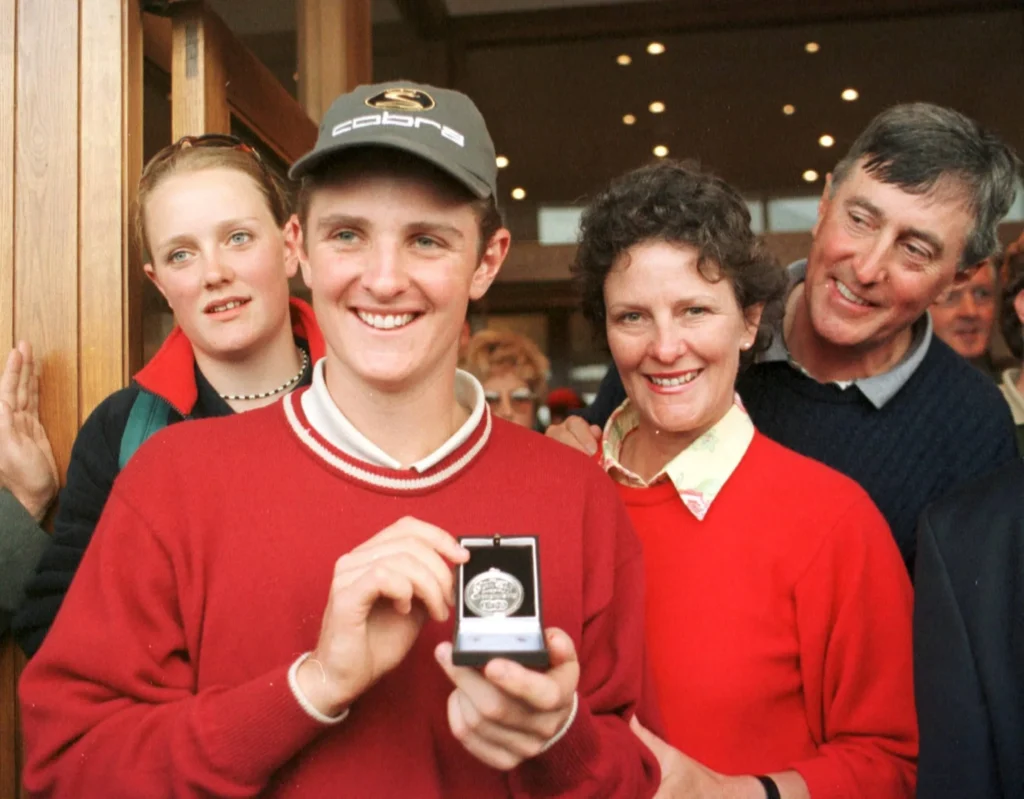
Rose has reflected on how golf prepared him for the attention that followed his Birkdale performance. Not through some mystical lesson buried in the back nine, but through years spent meeting competitors, officials, members and spectators.
Golf can be an awkward game, but it is a remarkably effective social education. It asks young players to keep score honestly, shake hands properly and maintain a civil expression after sending a new ball into a shrub.
For Rose, those lessons proved useful when the microphones appeared.
“Golf prepared me for that moment in a lot of ways. It teaches you how to handle yourself, how to interact with people from all walks of life, and how to represent yourself with a degree of respect and professionalism.
By the time Birkdale came around, I’d spent years around golf clubs, tournaments, officials and fellow competitors, so I had developed social skills to help me cope with the attention that followed.
That said, nothing really prepares a 17-year-old for suddenly being recognised in the street, signing autographs, doing TV interviews and having people talk about you as the next big thing in golf. It all happened very quickly after my finish in The Open that year.
What helped me most was staying grounded. My parents had always instilled values of humility, perspective and respect for others, and those values became really important during that period.
Looking back, golf gave me the confidence and people skills to deal with the spotlight, while my upbringing gave me the perspective to handle it in the right way. It allowed me to enjoy the opportunities that came my way without losing sight of who I was.”
The most telling element is not that golf gave Rose confidence. Plenty of sports can do that. It is the combination of confidence and perspective that matters.
One without the other can be troublesome. Confidence without perspective tends to arrive loudly, occupy the best chair and stay long after everybody else has gone home.
Rose credits his upbringing with keeping his feet beneath him while his public profile accelerated. Golf supplied the environment; family supplied the ballast.
Golf’s Value Beyond the Scorecard

The story also explains why Rose now speaks about golf as something more substantial than a profession.
The sport gave him opportunity, but not solely in the form of trophies, travel or recognition. It taught him how to communicate, recover from disappointment, behave under scrutiny and build relationships with people outside his immediate circle.
Those are useful qualities whether somebody becomes a professional golfer, an accountant or the person attempting to explain a four-hour society round to an unimpressed partner.
The Kate & Justin Rose Foundation is built around extending those benefits to young people who may otherwise have little or no access to the game.
The Foundation funds organisations across the UK that create opportunities for disadvantaged children and young people to experience golf.
Among the projects it supports are Dryvebox U.K., which takes simulator golf experiences into inner-city schools, and Sport for All UK, which enables children with upper-body limb differences to participate in the sport.
The common thread is access. Golf cannot claim to teach confidence, resilience and social skills if the front door remains closed to large sections of the population.
Turning Personal Opportunity Into Wider Access
Rose has considered how his 17-year-old self might respond to the knowledge that golf would eventually allow him to support thousands of young people.
The honest answer is that the teenager concerned was rather busy trying to build a career.
“I think 17-year-old Justin would find it quite hard to believe, to be honest. At that age, I was simply focused on trying to become the best golfer I could be and make my way in the game. I wasn’t really thinking about the impact golf could eventually allow me to have outside of playing.
One of the greatest things golf has given me is opportunity. It has taught me life skills like; confidence, resilience and how to build relationships with people. Through the Foundation, being able to help young people across the UK – particularly those who may never have thought golf was for them – experience those same benefits is incredibly rewarding.
What makes me most proud is seeing children from all walks of life, being given opportunities they might not otherwise have had. If I could tell my 17-year-old self that one day we’d be helping thousands of young people discover the game and everything that comes with it, I’d be amazed.”
That final thought gives Rose’s return to Birkdale considerably more weight than a simple anniversary.
Elite sport is often obsessed with what happened: the finish, the score, the shot and the place on the leaderboard. Time offers a different measurement. It asks what followed and who else benefited.
Rose’s teenage performance opened a door into professional golf. The Foundation is now attempting to open similar doors for young people who might never have imagined themselves walking through the entrance of a golf club.
A Birkdale Return With a Broader Purpose
There will always be an irresistible symmetry in Rose returning to the place where the wider golfing public first came to know him.
Birkdale represents the moment possibility became expectation. Nearly three decades later, Rose can look back with a clearer understanding of everything that moment demanded and everything it eventually made possible.
The teenage golfer left Birkdale carrying the attention of the sporting world. The older one returns with something more useful: the ability to direct some of that attention towards children still waiting for their first opportunity.
Golf gave Justin Rose a stage. His Foundation is working to ensure that others are at least given a way through the gate.
Further information about the projects supported by the Kate & Justin Rose Foundation is available at www.justinrose.com/kjr-foundation-uk.