 Andy Devaney
The Square Golf Omni Portable Launch Monitor lands in a golf technology market where the numbers can be almost as frightening as a downhill four-footer for the monthly medal.
At around $1,600, the new Omni from Square Golf is being positioned for players who want credible home simulator performance and useful range data without wandering into the $5,000-plus bracket occupied by many premium launch monitors.
That price point is the story. Not because affordable automatically means good — golf is littered with gadgets that promised transformation and delivered mild inconvenience — but because the Omni appears to give Square Golf a more serious foothold in the simulator-first category.
For golfers building an indoor practice space, upgrading a garage set-up or trying to bring some order to their winter work, this is the sort of product that will prick up ears.
A Step Up From The Original Square Golf Home Monitor
The Omni follows the original Square Golf Home launch monitor, which sits at around $700 and is billed as an entry-level option. The new unit is pitched much more ambitiously.
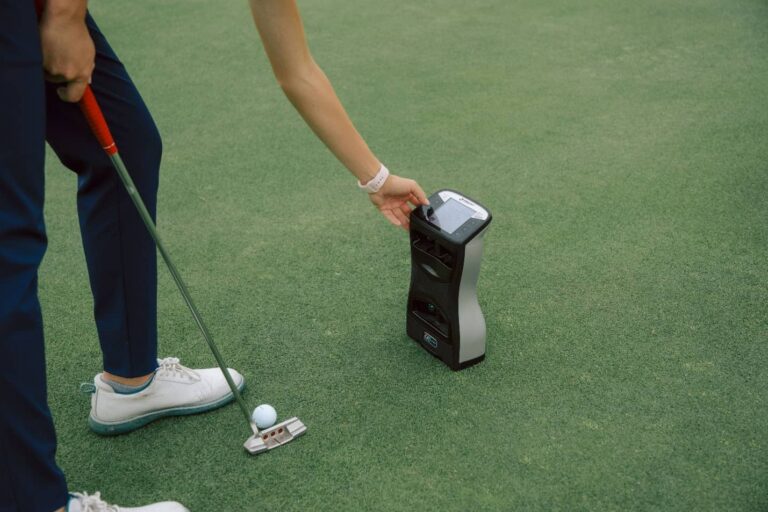
The key hardware change is the camera system. The Square Golf Home monitor uses two high-speed infrared cameras. The Omni uses four. That additional tracking capacity is central to Square Golf’s attempt to move from budget-friendly curiosity into a more capable home simulator conversation.
The data package is also broader. The Omni tracks core numbers such as carry distance, total distance and smash factor, then adds path, spin rates, trajectories, height, clubhead speed and ball speed. In other words, it goes beyond the “that went about 148-ish” school of golf improvement, which remains popular mostly because it requires no emotional accountability.
It also comes with four game modes and an on-screen display, giving golfers direct access to key numbers without constantly leaning on a separate device.
Jon Sherman Sees A More Serious Contender
Jon Sherman, founder of Practical Golf, is not new to this corner of the game. His newsletters, website and podcasts focus on helping golfers improve through technology, and he also works as a consultant for the Celina, Texas-based Indoor Golf Shop.
That company carries launch monitors and simulators from Trackman, Uneekor, Garmin, Bushnell, Flightscope, ProTee, Full Swing and Tru Golf, along with projectors, wall padding, golf mats and other home simulator equipment. So when Sherman talks about the Omni, it comes from a landscape filled with far more expensive machinery.
“I was very impressed with the accuracy,” says Sherman, the founder of Practical Golf, whose newsletters, website, and podcasts are all about helping golfers get better through technology.
That is the sort of comment that matters in this market. Launch monitors live or die on trust. If the numbers feel random, the golfer stops believing them. Once that happens, the machine becomes an ornament with firmware.
Accuracy Against A Familiar Benchmark
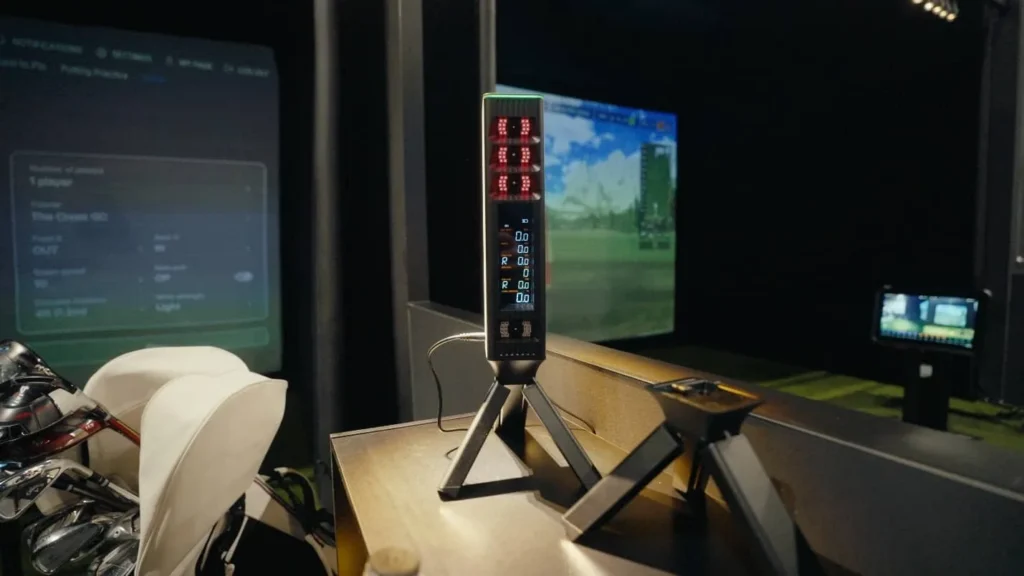
Sherman also compared the Omni with his Foresight GC3, a respected name in the serious launch monitor and home simulator category.
“In my testing, the Omni was almost identical to my Foresight GC3 on many shots,” he added. “The original Square was accurate when it worked, but you would get misreads at times. The newer one, because it has extra cameras, I don’t think I got one misread, except maybe on the driver a couple of times. But it was pretty spot on.”
That comparison is likely to be one of the Omni’s strongest talking points. It does not turn the unit into a like-for-like replacement for every premium system, nor should it be treated as one. But it does suggest that Square Golf has addressed one of the major practical issues with the original model: misreads.
For a home simulator golfer, fewer misreads means less faff, less second-guessing and fewer moments where a perfectly decent swing is followed by a number that looks as if it was produced by a distracted weather station.
No Marked Golf Balls Required
One of the more useful changes is that the Omni does not require specially marked golf balls. That may sound minor until you have spent an evening trying to keep the “right” balls separate from the rest of the bucket like a man organising evidence.
For indoor golfers, it is a genuinely practical improvement. It makes the system easier to use and removes one of those small annoyances that can slowly become a large one.
There is still a club-data requirement: golfers need to place two stickers on the clubhead. Sherman calls that a nuisance rather than a deal breaker. That feels a fair distinction. It is not ideal, but golf improvement has always involved a modest amount of indignity.
Built For Home First, Range Second
The Omni includes a tripod and a removable, rechargeable battery said to last up to six hours. It is also compatible with both Android and Apple devices.
That gives it genuine portability, though not necessarily the same grab-and-go appeal as some smaller range-first devices. Sherman sees the Omni primarily as an indoor unit rather than something he would take to the practice ground every time.
“Personally, would I take that to the range with me all the time? Probably not. I still see it primarily as an indoor unit,” Sherman says. “But I think this is going to be a home run for golfers who want a strong simulator performance without spending $5,000-plus.”
That line neatly captures the likely buyer. This is for the golfer who wants to build a capable simulator environment at home, not necessarily the player looking for the smallest possible device to slip into a range bag.
Software And Simulator Play
The Omni does not require a subscription to operate. It includes simulated courses with 1,000 free credits, which gives users a way into simulator play from the start.
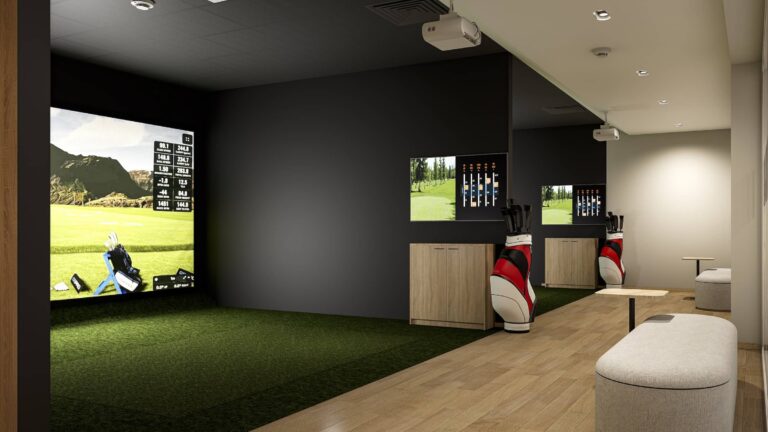
Sherman does recommend adding a third-party integration such as GSPro for those who want a fuller simulator experience, more advanced graphics and a wider selection of courses. That is worth noting because the launch monitor is only one part of a proper home golf simulator set-up.
Screens, mats, projectors, impact areas and software all shape the final experience. The Omni may lower the cost of entry at the tracking end, but the wider simulator ecosystem still needs planning. Golf rarely lets you escape with just one purchase. It prefers to follow you around the house holding a basket.
The Practical Upsides
The obvious appeal is the price-to-performance proposition. At around $1,600, the Square Golf Omni sits well below many premium launch monitors while offering a broader data set than most low-cost alternatives.
The four-camera system is the central upgrade over the original Square Golf Home unit. Based on Sherman’s comments, it appears to improve reliability and reduce misreads.
The lack of required marked balls is another clear usability gain, particularly for golfers practising indoors several times a week.
The on-screen display also gives the device a practical edge. Being able to see numbers such as carry distance and launch angle directly on the unit can be useful indoors and especially outdoors, where phones and tablets are often competing with glare, battery life and general human impatience.
The Caveats For Buyers
The Omni may be portable, but it still sounds like a home simulator product first. Golfers wanting something ultra-compact for constant range use may prefer a smaller unit.
The clubhead stickers for club data are another consideration. They are not a fatal flaw, but they are part of the user routine.
Driver performance is also worth watching, given Sherman’s caveat that he may have had a couple of misreads with that club. For many golfers, the driver is the club they most want data on, mainly because it is the one most likely to behave like a farm animal in a thunderstorm.
Why The Omni Matters In Golf Technology
The home simulator market has grown far beyond the old fantasy of tour pros, teaching studios and people with suspiciously large basements. More ordinary golfers now want data-driven practice, indoor winter play and a better way to understand their swings away from the course.
That shift creates demand for launch monitors that are accurate, usable and not priced entirely for commercial studios. The Square Golf Omni appears to be Square Golf’s attempt to sit directly in that gap.
It is not the cheapest option in the category. It is not being positioned as the most premium, either. Its appeal lies in the middle: more capable than entry-level, less financially violent than the big-ticket alternatives, and seemingly aimed at golfers who want their home practice to feel purposeful rather than decorative.
For the right player, that could make the Omni one of the more interesting launch monitor stories in the simulator space. Golfers may still blame the numbers, naturally. But at least now they may have fewer excuses for not knowing them.